




A protein complex known as STING plays a crucial role in detecting the presence of tumor cells and promoting an anti-tumor response by the body’s innate immune system, according to two separate studies in Immunity.

 Your new post is loading...
 Scoop.it! A protein complex known as STING plays a crucial role in detecting the presence of tumor cells and promoting an anti-tumor response by the body’s innate immune system, according to two separate studies in Immunity. 
No comment yet.
Sign up to comment
Scoop.it!
Acute organ failure following the loss of anti-apoptotic cellular FLICE ...
Gilbert C FAURE's insight:
Apoptosis signaling is involved in both physiological tissue homeostasis and acute and chronic diseases. The role of regulatory apoptosis signaling molecules and their organ-specific functions are less defined. Therefore, we investigated the loss of the anti-apoptotic cellular FLICE-inhibitory protein (cFLIP) and the mechanisms of the resulting lethal organ failure in vivo using inducible knockout mice. These were generated by crossing floxed cFLIP mice to a tamoxifen inducible Rosa26-creERT2 mouse strain. Death following global loss of cFLIP resulted from liver failure, accumulation of M1-polarized macrophages and accompanying hepatic cell death and inflammation. Apoptosis was also prominent in immune cells, the kidney and intestinal epithelial cells (IECs) but not in cardiomyocytes. Cellular injury led to the release of damage-associated molecular patterns (DAMPs) and the induction of innate immune receptors including toll-like receptors (TLRs) 4 and 9, and stimulator of interferon genes (STING). Transplantation of bone marrow with intact cFLIP or depletion of macrophages prevented the phenotype of acute liver failure. Interestingly, compound deletion of cFLIP in bone marrow-derived cells and hepatocytes did not promote organ failure. Thus, cFLIP exerts a critical role in tissue homeostasis by preventing the activation of monocytic cells and innate immunity, which causes cell death and inflammation in susceptible tissues. These results encourage the development of organ-specific anti-apoptotic and anti-inflammatory therapies in acute organ failure.
Scoop.it!
New at Molecular Cell: Taking the STING out of innate immunity http://t.co/uACGOg4MEF
|
Scoop.it!
November 20, 2014:
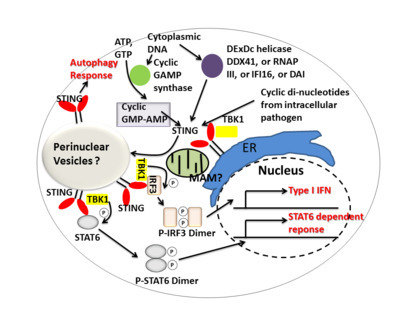
A recently discovered protein complex known as STING plays a crucial role in detecting the presence of tumor cells and promoting an aggressive anti-tumor response by the body's innate immune system, according to two separate studies published in the Nov. 20 issue of the journal Immunity.
The studies, both from University of Chicago-based research teams, have major implications for the growing field of cancer immunotherapy. The findings show that when activated, the STING pathway triggers a natural immune response against the tumor. This includes production of chemical signals that help the immune system identify tumor cells and generate specific killer T cells. The research also found that targeted high-dose radiation therapy dials up the activation of this pathway, which promotes immune-mediated tumor control.
These findings could “enlarge the fraction of patients who respond to immunotherapy with prolonged control of the tumor,” according to a commentary on the papers by the University of Verona's Vincenzo Bronte, MD. “Enhancing the immunogenicity of their cancers might expand the lymphocyte repertoire that is then unleashed by interference with checkpoint blockade pathways,” such as anti-PD-1. STING, short for STimulator of INterferon Genes complex, is a crucial part of the process the immune system relies on to detect threats -- such as infections or cancer cells -- that are marked by the presence of DNA that is damaged or in the wrong place, inside the cell but outside the nucleus. Detection of such “cytosolic” DNA initiates a series of interactions that lead to the STING pathway. Activating the pathway triggers the production of interferon-beta, which in turn alerts the immune system to the threat, helps the system detect cancerous or infected cells, and ultimately sends activated T cells into the battle. Via Krishan Maggon

Krishan Maggon 's curator insight,
November 22, 2014 2:02 AM
University of Chicago Medicine STING-Dependent Cytosolic DNA Sensing Mediates Innate Immune Recognition of Immunogenic Tumors Gajewski and colleagues STING-Dependent Cytosolic DNA Sensing Promotes Radiation-Induced Type I Interferon-Dependent Antitumor Immunity in Immunogenic Tumors Weichselbaum and colleagues
Scoop.it!
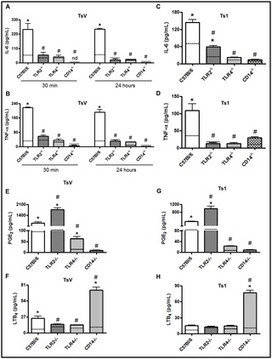
by Karina Furlani Zoccal, Claudia da Silva Bitencourt, Francisco Wanderley Garcia Paula-Silva, Carlos Artério Sorgi, Karla de Castro Figueiredo Bordon, Eliane Candiani Arantes, Lúcia Helena Faccioli Scorpion sting-induced human envenomation...
|






STING, short for STimulator of INterferon Genes complex, is a crucial part of the process the immune system relies on to detect threats—such as infections or cancer cells—that are marked by the presence of DNA that is damaged or in the wrong place, inside the cell but outside the nucleus.