


When volcanic activity caused the emergence of the Spanish island of Lanzarote 15 million years ago it was a desolate, lifeless place.
Settled only three thousand years ago, the island's volcano could still erupt again.

 Your new post is loading...
 Scoop.it! When volcanic activity caused the emergence of the Spanish island of Lanzarote 15 million years ago it was a desolate, lifeless place. No comment yet.
Sign up to comment
Scoop.it!

Dad and Graphic Designer, David LaFerriere started drawing on his kids sandwich bags back in 2008 - and has keep a record of it on Flckr. Much has been written about what a great dad he is, and I'm... Via Joseph Vancell
Scoop.it!

While humans may never be able to regenerate body parts they've lost, scientists are perfecting ways to create different types of replacement tissue using stem cells or techniques that kick-start r... Via Erskine S.Weekes-Libert
Scoop.it!

Before we were old enough to know better, many of us grew up hearing -- and eventually repeating -- the nursery rhyme: "Sugar and spice and everything nice/That's what little girls are made of." Not so, Mother Goose, not so. Via F. Thunus
Scoop.it!

Mother of two, Sharon Campbell-Rayment, 50, fell off a horse and awoke with a Scottish accent and is now to write a book about how the bizarre accident changed her life. Via Susie Blackmon
Scoop.it!

From
phys

A queen in a paperwasp colony largely stays in the dark. The worker wasps, who fly outside to seek food and building materials, see much more of the world around them. Via Jocelyn Stoller
Scoop.it!

There is more money in looking at bears than there is in shooting them - 12 times more to be exact, a new study concludes.
The study conducted by the Centre for Responsible Tourism, a research institute at Stanford University in Washington, D.C., and funded by the conservation organization Tides Canada, concluded that bear-related ecotourism is exponentially more profitable than trophy hunting.
"We found that the bear viewing is generating 12 times more in visitor spending than is bear hunting, and over 11 times more in direct revenue for the B.C. province," said lead researcher Martha Honey.
Ecotourism, including bear viewing, has grown rapidly over the past decade on B.C.'s Central Coast, said Honey. People from around the world come to the Great Bear Rainforest in the hopes of seeing black, grizzly and kermode bears in their natural habitat.
The report concluded trophy hunting, on the other hand, is on the decline, said Honey.... Via Wildlife Margrit 
Wildlife Margrit's curator insight,
January 8, 2014 1:11 PM
Let's make it so for all wildlife everywhere in the world shall we?
"We found that the bear viewing is generating 12 times more in visitor spending than is bear hunting, and over 11 times more in direct revenue for the B.C. province," said lead researcher Martha Honey.
Scoop.it!
Imgur is home to the web's most popular image content, curated in real time by a dedicated community through commenting, voting and sharing. (RT @roseveleth: Super interesting visual look at how dog breeds have changed over time. Via Rudy Montigny
Scoop.it!

Professor Seth Dixon shares over 50 of his favorite geography videos in this online map http://bit.ly/KDY6C2 
Melissa Marie Falco-Dargitz's curator insight,
November 3, 2014 12:02 PM
It was nice to see where everything was happening. I hope it gets updated to more current events. I wish we had something like this when we were looking at the invasion of Kuwait. 
Caroline Ivy's curator insight,
March 15, 2015 5:19 PM
Seth Dixon uses ArgGIS to juxtapose maps with the location a video is associated with.
This idea has crossed my mind before. Now, a video can be contemplated with the spatial accuracy needed. This connects events to a place, and can help students more fully grasp the geospatial distribution of events. 
Nita Ardi's curator insight,
January 14, 2019 12:16 PM
Great resource for classroom and information to get kids going.
Scoop.it!

Today 1914: Ford Motor Company institutes 8hr workday and $5/hr minimum wage. Check out the Model A: http://t.co/jKJq5f9EQ5 Via Mr. David Burton
Scoop.it!

Thousands of species were scientifically described for the first time in 2013. Many of these were 'cryptic species' that were identified after genetic analysis distinguished them from closely-related species, while others were totally novel.
Scoop.it!

While knowledge can get some individuals far, a touch of brilliance also pays dividends, as many of today’s shining executive stars prove.
Scoop.it!

What do we expect will happen in one thousand years time? Or one million years? Or even one billion? As our amazing timeline shows, there may be trouble ahead. |
Scoop.it!

This is a mind map of the seven basic sentence patterns in English (NEW #mindmap: Sentence Types - http://t.co/1JsEfKgyIC) Via George Huba
Scoop.it!
Scoop.it!

Never trust strangers. That is something most of us were taught by our parents or guardians at an early stage of our life, especially if the stranger says he is a sorcerer who can turn you invisible whilst you rob a bank! Via Bonnie Burns 
Bonnie Burns's curator insight,
January 8, 2014 5:14 PM
The fake sorcerer explained to him that the spells would make him invisible, and that he could then rob banks all he wanted.
Scoop.it!

From
io9
The idea of sustainable living off the grid isn't new. In fact, people in San Francisco were doing it in the late 19th century, when they started moving into abandoned street cars along Ocean Beach. Via F. Thunus
Scoop.it!

Oldenburg stallion Willem I, born 1895. This shows the old Oldenburg-type which is very different to the modern sporthorse-Oldenburg
Scoop.it!

The hardworking Lagotto Romagnolo and the cuddly Coton de Tulear are just two of the five newest members of the American Kennel Club's Miscellaneous Class. Via Rudy Montigny
Scoop.it!

Lucie Bilodeau is a professional and accomplished artist who has been painting since 1982. Explore her artistic vision as she communicates with nuances and detail the essence of her subjects in her fine art paintings. Via Wildlife Defence
Scoop.it!
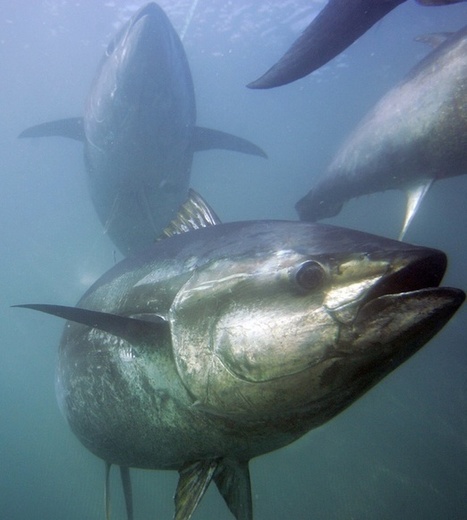
Once used for cat food, the endangered fish is now one of the most prized delicacies in the world. Via Wildlife Defence
Scoop.it!

Pompeians ate grains, fruits, nuts, olives, local fish and chicken eggs as well as giraffe and flamingo meat, spices, some from as far away as Indonesia. Via David Simpson, Joy Kinley 
Joy Kinley's curator insight,
January 9, 2014 8:31 AM
It is always interesting to note what people ate. It can show what was popular, what was grown, and trade routes. Spices would help preserve food so it would last much longer. Some meats such as fish, birds, pigs, sheep, and cow would be considered normal today but giraffe would have been eaten as a show of wealth.
Scoop.it!

Coloured engravings from France's first ice-skating manual Le Vrai Patineur (The True Skater) written by Jean Garcin, a book praised in Honoré de Ba...
Scoop.it!

Chameleons are famed for being able to change their color, but another of their amazing characteristics is the way they unleash their long, sticky tongues to grab the insects – and even sometimes small birds – on which they feed. Behind these remarkable appendages are some extremely intricate and impressive biological features that are of great interest to scientists. Yet chameleons flicking out their tongues also make for some very attractive photos. |






