

3/4GB have been learning about Australia Day. We watched a video of people reflecting on what Australia Day means to them. You can watch the video
Via Maree Whiteley


|
HSIE K-6
Engaging resources and ideas for teaching HSIE K-6. Topics such as history, cultures, environments, social systems and structures are taught through hands on, inquiry based approaches. Curated by Catherine Smyth |
 Your new post is loading...

|
Rescooped by
Catherine Smyth
from Critical and Creative Thinking for active learning
April 1, 2013 8:41 PM
|
 Scoop.it!
3/4GB have been learning about Australia Day. We watched a video of people reflecting on what Australia Day means to them. You can watch the video
Primary students reflect on what Australia Day means to them.
|
|
Rescooped by
Catherine Smyth
from Critical and Creative Thinking for active learning
March 11, 2013 6:54 PM
|
Scoop.it!

Why Scoopit Is Becoming An Indispensable Learning Tool....
Curation is a valuable skill for today’s learner. In a culture of content overload, members that provide great content to their audience will be recognized leaders in network communities. Optimally, we equip students to differentiate good content from bad in preparation for their further education and careers. Curating an online topic (and allowing comments) also increases self-awareness and provides additional insight from others. The nuances of sharing content and writing to an audience become much better understood through interactivity between the curator and participating audience.

Students use critical thinking skills to collect, evaluate and analyze content; they may identify trends from discourse; they develop writing skills in original expression; and they interact, communicate and publish to a global audience. But perhaps more importantly, students practice digital citizenship and personal responsibility to lifelong learning...love it!

I think the scope for Scoop it is sensational. It's a great way to organise, filter, select and highlight online digital resources around a topic, theme or idea.
|
|
Scooped by
Catherine Smyth
February 27, 2013 9:54 PM
|
Scoop.it!

|
|
Scooped by
Catherine Smyth
February 19, 2013 1:02 AM
|
Scoop.it!
Throughout 2011 and 2012, the Board of Studies NSW developed new K–10 syllabuses for English, Mathematics, Science (incorporating Science and Technology K–6) and History that incorporate agreed Australian Curriculum content.
Primary teachers in NSW should keep teaching HSIE K-6 in 2013 but, familiarise themselves with the new history syllabus and the support materials developed by the Board of Studies. If you have time, peruse and give the BoS feedback by clicking on the link. The NSW syllabus for history K-10 is slated for implementation in 2016.
For syllabus links and support materials for teaching the topic "British colonisation" click on the history syllabus link then go to Stage 2 content.
|
|
Scooped by
Catherine Smyth
February 17, 2013 11:45 PM
|
Scoop.it!

This website will help to run a fair and fun school election in the classroom.
|
|
Scooped by
Catherine Smyth
August 15, 2012 2:48 AM
|
Scoop.it!

Locate the K-6 HSIE Syllabus and other resources on the NSW Board of Studies website. Locate information and advice on the implementation of the Australian curriculum in NSW on this website as well.
|
|
Scooped by
Catherine Smyth
June 21, 2012 3:26 AM
|
Scoop.it!

Downloadable curriculum resources for teaching HSIE K-6.

Search this site for great ideas for HSIE in class
|
|
Scooped by
Catherine Smyth
June 21, 2012 2:42 AM
|
Scoop.it!
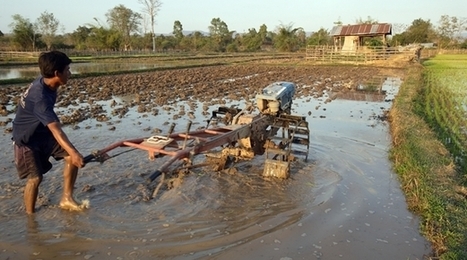
Teacher resources to encourage a global perspective across the curriculum
This website provides a lot of useful resources on global issues such as poverty and economic, social and cultural rights.
|
|
Scooped by
Catherine Smyth
August 23, 2012 10:11 PM
|
Scoop.it!
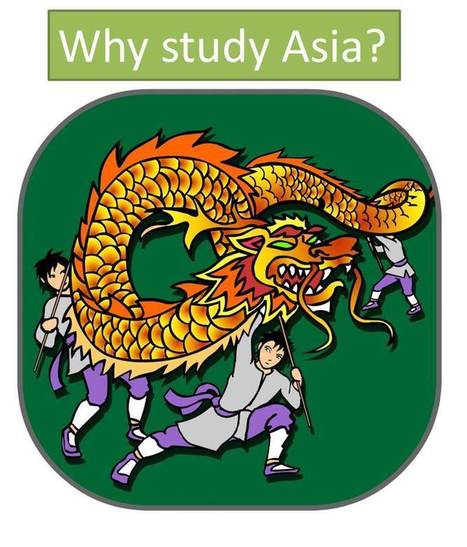
An excellent range of teaching resources for embedding an Asian perspective in the classroom.

|
|
Scooped by
Catherine Smyth
August 23, 2012 10:09 PM
|
Scoop.it!
Resources for school planning for HSIE.
|
|
Scooped by
Catherine Smyth
June 25, 2012 12:27 AM
|
Scoop.it!

Link to the Australian curriculum: history
|
|
Scooped by
Catherine Smyth
February 10, 2013 10:41 PM
|
Scoop.it!

The GA supports primary and secondary geography teachers through teaching resources, geography journals, CPD events, Barnaby Bear, Worldwise and more.
The author of this blog has a number of useful ideas for developing students' writing skills and geographical knowledge and understanding.
|
|
Scooped by
Catherine Smyth
February 10, 2013 6:53 PM
|
Scoop.it!
There are a range of different ideas and activities emphasising visible thinking on this website. Teachers can use these activities to develop students' thinking skills and their understanding of content in HSIE.
|
|
Scooped by
Catherine Smyth
February 10, 2013 6:49 PM
|
Scoop.it!
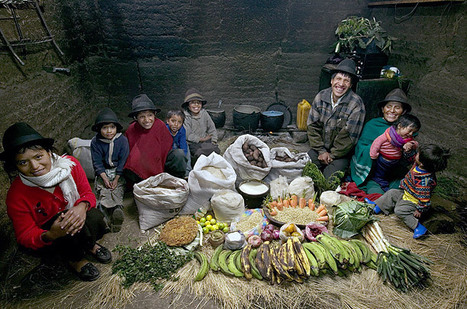
What's on family dinner tables around the globe? Photographs by Peter Menzel from the book "Hungry Planet"
The ideas, images and information on this site link nicely to teaching about resource systems, sustainability, needs and wants, interdepedence and other concepts.

Dinamica sobre diversitat i desigulatat en alimentació. Caltarien les dades per paisos de calories per habitant i dia que es troben a la UNESCO
This website gives insight into what different countries eat based on their cultural and geographical heritage.

This gallery of 16 families from around world together with their week food is quite a treat that shows agricultural, development and cultural patterns. Pictured above is the Ayme family from Ecuador, just one of the many family's highlighted in the book Hungry Planet. The Ayme family that typically spends $31.55 on food and commonly eat potato soup with cabbage.
Tags: food, agriculture, worldwide, consumption, unit 5 agriculture, book reviews, culture, development, unit 3 culture.
|
|
Scooped by
Catherine Smyth
February 10, 2013 11:05 PM
|
Scoop.it!
This website gives a sense of the people, land, language and traditional technologies and knowledge of the Burarra people of Arnhem Land, in Australia's Northern Territory.
Visit the Burarra PeopleQuestacon's Burarra Gathering Online Adventure let's you learn about Burarra traditional technology.Visit the Burarra People Online AdventureYou can take a virtual trip to the land of the Burarra people, and be guided by Danaja, a young Burarra man, and his grandfather, Wala Wala.
You will need to complete a permit to travel onto Aboriginal land. You will also have to decide whether to travel in the wet or the dry season.

Outcome:
- describe features of places and the connections people have with places GE1-1
Inquiry question: How are people connected to places?
What factors affect people’s connection to places?
This is a fantastic interactive resource to help students gain a deeper understanding of Aboriginal land and the connection between Burarra people with their land; Arnhem Land, sea and animals. It is an engaging and fun resource, which invites students to the life and daily activities of the traditional Burarra people through detailed and realistic animation. Stanner (1979) reiterates the meaning of land and country to Aboriginal and Torres Strait Islander people, where inanimate objects such as mountains, flora and fauna take on human like qualities (Van Issum, 2012, p. 62). As such, through this animated adventure, students can achieve an authentic experience with another culture and how different people connect to place.
Teaching ideas
This resource could be used in small groups using iPads. It should be taken account that not all schools can provide sufficient iPads, so another option could be using the IWB with the whole class. Before this, the class will complete a KWL Chart together. KWL Charts are a useful visible thinking strategy, which allows students to think about what they already know, what they want to know and what they already know (Lyman, 1981 In Ritchhart & Perkins, 2008, p. 59). By implementing visible thinking strategies, classroom tasks become more learning oriented rather than work oriented (Marshall, 1988 In Ritchhart & Perkins, 2008, p. 61).
References:
Commonwealth of Australia. (2008). Questacon-The National Science and Technology Centre: Burarra Gathering. Retrieved 8th April, 2016 from http://www.questacon.edu.au/burarra-gathering/welcome-to-burarra-gathering
Ritchhart, R. & Perkins, D. (2008). Teaching students to think. Educational Leadership, 65(5), 57-61. Retrieved 8th April, 2016 from http://www.visiblethinkingpz.org/VisibleThinking_html_files/06_AdditionalResources/makingthinkingvisibleEL.pdf
Van Issum, H. (2012). Why we need Aboriginal and Torres Strait Islander perspectives. In Taylor, Fahey, Kriewaldt & Boon. Place and Time. Explorations in Teaching Geography and History. Frenchs Forest: Pearson Australia
|
|
Scooped by
Catherine Smyth
July 17, 2012 10:29 PM
|
Scoop.it!
Primary teachers, without a background in geography, will find the Shape paper provides an overview of the discipline of geography. This is essential reading.
|
|
Scooped by
Catherine Smyth
December 13, 2012 7:27 PM
|
Scoop.it!
National Indigenous Television (NITV) provides a nationwide Indigenous television service via cable, satellite and terrestrial transmission. The content for these services is primarily commissioned or acquired from the Indigenous production sector.
|
|
Scooped by
Catherine Smyth
November 29, 2012 6:02 PM
|
Scoop.it!
A film from the Competitive Enterprise Institute, adapted from the 1958 essay by Leonard E. Read.
This year's Geography Awareness Week's theme was "Declare Your Interdependence!" The GAW poster for 2012 focused on the Geography of a Pencil and this video works together nicely as a supplement to that poster. You may see the economics of capitalism and globalization in a less optimistic light than Leonard Read, but the theme of interconnectedness makes this a great resource.
This year's Geography Awareness Week's theme was "Declare Your Interdependence!" The GAW poster for 2012 focused on the Geography of a Pencil and this video works together nicely as a supplement to that poster. You may see the economics of capitalism and globalization in a less optimistic light than Leonard Read, but the theme of interconnectedness makes this a great resource.
|
|
Scooped by
Catherine Smyth
November 19, 2012 10:35 PM
|
Scoop.it!

The Australian Children's Television Foundation has produced a multi-platform education resource based on the animation Wadu Matyidi. This resource, designed for primary-aged students, provides the opportunity for students to explore Adnyamathanha language, culture, stories and traditions.
|
|
Scooped by
Catherine Smyth
November 8, 2012 11:32 PM
|
Scoop.it!

One of the wonders of today's Internet would have to be Google Earth. Most of you will also be aware of Google Maps and some may even have used it in the classroom....
|
|
Scooped by
Catherine Smyth
November 8, 2012 10:55 PM
|
Scoop.it!

This website features several stories based on locations on Google map. The purpose is to create a weave of stories about the places. Users can join in for free and start marking up places in Google Maps with their own stories and photos. They can also browse each others' stories and can rate and discuss them.
|
|
Scooped by
Catherine Smyth
October 30, 2012 6:51 PM
|
Scoop.it!
Need ideas for dealing with current issues in the primary classroom? This website illustrates how DeBono's Six Thinking Hats help students to think critically about a media report about Refugees. The website was created by Alicia Rankine, a preservice primary teacher at the University of Sydney.
|
|
Scooped by
Catherine Smyth
October 29, 2012 8:12 PM
|
Scoop.it!
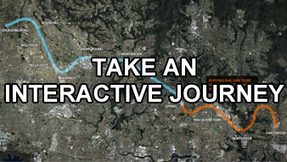
The North West Rail Link is a priority rail infrastructure project for the NSW Government.
|
|
Scooped by
Catherine Smyth
October 29, 2012 6:57 PM
|
Scoop.it!

Refugees have been coming to Australia since the early 19th century. This site explores the contribution of refugees to Australian society.
|
|
Rescooped by
Catherine Smyth
from Teaching history with ICT
October 18, 2012 10:42 PM
|
Scoop.it!
Are you lukewarm about technology in the classroom?
Watch this advert for the Guardian newspaper which shows how stories are now covered in print and online.
Think about the implications of this for your students. What literacy skills do students need? How will you as a teacher use technology to start the conversation...











What does Australia Day mean to you? Responses from the great resources on the Together for Humanity website.
More great responses from primary students after watching the Together for Humanity teacher resource videos.
What is Australia Day?
Reflection is a powerful factor in learning.
Don't underestimate the importance of historical language in developing historical understanding. Provide opportunities for students to expand their historical vocaulary and to use language for a variety of purposes.
Young students need explicit instructions for when and how to use conventions of language.
Husbands (1996) identifies different types of historical language including:
1. The language of the past (e.g. British colonisation, original inhabitants, convict, First Fleet, monarchy, revolution, Terra Nullius)
2. The language of historical time (century, period, modern, decade)
3. The language of historical processes (cause, chronology, similarity, difference, perspective)
4. The language of historical description and analysis (revolution, monarchy, democracy)
Use 'Word Walls' or word charts to help students keep track of information and terminology that is used in a Unit of Work and keep adding new words.