

Learn how to apply Ansoff's Matrix to understand the risk of different strategic options using our free worksheet.


|
Scooped by
Bruce Fellowes
onto Technology & CSR December 3, 2017 4:41 PM
|
 Scoop.it!
Learn how to apply Ansoff's Matrix to understand the risk of different strategic options using our free worksheet.


 Your new post is loading...
 Your new post is loading...
Your new post is loading...
Scoop.it!

Several observers are watching the AI revolution and asking where the electricity for data centers will come from and how much will it cost?
Scoop.it!

PLANS for a green hydrogen production facility by Pembroke Power Station, which the applicants say “can establish Pembroke at the forefront of south Wales’ low carbon future,” and create new jobs are expected to be backed next week.
Scoop.it!

The past can tell us lots about the future when it comes to artificial intelligence.
Scoop.it!

The 500kg Microlino is part of a new set challenging the ever-increasing domination of huge cars Via Graham Watson

Graham Watson's curator insight,
June 1, 2024 4:37 AM
Is the Microlino going to challenge the dominance of SUVs? This Guardian article highlights the rise of the miniature car, made by the same company that make micro-scooters - so there's a chance to apply a prominent Business Management concept too.
However, are smaller electric vehicles the way forward?
Scoop.it!

Onshore wind and solar could provide 226GWh of electricity without impairing food production, says Friends of the Earth Via Graham Watson
Graham Watson's curator insight,
April 9, 2024 5:34 AM
Friends of the Earth have produced a report that implies that the UK could produce 13 times more renewable energy using less than 3% of the land. They argue that a mix of solar power and wind power could generate this energy, although it will depend upon relaxing planning restrictions.
Scoop.it!

Sir Keir Starmer will announce a new state-owned firm with £8.3bn to invest in green energy. Via Graham Watson
Graham Watson's curator insight,
March 25, 2024 10:15 AM
This discussion of the Labour Party's energy policy could feature on my Microeconomic board, given the focus on floating wind farms, but for me, the main thrust of it looks at the UK's energy security.
That said, there's also the issue of nationalisation here in that there's a pledge to establish a public-owned company, Great British Energy, to oversee this new source of renewable energy. 
Londonpound's curator insight,
May 6, 2024 2:14 PM
https://micjeffonpharmacy.com/ https://micjeffonpharmacy.com/product/diazepam-uk/ https://micjeffonpharmacy.com/product/tramadol-uk/ https://micjeffonpharmacy.com/product/codeine-cough-syrup/ https://micjeffonpharmacy.com/product/oxycontin-uk/ https://micjeffonpharmacy.com/product/buy-phenergan-uk/ https://micjeffonpharmacy.com/product/buy-viagra/ https://micjeffonpharmacy.com/product-tag/phenergan-night-time/ https://micjeffonpharmacy.com/product/uniroid-hc-ointment/ https://micjeffonpharmacy.com/product-tag/diazepam-5mg-pil/ https://greengracepharmacy.co.uk/product/diazepam-uk/ https://micjeffonpharmacy.com/product-tag/diazepam-5mg-pil/ https://micjeffonpharmacy.com/product/amitriptyline-25mg/ https://micjeffonpharmacy.com/product/buy-nitrazepam/ https://micjeffonpharmacy.com/product/cenforce-100/ https://micjeffonpharmacy.com/product/keytruda-infusion/ https://micjeffonpharmacy.com/product/buy-amoxicillin/ https://greengracepharmacy.co.uk/product/buy-wegovy-uk/ https://greengracepharmacy.co.uk/product/mounjaro-uk/ https://greengracepharmacy.co.uk/product/codeine-linctus/ https://greengracepharmacy.co.uk/product/buy-diazepam-uk/ https://micjeffonpharmacy.com/product/cenforce-100/ https://micjeffonpharmacy.com/product/morphine-sulfate/ https://micjeffonpharmacy.com/product/omeprazole-20-mg/ https://micjeffonpharmacy.com/product/oxycodone-10mg/ https://micjeffonpharmacy.com/product/ozempic-weight-loss/ https://micjeffonpharmacy.com/product/phentermine-uk/ https://micjeffonpharmacy.com/product/saxenda-weight-loss/ https://micjeffonpharmacy.com/product/uniroid-hc-ointment/ https://silverlinemagicmushrooms.co.uk/product/london-pound-cake-strain/ https://silverlinemagicmushrooms.co.uk/product/blueberry-muffin-strain/ https://silverlinemagicmushrooms.co.uk/product/liberty-caps/ https://silverlinemagicmushrooms.co.uk/product/morning-glory/ https://silverlinemagicmushrooms.co.uk/product/golden-teacher/ https://silverlinemagicmushrooms.co.uk/product/blue-meanie/ https://silverlinemagicmushrooms.co.uk/product/amanita-muscaria-uk/
https://featheredparrotbreeders.com/product/hyacinth-macaw-eggs-for-sale/ https://featheredparrotbreeders.com/product/african-grey-parrot-eggs-for-sale/ https://featheredparrotbreeders.com/product/african-grey-parrots-for-sale/ https://featheredparrotbreeders.com/product/cockatoo-for-sale/ https://featheredparrotbreeders.com/product/hyacinth-macaw-for-sale/ https://featheredparrotbreeders.com/product/hyacinth-macaw-eggs-for-sale/ https://featheredparrotbreeders.com/product/baby-blue-and-gold-macaw-for-sale/
Scoop.it!

US and UK governments agree deal to collaborate on AI safety testing - SiliconANGLE...
Scoop.it!

Peter Steggall, APAC VP at Domo, outlines the key considerations for organizations looking to extract the true value of AI.
Scoop.it!

A new era of technological innovation is dawning for vehicle manufacturers as AI, machine learning and 5G connectivity start modernizing the production line...
Scoop.it!

Explore the impact of AI on the future of work: potential job disruptions, importance of reskilling, and potential economic implications.
Scoop.it!

From
www

The European Investment Bank (EIB) unveiled a new study today titled “Cutting plastics pollution – Financial measures for a more circular value chain”. The study analyses the inefficiencies of the plastics value chain and their solutions.
Scoop.it!
|
Scoop.it!

European AI investment surged 55% as the continent's €200 billion InvestAI programme challenges US-China dominance, writes Mottli CEO Louis Napoletani.
Scoop.it!

Many consumers are happy to communicate with an AI agent but also want to know when that conversation is happening.
Scoop.it!
Polyester is one of the most popular fabrics in the world. Made from PET plastic, it is prized for its durability, lightness, and low cost of production. While these characteristics make it ideal for various uses across the textile industry, the oversupply of polyester has also fueled an environmental disaster. Now, brands like Adidas, Nike, and Shein are trying to increase the amount of polyester made from recycled plastics -- but is this the best use of old plastic? We visited Tamil Nadu, India, to see how one company makes clothing from used plastic bottles and whether this is the best solution for this waste stream. Via Graham Watson
Graham Watson's curator insight,
June 28, 2024 3:45 AM
This Business Insider looks at how an Indian firm are turning 1.5m plastic bottles per day into polyester, and they're only going to produce more, looking to triple output in the next two years. It's a lovely example of the circular economy, and recycling waste plastics into clothing.
Scoop.it!
A UAE-based recycling app helps businesses divert their food waste away from landfills and make growing food in the desert nation less challenging. Via Graham Watson
Graham Watson's curator insight,
May 31, 2024 10:10 AM
This Reuters clip looks art the recycling app ReLoop which is trying to help businesses use food waste more efficiently, turning it into compost and helping grow food in the desert.
That said, such farming is itself likely to be inefficient, and generate a number of negative externalities.
Scoop.it!
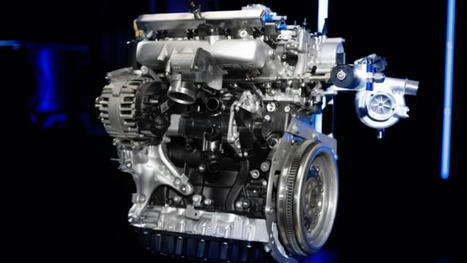
The Austrian company AVL Racetech has developed a powerful hydrogen combustion engine. It has emerged as a result of the collaboration of engineers from AVL Racetech and the HUMDA laboratory in Hungary.
The innovative hydrogen combustion engine has a novelty that makes it special: a water injection system. With this addition, the power problem traditionally linked to these types of engines is solved.
Port Fuel Injection or PFI inserts traditional water into the engine’s air intake system, preventing premature ignition that could damage the components and achieves stoichiometric combustion. Translated, this means that the resulting air-fuel ratios are more or less fixed.
The result of this exhaustive work has been a two-liter hydrogen engine that produces 410 hp and 500 Newton-meters of torque between 3,000 and 4,000 revolutions per minute, achieving a specific power density of approximately 205 hp per liter (150 kW per liter).
AVL press release on testing the motor: Via Sepp Hasslberger

Sepp Hasslberger's curator insight,
April 9, 2024 11:58 AM
An Austro/Hungarian collaboration has allowed to overcome limits of hydrogen combustion motors. Port Fuel Injection of water moderates combustion and increases motor power.
Scoop.it!

Independent Advisor Solar says there were 189,826 MCS-certified solar installations in the United Kingdom last year, up 37.5% year on year. The researchers have also identified the 10 regions with the most solar panels installations to date.
Scoop.it!

Sales of regular hybrids are up 19.5 per cent while plug-in hybrids rose 10.7%; even diesels are up 9 per cent...
Scoop.it!

The development of energy-efficient, versatile, and easy-to-install air-air heat pumps is expected to boost market growth to $58.7 B by 2033, with a CAGR of 5%...
Scoop.it!

London’s smart city progress creates a virtuous circle in which connectivity improvements promotes more business growth.
Scoop.it!

These five CPGs have introduced sustainable packaging alternatives and solutions for some of their most popular products.
Scoop.it!

EVs have experienced the biggest drop in interest of the fuel types among buyers currently planning their next purchase.JudgeService has reported that twe...
Scoop.it!

Autonomous Vehicles, News How autonomous vehicles are revolutionising slow, off-highway environments Share this page Autonomous vehicles have the potential to revolutionise industrial environments, bringing newfound levels of efficiency and productivity. From construction sites to ports, autonomous trucks are dramatically improving operational and environmental efficiencies with faster delivery times and reduced costs in both fuel expenses and labour costs. As companies continue to embrace this technology, what can be expected from autonomous vehicle workflow performance? In this blog post we will explore how process automation is aiding worker safety while spurring innovation within the industry as well as answering common questions about automated processes such as: What are some of the benefits associated with autonomously controlled vehicles working in slower environments? How does human input help enhance safe operations? We’ll take a closer look at these topics and more so that you can get all the information necessary for making informed decisions about integrating autonomous vehicle systems into your business! Overview of the autonomous vehicle industry – what are autonomous vehicles and how have they been developed over time The autonomous vehicle industry has experienced significant growth over the years. Autonomous vehicles are self-driving cars, trucks, and yard tractors that use advanced technology to control themselves. They are designed to reduce human error on the road, which is responsible for most accidents. The development of autonomous vehicles started in the 1920s, when researchers began exploring the possibility of using “radio control” to operate cars remotely. Since then, numerous advancements have been made in the industry, with autonomous trucks and yard tractors making significant strides. These vehicles are aimed at efficiently handling heavy loads over long distances and in complex and dynamic environments. With ongoing research and development, the autonomous vehicle industry is set to revolutionise the way we commute and transport goods. How can autonomous vehicles be used in slow, off-highway environments such as logistics, ports, mining, agriculture, and forestry operations The advancements in autonomous vehicle technology have paved the way for exciting applications, especially in industries such as logistics, ports, mining, agriculture, and forestry operations. Integrating autonomous vehicles in these slow, off-highway environments can provide significant benefits. With the use of this technology, mining companies can increase efficiency and safety in their operations, while agriculture and forestry companies can achieve better yields and improve worker safety. With improved navigation, these autonomous vehicles can work around the clock without the need for human operators, significantly reducing operational costs. As the technology continues to evolve, the possibilities for autonomous vehicles in these industries are endless, offering a glimpse into a more sustainable and efficient future. Benefits of using autonomous vehicles in these environments – increased productivity, improved safety, and potential cost savings Autonomous vehicles are revolutionising several industries, from transportation to logistics. The use of these vehicles is becoming increasingly popular due to their significant benefits, which include increased productivity, improved safety, and potential cost savings. By implementing autonomous vehicles, companies can streamline their operations by reducing the need for human intervention and therefore increasing efficiency. Additionally, the safety benefits of autonomous vehicles cannot be overstated. Without the need for a human driver, the risk of accidents caused by human error is eliminated. Finally, the potential cost savings come from the reduction of labor costs associated with traditional driving jobs. Overall, the introduction of autonomous vehicles in various sectors has the potential to transform the way we do business and live our lives. Examples of successful implementations of autonomous vehicles in off-highway industries In recent years, autonomous vehicles have been making waves in off-highway industries. Under the umbrella of projects 5G CAL and V-CAL, led by the North East Automotive Alliance, StreetDrone implemented its autonomous technology into a 40-tonne yard tractor to deliver parts from the operator’s sites to the Nissan car plant in Sunderland. Its abilities to work around the clock and improve safety on the job have been game changers. This has allowed for Vantec’s operations to run smoothly and efficiently, as well as keeping their workers out of harm’s way. Nissan is currently benefiting from the driverless technology, which ensures parts are being delivered 24/7 and the car plant production line never stops. This is just an example of how autonomous vehicles can provide benefits in a variety of industries beyond just consumer transportation. Challenges associated with the use of autonomous vehicles in off-highway applications The rise of autonomous vehicles has revolutionised the way people think about transportation. However, most discussions on this topic focus on highway use cases and overlook the potential challenges faced in off-highway applications. Off-road environments, such as distribution centres, construction sites, ports or mining locations, pose unique challenges to autonomous vehicles that need to be addressed. These challenges include navigating junctions, barriers, traffic lights or through uneven terrain, dealing with unpredictable weather conditions, and managing the heavy-duty equipment involved in these tasks. By addressing these challenges, we can unlock the full potential of autonomous vehicles in off-highway applications and create a more efficient and safer future for logistics, construction, and mining industries. What is the future for autonomous vehicles in off-highway industries As technology continues to advance, there is no doubt that the future of autonomous vehicles in off-highway industries is bright. These industries, which include logistics, mining, agriculture, and construction, among others, are poised to benefit greatly from the use of autonomous vehicles. With the ability to work around the clock without rest, these vehicles can greatly increase productivity and efficiency. Not only that, but they can also improve safety by performing tasks that are too dangerous for human operators. However, there are still many hurdles to clear before we see widespread adoption of autonomous vehicles in these industries. These include regulatory issues, technical challenges, and, of course, the cost of the technology. Nonetheless, the potential benefits are significant enough that it seems inevitable that autonomous vehicles will play a major role in the future of off-highway industries. All in all, autonomous vehicles are revolutionising the way slow, off-highway work is done. They can be used to increase productivity, improve safety, and potentially save costs. Successful implementations of autonomous vehicles in logistics, mining, agriculture, and forestry operations have shown how versatile and capable these machines can be. Of course, there are challenges associated with their use, such as navigational capabilities and finding ways to integrate them into existing workflows. Nevertheless, autonomous vehicles offer many promising benefits that could help these industries become safer and more efficient. With further development of the technology and a deeper understanding of its potential applications, future developments may make more jobs viable in off-highway industries while improving the speed and accuracy of tasks performed. PrevPreviousHow autonomous trucks are transforming the container shipping industry PrevPrevious About the Author Larisa Giurea Related Posts How to select the right automation technology for your distribution centre Read More » Overview of automation in distribution centres Read More » StreetDrone and Restore launch a new partnership ahead of Mental Health Awareness Week Read More » Follow Us
|





