Your new post is loading...

|
Scooped by
heather dawson
May 18, 6:18 AM
|
Three papers in Nature find that around half of social science studies hold up under replication, reproducibility, and robustness tests. Is this a bad thing
|
|
Scooped by
heather dawson
May 14, 3:09 AM
|
Lewis Eves, Gilsun Jeong, Nandor Revesz and Harrison Swinhoe found that if you ask students why they rely on AI, their answers often point to anxieties about engaging with their tutors If you ask students why they rely on AI, their answers often point to anxieties about engaging with their tutors
|
|
Scooped by
heather dawson
May 13, 3:10 AM
|
|
|
Scooped by
heather dawson
May 12, 8:33 AM
|
|
|
Scooped by
heather dawson
May 7, 9:53 AM
|
Educational NLP systems are typically evaluated using engagement metrics and satisfaction surveys, which are at best a proxy for meeting pedagogical goals. We introduce six computational metrics for automated evaluation of pedagogical alignment in student-AI dialogue. We validate our metrics through analysis of 12,650 messages across 500 conversations from four courses. Using our metrics, we identify a fundamental misalignment: educators design conversational tutors for sustained learning dialogue, but students mainly use them for answer-extraction. Deployment context is the strongest predictor of usage patterns, outweighing student preference or system design: when AI tools are optional, usage concentrates around deadlines; when integrated into course structure, students ask for solutions to verbatim assignment questions. Whole-dialogue evaluation misses these turn-by-turn patterns. Our metrics will enable researchers building educational dialogue systems to measure whether they are achieving their pedagogical goals.
|
|
Scooped by
heather dawson
May 6, 5:07 AM
|
Jisc has released a report on digital equity in transnational education, identifying considerations for institutions seeking to provide equitable digital experiences to students learning on overseas programmes. The guidance covers themes including licensing, curriculum adaptation, staff cross-cultural readiness, and infrastructure. Jisc observes that UK providers “cannot assume that curriculum journeys designed for a UK infrastructure and educational context will translate as intended within TNE environments.”
|
|
Scooped by
heather dawson
May 4, 12:05 PM
|
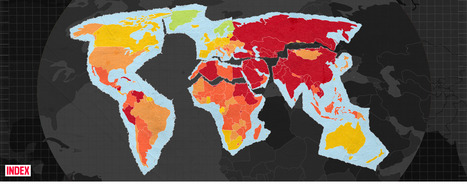
Reporters Without Borders (RSF) has released its 25th World Press Freedom Index at a time when political pressure on the press is intensifying, authoritarian tendencies are growing and the media market is heavily weakened. This year, the Index’s analysis highlights an alarming deterioration in the conditions for journalism in many parts of the world, despite some isolated improvements, as 100 out of 180 countries and territories have seen their press freedom score decline. Here is a look at the 2026 analysis, region by region.
|
|
Scooped by
heather dawson
April 28, 3:06 AM
|
Applies to England About this advice note This advice note supports awarding organisations (AOs) in understanding how the existing Conditions of Recognition[footnote 1] and related Guidance apply to the risks of malpractice arising from Learners’ use of artificial intelligence (AI) tools.
|
|
Scooped by
heather dawson
April 27, 3:56 AM
|
For David Mather, student progression may not be a proxy for wellbeing
|
|
Scooped by
heather dawson
April 23, 3:30 AM
|
Universities must scale up collaboration to deliver green economy transitions, new report warns Universities have a pivotal role to play in tackling climate change, but fragmented collaboration and disciplinary boundaries are slowing progress, according to a new Debate Paper from the Higher Education Policy Institute (HEPI), sponsored by the University of Salford. A clear and […]
|
|
Scooped by
heather dawson
April 16, 3:54 AM
|
A report from Prospects and the ISE explores how young people and employers view how AI is shaping the early careers landscape.
|
|
Scooped by
heather dawson
April 15, 8:19 AM
|
|
|
Scooped by
heather dawson
April 1, 3:31 AM
|
The British Academy has published a report into open access for long-form publications. Based on interviews with library leaders, the perspectives of academics, and qualitative data it recommends the development of a clear strategy for longform OA, sustainable funding and infrastructure, and meaningful author engagement. It found that academics in humanities, social science and arts disciplines still view green OA (for example via institutional repositories) as a “last resort” access group.
|
|
|
Scooped by
heather dawson
May 15, 4:29 AM
|
The Office for Students’ (OfS) annual financial sustainability report shows that, while higher education institutions reported a small improvement in financial performance in 2024-25, they remain under continued pressure due to volatile student recruitment patterns and rising costs.
|
|
Scooped by
heather dawson
May 13, 3:14 AM
|
The British Academy has released an update to its data-driven analysis of the geographic spread of higher education provision in the humanities, arts and social sciences. Writing for Wonkhe this morning, the British Academy’s Ruairi Cullen notes that while provision in such subjects is stable or growing in Russell Group universities, it is in decline in other providers. Traditionally high demand subjects, including business and management, sociology, and psychology saw growth only in the Russell Group last year. The real focus of the BA’s interactive maps is the geographic impact of these changes. It is no longer possible to study English literature in any part of Cumbria, while Kent and the south coast no longer has teaching in languages, philosophy, or anthropology.
|
|
Scooped by
heather dawson
May 12, 8:34 AM
|
New insights on the trends and outlook for UK transnational education in East Asia.
|
|
Scooped by
heather dawson
May 7, 10:57 AM
|
Student ratings of specialist mental health mentoring – the largest category of non-medical help (NMH) funded through the Disabled Students' Allowance – have fallen 14 percentage points over three application years, from 72 per cent rating support high quality in 2022/23 to 58 per cent in 2024/25. The figure appears in Non-medical help through DSA: students' experiences and perceived quality, an IFF Research mixed-methods study commissioned by the Department for Education (DfE), which concludes that NMH plays "a retention support function for HEPs, even though not designed as such". It also flags the absence of any NMH role tailored to ADHD, alongside evidence that students are routinely accepting online support without realising they have a regulatory right to be reallocated to another provider when their preferred mode is unavailable in their region.
|
|
Scooped by
heather dawson
May 7, 3:08 AM
|
Jisc Online surveys is a powerful, easy to use tool for creating online surveys. Run by Jisc, online surveys is used by over 300 different organisations in th
|
|
Scooped by
heather dawson
May 6, 5:04 AM
|
|
|
Scooped by
heather dawson
April 30, 3:11 AM
|
A report from the University of East London (UEL), in support of Universities UK’s Transformation and Efficiency Taskforce, covering 160 UK higher education institutions, finds some universities are generating surpluses of up to 37% with strong cash reserves, while others are running deficits of up to 28% with cash spend equivalent to a quarter of annual income.
|
|
Scooped by
heather dawson
April 28, 3:05 AM
|
We are the voice of the higher education sector in London
|
|
Scooped by
heather dawson
April 27, 3:54 AM
|
Access your digital copy of our latest white paper below Use the button below to download your free digital copy of Educating the AI generation, produced in partnership with Wonkhe. We’ll also send a copy straight to your inbox.
|
|
Scooped by
heather dawson
April 23, 3:29 AM
|
Update on disruption to education systems across Gulf Cooperation Council (GCC) countries and Iraq.
|
|
Scooped by
heather dawson
April 16, 3:52 AM
|
The Russell Group calls for international PhD students to be exempt from the International Student Levy to protect the UK's R&D talent pipeline and continue to attract global talent
|
|
Scooped by
heather dawson
April 15, 8:16 AM
|
The Lumina Foundation-Gallup State of Higher Education Study, based on a survey of nearly 4,000 associate and bachelor’s degree students, finds that 57% use AI daily or weekly for schoolwork, while just 13% say they never use it. Yet more than half of students (53%) say their institution discourages or prohibits AI use in coursework, and 52% report that at least some of their classes lack clear guidance on specific use policies. The findings point to a gap between student behavior and institutional policy — one with implications for academic integrity, teaching practices and workforce preparation.
|