Health Care & Health Politics & Infographics
4.4K views | +9 today
Health Care & Health Politics & Infographics
Your new post is loading...
Rescooped by shelbylaneMD from Social Media and Healthcare
January 7, 2014 7:07 PM
Scoop.it!

Five healthcare innovations to get excited about

Five healthcare innovations to get excited about | Health Care & Health Politics & Infographics | Scoop.it

With Canada’s aging population, the fact that about 40 percent of women could develop cancer in their lifetimes, and that heart disease and stroke are among the leading causes of death in women, it’s likely that many Canadian women will require medical treatment at some point in their lives.

Given this critical need, hospitals in Canada are quickly becoming the most innovative in the world. Many are being designed to provide patients with access to faster and better-quality care while others allow patients to take more control over their own health care needs. Here are 10 innovations you can get excited about:

1. Mobile health careSmartphones and tablets make it easy to monitor health care information on the go. Count calories, track physical activity, calculate body mass index (BMI) and ask medical questions.

Try it for yourself: Bant is an app developed in Canada that simplifies diabetes management for patients.

2. Social mediaUsed by patients to share health care information, new support sites let people connect with others undergoing similar experiences, to share advice and provide comfort and encouragement.

Try it for yourself:CancerConnection.ca allows anyone dealing, either directly or indirectly, with cancer to share their experiences and build supportive relationships.

DiabetesCareCommunity.ca is Canada’s first social network and online resource for families and friends of people with diabetes.

YoungAdultCancerCanada.ca is an online information and support resource that uses social media to connect young people diagnosed with cancer.

3. Bedside technologyHospital rooms are going high-tech with new interactive patient portals providing communication, education and entertainment—patients can contact nurses and order meals, learn more about their condition, as well as access TV shows and movies.

Toronto’s Humber River Hospital, opening in 2015, will be North America’s first fully digital hospital. Using the latest technologies to put patients and families at the centre of their care, the hospital will have online registration and electronic health records and bedside room-environment control.

4. Point-of-care diagnosticsLab tests are critical in diagnosis and monitoring of patients with acute and chronic diseases. These tests are largely done in central laboratories in hospitals or reference laboratories. Advances in point-of-care testing (PoCT) technologies allow for some of the routine tests (such as blood sugar and certain other critical tests) to be run outside of the laboratory quickly, often with just a few drops of the patient’s blood. These tests offer the convenience of fast and reliable results. PoCT programs allow for faster assessment and monitoring of patients, and improve patient care.

National Research Corporation Canada has developed a Point-of-Care app that allows health care leaders making hospital rounds to deliver real-time data and reports to other departments so patient issues are resolved quickly. This leads to a better experience for patients.

5. Virtual visitsRemote monitoring of patients allows for virtual visits to be conducted by teleconference or video conference – a specialist from across the country can examine a patient and give a diagnosis, saving the time and high cost of travel.

Try it yourself: Ontario Telemedicine Network is the world leader in telemedicine, using innovative technology to streamline health care processes, while also expanding the way knowledge is shared and how the medical community interacts with each other and with patients.


Via Plus91
No comment yet.
Scooped by shelbylaneMD
December 30, 2013 7:24 PM
Scoop.it!

Must-See TV: Health Plans Voluntarily Extend Payment Deadlines | AHIP Coverage

No comment yet.
Rescooped by shelbylaneMD from Health Supreme
December 30, 2013 7:01 PM
Scoop.it!

Fluoridation's Shocking History - Video 6min

Fluoridation's Shocking History - Video 6min | Health Care & Health Politics & Infographics | Scoop.it

How did the thought that ingesting fluoride would benefit oral and dental health actually start? Professor Paul Connett describes how and why water fluoridation started in the USA. 


He points out the flaws in the reasoning behind a push for fluoridation, and the lack of actual studies to ascertain the effects of fluoride in drinking water.


There are many concerns about continued fluoridation. Studies in countries with high natural levels of fluoride in their water find negative effects and all that is being done is to criticize the methodology of those studies...


Via Sepp Hasslberger
Sepp Hasslberger's curator insight, December 30, 2013 9:46 AM

If your water is being fluoridated, you should be concerned...

Rescooped by shelbylaneMD from Social Media and Healthcare
December 19, 2013 9:38 AM
Scoop.it!

Use of Social Media in Public Health teaching: 5 reasons why and some words of caution.

Use of Social Media in Public Health teaching: 5 reasons why and some words of caution. | Health Care & Health Politics & Infographics | Scoop.it

The use of social media has increased dramatically over the last decade.  Sites such as Facebook, Twitter, and LinkedIn have allowed the rapid communication of ideas and news around the world at fast speeds.  Recent estimates suggest that over 90% of young adults have some type of online presence, weather it is in the form of a Facebook page, and/or Twitter or LinkedIn account.  Moreover, it is estimated that over 80% of 25-34 year olds browse the World Wide Web regularly, with 50% of these accessing the Web from a mobile device.  This presents a great opportunity for educators, especially in the Public Health arena, to interact and engage students in a field that is rapidly changing and depends on timely information to make decisions, which may have a potential effect in the population as a whole.


The “theory of student involvement” (1) promotes the interaction of students’ with peers and faculty alike, in order to have the most positive academic experience while pursuing a college degree.  Hence, considering our students are changing the way they connect with each other and the “world”, we as Public Health educators, should consider utilizing some of these technologies to further engage our students and allow them to have “some control” about the information they learn and share, of course, without sacrificing the core pillars of any academic program.


Over the last year, I have become involved in the utilization of social media in the classroom, and consider there are five important components why it can be useful in any Public Health classroom:


1.      Breaking news in Public Health

Considering the importance of “time” in the management of any disease, utilizing social media to follow leading institutions such as the National Health Service in the UK, or the Center for Disease Control in the US, will keep students informed of ‘news’, which can later serve as a topic of discussion in classroom, or ‘online’, as a student can pose questions and receive immediate feedback from instructor, peers, or even the leading authorities in those organizations.  Thus, social media can be used as a way to disseminate content and course specific information.


2.      Theme specific live-chats

In an environment where allocation of traveling resources may be scarce, social media presents an opportunity for all students to virtually travel to any part of the world, while seating at their desks.  The biggest “hurdle”, if any, is to follow the right organizations.  Today, search algorithms make it easy to utilize these sites and learn more about any topic.


3.      Develop an community outside the classroom

The utilization of social media can create an “outside the classroom environment”, in which students remain engaged in a topic before, during or even after the class has ended.  Moreover, some students may be more comfortable sharing their opinions in a Social Media platform than in the classroom; hence, encouraging all students to participate in the dialogue.


4.      Interact with world-renown Public Health practitioners

Aside from meeting world-renowned practitioners at international conferences around the world, which could be very expensive for faculty and almost impossible for students, social media presents an opportunity to reach out to professionals around the world and interact with them in a “live” environment, which could enhance participation and involvement by students in any course.


5.      Meet other students/professionals in the field

Although meeting world-renown practitioners is exciting, reaching out to other professionals, or other students in the field enhances the collaborative nature of public health and encourages learning from others in the field.  Additionally, these interactions can create possibilities for internships, additional graduate and post-graduation work, and even potential jobs.


Although Social Media can be a great tool for the classroom, there are a couple of issues that need to be address for a productive implementation:


1.      Equipment needs

Unfortunately, even though students around the world commonly use Social Media often, it may be difficult for some students to actively engage in class discussions, etc., due to a lack of a mobile device.  Some may only have laptops, or even desktops, which limit the utilization of this technology.  Thus, instructors should be aware of this limitation when “requiring” its use in the Public Health classroom.


2.      Privacy

Although Internet privacy is a big issue these days, it should made clear to ALL students that professional and personal accounts should not be combined.  As young professionals, they each need to work on their “online presence” and the last thing they want to do is to meet a world-renowned epidemiologist who knows what they did Saturday night!  I believe here is where instructors need to pay more attention and have strict guidelines for proper utilization.


As social media continues to gain popularity among our society, public health instructors should consider utilizing these technologies to promote student engagement both in and outside the classroom.  These technologies could maximizing those “teachable moments” in public health, which usually occur outside of the classroom when students are going about their day and see/do something that reminds them of what they discussed in class the week before!  Personally, I think we should stop trying to analyze how and why students are currently using social media; instead, we should focus how WE want them to use it in our classrooms, so that they can become better practitioners and public health professionals.


Via Plus91

No comment yet.
Rescooped by shelbylaneMD from healthcare technology
December 17, 2013 12:43 AM
Scoop.it!

2014: the year of the empowered patient…and physician? - What’s next

2014: the year of the empowered patient…and physician? - What’s next | Health Care & Health Politics & Infographics | Scoop.it

As the healthcare industry evolves, physicians find themselves with less and less time to spend with patients. As a result, voice-enabled mHealth apps, such as AskMD and Sense.ly, are emerging to empower patients and enable them to take a more active role in their own health and well-being.


The latest estimates suggest that new physicians only have about eight minutes to spend with each patient.  Today, much of their time is being devoted to “punching below their weight.”  In other words, while time focused on patient care wanes, resources and efforts devoted to things like paperwork (albeit digital paperwork) are on the rise as physicians are forced to shoulder growing regulatory demands while also driving toward the creation of a“learning” healthcare system.


Intelligent systems have the ability to not only interact on a human level, but also understand and reason to deliver a desired outcome – such as finding and instantly playing a movie or, from a more clinical perspective, giving physicians easy access to data locked within the electronic health record (EHR).


Helping physicians make the most of their time with the patient

For physicians, intelligent systems come in the form of natural, conversational and intuitive technologies that break down IT barriers that sit between the physician and the patient – getting technology to work for doctors, rather than against them.  Intelligent systems help doctors address ever-changing technological shifts in order to get them back to the bedside practicing the art of medicine, despite increased demands on their time and resources.


Giving patients the tools to more actively engage in proactive care

In addition to streamlining administrative duties and easing the burden of the shift to digital care for physicians, we need patients to become more engaged in order to truly increase the value of care and drive down costs.  A critical component to empowering patients is arming them with intelligent systems of their own that allow them to access information on-the-go in order to gain initial insights on symptoms and care treatments so that they can make the most of the eight minutes with their physician.


more at http://whatsnext.nuance.com/2014-year-empowered-patientand-physician/


Via nrip
Shyam Kumar Chaturvedi's curator insight, December 17, 2013 1:14 AM

As the healthcare industry evolves, physicians find themselves with less and less time to spend with patients. As a result, voice-enabled mHealth apps, such as AskMD and Sense.ly, are emerging to empower patients and enable them to take a more active role in their own health and well-being.

Scooped by shelbylaneMD
November 8, 2013 2:42 PM
Scoop.it!

5 design flaws of HealthCare.gov

5 design flaws of HealthCare.gov | Health Care & Health Politics & Infographics | Scoop.it
Amid the government shutdown and partisan games plaguing Washington, D.C., and the rest of the country, something is actually happening--online signups for the Affordable Care Act. HealthCare.gov is finally open for business, but how well...
No comment yet.
Scooped by shelbylaneMD
November 8, 2013 12:01 PM
Scoop.it!

Obamacare « Jon Rappoport's Blog

Obamacare « Jon Rappoport's Blog | Health Care & Health Politics & Infographics | Scoop.it
Posts about Obamacare written by Jon Rappoport and theodorewesson
No comment yet.
Rescooped by shelbylaneMD from Digital Health
November 6, 2013 6:06 PM
Scoop.it!

The Obsession With Medical Costs Will Turn Mobile Health Apps And Devices Into A Major Growth Industry

The Obsession With Medical Costs Will Turn Mobile Health Apps And Devices Into A Major Growth Industry | Health Care & Health Politics & Infographics | Scoop.it

In the United States alone, health spending places the domestic health care industry among the five or six largest economies in the world.

To lower skyrocketing costs, consumers and the health care industry are looking at a variety of solutions. Increasingly, apps and mobile devices that allow consumers to take charge of their own treatment are seen as ways to start bringing down costs. They are taking health care out of hospitals and doctor's offices, and putting more power in consumer hands.


Via Alex Butler
Ranjit Kovilinkal's curator insight, November 16, 2013 11:16 PM

Customised healthcare solutions are the key...

Scooped by shelbylaneMD
October 31, 2013 1:06 PM
Scoop.it!

My Family Health Portrait - Welcome

My Family Health Portrait - Welcome | Health Care & Health Politics & Infographics | Scoop.it
No comment yet.
Rescooped by shelbylaneMD from Digital Health
October 30, 2013 9:52 PM
Scoop.it!

Join the largest mobile health community on Google+

Join the largest mobile health community on Google+ | Health Care & Health Politics & Infographics | Scoop.it

Via Alex Butler
Alex Butler's curator insight, October 30, 2013 11:48 AM

Mobile Health is not just the delivery of healthcare services via mobile communication devices but a revolution in patient involvement in their own health and wellness. Combined with Big Data it forms the core of 21st Century digital health

Rescooped by shelbylaneMD from FOOD? HEALTH? DISEASE? NATURAL CURES???
October 28, 2013 10:57 AM
Scoop.it!

GM Corn Poses Health Hazard

GM Corn Poses Health Hazard | Health Care & Health Politics & Infographics | Scoop.it
A study demonstrates the toxicity of genetically modified corn, which shows that it is neither sufficiently healthy nor proper to be commercialized.

Via Troy Mccomas (troy48)
No comment yet.
Scooped by shelbylaneMD
October 25, 2013 11:21 AM
Scoop.it!

The GMO Mini-Summit Broadcasts page

The GMO Mini-Summit Broadcasts page | Health Care & Health Politics & Infographics | Scoop.it
The broadcasts page for a free online summit to give you the truth about genetically engineered foods and what you can do to protect yourself, your family and
No comment yet.
Scooped by shelbylaneMD
October 23, 2013 6:23 PM
Scoop.it!

How do we know that social media is important to health care? | Pew Research Center's Internet & American Life Project

I began a recent speech at a medical school with a question that many busy clinicians might be asking: How do we know that social media is important to health care? ("Listen in. Share your wisdom.
No comment yet.
Rescooped by shelbylaneMD from Social Media and Healthcare
January 7, 2014 7:07 PM
Scoop.it!

Let's start a grassroots physician social media movement

Let's start a grassroots physician social media movement | Health Care & Health Politics & Infographics | Scoop.it

It is hard to teach an old dog new tricks.


No where is this more apparent than working to get physicians to understand the potential of social media for their practice.  The adoption of social media by doctors — even something as relatively simple as Twitter, is tough.


Face it:  Thinking that a re-tweeting of how much we want more doctors on Twitter by next year is just preaching to the social media choir.  After all, those on social media are already supporters.  How do we get physicians who are not on social media to understand its potential value to them?


This is not a simple undertaking.  Doctors are being forced to spend more computer screen time than they ever wanted to thanks to the mandatory documentation requirements of electronic medical records.  What physician also wants to spend even more time glued to a computer screen — or cell phone — texting little tidbits to Twitter, posting pictures to Facebook, or browsing Pinterest photos?


Please.


For doctors to accept social media, they have to understand its value to them.  There’s only one way I know to do that: demonstrate it to them.

Those of us who are believers have to show them a well-organized RSS feed reader containing journal articles and news reports they’re want to say up up to date with and likely read.  We have to show them how to use social media to collaborate (in near real-time) with colleagues to write an article or crowd-source a talk.  We need to show them the contacts — many who they’d recognize — you’ve made around the globe.  Show them how they can lurk and get the information they need without having to expose themselves to any potential legal issues.  We should show new graduating residents and fellows how they can stay in touch with their professors so they can continue to tap their network for answers to difficult clinical questions and get a rapid response.


And if all else fails: we must show them how they can stay in touch with their kids once they leave their homes.


Then, slowly, one-by-one, a grassroots physician social media movement can begin.  Otherwise, we’ll just be preaching to our same old physician social media circle.


Via Plus91

No comment yet.
Rescooped by shelbylaneMD from FOOD? HEALTH? DISEASE? NATURAL CURES???
December 30, 2013 7:02 PM
Scoop.it!

EXPOSED: Angelina Jolie part of a clever corporate scheme to protect BRCA gene patents (opinion) - NaturalNews.tv

EXPOSED: Angelina Jolie part of a clever corporate scheme to protect BRCA gene patents (opinion) - NaturalNews.tv | Health Care & Health Politics & Infographics | Scoop.it

Via Troy Mccomas (troy48)
No comment yet.
Rescooped by shelbylaneMD from FOOD? HEALTH? DISEASE? NATURAL CURES???
December 30, 2013 6:59 PM
Scoop.it!

How Chronic Disease Starts in the Mouth - NaturalNews.tv

How Chronic Disease Starts in the Mouth - NaturalNews.tv | Health Care & Health Politics & Infographics | Scoop.it

Via Troy Mccomas (troy48)
No comment yet.
Rescooped by shelbylaneMD from Social Media and Healthcare
December 19, 2013 8:53 AM
Scoop.it!

Digital Doctor Vs. Social Doctor

A digital and social doctor uses digital tools for effective social communications with peers, and with patients!

Via Plus91

No comment yet.
Scooped by shelbylaneMD
November 8, 2013 2:47 PM
Scoop.it!

HealthCare.gov website security was at 'high risk' before launching

HealthCare.gov website security was at 'high risk' before launching | Health Care & Health Politics & Infographics | Scoop.it
A government memorandum signed off on by Centers for Medicare & Medicaid services administrator Marilyn Tavenner reveals that she allowed HealthCare.gov to launch without final security testing.
No comment yet.
Rescooped by shelbylaneMD from Heart and Vascular Health
November 8, 2013 1:48 PM
Scoop.it!

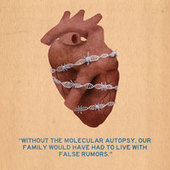
Molecular Autopsies: evaluating cause of death for young victims of Sudden Cardiac Death

Molecular Autopsies:  evaluating cause of death for young victims of Sudden Cardiac Death | Health Care & Health Politics & Infographics | Scoop.it
Each year, tens of thousands of young people worldwide die suddenly after their hearts stop beating for no apparent reason.


Up to half of sudden so-called 'autopsy negative' deaths leave grieving family members without a resolution—and without the knowledge that they, too, could be at risk for the same type of outcome. Unlike death from coronary artery disease, which leaves physical clues in the heart, many deaths from inherited rhythm disorders leave behind a heart that looks normal in every respect. Sometimes, the only telltale marks dwell in the genetic code.But what sounds like a simple solution—genetic testing of the dead—isn't so easy. Even though molecular analyses offer a plausible cause of death for up to one-third of autopsy-negative cases in people under 40, such forensic medicine is rarely performed. There's no standardized autopsy procedure in such deaths; there's no centralized database of mutations for inherited heart problems; and there's no payer reimbursement for post-mortem genetic investigations. In many countries, health insurance coverage simply ends when the heart stops beating.


Via Seth Bilazarian, MD
Seth Bilazarian, MD's curator insight, November 8, 2013 11:31 AM

The unresolved grief for families not knowing the casue of death fro loved ones who die suddenly is a real problem.  AUtopsies are not covered and done infrequently because of cost.  thsi attractive option of a "molecular autopsy" from blood taken after death seems like a good solution both for grieivng families and from a public health standpoint.

Rescooped by shelbylaneMD from SELF HEALTH + HEALING
November 6, 2013 6:10 PM
Scoop.it!

The dental diet: 10 nutrition strategies for healthy teeth

The dental diet: 10 nutrition strategies for healthy teeth | Health Care & Health Politics & Infographics | Scoop.it
Dental health is more important than most people realize. And nutrition plays a big role in this. Want to know what to eat to keep your teeth and gums strong? Chew on this.


Our teeth may be small. But they, and our gums, are a lot more important to our health than many of us realize.

Without teeth, we can’t chew. Imagine that. No more crunchy raw vegetables and fruits! No more nuts! No more peanut brittle! (Um… did I just say that?)


If our eyes are a window to the soul, our teeth and gums are a window to our bodies.


Via PAT NOVAK
No comment yet.
Rescooped by shelbylaneMD from Social Media and Healthcare
November 3, 2013 4:30 PM
Scoop.it!

CDC looks to social media for disease trends

CDC looks to social media for disease trends | Health Care & Health Politics & Infographics | Scoop.it

he Centers for Disease Control can envision a future where it uses social media as a data source for the early tracking of emerging diseases, but it's not without obstacles.


Nontraditional data sources are an increasing necessity caused by the great recent decline of public health staff at local governments, said Joanne Andreadis, senior advisor within the CDC Office of Public Health Preparedness and Response. She spoke on a panel Oct. 28 during the annual ACT-IAC Executive Leadership Conference.


There's a lot of "accurate and verifiable information that we can use, whether it's social media or crowd-sourcing," echoed James Tyson, CDC chief of situational awareness. The center would like to get to the point where the agency has not just awareness of current situations, but is able to get in front of brewing epidemics, he added.


But social media in particular isn't without risk. Self-identified location in social media is notoriously unreliable, and incidents can attract tweeting or re-tweeting from a geographically dispersed audience.

In addition, crowdsourced data is subject to distortion--the previously unassailable Google Flu Trends famously overstated the prevalence of flu in 2012.


But, there is research underway on how to use network analysis--looking at the geographic indicators of connected members of a social network--that could potentially filter out social media from people not actually in a location, said Catherine Havasi, an MIT research scientist. Google Flu Trends, she added, is based on search queries, meaning that search trends may be a reflection of worries rather than fact, she added.


Via Plus91
No comment yet.
Scooped by shelbylaneMD
October 31, 2013 12:59 PM
Scoop.it!

CDC Features - Hereditary Breast and Ovarian Cancer

CDC Features - Hereditary Breast and Ovarian Cancer | Health Care & Health Politics & Infographics | Scoop.it
Having a family history of breast and ovarian cancer affects a woman's risk for developing these diseases. Learn about hereditary risk, and whether you might benefit from cancer genetic counseling and testing.
No comment yet.
Rescooped by shelbylaneMD from FOOD? HEALTH? DISEASE? NATURAL CURES???
October 28, 2013 10:57 AM
Scoop.it!

Health Problems on Genetically Modified Foods

Health Problems on Genetically Modified Foods | Health Care & Health Politics & Infographics | Scoop.it
Jeffrey Smith, famous for his bestseller, Seeds of Deception, explains how genetically modified foods cause health problems.

Via Troy Mccomas (troy48)
No comment yet.
Rescooped by shelbylaneMD from FOOD? HEALTH? DISEASE? NATURAL CURES???
October 28, 2013 10:57 AM
Scoop.it!

Vaccines: The Toxic Truth

Learn the TRUTH about vaccination and the Big Pharma Coverup in this video compilation created by Dr. Gary Null. See all the videos in full-length at the fol...

Via Troy Mccomas (troy48)
No comment yet.
Scooped by shelbylaneMD
October 24, 2013 8:17 PM
Scoop.it!

Registration

Registration | Health Care & Health Politics & Infographics | Scoop.it
THE WORLD'S FIRST GLUTEN SUMMIT COULD CHANGE YOUR LIFE! Dr.
shelbylaneMD's insight:
The best information, from the best experts.
No comment yet.