Health Heroes addresses childhood health literacy by using comics and an online social network to make complex health information engaging and easy to ...
Via Lindsey Stafford


 Your new post is loading...
 Your new post is loading...
Your new post is loading...
 Scoop.it!
Health Heroes addresses childhood health literacy by using comics and an online social network to make complex health information engaging and easy to ... Via Lindsey Stafford 
No comment yet.
Sign up to comment
Scoop.it!

A new study by Penn researchers now suggests that omega-3, a fatty acid commonly found in fish oil, may have long-term neurodevelopmental effects that ultimately reduce antisocial and aggressive behavior problems in children.
http://www.eurekalert.org/pub_releases/2015-05/uop-prp051515.php#
Scoop.it!

"NREPP is a searchable online registry of more than 200 interventions supporting mental health promotion, substance abuse prevention, and mental health and substance abuse treatment. We connect members of the public to intervention developers so they can learn how to implement these approaches in their communities. NREPP is not an exhaustive list of interventions, and inclusion in the registry does not constitute an endorsement."
Scoop.it!
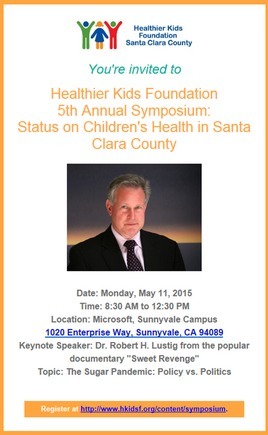
"Healthier Kids Foundation is hosting its 5th Annual Symposium on the Status of Children's Health on Monday, May 11th from 8:30 AM to 12:30 PM at Microsoft Sunnyvale Campus (1020 Enterprise Way, Sunnyvale, CA 94089). Emphasizing the importance of engaging in "Healthier Earlier" strategies, this year's Symposium will focus on the sugar pandemic. The Symposium's keynote speaker is Dr. Robert H. Lustig, MD, MSL, and Professor of Pediatrics in the Division of Endocrinology and Member of the Institute of Health Policy Studies at the University of California, San Francisco. Dr. Lustig is currently investigating the contribution of nutritional, neural, hormonal, and genetic influences in the expression of the current obesity epidemic and diabetes both in children and adults. Lustig graduated from MIT in 1976, and received his M.D. from Cornell University Medical College in 1980, and his Masters of Studies of Law from UC Hastings College of Law in 2013. Dr. Lustig is the past Chairman of the Ad hoc Obesity Task Force of The Endocrine Society, and a member of the Board of Directors of the American Heart Association of the Bay Area."...
To register, click on title above or here:
Scoop.it!

From
www

"Research suggests that approximately 25% of American children will experience at least one traumatic event by the age of 16. A child's reactions to trauma can interfere considerably with learning and/or behavior at school. However, schools also serve as a critical system of support for children who have experienced trauma.
Administrators, teachers, and staff can help reduce the impact of trauma on children by recognizing trauma responses, accommodating and responding to traumatized students within the classroom setting, and referring children to outside professionals when necessary. The National Child Traumatic Stress Network has developed tools and materials to help educators understand and respond to the specific needs of traumatized children."
http://www.nctsn.org/resources/audiences/school-personnel/trauma-toolkit
Scoop.it!

By Bob Egelko "California’s sex-education law prohibits school districts from indoctrinating students on the need to remain celibate before marriage or teaching them that abstinence is the only safe way to prevent pregnancy and sexually transmitted diseases, a judge has ruled.
The decision by Fresno County Superior Court Judge Donald Black applies only to the 40,000-student Clovis Unified School District. But as the first ruling to interpret California’s 11-year-old law on sex education and disease prevention, it should put schools on notice that “young people need complete, accurate health information required by law,” said Phyllida Burlingame, director of Reproductive Justice Policy for the American Civil Liberties Union, which took part in the suit. “This is the first time that abstinence-only-until-marriage curricula have been found to be medically inaccurate,” Burlingame said Monday. The state law requires school districts to make their sex-education programs “age-appropriate” and directs them to teach students, starting in the seventh grade, that abstinence from sex is the only sure way to prevent pregnancy and sexually transmitted diseases. But it also requires districts to provide “medically accurate information” on other methods, including all contraceptives approved by the Food and Drug Administration.
The law also requires public schools to teach students, in middle school and again in high school, about the dangers of HIV and AIDS and how they can be prevented.
A group of parents in Clovis filed suit in November 2012, saying the school district was using texts and videos that focused on abstinence and made little or no mention of contraceptives or claimed they were ineffective. One video, described in Black’s ruling, compared a woman who was not a virgin to a dirty shoe. Other videos “perpetuated sexual orientation bias,” the judge said, including one that encouraged students to adopt the mantra, “One man, one woman, one life.”
The parents dismissed their suit in February 2014 after the district changed its policies. But Black, in a ruling issued April 28, ordered the district to pay attorneys’ fees to the parents’ lawyers, saying the suit had been the catalyst that led Clovis to bring its ninth-grade courses into compliance with the law.
“Access to medically and socially appropriate sexual education is an important public right,” Black said. Burlingame, of the ACLU, said objections from students and parents have prompted other California school districts to scale back their abstinence-only policies, including Fremont in 2008."...
For full post, click on title above or here: http://www.sfgate.com/education/article/Judge-Abstinence-only-curriculum-is-not-sex-6256481.php
Scoop.it!
Advocates for Youth champions efforts that help young people make informed and responsible decisions about their reproductive and sexual health. Advocates believes it can best serve the field by boldly advocating for a more positive and realistic approach to adolescent sexual health. Advocates focuses its work on young people ages 14-25 in the U.S. and around the globe. http://www.advocatesforyouth.org/
Scoop.it!

From
ncadd
"The National Council on Alcoholism and Drug Dependence, Inc. (NCADD) provides education, information, help and hope to the public. It advocates prevention, intervention and treatment through offices in New York and Washington, and a nationwide network of Affiliates."
For main page, click on title above or here:
Scoop.it!
"It’s time to overhaul our approach to tobacco prevention. While this generation of teenagers has gotten smarter about smoking, and rates of traditional cigarette use are down, rates of e-cigarettes have tripled over the last three years.
E-cigarettes are definitely a challenge, and there are so many aspects of the subject that lend themselves to research and inquiry."...
For full post, click on title above.
Scoop.it!

"This new SHAPE America Guidance Document gives teachers, administrators, curriculum specialists and teacher trainers a detailed blueprint for designing and delivering health education that meets national, state and local standards and frameworks. Created by SHAPE America and a task force of exemplary health educators, Appropriate Practices in School-Based Health Education lists best practices for: * Creating a positive and inclusive learning environment that engages students in learning the skills they need to live healthy lives
For main page and for download access to document, click on title above or here: http://www.shapeamerica.org/publications/products/appropriatepractice_schoolhealth.cfm
Scoop.it!

By Jessica Lahey "At a recent school event, a mother asked me how she could help her son who had begun drinking and taking drugs. “There must be something I can say that will make him listen,” she implored, hoping I could help her find the magic words that would make her son face his escalating substance abuse problem.
I teach writing at an inpatient drug and alcohol rehabilitation center, so I went to the source for answers. I asked my students to write about the question, “In your most receptive, optimistic and trusting moments, was there anything that anyone could have said to you that would have affected your drug use? If so, who was that person and what could they have said to you?” Here (shared with their permission and the permission of the program) are some of their answers.
D. wrote, “We kids generally don’t want to listen to what our parents or teachers say, but I might have listened to another family member. Maybe if they said that alcohol could take control of you, or that alcohol can make you lose friends, make you push away people who care about you, and make you do things that you would be embarrassed to tell your parents about.” “If parents don’t have first-hand experience with drugs or alcohol, it’s hard for their kids to connect with them about their addiction. They need someone who knows the sadness, the loneliness, and the darkness,” wrote another. A., a particularly introspective and perceptive student, wrote that the things the adults in his life told him about drugs and alcohol made him more determined to seek them out, not less. When adults told him drugs were all bad, with no upside, he suspected he wasn’t being told the truth. “There must have been some reason they were so addictive, that so many people seemed to love them so much. It seemed like everyone was trying to hide the truth from me, like someone telling you that the chocolate pudding sucks so that they can eat more of the delicious pudding themselves. I was determined to try that pudding, to make up my own mind.” When he did try the pudding (marijuana, in his case), “It made me feel better than I had felt in so, so long. It brought back the happiness I felt before the depression, the anxiety, the panic attacks.” That initial positive experience only served to support his hunch that the adults in his life had been lying to him all along. What might have worked, continued A. in his paper, was the truth. “Show them the black, white, and the gray, otherwise they will find the truth themselves, through experience. Show them both sides of the story, and they’ll figure out that drugs aren’t worth the consequences.” A., as it turns out, was on to something. David Sheff, author of the books “Beautiful Boy,” the story of his son’s addiction, and “Clean,” about treating and preventing drug addiction, wrote in an email, “The research shows that for a conversation to make a difference, it must rely not on scare tactics — dire warnings and exaggerated fears — but facts. The goal is to get kids to think. We must acknowledge that it’s confusing and there aren’t easy or black-and-white answers. We can use a kind of motivational interviewing and get kids thinking about why they may be tempted to use — the potential benefits versus potential risks.”
Lisa Fredericksen, author of “If You Loved Me, You’d Stop! What You Really Need to Know When Your Loved One Drinks Too Much” added in an email that we must also take adolescent brain development into account in our parenting. Until their brains are fully wired for adulthood, they need help balancing their as-yet underdeveloped ability to predict the cause and effect of their actions against their natural tendency toward risk-taking and impulsiveness. “It is our job, then, to structure our teens’ lives so they have the kinds of boundaries that will help them thrive until their brains have matured enough to take full control,” Ms. Fredericksen explained.
It’s useless to tell a child who’s being bullied, or is failing in school, or is traumatized by family turmoil to just say no. It’s pointless to tell our children to ‘make good choices’ about drugs if those drugs offer a reprieve from the darkness they feel, or a connection they so badly crave to other kids. We must work to mitigate rather than add to the stress they experience before drugs present as a solution.
Mr. Sheff’s words echo the advice I’ve heard from experts in childhood anxiety, self-injury, and trauma: Listen to your children, validate their feelings, and help them develop the emotional vocabulary and coping mechanisms they so desperately need in order to navigate their lives, substance free."...
For full post, click on title above or here:
|
Scoop.it!

Exercise tones the legs, builds bigger biceps and strengthens the heart. But of all the body parts that benefit from a good workout, the brain may be the big winner.
http://www.gulf-times.com/opinion/189/details/439577/exercise-builds-brawn%26hellip-and-brain-power
Scoop.it!
Co-authored by the Alliance for Childhood, Campaign for a Commercial-Free Childhood, and Teachers Resisting Unhealthy Children’s Entertainment "This guide is designed to help educators and parents make informed decisions about whether, why, how, and when to use screen technologies with young children. Just because products are marketed as “educational” doesn’t mean they are. How do we best support children’s growth, development, and learning in a world radically changed by technology?
Now available: Spanish translation of Facing the Screen Dilemma Visit Campaign for a Commercial Free Childhood report announcement here: http://commercialfreechildhood.org/screendilemma ;
Visit main page of Alliance For Childhood here: http://www.allianceforchildhood.org
Scoop.it!

Summary of news and laws pertaining to sexting in the State of California.
http://mobilemediaguard.com/states/sexting_laws_california.html
For an example of a website that is aiming to educate youth about the illegal nature of sexting, check out:
Scoop.it!
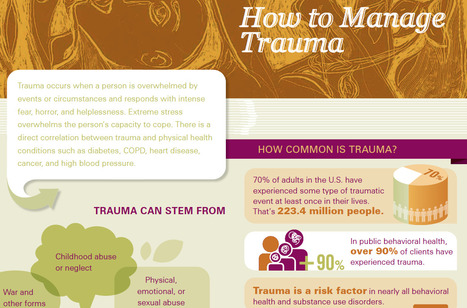
"According to SAMHSA, individual trauma results from an event, series of events, or set of circumstances that is experienced by an individual as physically or emotionally harmful or life threatening and that has lasting adverse effects on the individual’s functioning and mental, physical, social, emotional,or spiritual well-being.
http://www.integration.samhsa.gov/clinical-practice/trauma
For full infographic that is displayed in part above, click here: http://www.integration.samhsa.gov/clinical-practice/Trauma-infographic.pdf
Scoop.it!

From
www
The month highlights the importance of healthy lifestyles, being physically active, and participating in your favorite sports.
http://www.hhs.gov/blog/2015/05/01/get-moving-may-national-physical-fitness-and-sports-month.html
Scoop.it!
This video for teachers and school employees aims at raising awareness about the difficulties encountered by kids living with arthritis. These students can find it ... Via Lindsey Stafford

Lindsey Stafford's curator insight,
May 23, 2015 4:04 PM
What Educators NEED to know about Juvenile Arthritis 
Roxana Marachi, PhD's comment,
May 29, 2015 12:53 PM
Thank you for sharing this! I will include in future Health Education courses as well.
Scoop.it!

If you are concerned that someone might be self-injuring, get information for yourself about self-injury and then take initiative and ask...
Scoop.it!
"Stress. It makes your heart pound, your breathing quicken and your forehead sweat. But while stress has been made into a public health enemy, new research suggests that stress may only be bad for you if you believe that to be the case."
Scoop.it!

From
patch
"A high-quality recess program can help students feel more engaged, safer and positive about the school day, according to Stanford research.
McLaughlin’s co-authors are Rebecca London (lead author), formerly of Stanford and now a researcher at UC Santa Cruz; Lisa Westrich, a former Stanford research and policy analyst; and Katie Stokes-Guinan, a former Stanford graduate student researcher."...
For full post, click on title above or here: http://patch.com/california/unioncity/why-kids-need-recess
|