Ideo helps the budget hotel chain rethink everything from beds to mood lighting.
Via Niels Biersteker

 Your new post is loading...
 Scoop.it! Ideo helps the budget hotel chain rethink everything from beds to mood lighting. Via Niels Biersteker 
No comment yet.
Sign up to comment
Scoop.it!

Mosaert is a limited fashion line by Belgian singer Stromae, who's African roots have influenced the superb vintage-inspired art direction of the collection Via Levin Chin
Scoop.it!

Borrowing a trick from nature, engineers from the University of California at Berkeley have created an incredibly thin, chameleon-like material that can be made to change color -- on demand -- by simply applying a minute amount of force. The colors we typically see in paints, fabrics, and other natural substances occur when white, broad spectrum light strikes their surfaces. The unique chemical composition of each surface then absorbs various bands, or wavelengths of light. Those that aren't absorbed are reflected back, with shorter wavelengths giving objects a blue hue and longer wavelengths appearing redder and the entire rainbow of possible combinations in between. Changing the color of a surface, such as the leaves on the trees in autumn, requires a change in chemical make-up. Recently, engineers and scientists have been exploring another approach, one that would create designer colors without the use of chemical dyes and pigments. Rather than controlling the chemical composition of a material, it's possible to control the surface features on the tiniest of scales so they interact and reflect particular wavelengths of light. This type of "structural color" is much less common in nature, but is used by some butterflies and beetles to create a particularly iridescent display of color. Controlling light with structures rather than traditional optics is not new. In astronomy, for example, evenly spaced slits known as diffraction gratings are routinely used to direct light and spread it into its component colors. Efforts to control color with this technique, however, have proved impractical because the optical losses are simply too great. The authors of the Optica paper applied a similar principle, though with a radically different design, to achieve the color control they were looking for. In place of slits cut into a film they instead etched rows of ridges onto a single, thin layer of silicon. Rather than spreading the light into a complete rainbow, however, these ridges -- or bars -- reflect a very specific wavelength of light. By "tuning" the spaces between the bars, it's possible to select the specific color to be reflected. Unlike the slits in a diffraction grating, however, the silicon bars were extremely efficient and readily reflected the frequency of light they were tuned to. Earlier efforts to develop a flexible, color shifting surface fell short on a number of fronts. Metallic surfaces, which are easy to etch, were inefficient, reflecting only a portion of the light they received. Other surfaces were too thick, limiting their applications, or too rigid, preventing them from being flexed with sufficient control. The Berkeley researchers were able to overcome both these hurdles by forming their grating bars using a semiconductor layer of silicon approximately 120 nanometers thick. Its flexibility was imparted by embedding the silicon bars into a flexible layer of silicone. As the silicone was bent or flexed, the period of the grating spacings responded in kind. The semiconductor material also allowed the team to create a skin that was incredibly thin, perfectly flat, and easy to manufacture with the desired surface properties. This produces materials that reflect precise and very pure colors and that are highly efficient, reflecting up to 83 percent of the incoming light. Their initial design, subjected to a change in period of a mere 25 nanometers, created brilliant colors that could be shifted from green to yellow, orange, and red - across a 39-nanometer range of wavelengths. Future designs, the researchers believe, could cover a wider range of colors and reflect light with even greater efficiency. Via Dr. Stefan Gruenwald
Scoop.it!

Learn lessons in creativity from Breaking Bad. What can businesses learn for the writers? Via Creativity For Life
Scoop.it!

the editorial takes place southern california on a site that has been intricately painted in a spectrum of vibrant hues that canvas designs and motifs made of local adobe clay.
Scoop.it!

LEARNing To LEARN, the PracTICE | With ALL that mass of information which WE get on each day in OUR technology driven Digital World, with the messages from Social Media through OUR PLN (Personal [Professional] Learning Network), there is a MUST to organize OUR LEARNing! WE MUST unlearn the OLD and learn to learn differently as that was the case twenty years ago! Learn more: - https://gustmees.wordpress.com/2015/01/28/practice-learning-to-learn-example-2/ - https://gustmees.wordpress.com/2014/07/10/education-collaboration-and-coaching-the-future/ Via Gust MEES

Gust MEES's curator insight,
March 3, 2015 6:08 PM
LEARNing To LEARN, the PracTICE | With ALL that mass of information which WE get on each day in OUR technology driven Digital World, with the messages from Social Media through OUR PLN (Personal [Professional] Learning Network), there is a MUST to organize OUR LEARNing! WE MUST unlearn the OLD and learn to learn differently as that was the case twenty years ago! Learn more: - https://gustmees.wordpress.com/2015/01/28/practice-learning-to-learn-example-2/ - https://gustmees.wordpress.com/2014/07/10/education-collaboration-and-coaching-the-future/ 
Iolanda Bueno de Camargo Cortelazzo's curator insight,
March 14, 2015 10:37 AM
A new tool I will use with colleagues in the continuing teacher development program I coordinate. It will help a lot. Thanks.
Scoop.it!

Social media is often used for personal expression; to show special interests, proud moments, something informative, and personal statements. Social media accounts can be an extension of who were are. We live in a time where we can reach more people than in person. It can be tempting to tell everyone everything... Via Lauren Moss

Emily Brooker's curator insight,
June 2, 2021 1:53 AM
While not completely education-related, I found this source very interesting. I think as an educator we should be aware of the impacts of social media and if appropriate inform our students on how to conduct themselves appropriately online.

Ash Sartor's comment,
June 8, 2021 7:35 AM
I think this is such a good read! It is so important to education today's society about the impacts of social media. It is becoming more evident that it educator's need to be demonstrating good practices in their classrooms in relation to safe, legal and privacy regulations.
Scoop.it!

It’s here. Creative Boom’s recommended 110 essential resources for creative freelancers and entrepreneurs, because 100 wasn't quite enough. When w... Via Creativity For Life
Scoop.it!

Olivier Renaudin's curator insight,
March 9, 2015 4:44 AM
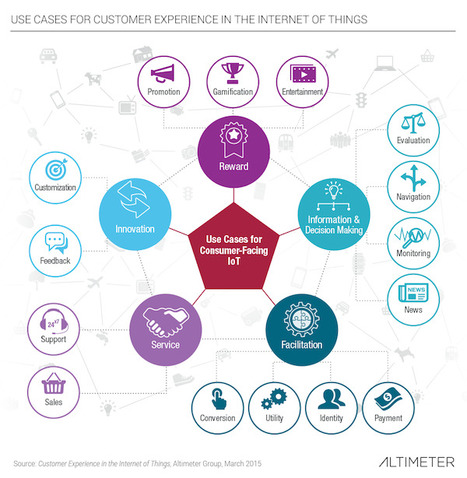
With every human expected to own some 20 or more connected devices by the year 2020, the Internet of Things (IoT) is a phenomenon brands can’t afford to ignore. 
Romain MAZUIR's curator insight,
March 9, 2015 4:35 PM
Customer Experience in the Internet of Things #H2MWP 
Birgitta Edberg's curator insight,
March 29, 2015 3:16 PM
Always easier to understand Customers Experience in infographic.
Scoop.it!

Over at the Defense Advanced Research Projects Agency, also known as DARPA, there are some pretty amazing (and often top-secret) things going on. But one notable component of a DARPA project was revealed by a Defense Department official at a recent forum, and it is the stuff of science fiction movies. According to DARPA Director Arati Prabhakar, a paralyzed woman was successfully able use her thoughts to control an F-35 and a single-engine Cessna in a flight simulator. It's just the latest advance for one woman, 55-year-old Jan Scheuermann, who has been the subject of two years of groundbreaking neurosignaling research. First, Scheuermann began by controlling a robotic arm and accomplishing tasks such as feeding herself a bar of chocolate and giving high fives and thumbs ups. Then, researchers learned that -- surprisingly -- Scheuermann was able to control both right-hand and left-hand prosthetic arms with just the left motor cortex, which is typically responsible for controlling the right-hand side. After that, Scheuermann decided she was up for a new challenge, according to Prabhakar. "Jan decided that she wanted to try flying a Joint Strike Fighter simulator," Prabhakar said, prompting laughter from the crowd at the New America Foundation's Future of War forum. "So Jan got to fly in the simulator." Unlike pilots who use the simulator technology for training, Scheuermann wasn't thinking about controlling the plane with a joystick. She thought about flying the plane itself -- and it worked. "In fact," Prabhakar noted, "for someone who's never flown -- she's not a pilot in real life -- she's in there flying a simulator directly from neurosignaling." Scheuermann has been paralyzed since 2003 because of a neurodegenerative condition. In 2012, she agreed to be fitted with two probes on the surface of her brain in the motor cortex area responsible for right hand and arm movements. In the last two years, she has tolerated those probes better than expected; as a result, she's been the subject of increasingly sophisticated experiments in conjunction with the University of Pittsburgh Medical Center and DARPA's Revolutionizing Prosthetics program, to determine just how much she can do simply by thinking about it. Via Dr. Stefan Gruenwald
Scoop.it!

What will your company’s next great product or service be? Here’s how to foster creative innovation among your staff. Via Creativity For Life
Scoop.it!

[Ed. Note: Rob Bates, is a senior editor for JCK, and blogger/writer about the diamond and jewelry industries—this post originally posted here] When we first started talking about the Apple Watch, some predicted that the highest-end model—the 18k...
Scoop.it!

The Blended and Online Assessment Taxonomy Infographic presents types of activities and grading and feedback criteria to help you plan better assessments.

Viljenka Savli (http://www2.arnes.si/~sopvsavl/)'s curator insight,
February 25, 2015 3:09 AM
A clear and useful list of activities for assessment. 
Karen Molineaux's curator insight,
February 25, 2015 8:06 PM
This is a pretty good infographic that serves as a guide when trying to decide what type of activity and grading to do when addressing Bloom's... 
Tom Stream's curator insight,
March 1, 2015 12:44 PM
As we move to more online learning opportunities, we are going to have to evaluate our evaluation tools. |
Scoop.it!

new experiences on creative thinking. The important relationship in my life is focused on avoiding changes, surprises, and unplanned events. Creative Thinking Via Creativity For Life
Scoop.it!

What did Charles Darwin, Johann Wolfgang von Goethe and Marcel Proust all have in common? Besides being creative geniuses, they shared an odd quirk: The luminaries were abnormally sensitive to noise, and often required solitude to work. Via stan stewart
Scoop.it!
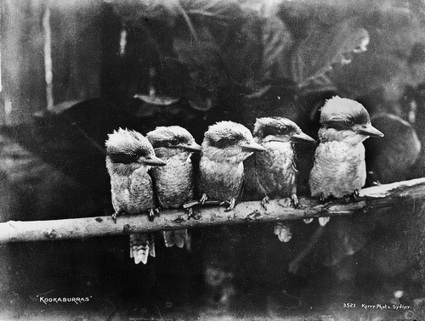
"Perfectionism is the voice of the oppressor, the enemy of the people. It will keep you cramped and insane your whole life." Via Creativity For Life
Scoop.it!

It helps that they're naturally adept at switching between separate mental tasks Via Cultural Infusion
Scoop.it!
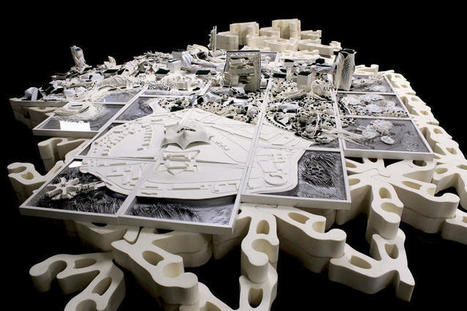
In 1939, visitors stood in line for hours to see the Futurama exhibit at the New York World's Fair, a detailed model imagining 1960s America. Complete with half a million tiny buildings and a million handmade miniature trees, it also visualized a network of highways crossing the country. And while the interstate system probably would have been built without it, it's arguable that the visualization—sponsored by GM—helped the roads happen. A new exhibit called the Future City, up now at London's Royal Institute of British Architects, looks at how drawings and models of futuristic cities can shape the cities that actually are built. "Visualizations of future cities contribute to our collective imagination," says Nick Dunn from Lancaster University "They provide us with visionary projections of how we might live. Reexamining these from a historical perspective can give us new insights and greater understanding of the developments and patterns that shape the present, and in turn, their implications for our future." Via Lauren Moss
Scoop.it!

When Showtime invited Dan Cassaro to join a design "contest" he felt amounted to milking professionals for free work, he let the network—and the world—know how he felt about it. Via Levin Chin
Scoop.it!

Mexico City-based BuBa Arquitectos proposes a vertical zoo wrapped in lush vegetation that relies on solar power, rainwater and natural ventilation. Why not take the same theories and technologies used to grow organic produce and raise animals and apply them to build more compact, more sustainable zoos? Proposed by Mexico City-based BuBa Arquitectos, the Vertical Zoo is a balanced and sustainable space where people and animals can coexist in harmony. Wrapped in lush vegetation, the star-shaped building makes use of green building strategies to reduce heat gain, encourage natural ventilation and soak up rainwater. Totally self-sufficient, the tower's aim is to be a sustainable refuge for all animal kingdom species. Via Lauren Moss
Scoop.it!

Content Curation from A to Z, a short online learning program,
Via Robin Good

Caren Taubman Glasser's curator insight,
March 6, 2015 11:43 AM
@Robin Good always has great information. Check out his online classes to learn what you need to know about content curating. 
Gonzalo Moreno's curator insight,
March 6, 2015 3:42 PM
There's always teachers, and MASTERS, like R.Good!
Scoop.it!
To celebrate the tool that has helped shape creativity, artists from all over the world contributed their most amazing dreams—and their working files with la... Via Alessandro Rea
Scoop.it!

"Terrible things happen. And those are the things that we learn from... The amazing thing is that despite all... the human spirit still mana Via Creativity For Life
Scoop.it!
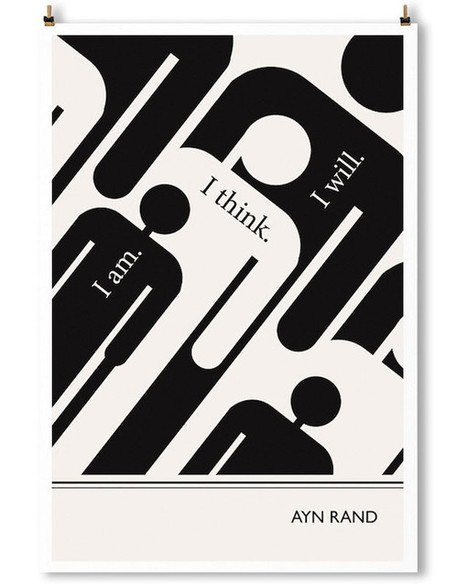
New York-based illustrator Evan Robertson from design studio Obvious State, previously featured here, has created new additions to his... Via Alessandro Rea
Scoop.it!

This article is part of Future Tense, a collaboration among Arizona State University, New America, and Slate. At noon on Wednesday, March 4, Future Tense will host an event in Washington, D.C., on technology and the future of disability.
|