Your new post is loading...

|
Rescooped by
Antonios Bouris
from Amazing Science
August 24, 2018 5:45 AM
|
Scientists have shown that water is likely to be a major component of those exoplanets (planets orbiting other stars) which are between two to four times the size of Earth. It will have implications for the search of life in our Galaxy. Scientists have shown that water is likely to be a major component of those exoplanets (planets orbiting other stars) which are between two to four times the size of Earth. It will have implications for the search of life in our Galaxy. The work is presented at the Goldschmidt conference in Boston.
Via Dr. Stefan Gruenwald
|
|
Rescooped by
Antonios Bouris
from Technology in Business Today
August 24, 2018 5:36 AM
|
AI tools in the classroom help Students with Autism
A school in Massachusetts is using artificial intelligence tools from Boston-based start-up Brain Power, which provides classrooms with technology that helps teachers keep students engaged. Thuy Ong reports.
Via TechinBiz
|
|
Rescooped by
Antonios Bouris
from Amazing Science
August 22, 2018 12:44 AM
|
Cases of measles have reached a record high in Europe this year, with more cases recorded in the first six months of 2018 than any other 12-month period this decade, according to the World Health Organization (WHO). More than 41,000 children and adults contracted measles in the European region from January to June -- almost double the number of people infected with measles for all of 2017. Last year was a record high for measles cases, with 23,927 people becoming infected in Europe that year, but numbers this year have already exceeded those figures. In 2016 there was a yearly total of 5,273 cases of measles. "The current outbreaks threaten the lives of children and adults, and put the progress that has been made so far at risk," said Dr. Mark Muscat, technical officer with the vaccine-preventable diseases and immunization program at the WHO's Regional Office for Europe. "This is an unnecessary and unacceptable tragedy when we have a safe and effective vaccine available to prevent the disease."
Via Dr. Stefan Gruenwald
|
|
Rescooped by
Antonios Bouris
from Amazing Science
August 17, 2018 5:14 AM
|
New archaeological research from The Australian National University (ANU) has found that Homo erectus, an extinct species of primitive humans, went extinct in part because they were 'lazy'. An archaeological excavation of ancient human populations in the Arabian Peninsula during the Early Stone Age, found that Homo erectus used 'least-effort strategies' for tool making and collecting resources. This 'laziness' paired with an inability to adapt to a changing climate likely played a role in the species going extinct, according to lead researcher Dr. Ceri Shipton of the ANU School of Culture, History and Language. "They really don't seem to have been pushing themselves," Dr. Shipton said. "I don't get the sense they were explorers looking over the horizon. They didn't have that same sense of wonder that we have."
Via Dr. Stefan Gruenwald
|
|
Rescooped by
Antonios Bouris
from Technology in Business Today
August 17, 2018 5:11 AM
|
Lift off in NASA's mission to "Touch the Sun"
The Parker Solar Probe was launched on Sunday in a mission to venture closer to the Sun than ever before.
Via TechinBiz
|
|
Rescooped by
Antonios Bouris
from Amazing Science
August 10, 2018 7:58 AM
|
Blood Falls is an aptly named feature in Antarctica. The 100-foot stream of water running down the side of a glacier is a deep, rich, blood red. Though we’ve known for decades what causes the red color, it took more than 100 years for scientists to discover the source of Blood Falls: a secret, ancient, underground lake. Blood Falls were first discovered by Australian explorer Griffith Taylor during an expedition in 1911. At the time, he and other explorers guessed that the red color might be caused by algae living in the water.
Via Dr. Stefan Gruenwald
|
|
Rescooped by
Antonios Bouris
from Technology in Business Today
August 10, 2018 7:46 AM
|
The Future of Roads could mean Cars not having to stop at Intersections Researchers at MIT and ETHZ have developed a working mathematical model for slot-based intersections. If successful, traffic efficiency would double and pollution would be greatly reduced.
Via TechinBiz
|
|
Rescooped by
Antonios Bouris
from Amazing Science
August 6, 2018 4:51 AM
|
The expression of a gene involved in female birds' color vision is linked to the evolution of colorful plumage in males, reports a new study from the University of Chicago. The findings, published Nov. 26 in the Proceedings of the Royal Society B, confirm the essential role of female color perception in mate selection and sexual dimorphism. "This is the first time an aspect of the visual system in birds has been directly associated with plumage evolution," said Natasha Bloch, PhD, who authored the study while a graduate student in ecology & evolution at the University of Chicago. "It tells us color perception plays an important role in the evolution of the spectacular diversity of colors we see in nature."
Via Dr. Stefan Gruenwald
|
|
Rescooped by
Antonios Bouris
from Amazing Science
August 3, 2018 6:20 AM
|
Trees are talking and sharing resources right under your feet, using a fungal network nicknamed the Wood Wide Web. CrowdScience presenter Marnie Chesterton reveals how plants use the system to support their offspring, while others hijack the network to sabotage their rivals.
Via Dr. Stefan Gruenwald
|
|
Scooped by
Antonios Bouris
July 27, 2018 6:49 AM
|
Researchers believe they have found the first existing body of liquid water on the Red Planet.
|
|
Scooped by
Antonios Bouris
July 27, 2018 6:40 AM
|
Transformative pedagogies, encourage students to be an equal and active participant in their learning. They are not limited to being passive listeners or mere receivers of information, with instructions on how to process the same. Students are expected to consciously understand their learning, the thought processes intertwined with it, while questioning, exploring, and discovering new realms of learning.
"If you’re a six-foot human standing on a paddleboard, it’s just as well you don’t know that a 60-foot, 40-ton humpback whale with 16-foot flippers is surfacing directly beneath you. The only thing more unsettling would be if there were four 60-ft., 40-ton humpback whales with 16-foot flippers doing the same. Just such a don’t-look-down moment played out off the coast of the Hawaiian island of Kauai in 2016. Ordinarily, it would have been the kind of experience that the paddleboarder—who came through unharmed—would have described to his friends with a helpless “You should’ve seen it.” As it happens though, his friends did see it, as did more than 200 million people so far on Facebook, YouTube and uncounted other websites around the world."
Via John Evans
|
|
|
Rescooped by
Antonios Bouris
from Amazing Science
August 24, 2018 5:42 AM
|
An Artificial General Intelligence (AGI) would be a machine capable of understanding the world as well as any human, and with the same capacity to learn how to carry out a huge range of tasks. AGI doesn't exist yet, but has featured in science-fiction stories for more than a century, and been popularized in modern times by films such as 2001: A Space Odyssey. Fictional depictions of AGI vary widely, although tend more towards the dystopian vision of intelligent machines eradicating or enslaving humanity, as seen in films like The Matrix or The Terminator. In such stories, AGI is often cast as either indifferent to human suffering or even bent on mankind's destruction. In contrast, utopian imaginings, such as Iain M Banks' Culture civilization novels, cast AGI as benevolent custodians, running egalitarian societies free of suffering, where inhabitants can pursue their passions and technology advances at a breathless pace. Whether these ideas would bear any resemblance to real-world AGI is unknowable since nothing of the sort has been created, or, according to many working in the field of AI, is even close to being created.
Via Dr. Stefan Gruenwald
|
|
Rescooped by
Antonios Bouris
from Amazing Science
August 22, 2018 12:46 AM
|
In remote areas of the world, everyday items like electrical outlets and batteries are luxuries. Health care workers in these areas often lack electricity to power diagnostic devices, and commercial batteries may be too expensive. Today, researchers report a new type of battery -- made of paper and fueled by bacteria -- that could overcome these challenges.
Via Dr. Stefan Gruenwald
|
|
Rescooped by
Antonios Bouris
from Amazing Science
August 17, 2018 5:16 AM
|
Barbra Streisand is not alone. At a South Korean laboratory, a once-disgraced doctor is replicating hundreds of deceased pets for the rich and famous. It’s made for more than a few questions of bioethics. The surgeon is a showman. Scrubbed in and surrounded by his surgical team, a lavalier mike clipped to his mask, he gestures broadly as he describes the C-section he is about to perform to a handful of rapt students watching from behind a plexiglass wall. Still narrating, he steps over to a steel operating table where the expectant mother is stretched out, fully anesthetized. All but her lower stomach is discreetly covered by a crisp green cloth. The surgeon makes a quick incision in her belly. His assistants tug gingerly on clamps that pull back the flaps of tissue on either side of the cut. The surgeon slips two gloved fingers inside the widening hole, then his entire hand. An EKG monitor shows the mother’s heart beating in steady pulses. Just like that the baby’s head pops out, followed by its tiny body. Nurses soak up fluids filling its mouth so the tyke can breathe. The surgeon cuts the umbilical cord. After some tender shaking, the little one moves his head and starts to cry. Looking triumphant, the surgeon holds up the newborn for the students to see—a baby boy that isn’t given a name but a number: That’s because he is a clone. One of many.
Via Dr. Stefan Gruenwald
|
|
Rescooped by
Antonios Bouris
from Technology in Business Today
August 17, 2018 5:13 AM
|
World's first commercial 3D-printed concrete homes planned
A consortium between the municipality of Eindhoven, Eindhoven University of Technology (TU/e), and three private firms is building five unique 3D-printed concrete homes in the city. Designer Rob Wolfs told Jim Drury they will be the world
Via TechinBiz
|
|
Rescooped by
Antonios Bouris
from Amazing Science
August 13, 2018 6:57 AM
|
Flying cars are being developed by companies spanning from new startups like Ehang and Pal-V, to industry giants like Airbus and Rolls-Royce. Not long ago, the idea of traveling by flying car was pure science fiction. The Jetsons made the concept famous, but turning such a machine into reality seemed like a step too far. How should they be governed? Would you need a license? Where would they land and take-off from?
Via Dr. Stefan Gruenwald
|
|
Rescooped by
Antonios Bouris
from Amazing Science
August 10, 2018 7:50 AM
|
Observations made with ESO’s Very Large Telescope have for the first time revealed the effects predicted by Einstein’s general relativity on the motion of a star passing through the extreme gravitational field near the supermassive black hole in the centre of the Milky Way. This long-sought result represents the climax of a 26-year-long observation campaign using ESO’s telescopes in Chile.
Via Dr. Stefan Gruenwald
|
|
Rescooped by
Antonios Bouris
from GRaphicARTnews
August 10, 2018 7:43 AM
|
The “Onassis Cultural Centre” is Athens’ (Greece), new cultural space hosting events of all spectrum of arts with an emphasis on contemporary cultural expression. Theatre, dance, music, visual arts, written word, to support Greek artists, to cultivate international collaborations and to educate children and people of all ages through life-long learning....
Via Mary Papaefstathiou
|
|
Rescooped by
Antonios Bouris
from Amazing Science
August 3, 2018 6:39 AM
|
Professor Ishikawa Komuro's Tokyo lab is better known for robot hands that can dribble and catch balls and spin pencils between their fingers. Now, two researchers have taken this speedy sensing tech and applied it to the ripping of paper books. Books are different from other kinds of media, like music and movies – it's very hard to get them into a computer. There is no equivalent of CD or DVD rippers like iTunes or Handbrake. This not only makes piracy laborious, it also stops you from turning your own books into e-books. This high-speed scanner changes that, at least if you have the room and tech skills to build one. By using a high-speed camera that shoots at 500 frames per second, lab workers Takashi Nakashima and Yoshihiro Watanabe can scan a 200-page book in under a minute. You just hold the book under the camera and flip through the pages as if shuffling a deck of cards. The camera records the images and uses processing power to turn the odd-shaped pictures into flat, rectangular pages on which regular OCR (optical character recognition) can be performed. The technique is unlikely to be coming to the home anytime soon (although ripping a book by flipping it in front of your notebook's webcam would be pretty awesome), but it could certainly speed up large scanning efforts like Google's book project.
Via Dr. Stefan Gruenwald
|
|
Rescooped by
Antonios Bouris
from Amazing Science
August 3, 2018 6:23 AM
|
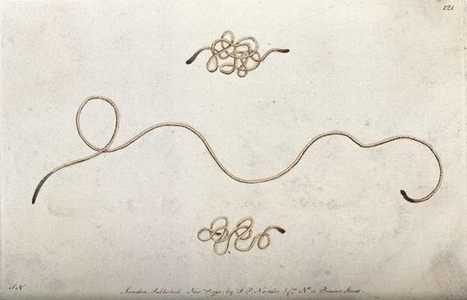
30,000 years ago, a ground squirrel burrowed out a spot for itself, about 10 inches in diameter at its widest, where it brought back seeds and other grassy and fruited plants to nibble on. The place where the squirrel chose to make its burrow is now known as Siberia, and the burrow is close to 100 feet below the surface and in a layer of permafrost. The squirrel, of course, is long gone. But tiny roundworms, a type of nematode, that also made their home there have lasted those tens of thousands of years, frozen and immobile. Now, though, scientists in Russia have revived them, making these worms—all of them female worms—the first multicellular organisms to have survived being frozen in Arctic permafrost.
Via Dr. Stefan Gruenwald
|
|
Rescooped by
Antonios Bouris
from Amazing Science
July 27, 2018 6:51 AM
|
The limits of human existence might not be as limited as we have long thought. A person's risk of death slows and even plateaus above age 105, a new study reports, challenging previous research saying there's a cutoff point past which the human life span cannot extend. Longevity pioneers lucky enough to make it past the perilous 70s, 80s and 90s could potentially live well into their 110s, if fortune remains on their side, said senior author Kenneth Wachter, a professor of demography and statistics at the University of California, Berkeley.
Via Dr. Stefan Gruenwald
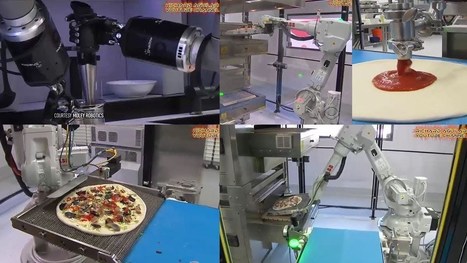
Unbelievable Robotic Automation in Restaurants! Pizza made by robot chefs.
Hungry Startup Uses Robots to Make Pizza.
Via TechinBiz
How Augmented Reality could change the Future of Surgery
If you're undergoing surgery, you want the best surgical team to collaborate on your case, no matter where they are. Surgeon and entrepreneur Nadine Hachach-Haram is developing a new system that helps surgeons operate together and train one a
Via TechinBiz
|