Your new post is loading...

|
Rescooped by
Antonios Bouris
from Amazing Science
January 7, 2019 6:39 AM
|
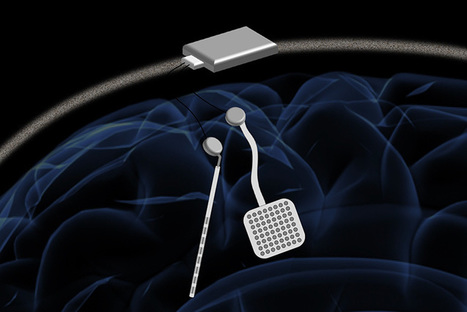
Scientists have developed a ew device which can listen to and stimulate electric current in the brain at the same time. A new neurostimulator developed by engineers at the University of California, Berkeley, can listen to and stimulate electric current in the brain at the same time, potentially delivering fine-tuned treatments to patients with diseases like epilepsy and Parkinson's. The new device, named the WAND, works like a "pacemaker for the brain," monitoring the brain's electrical activity and delivering electrical stimulation if it detects something amiss.
Via Dr. Stefan Gruenwald
|
|
Rescooped by
Antonios Bouris
from Amazing Science
January 7, 2019 6:36 AM
|
Researchers have found that neighboring cells can take over functions of damaged or missing insulin-producing cells. The discovery may lead to new treatments for diabetes. Diabetes is caused by damaged or non-existing insulin cells inability to produce insulin, a hormone that is necessary in regulating blood sugar levels. Many diabetes patients take insulin supplements to regulate these levels.
Via Dr. Stefan Gruenwald
|
|
Rescooped by
Antonios Bouris
from Amazing Science
December 31, 2018 11:07 AM
|
Scientists in China have reported a major breakthrough in the quest for nuclear fusion technology, which would harness power through the same processes that occur within stars. At the Experimental Advanced Superconducting Tokamak (EAST) reactor in Hefei, China, researchers managed to heat hydrogen within the 'artificial sun' to a temperature of more than 100 million degrees Celsius, or 212 million degrees Fahrenheit, at which point it becomes plasma. The temperatures inside EAST are actually about seven times hotter than the center of the sun, where the added pressure from gravity allows for fusion to occur. On Earth, extreme temperatures are necessary to produce nuclear fusion, which occurs when two nuclei come together to form a heavier nucleus. The fusion process releases vast amounts of heat and energy, the results of which we can see when we look up at the Sun, or any star in the night sky. The opposite of fusion is nuclear fission, which occurs when the nuclei of atoms split in a chain reaction. This process also releases extraordinary amounts of energy, and it's currently used in nuclear weapons and power plants worldwide. However, nuclear fission leaves behind dangerous radioactive waste. Nuclear fusion is relatively clean. That's partly why scientists worldwide have been racing for years to develop a safe and reliable way to produce the conditions necessary for nuclear fusion, which in theory could someday give the world a virtually limitless supply of clean energy. The recent success at EAST represents an important step toward that goal. News
Via Dr. Stefan Gruenwald
|
|
Rescooped by
Antonios Bouris
from Amazing Science
December 31, 2018 11:04 AM
|
Just like a lock can be picked, any biometric scanner can be fooled. Researchers have shown for years that the popular fingerprint sensors used to guard smartphones can be tricked sometimes, using a lifted print or a person's digitized fingerprint data. But new findings from computer scientists at New York University's Tandon School of Engineering could raise the stakes significantly.
Via Dr. Stefan Gruenwald
|
|
Rescooped by
Antonios Bouris
from Amazing Science
December 23, 2018 11:00 AM
|
Organically farmed food has a bigger climate impact than conventionally farmed food, due to the greater areas of land required. This is the finding of a new international study involving Chalmers University of Technology, Sweden, published in the journal Nature.
Via Dr. Stefan Gruenwald
|
|
Rescooped by
Antonios Bouris
from Amazing Science
December 23, 2018 10:52 AM
|
Designed by Danny Hillis, the Clock is designed to run for ten millennia with minimal maintenance and interruption. The Clock is powered by mechanical energy harvested from sunlight as well as the people that visit it. The primary materials used in the Clock are marine grade 316 stainless steel, titanium and dry running ceramic ball bearings. The entire mechanism will be installed in an underground facility in west Texas. In 02011, The American Astronomy Society published a paper co-written by Danny Hillis that describes how the Clock reckons time over its 10,000-year design lifetime.
Via Dr. Stefan Gruenwald
|
|
Scooped by
Antonios Bouris
December 14, 2018 12:11 AM
|
Augmented and virtual reality technology is still in the very early stages of development, but it's already rapidly changing how we do business and innovate.
|
|
Rescooped by
Antonios Bouris
from Amazing Science
December 13, 2018 11:55 PM
|
Over the past three decades of global warming, the oldest and thickest ice in the Arctic has declined by a stunning 95 percent, according the National Oceanic and Atmospheric Administration’s annual Arctic Report Card. The finding suggests that the sea at the top of the world has already morphed into a new and very different state, with major implications not only for creatures such as walruses and polar bears but, in the long term, perhaps for the pace of global warming itself.
Via Dr. Stefan Gruenwald
|
|
Rescooped by
Antonios Bouris
from Amazing Science
December 10, 2018 2:21 AM
|
MIT engineers have come up with a conceptual design for a system to store renewable energy, such as solar and wind power, and deliver that energy back into an electric grid on demand. The system may be designed to power a small city not just when the sun is up or the wind is high, but around the clock. The new design stores heat generated by excess electricity from solar or wind power in large tanks of white-hot molten silicon, and then converts the light from the glowing metal back into electricity when it's needed. The researchers estimate that such a system would be vastly more affordable than lithium-ion batteries, which have been proposed as a viable, though expensive, method to store renewable energy.
Via Dr. Stefan Gruenwald
|
|
Rescooped by
Antonios Bouris
from Amazing Science
December 10, 2018 2:09 AM
|
NASA Administrator Jim Bridenstine announced Thursday that nine U.S. companies will compete to deliver experiments to the lunar surface. The space agency will buy the service and let private industry work out the details on getting there, he said. The goal is to get small science and technology experiments to the surface of the moon as soon as possible. The first flight could be next year; 2019 marks the 50th anniversary of the first manned moon landing. The nine companies, representing seven states, are: - Astrobiotic Technology Inc., Pittsburgh;
- Deep Space Systems, Littleton, Colorado;
- Draper, Cambridge, Massachusetts;
- Firefly Aerospace Inc., Cedar Park, Texas;
- Intuitive Machines, Houston;
- Lockheed Martin, Littleton;
- Masten Space Systems Inc., Mojave, California;
- Moon Express, Cape Canaveral; and
- Orbit Beyond, Edison, New Jersey.
Via Alan Charky, Dr. Stefan Gruenwald
|
|
Rescooped by
Antonios Bouris
from Amazing Science
December 3, 2018 4:47 AM
|
It sounds like the plot of the world's tiniest horror movie: deep in the Ecuadorian Amazon, a newly discovered species of wasp transforms a "social" spider into a zombie-like drone that abandons its colony to do the wasp's bidding. That's the gruesome, real-life discovery by University of British Columbia researchers, who detail the first example of a manipulative relationship between a new Zatypota species wasp and a social Anelosimus eximius spider in a study published recently in Ecological Entomology. "Wasps manipulating the behaviour of spiders has been observed before, but not at a level as complex as this," said Philippe Fernandez-Fournier, lead author of the study and former master's student at UBC's department of zoology. "Not only is this wasp targeting a social species of spider but it's making it leave its colony, which it rarely does."
Via Dr. Stefan Gruenwald
|
|
Rescooped by
Antonios Bouris
from Amazing Science
November 26, 2018 4:04 AM
|
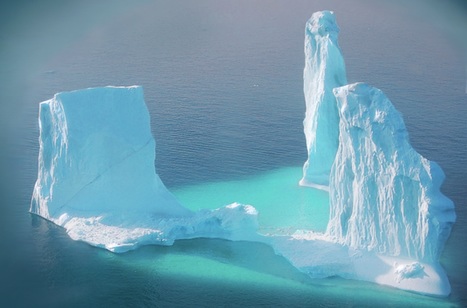
Climate change and human activity are dooming species at an unprecedented rate via a plethora of direct and indirect, often synergic, mechanisms. Among these, primary extinctions driven by environmental change could be just the tip of an enormous extinction iceberg. As our understanding of the importance of ecological interactions in shaping ecosystem identity advances, it is becoming clearer how the disappearance of consumers following the depletion of their resources — a process known as ‘co-extinction’ — is more likely the major driver of biodiversity loss.
Via Dr. Stefan Gruenwald
|
|
Rescooped by
Antonios Bouris
from Technology in Business Today
November 26, 2018 3:57 AM
|
?
Why 3D Printing is the Future of Housing
Technology has drastically changed our lives over the years. Books, movies, and music have become digitalized. Cars are becoming computerized. Smartphones we carry in our pocket are more powerful than supercomputers from the mid 90’s. However, there’s one
Via TechinBiz
|
|
|
Rescooped by
Antonios Bouris
from Technology in Business Today
January 7, 2019 6:38 AM
|
How this Modern Agriculture Technology Company is changing Farming
Indigo's CEO David Perry on how the company is changing the way plants are being farmed and consumed, and his key to success.
Via TechinBiz
|
|
Rescooped by
Antonios Bouris
from Amazing Science
January 7, 2019 6:35 AM
|
Humans are not the only animals to build elaborate housing and grow crops—or to add carbon dioxide (CO2) to the atmosphere through their industry. A new study shows that the leaf-cutter ant Atta cephalotes is also a master builder and cultivator and a significant source of greenhouse gas emissions. Found in ecosystems throughout the New World, Atta species excavate massive, several-meter-deep underground nests that include complex tunnels and chambers, exits, and entrances. The ants drag vast quantities of vegetation into the nests to feed their main food source: a fungus called Leucoagaricus gongylophorus. To maintain the proper concentrations of CO2 and oxygen belowground, the nests also feature air vents and chimney-like turrets that enhance ventilation.
Via Dr. Stefan Gruenwald
|
|
Rescooped by
Antonios Bouris
from Amazing Science
December 31, 2018 11:06 AM
|
A new theory tries to explain the mysterious phenomena that exists at the center of black holes. Black holes are among the most mysterious places in the universe; locations where the very fabric of space and time are warped so badly that not even light can escape from them. According to Einstein's theory of general relativity, at their center lies a singularity, a place where the mass of many stars is crushed into a volume with exactly zero size. However, two recent physics papers, published on Dec.10 in the journals Physical Review Letters and Physical Review D, respectively, may make scientists reconsider what we think we know about black holes. Black holes might not last forever, and it's possible that we've completely misunderstood their nature and what they look like at the center, according to the papers. [read: Stephen Hawking's Most Far-Out Ideas About Black Holes]
Via Dr. Stefan Gruenwald
|
|
Rescooped by
Antonios Bouris
from Technology in Business Today
December 31, 2018 10:56 AM
|
New Robot moves in Water, on Ice and Land
Funded by the U.S. navy, the 'Velox' robot can make novel movement through water and across ice. Dan Fastenberg reports.
Via TechinBiz
|
|
Scooped by
Antonios Bouris
December 23, 2018 10:55 AM
|
As a travelling retrospective of her work opens in Bangkok, the Ai Weiwei-approved photographer Luo Yang discusses a decade spent photographing Chinese women
|
|
Rescooped by
Antonios Bouris
from Technology in Business Today
December 23, 2018 10:48 AM
|
Not so long ago, Chinese bike-sharing firm Ofo was flush with cash and hailed as a game-changing tech startup. Today, it's struggling to stay afloat.
Via TechinBiz
|
|
Rescooped by
Antonios Bouris
from Amazing Science
December 13, 2018 11:57 PM
|
What do scientists see when comparing our future climate with the past? In less than 200 years, humans have reversed a multimillion-year cooling trend, new research suggests. If global warming continues unchecked, Earth in 2030 could resemble its former self from 3 million years ago, according to a study published Monday in the journal Proceedings of the National Academy of Sciences finds. During that ancient time, known as the mid-Pliocene epoch, temperatures were higher by about 2 to 4 degrees Celsius (3.6 to 7.2 degrees Fahrenheit) and sea levels were higher by roughly 20 meters (almost 66 feet) than today, explained Kevin D. Burke, lead author of the study and a researcher and Ph.D. candidate at the Nelson Institute for Environmental Studies at the University of Wisconsin-Madison.
Via Dr. Stefan Gruenwald
|
|
Rescooped by
Antonios Bouris
from Technology in Business Today
December 13, 2018 11:53 PM
|
Forum organisers used Boris to enliven the event, having him dance to a pop song, but a crew for Russian state television apparently thought Boris was real, and used footage of him dancing and speaking as an example of Russian technological prowess.
Via TechinBiz
|
|
Rescooped by
Antonios Bouris
from Technology in Business Today
December 10, 2018 2:17 AM
|
The first Starlink satellites are set to launch aboard a Falcon 9 on Thursday. It could be the start of a whole new way to share Elon Musk memes.
Via TechinBiz
|
|
Rescooped by
Antonios Bouris
from Amazing Science
December 3, 2018 4:48 AM
|
NASA’s InSight lander touched down on Mars on November 26 for a study of the Red Planet’s insides. “Touchdown confirmed, InSight is on the surface of Mars!” said Christine Szalai, a spacecraft engineer at NASA’s Jet Propulsion Laboratory in Pasadena, Calif., in a live broadcast from mission control. The lander sent its first picture — which mostly showed the inside of the dust cover on its camera lens — shortly after landing. The landing of InSight, short for Interior Exploration using Seismic Investigations, Geodesy and Heat Transport, brings the total number of successful NASA Mars landings to eight. InSight touched down at about 2:55 p.m. Eastern time in a wide, flat plain called Elysium Planitia, near Mars’ equator. News of the landing was relayed by a pair of tiny satellites called MarCO that travelled to Mars with InSight as an in-house communications team. Over the next Martian year (about two Earth years), InSight will use a seismometer to listen for “Marsquakes” and other seismic waves rippling through the planet (SN: 5/26/18, p. 13). The lander will also drill five meters into Mars’ surface to measure the planet’s internal heat flow, a sign of how geologically active Mars is today.
Via Dr. Stefan Gruenwald
|
|
Rescooped by
Antonios Bouris
from Amazing Science
December 3, 2018 4:42 AM
|
Landing on Jupiter’s moon Europa will be even harder than we thought due to a forbidding belt of huge ice spikes that could trap or incapacitate a spacecraft. If you want to attempt a landing on Europa, you’d better bring a repair kit. Parts of its surface may be covered in meters-long blades of ice that could make exploring Jupiter’s frigid moon a dangerous endeavour.
Via Dr. Stefan Gruenwald
|
|
Rescooped by
Antonios Bouris
from Amazing Science
November 26, 2018 4:03 AM
|
For this study, Dr Mathilda Mommersteeg and her team at the University of Oxford studied two types of Mexican tetra fish - river-dwellers that are able to self-heal their heart tissue, and cave-dwellers that cannot. The cave fish, who once lived in the rivers of Northern Mexico, were washed into caves by floodwaters about 1.5 million years ago and evolved, losing their sight and color because of living in perpetual darkness.
Via Dr. Stefan Gruenwald
|