Another genetically edited baby is due, but the world may never learn of its birth if the Chinese government decides to keep it a secret.
The Second International Summit on Human Genome Editing, held in Hong Kong last November, was meant to debate the pros and cons of genetically engineering humans. Instead, the proceedings were turned upside down by the revelation that He Jiankui, a Chinese biophysicist, had already done it. He’d gone ahead and edited the DNA of twin girls with the powerful gene modification tool called CRISPR.
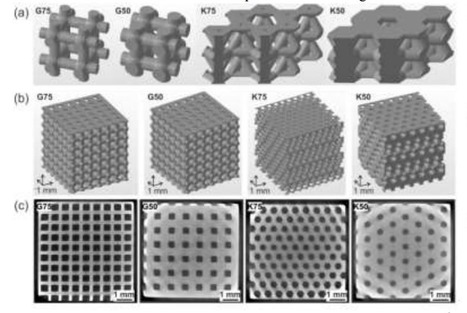
The authors are aware of the necessities in tissue engineering: the material cannot be toxic, obviously, as that would cause further health issues in a patient, biodegradability is key, with the material being absorbed along with suitable bone growth, and porosity and density must be suitable too, balanced out with proper strength.
DLP 3D printing has proven successful for creating scaffolds due to comprehensive irradiation over the whole cross-section, and shorter processing times in comparison to other processes. The researchers focused on DLP 3D printing for this study, in relation to the use of calcium phosphate structures that are not only complex and high resolution but also strong. The team assessed both rectilinear grid structure and hexagonal geometries (at 50 and 75 percent porosity) for mechanical properties, with complete chemical analyses performed before and after bioprinting.
A voice-recognition feature can be easily found on mobile phones these days. Oftentimes, we experience an incident where a speech recognition application is activated in the middle of a meeting or a conversation in the office. Sometimes, it is not activated at all regardless of numbers of times we call out the application. It is because a mobile phone uses a microphone which detects sound pressure to recognize voice, and it is easily affected by surrounding noise and other obstacles.
Professor Kilwon Cho of Chemical Engineering and Professor Yoonyoung Chung of Electronic and Electric Engineering from POSTECH successfully developed a flexible and wearable vibration responsive sensor. When this sensor is attached to a neck, it can precisely recognize voice through vibration of the neck skin and is not affected by ambient noise or the volume of sound.
Conventional vibration sensors recognize a voice through air vibration and the sensitivity decreases due to mechanical resonance and the damping effect, therefore they are not capable of measuring voices quantitatively. So, ambient sound or obstacles such as a mouth mask can affect its accuracy of voice recognition and it cannot be used for security authentication.
In this study, the research group demonstrated that the voice pressure is proportional to the acceleration of neck skin vibration at various sound pressure levels from 40 to 70 dBSPL, and they developed a vibration sensor utilizing the acceleration of skin vibration. The device, which is consists of an ultrathin polymer film and a diaphragm with tiny holes, can sense voices quantitively by measuring the acceleration of skin vibration.
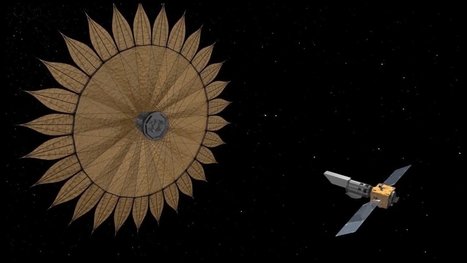
Starshade exoplanet-hunting missions may be technologically daunting, but not beyond NASA's reach. Such a mission would employ a space telescope and a separate craft flying about 25,000 miles (40,000 kilometers) ahead of it. This latter probe would be equipped with a large, flat, petaled shade designed to block starlight, potentially allowing the telescope to directly image orbiting alien worlds as small as Earth that would otherwise be lost in the glare. Instruments called coronagraphs, which have been installed on multiple ground-based and space telescopes, work on the same light-blocking principle. But coronagraphs are incorporated into the telescope itself.
Follow the Food – a new series by BBC Future and BBC World News – looks into where our food comes from and how will this change in the near future, thanks to new technologies and innovative ways of farming.
A team of researchers with the Royal Botanic Gardens in the U.K. and Stockholm University has found that plant extinctions over the past two and a half centuries have been more extensive than previous estimates suggested. In their paper published in the journal Nature Ecology and Evolution, the group describes their exhaustive study of plants and which have gone extinct, and what it might mean for future plant life.
In recent years, botanists have estimated that fewer than 150 plant species have gone extinct in modern times—most due to human activities. In this new effort, the researchers have found that the real number is closer to quadruple such estimates—they found 571 plants that have gone extinct since 1753. That was the year that famed botanist Carl Linnaeus published his Species Plantarum—a collection of all known plant species at that time.
Thirty-three years have passed after the melt-down of reactor No. 4 at the Chernobyl Nuclear Power Plant near Pripyat, Ukraine. It has resulted in the permanent evacuation of entire towns, killing thousands and creating a massive Exclusion Zone. The disaster is now back in the news thanks to HBO’s hit miniseries, “Chernobyl” and its accompanying podcast.
With a cumulative series viewership of 8 million and counting, the buzz has even caused controversy, spurring tourists to visit the overgrown corner of Ukraine, posing for selfies in front of the now-dormant shuttered nuclear plant, and at the ruins of Pripyat. There is debate as to whether the Exclusion Zone is becoming too commercialized.
The electronic beep is everywhere. When you don’t fasten your seatbelt, your car beeps. When your microwave has finished reheating your leftover Chinese takeout, it beeps. The dishwasher beeps; the smoke detector beeps; when the coffee maker turns itself off automatically, it beeps. If you misplace your iPhone, you can make it beep, by remote control.
A rover scanning the surface of Mars for evidence of life might want to check for rocks that look like pasta, researchers report in the journal Astrobiology.
The bacterium that controls the formation of such rocks on Earth is ancient and thrives in harsh environments that are similar to conditions on Mars, said University of Illinois geology professor Bruce Fouke, who led the new, NASA-funded study.
Elon Musk’s new project Neuralink has been making headlines recently, but very little is known about this mysterious company so far. So, what is Neuralink?
Back in 2015, Professor Pedram Mohseni and Rudolph J. Nudo created a startup called ‘NeuraLink’. These pair of neurotech researchers had developed a device that could potentially help people suffering from brain injuries. Investors didn’t show a great deal of interest, but in 2016 a mysterious unknown investor came along with an offer to purchase the rights to the name, Neuralink, for tens of thousands of dollars. They sold, and that investor later turned out to be multi-billionaire, Elon Musk.
What if drones and self-driving cars had the tingling “spidey senses” of Spider-Man? They might actually detect and avoid objects better, says Andres Arrieta, an assistant professor of mechanical engineering at Purdue University, because they would process sensory information faster.
Better sensing capabilities would make it possible for drones to navigate in dangerous environments and for cars to prevent accidents caused by human error. Current state-of-the-art sensor technology doesn’t process data fast enough – but nature does.
And researchers wouldn’t have to create a radioactive spider to give autonomous machines superhero sensing abilities.
Elephants are among the most intelligent animals in the world. Previous studies have found that elephants are able to recognize individual faces and that they have a unique and sophisticated set of social norms which even includes mourning. Recently scientists have discovered that elephants have their own form of rudimentary language which seems primarily designed to warn other members of their herd about potential threats.
Researchers from a collaborative team comprising scientists from Oxford University, Save the Elephants and Disney’s Animal Kingdom have been studying the noises elephants make when exposed to certain threats. The researchers found that if elephants are exposed to the sound of a human voice, specifically speaking in the language of the Samburu tribe of northern Kenya, that elephants become vigilant and emit a distinctive noise that sounds like a low rumble. Other elephants, not exposed to the human voice, reacted to the elephant alarm by running away and making the exact same rumbling noise.
When it comes to affairs of the heart, there are a variety of factors at play: mutual attraction, shared interests, an intangible spark that eventually leads to love. But in Darwinian terms, the recipe for reproduction is far more clinical, with animals seeking mates based on the potential evolutionary advantage—often superior cognition skills—offered by a match.
Now, a new study published in the journal Science suggests that female budgerigars, a species of small Australian parrots better known as budgies, employ this selective brand of logic when playing the mating game. As Nick Carne writes for Cosmos, a team of Chinese and Dutch researchers found that female budgies preferred brains over beauty and brawn. The birds would even change their selection if the previously overlooked mate learned a new trick.
Soon, you might not need anything more specialized than a readily accessible touchscreen device and any existing data sets you have access to in order to build powerful prediction tools. A new experiment from MIT and Brown Universityresearchers have added a capability to their ‘Northstar’ interactive data system that can “instantly generate machine-learning models” to use with their exiting data sets in order to generate useful predictions.
One example the researchers provide is that doctors could make use of the system to make predictions about the likelihood their patients have of contracting specific diseases based on their medial history. Or, they suggest, a business owner could use their historical sales data to develop more accurate forecasts, quickly and without a ton of manual analytics work.
Researchers are calling this feature the Northstar system’s “virtual data scientist,” (or VDS) and it sounds like it could actually replace the human equivalent, especially in settings where one would never actually be readily available or resourced anyway. Your average doctor’s office doesn’t have a dedicated data scientist headcount, for instance, and nor do most small- to medium-sized businesses for that matter. Independently owned and operated coffee shops and retailers definitely wouldn’t otherwise have access to this kind of insight.
Although it might be theoretically possible to replicate the functioning of a human brain, it is not practicable as of now. Thus, capability-wise, we are leaps and bounds away from achieving artificial general intelligence. However, time-wise, the rapid rate at which AI is developing new capabilities means that we might be get close to the inflection point when the AI research community surprises us with the development of artificial general intelligence. And experts have predicted the development of artificial intelligence to be achieved as early as by 2030. A survey of AI experts recently predicted the expected emergence of AGI or the singularity by the year 2060.
Thus, although in terms of capability, we are far from achieving artificial general intelligence, the exponential advancement of AI research may possibly culminate into the invention of artificial general intelligence within our lifetime or by the end of this century. Whether the development of AGI will be beneficial for humanity or not is still up for debate and speculation. So is the exact estimate on the time it will take for the emergence of the first real-world AGI application. But one thing is for sure -- the development of AGI will trigger a series of events and irreversible changes (good or bad) that will reshape the world and life as we know it, forever.
When we get to the inflection point of AGI replicating a human brain, will we be smart enough to know? Will a computer tell us? Will it be too late for humankind?
The world's largest maker of quantum computers, Canada's D-Wave Systems Inc., recently announced the Pegasus generation of its quantum computers, featuring 2.5 times the qubits (more than 5,000) than its predecessor, as well as the elimination of a major stumbling block to commercialization by directly connecting each of those qubits to three times as many nearby qubits as its previous generation, the Chimera. Analysts are predicting that Pegasus will advance quantum applications down the technology lifetime exponential growth curve.
A Russian biologist has told a journalist at Nature that he wants to create more gene-edited babies and will do it if he can win approval.
Who’s involved: Denis Rebrikov of the Pirogov Russian National Research Medical University in Moscow says he wants to repeat last year’s widely condemned experiment in China to create humans resistant to HIV. He believes he can do a better job.
Is this serious? Rebrikov isn’t known for his work with gene editing. A search of his publications mostly turns up reports on biomarkers of gum disease. However, last October he did author a report in which the gene-editing tool CRISPR was applied to human IVF embryos, one of just a dozen or so such experiments ever described. What’s more, his coauthors included the director of a large Russian maternity clinic, the Kulakov National Medical Research Center for Obstetrics, Gynecology, and Perinatology in Moscow. Rebikov believes Russian rules on creating gene-modified babies are unclear and says that he plans to seek approval to carry out the procedure.
Expert response: Experts say it wouldn’t be responsible to make more CRISPR babies at this time. One reason is that it is hard to know what unexpected effects altering a baby’s genes will have. The gene the Russians want to delete from embryos, CCR5, doesn’t just protect against HIV. It appears to have potential effects on cognition and life span, too. Yet some scientists will remain driven to genetically modify children, no matter what. “I think I’m crazy enough to do it,” Rebikov told Nature.
Scientists once thought that neurons, or possibly heart cells, were the oldest cells in the body. Now, Salk Institute researchers have discovered that the mouse brain, liver and pancreas contain populations of cells and proteins with extremely long lifespans -- some as old as neurons. The findings, demonstrating "age mosaicism," were published in Cell Metabolismon June 6, 2019.
The team's methods could be applied to nearly any tissue in the body to provide valuable information about lifelong function of non-dividing cells and how cells lose control over the quality and integrity of proteins and important cell structures during aging.
"We were quite surprised to find cellular structures that are essentially as old as the organism they reside in," says Salk Vice President, Chief Science Officer Martin Hetzer, senior author and professor. "This suggests even greater cellular complexity than we previously imagined and has intriguing implications for how we think about the aging of organs, such as the brain, heart and pancreas."
Most neurons in the brain do not divide during adulthood and thus experience a long lifespan and age-related decline. Yet, largely due to technical limitations, the lifespan of cells outside of the brain was difficult to determine.
"Biologists have asked -- how old are cells in an organism? There is this general idea that neurons are old, while other cells in the body are relatively young and regenerate throughout the organism's lifetime," says Rafael Arrojo e Drigo, first author and Salk staff scientist. "We set out to see if it was possible that certain organs also have cells that were as long-lived as neurons in the brain."
Since the researchers knew that most neurons are not replaced during the lifespan, they used them as an "age baseline" to compare other non-dividing cells. The team combined electron isotope labeling with a hybrid imaging method (MIMS-EM) to visualize and quantify cell and protein age and turnover in the brain, pancreas and liver in young and old rodent models.
The intuitive idea that objects influence each other because they're in physical proximity is soon to become another of those beliefs that turn out to be wrong when we look deeper.
One persistent illusion is that physical objects only interact with other objects they are close to. This is called the principle of locality. We can express this more precisely by the law that the strengths of forces between any two objects falls off quickly—at least by some power of the distance between them. This can be explained by positing that the bodies do not interact directly, but only through the mediation of a field, such as an electromagnetic field, which propagates from one body to the other. Fields spread out as they propagate, with the field lines covering a constantly greater area—providing a natural explanation for the laws that say the forces between charges and masses fall off like the square of the distance between them.
Phillips announces the sale of Artist | Icon | Inspiration: Women in Photography, an auction presented with gallerist and collector Peter Fetterman that will explore the role of women as artists, subjects, and innovators. The auction on 7 June in New York will offer approximately…
There are several components, but the real shocker is that more of us aren't embracing the current age of access to mastery of any topic. But that may not be so surprising—most of us were taught to be passive learners, to just "get through" school. It's easy to be lazy. The rewards of becoming an autodidact, though, include igniting inner fires, making new connections to knowledge and skills you already have, advancing in your career, meeting kindred spirits, and cultivating an overall zest for life and its riches.
There are several components, but the real shocker is that more of us aren't embracing the current age of access to mastery of any topic. But that may not be so surprising—most of us were taught to be passive learners, to just "get through" school. It's easy to be lazy. The rewards of becoming an autodidact, though, include igniting inner fires, making new connections to knowledge and skills you already have, advancing in your career, meeting kindred spirits, and cultivating an overall zest for life and its riches.
I've always felt 'different' because I genuinely love to learn, and most times it doesn't matter what...a combination of new experiences, new connections and new knowledge - maybe I just have a fondness for 'new'?
Distant water exoplanets might have oceans thousands of miles deep. That's in contrast to Earth's ocean, which is about 6.8 miles (about 11 km) deep at its deepest point.
Water worlds – planets or moons with global oceans – used to be considered part of science fiction, but we are starting to learn now that, not only do they exist, they might actually be fairly common.
In our own solar system, the moons Europa, Enceladus, Titan and Ganymede are known or suspected to have such oceans beneath their outer ice crust. Even Pluto is now thought to have one!
Scientists in London are using artificial intelligence to help detect bowel cancer in its early stages, by identifying cancerous growths from a live video feed of a colonoscopy. Gracie Jerome reports.
To get content containing either thought or leadership enter:
To get content containing both thought and leadership enter:
To get content containing the expression thought leadership enter:
You can enter several keywords and you can refine them whenever you want. Our suggestion engine uses more signals but entering a few keywords here will rapidly give you great content to curate.


 Your new post is loading...