Your new post is loading...

|
Scooped by
Antonios Bouris
February 9, 2020 9:09 PM
|
Having spent over 20 years working on food-poisoning lawsuits, Bill Marler simply doesn't eat certain foods anymore.
The attorney, who's litigating suits a
|
|
Rescooped by
Antonios Bouris
from Amazing Science
February 7, 2020 12:35 AM
|
When it comes to AI, Elon Musk has a name in treating it like some aliens’ attack or God. Tesla chief executive Elon Musk has warned about artificial intelligence before, tweeting that it could be more dangerous than nuclear weapons. Speaking Friday at the MIT Aeronautics and Astronautics department’s Centennial Symposium, Musk called it our biggest existential threat: - I think we should be very careful about artificial intelligence. If I were to guess like what our biggest existential threat is, it’s probably that. So we need to be very careful with the artificial intelligence. Increasingly scientists think there should be some regulatory oversight maybe at the national and international level, just to make sure that we don’t do something very foolish. With artificial intelligence we are summoning the demon. In all those stories where there’s the guy with the pentagram and the holy water, it’s like yeah he’s sure he can control the demon. Didn’t work out.
Musk was so caught up on artificial intelligence that he missed the audience’s next question. “Sorry can you repeat the question, I was just sort of thinking about the AI thing for a second,” he said. Musk spoke expansively for over an hour, at one point even asking a MIT student what his favorite sci-fi books were. He left to a standing ovation. You can watch the entire interview here.
Via Dr. Stefan Gruenwald
|
|
Rescooped by
Antonios Bouris
from Amazing Science
January 30, 2020 10:20 PM
|
CDC is closely monitoring an outbreak of respiratory illness caused by a novel (new) coronavirus (named “2019-nCoV”) that was first detected in Wuhan City, Hubei Province, China and which continues to expand. Chinese health officials have reported thousands of infections with 2019-nCoV in China, with the virus reportedly spreading from person-to-person in many parts of that country. Infections with 2019-nCoV, most of them associated with travel from Wuhan, also are being reported in a growing number of international locations, including the United States. The United States reported the first confirmed instance of person-to-person spread with this virus on January 30, 2020. Coronaviruses are a large family of RNA viruses that are common in many different species of animals, including camels, cattle, cats, and bats. Rarely, animal coronaviruses can infect people and then spread between people such as with MERS and SARS. Laboratory testing of human suspected cases of novel coronavirus (nCoV) infection (PDF)
Via Dr. Stefan Gruenwald
|
|
Rescooped by
Antonios Bouris
from Amazing Science
January 29, 2020 9:39 PM
|
One of the greatest unsolved puzzles in all of science is dark energy. The Universe isn't just expanding, but the expansion rate that we infer for distant galaxies is accelerating: their recession velocity speeds up from our perspective as time goes on. This was a surprise when it was discovered empirically in the 1990s, and more than two decades later, we still don't understand where this mysterious form of energy, the most abundant in all the Universe, comes from. While you can explain dark energy in the context of General Relativity, it's recently become fashionable to attempt to explain dark energy by modifying gravity instead. Recently, the award-winning theoretical work of Dr. Claudia de Rham has come into focus, leading The Guardian to ask, "Has physicist's gravity theory solved 'impossible' dark energy riddle?" It's a fascinating possibility, but one that demands an appropriate level of skepticism.
Via Dr. Stefan Gruenwald
Visa is buying Plaid in a deal worth $5.3 billion — roughly double the start-up’s last private valuation.
Plaid’s API software lets start-ups connect to users’ bank accounts and works with Venmo, mobile investing app Robinhood and cryptocurrency exchanges Coinbase and Gemini.
Plaid says 25% of people in the United States with bank accounts have connected to the fintech company through an app. Visa and rival Mastercard were early investors in the start-up, along with the venture arms of Goldman Sachs, Citi and American Express. Learn more / En savoir plus / Mehr erfahren: https://www.scoop.it/t/21st-century-innovative-technologies-and-developments/?&tag=Acquisitions
Via Gust MEES
|
|
Scooped by
Antonios Bouris
January 9, 2020 2:08 PM
|
How Australia has been battling bushfires during a devastating fire season.
|
|
Scooped by
Antonios Bouris
January 9, 2020 2:04 PM
|
Researchers claim to have found serious fault with the existence of dark energy, but not everyone is buying into it.
|
|
Rescooped by
Antonios Bouris
from Amazing Science
January 3, 2020 3:49 AM
|
|
|
Scooped by
Antonios Bouris
December 27, 2019 3:50 AM
|
Venus scientists convinced the team behind NASA's Parker Solar Probe to gather extra data during flybys of our neighboring world.
|
|
Rescooped by
Antonios Bouris
from Amazing Science
December 27, 2019 3:48 AM
|
Garra surinbinnani looks like a stout, brown minnow with the face of a boxer who's gone one too many rounds. The species makes its home in the fast-flowing, rocky streams of Western Thailand, a region that its namesake, the late conservationist Surin Binnan, devoted himself to protecting. At first glance, Garra surinbinnani looks like a stout, brown minnow with the face of a boxer who's gone one too many rounds. But the deep gash in its forehead studded with blue spikes is a natural feature whose function remains a mystery.
Via Dr. Stefan Gruenwald
|
|
Rescooped by
Antonios Bouris
from Amazing Science
December 18, 2019 9:18 PM
|
Described as ''living rocks'', giant land tortoises are lumbering beasts with a reputation for being sluggish in both speed and brainpower. But new research carried out by scientists from the Okinawa Institute of Science and Technology (OIST) suggests we have greatly underestimated the intelligence of these creatures, who can not only be trained but also have amazing powers of long-term recall.
Via Dr. Stefan Gruenwald
|
|
Scooped by
Antonios Bouris
December 14, 2019 7:11 AM
|
When born, to all intents and purposes they appear to be female. But when the children referred to as “Guevedoces” in an isolated village in the Dominica
|
|
|
Rescooped by
Antonios Bouris
from Amazing Science
February 7, 2020 12:45 AM
|
Researchers at Massachusetts Institute of Technology (MIT) and Qatar Computing Research Institute (QCRI) have developed a model powered by AI. The AI model is designed to tag road features in digital maps using satellite imagery. This AI-driven RoadTagger model combines a convolutional neural network (CNN) and a graph neural network (GNN) to automatically envisage the number of lanes and road types concealed by obstructions, improving GPS navigation, especially in countries with limited map data. The model helps drivers in incorporating information about parking spots, while mapping bicycle lanes that can assist cyclists to negotiate busy city streets. Providing updated information on road conditions, the RoadTagger model can also improve planning for disaster relief. Unlike other GPS navigation systems, RoadTagger makes use of an amalgamation of neural network architectures to automatically predict the number of lanes and road types, including residential or highway, even when roads can be blocked by trees or buildings. Sam Madden, a professor in the Department of Electrical Engineering and Computer Science (EECS) and a researcher in the Computer Science and AI Laboratory (CSAIL) says, “Most updated digital maps are from places that big companies care the most about. If you’re in places they don’t care about much, you’re at a disadvantage with respect to the quality of map. Our goal is to automate the process of generating high-quality digital maps, so they can be available in any country.” When testing RoadTagger on occluded roads from digital maps of 20 US cities, the model reckoned lane numbers with 77 percent accuracy and inferred road types with 93 percent accuracy. Also, the researchers are planning to enable the model to foresee other features, such as parking spots and bike lanes. The model relies on CNN and GNN, where GNNs form relationships between connected nodes in a graph, CNNs take as input raw satellite images of target roads. RoadTagger is based on an end-to-end model, meaning it is fed only raw data and automatically generates output, without human intervention. This combined architecture of CNN and GNN signifies a more human-like intuition, researchers noted.
Via Dr. Stefan Gruenwald
|
|
Rescooped by
Antonios Bouris
from Amazing Science
February 7, 2020 12:35 AM
|
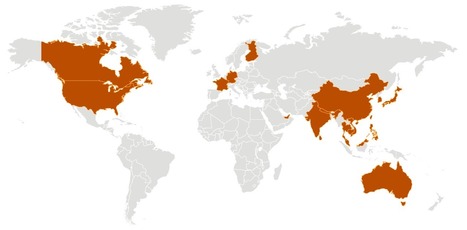
By uniting efforts, the International Brain Initiative can help shape the future of neuroscience research at a global scale. The initiative, at the time of writing, includes Japan’s Brain/Minds, Australian Brain Alliance, the EU’s Human Brain Project (HBP), Canadian Brain Research Strategy, the US’ BRAIN Initiative (BRAINI), the Korea Brain Initiative, and the China Brain Project. Few times in history has mankind ever united to solve a single goal. Even the ultimate moonshot in history—putting a man on the moon—was driven by international competition rather than unification. So it’s perhaps fitting that mankind is now uniting to understand the organ that fundamentally makes us human: our brain. First envisioned in 2016 through a series of discussions on the “grand challenges” in neuroscience at Johns Hopkins University, the International Brain Initiative (IBI) “came out” this week in a forward-looking paper in Neuron.
Via Dr. Stefan Gruenwald
|
|
Rescooped by
Antonios Bouris
from Amazing Science
January 29, 2020 9:48 PM
|
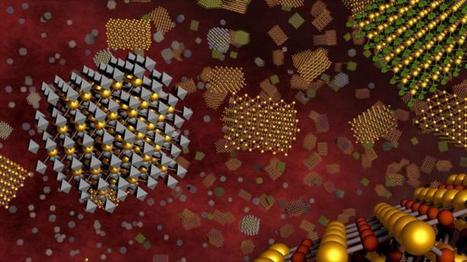
Researchers at Columbia University and University of California, San Diego, have introduced a novel "multi-messenger" approach to quantum physics that signifies a technological leap in how scientists can explore quantum materials. The findings appear in a recent article published in Nature Materials, led by A. S. McLeod, postdoctoral researcher, Columbia Nano Initiative, with co-authors Dmitri Basov and A. J. Millis at Columbia and R.A. Averitt at UC San Diego. "We have brought a technique from the inter-galactic scale down to the realm of the ultra-small," said Basov, Higgins Professor of Physics and Director of the Energy Frontier Research Center at Columbia. Equipped with multi-modal nanoscience tools we can now routinely go places no one thought would be possible as recently as five years ago."
Via Dr. Stefan Gruenwald
|
|
Rescooped by
Antonios Bouris
from Amazing Science
January 29, 2020 9:38 PM
|
This year will see a relatively low number of icebergs drifting into busy shipping regions in the north-west Atlantic, according to a combination of control systems and artificial intelligence forecasting models developed by experts at the University of Sheffield.
A recently published control systems model has been used to predict that between 479 and 1,015 icebergs will reach waters south of 48°N—the area of greatest risk to shipping traveling between Europe and north-east North America—in 2020, compared with 1,515 observed there last year.
Via Dr. Stefan Gruenwald
|
|
Rescooped by
Antonios Bouris
from Amazing Science
January 17, 2020 6:13 AM
|
Deaths from lung cancer dropped by 51 percent among men since the early 1990s and by 26 percent among women since the early 2000s. The report also credits drops in lung cancer mortality for a 2.2 percent dip from 2016 to 2017 — the largest decline of cancer deaths in a single year ever reported. Doctors attribute the success in part to lower smoking rates but also to significant advances in treatment. Major medical advances are continuing "The years we have been investing in basic science of cancer therapeutics [are] now starting to pay off," said Dr. Patrick Hwu, division head of cancer medicine at MD Anderson Cancer Center in Houston. Hwu, who was not involved with the new report, credited targeted therapies, which are drugs that work to eliminate the circuitry that turns on cancer cells. Another of the biggest advances, experts said, has been the development of immunotherapies such as Keytruda, also known as pembrolizumab. It uses the body's immune system to fight tumors, and it is approved for lung cancer and melanoma, the most dangerous form of skin cancer. The American Cancer Society report also found rapid declines in melanoma death rates, up to 7 percent a year from 2013 to 2017 among adults, also attributable to new treatments. The Food and Drug Administration approved two key drugs to treat melanoma: ipilimumab and vemurafenib. "We're actually seeing the effect of those drugs reflected in the overall melanoma death rate," said Rebecca Siegel, scientific director of surveillance research at the American Cancer Society and an author of the new report. "That's really exciting." Physicians are seeing it in practice, as well. "In the past decade, how we treat invasive melanoma has evolved so unbelievably rapidly that it is, for some, becoming more of a chronic disease than a death sentence," said Dr. Adam Friedman, a professor of dermatology at the George Washington School of Medicine and Health Sciences in Washington, D.C.
Via Dr. Stefan Gruenwald
|
|
Rescooped by
Antonios Bouris
from Amazing Science
January 17, 2020 5:47 AM
|
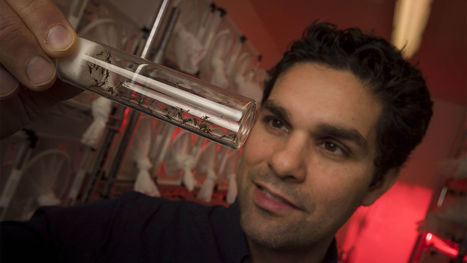
Recover from dengue once, and you’re not necessarily free and clear. The mosquito-borne disease marked by fever, rash, and debilitating pain results from any of four genetically distinct versions of the dengue virus. Previously infected people who get hit with a second of these “serotypes” can face more severe, even life-threatening symptoms. Now, by endowing a line of mosquitoes with an antibody against the virus, researchers have for the first time made insects that—at least in lab tests—appear unable to spread any form of the disease. In theory, these mosquitoes could be released into the wild to suppress the circulation of the virus. “This is right on the money,” says Alexander Franz, a biologist at the University of Missouri, Columbia, who studies insect-borne viruses. “This is what you need to do if you really want to have a strong effect on dengue prevalence.”
Via Dr. Stefan Gruenwald
|
|
Rescooped by
Antonios Bouris
from Amazing Science
January 9, 2020 2:06 PM
|
Deforestation in Brazil's Amazon in November surged by 104 percent compared to the same month in 2018, according to official data. The 563 square kilometers (217 square miles) deforested that month is also the highest number for any November since 2015, according to Brazil's National Institute for Space Research (INPE), which provides official data on deforestation. That is considered a significant increase, particularly during the rainy season, when deforestation generally slows. For the first 11 months of the year—also the first months in office of Jair Bolsonaro, a far-right leader who has eased restrictions on exploiting the Amazon's vast riches—deforestation totaled 8,974.3 square kilometers. That is nearly twice the 4,878.7 square kilometers reported for the first 11 months of 2018. The data was collected by the satellite-based DETER system, which monitors deforestation in real time. Another satellite-based system used by the INPE known as PRODES, considered more reliable but slower to compile data, reported in late November that in the 12 months beginning August 2018, deforestation of the Brazilian Amazon had passed the 10,000 square kilometer threshold for the first time since 2008. That represented a 43 percent increase from the preceding 12-month period. Deforestation in indigenous areas rose even faster, by 74.5 percent from the preceding period, INPE reported.
Via Dr. Stefan Gruenwald
|
|
Scooped by
Antonios Bouris
January 3, 2020 3:56 AM
|
Water appears both common and unexpectedly scarce in exoplanets — many distant worlds have it, but less of it than predicted, a new study finds.
Israeli scientists say a new study has shown that a small molecule called PJ34 has triggered the self-destruction of human pancreatic cancer cells in mice. According to the research, published in the peer-reviewed open-access biomedical journal Oncotarget, the administration of the molecule reduced the number of cancer cells in developed tumors by up to 90 percent in 30 days.
The study was led by Professor Malka Cohen-Armon and her team at Tel Aviv University’s Sackler Faculty of Medicine, in collaboration with Dr. Talia Golan and her team at the Cancer Research Center at Sheba Medical Center, and conducted with transplantations of human pancreatic cancer cells into immunocompromised mice, or xenografts. Learn more / En savoir plus / Mehr erfahren: https://www.scoop.it/t/21st-century-innovative-technologies-and-developments/?&tag=Cancer
Via Gust MEES
|
|
Scooped by
Antonios Bouris
December 27, 2019 3:49 AM
|
The moon crossed the face of the in a dazzling "ring of fire" solar eclipse Thursday (Dec. 26) to the delight of potentially millions of spectators around the world. Even astronauts in space marveled at the view.
|
|
Scooped by
Antonios Bouris
December 18, 2019 9:32 PM
|
China’s farside rover, Yutu 2, has broken the longevity record for working on the surface of the moon.
|
|
Scooped by
Antonios Bouris
December 18, 2019 9:14 PM
|
An introduction to Google’s new data visualization guidelines
|