Your new post is loading...

|
Rescooped by
Antonios Bouris
from Amazing Science
September 18, 2020 4:37 AM
|
Measurements of trace gases in planetary atmospheres help us explore chemical conditions different to those on Earth. Our nearest neighbor planet, Venus, has clouds that are temperate but hyperacidic. Here we report the apparent presence of phosphine (PH3) gas in Venus’s atmosphere, where any phosphorus should be in oxidized forms. Single-line millimeter-waveband spectral detections (quality up to ~15σ) from the JCMT and ALMA telescopes have no other plausible identification.
Via Dr. Stefan Gruenwald
|
|
Scooped by
Antonios Bouris
September 18, 2020 4:34 AM
|
A chemical you've likely never heard of has burst into the news thanks to scientists' announcement that they have detected phosphine, which they say may be a sign of life, in the clouds of Venus. Here's everything you need to know about phosphine, the strange chemical detected in the atmosphere of Venus.
|
|
Rescooped by
Antonios Bouris
from Amazing Science
September 11, 2020 5:04 AM
|
By detecting subtle differences in the way that Alzheimer’s sufferers use language, researchers at Stevens Institute of Technology have developed an A.I. algorithm that promises to accurately diagnose Alzheimer’s without the need for expensive scans or in-person testing. The software not only can diagnose Alzheimer’s, at negligible cost, with more than 95 percent accuracy, but is also capable of explaining its conclusions, allowing physicians to double check the accuracy of its diagnosis.
Via Dr. Stefan Gruenwald
|
|
Rescooped by
Antonios Bouris
from Amazing Science
September 4, 2020 3:04 AM
|
In ten years artificially intelligent robots will be living and working with us, according to Dr. Mark Sagar, CEO of Soul Machines, an Auckland, New Zealand-based company that develops intelligent, emotionally responsive avatars. Sagar, an AI engineer, is the inventor of a virtual nervous system that powers autonomous animated avatars like Baby X — a virtual infant that learns through experience and can “feel” emotions. “We are creating realistic adult avatars serving as virtual assistants. You can use them to plug into existing systems like IBM Watson or Cortana — putting a face on a chatbot,” said Sagar. Within a decade humans will be interacting with lifelike emotionally-responsive AI robots, very similar to the premise of the the HBO hit series Westworld, said Sagar. But before that scenario becomes a reality robotics will have to catch up to AI technology. “Robotics technology is not really at the level of control that’s required,” he said.
Via Dr. Stefan Gruenwald
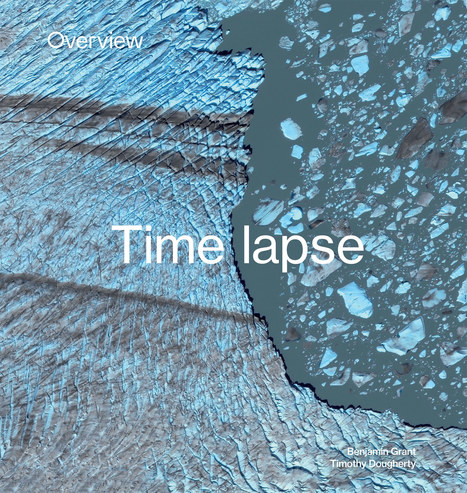
In a follow-up to the 2016 book Overview featuring stunning imagery of the Earth from above, Overview Timelapse: How We Change the Earth takes a critical look at the numerous ways humans have completely altered the surface of our planet in a very short time through urban development, climate change,
Via ECAL Library
The winning shots from the renowned Bird Photographer of the Year contest capture the mundane moments and extraordinary adventures of our avian neighbors. From a sleepy owl camouflaged by tree bark to a lurching great crested grebe, the stunning birds shown here were chosen out of more than 15,000 e
Via ECAL Library
|
|
Rescooped by
Antonios Bouris
from COMPARE RISK COMMUNICATION
August 28, 2020 10:13 PM
|
After SARS, the government outlined ways the N95 needed to improve. The new Octo Safety Device fixes most of those issues.
Via Emilio Mordini
|
|
Rescooped by
Antonios Bouris
from Technology in Business Today
August 28, 2020 10:12 PM
|
Technology News
Blazing fast 5G speeds are here but they aren't all that useful on the new 5G smartphones. WSJ's Joanna Stern packed up a motor home to see if the connection could power all her connected gadgets, including laptops, printers, Xboxes and camera-equipped doorbells.
Credit Wall St
Via TechinBiz
|
|
Scooped by
Antonios Bouris
August 23, 2020 10:38 PM
|
Physna is launching a search engine for 3D models. It's a first step toward digitally indexing the physical world.
|
|
Rescooped by
Antonios Bouris
from Amazing Science
August 22, 2020 3:55 AM
|
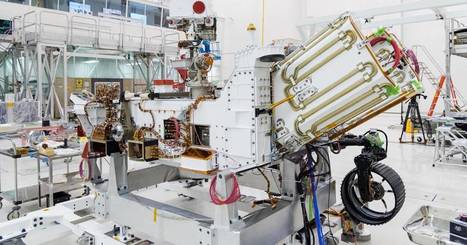
NASA new Mars rover, Perseverance, is on a mission to search for signs of ancient life on the Red Planet. It’s the agency’s largest and most autonomous Martian explorer yet. It’s also the first to be powered entirely with American plutonium.
At the heart of Perseverance is a small “nuclear battery” the size of a beer keg called a radioisotope thermoelectric generator, or RTG. Unlike the nuclear reactors that create electricity on Earth, RTGs don’t have to initiate or sustain a fission reaction to generate power. They don’t even have any moving parts. Instead, they passively harvest the natural heat produced by the decay of plutonium-238 and convert it into electricity. They can reliably provide energy and heat to a spacecraft for decades—the two plutonium-powered Voyager probes launched in the late 1970s are still transmitting from interstellar space—and have been NASA’s go-to power source for more than two dozen deep-space missions.
Via Dr. Stefan Gruenwald
|
|
Scooped by
Antonios Bouris
August 22, 2020 2:12 AM
|
Engineering firm Furrion has built a four-legged exo-suit, a 9,000 pound monstrosity straight out of "Pacific Rim" — and it wants you to pilot it.
|
|
Scooped by
Antonios Bouris
August 6, 2020 4:00 AM
|
‘Being a conductor is hard. It doesn’t get any easier,’ Sir Simon Rattle once said. However, there are a few tips and tricks that can help you along the way. Here’s what the world’s greatest maestros had to say…
|
|
Scooped by
Antonios Bouris
August 5, 2020 2:28 AM
|
The explosion in Beirut shows mushroom clouds don't just appear after nuclear detonations. Physics explains why the blast produced the menacing mushroom shape.
|
(CNN)A Japanese company has announced the successful test drive of a flying car.
Sky Drive Inc. conducted the public demonstration on August 25, the company said in a news release, at the Toyota Test Field, one of the largest in Japan and home to the car company's development base. It was the first public demonstration for a flying car in Japanese history.
The car, named SD-03, manned with a pilot, took off and circled the field for about four minutes.
"We are extremely excited to have achieved Japan's first-ever manned flight of a flying car in the two years since we founded SkyDrive... with the goal of commercializing such aircraft," CEO Tomohiro Fukuzawa said in a statement.
Via Gust MEES
|
|
Rescooped by
Antonios Bouris
from Amazing Science
September 11, 2020 5:05 AM
|
Using a new machine-learning algorithm, MIT researchers have identified a powerful antibiotic that can kill a wide range of species of pathogenic bacteria, including some that are resistant to all known antibiotics. The computer model, which can screen more than a hundred million chemical compounds in a matter of days, is designed to pick out potential antibiotics that kill bacteria using different mechanisms than those of existing drugs. "We wanted to develop a platform that would allow us to harness the power of artificial intelligence to usher in a new age of antibiotic drug discovery," says James Collins, the Termeer Professor of Medical Engineering and Science in MIT's Institute for Medical Engineering and Science (IMES) and Department of Biological Engineering. "Our approach revealed this amazing molecule which is arguably one of the more powerful antibiotics that has been discovered."
Via Dr. Stefan Gruenwald
|
|
Rescooped by
Antonios Bouris
from Amazing Science
September 11, 2020 5:02 AM
|
Artificial skin reacts to pain just like real skin, opening the way to better prosthetics, smarter robotics and less invasive options for skin grafts. Researchers have developed electronic artificial skin that reacts to pain just like real skin, opening the way to better prosthetics, smarter robotics and non-invasive alternatives to skin grafts. The prototype device developed by a team at RMIT University in Melbourne, Australia, can electronically replicate the way human skin senses pain. The device mimics the body's near-instant feedback response and can react to painful sensations with the same lighting speed that nerve signals travel to the brain.
Via Dr. Stefan Gruenwald
|
|
Rescooped by
Antonios Bouris
from Amazing Science
September 4, 2020 3:02 AM
|
Elon Musk demonstrated a working Neuralink brain-machine interface device implanted on a pig during a live broadcast. He said the purpose of the presentation was to recruit employees that would like to help develop the system. – “We’re not trying to raise money or do anything else, but the main purpose is to convince great people to come work at Neuralink, and help us bring the product to fruition; make it affordable and reliable and such that anyone who wants one can have one,” he said. Neuralink aims to solve brain-related issues with the brain chip called ‘Link’. Musk said the device could help solve memory loss, strokes, addiction, depression, anxiety, even monitor a users’ health to warn if they are about to have a heart attack. The interface could also help return mobility to paralyzed individuals through artificial limbs. The user would be able to move prosthetics with their thoughts via the Link brain-machine interface.
Via Dr. Stefan Gruenwald
|
|
Scooped by
Antonios Bouris
September 4, 2020 2:44 AM
|
India's fantastical trucks look like they just rolled out of Alice in Wonderland. But this isn't just about pure aesthetics -- it's a shrewd business move.
|
|
Scooped by
Antonios Bouris
September 3, 2020 1:59 AM
|
Schools across the US are using Edgenuity, an online learning platform that offers virtual classes for students. Some classes involve short-answer questions that are graded by an AI — and some students have figured out how to game it.
|
|
Rescooped by
Antonios Bouris
from Technology in Business Today
August 28, 2020 10:13 PM
|
Future Homes
With the evolution of clouds, IoT, and new technologies, the smart home setup became more sophisticated than ever.
Credit Interesting Engineering
Via TechinBiz
|
|
Scooped by
Antonios Bouris
August 23, 2020 11:17 PM
|
The Chief Executive Officer of SpaceX and Tesla, Elon Musk, founded Neuralink, a company that is developing a brain-machine interface that could one day restore a variety of brain-related issues, including restoring eyesight and limb functionality, solve memory loss, even cure depression via a brain chip implant. Musk
|
|
Rescooped by
Antonios Bouris
from Amazing Science
August 22, 2020 3:56 AM
|
A new deepfake art installation reimagines the story of the moon landings, revealing threats to both democracy and history, It has been 50 years since man set foot on the moon - a moment of triumph, technology and staggering engineering. But what if things hadn't gone to plan? At the time of the landing, then US president Richard Nixon had prepared a statement to read in case things went wrong, and astronauts Neil Armstrong or Buzz Aldrin were left stranded on the lunar surface. Decades later, a new art installation has used the latest deepfake technology to reimagine the story of the moon landing. The undelivered speech, written by presidential speechwriter William Safire, was stored in the National Archives and finally made public in 1999 during the 30th anniversary of the Apollo 11 landing. “In Event of Moon Disaster’’, which opened Friday at the International Documentary Festival (IDFA) in Amsterdam, was produced at the MIT Center for Advanced Virtuality and directed by Francesca Panetta, the centre’s creative director, and Halsey Burgund, an MIT research affiliate.
Via Dr. Stefan Gruenwald
|
|
Rescooped by
Antonios Bouris
from Technology in Business Today
August 22, 2020 3:54 AM
|
Future Robotics
AMAZING ROBOTIC FARMING THAT YOU NEED TO KNOW| MODERN AGRICULTURE ROBOTS
Credit PUNEETH ROBOTICS
Via TechinBiz
|
|
Rescooped by
Antonios Bouris
from COMPARE RISK COMMUNICATION
August 15, 2020 12:17 AM
|
A rare peek into the bone marrow after vaccination shows key antibodymaking cells have a short life span
Via Emilio Mordini
|
|
Scooped by
Antonios Bouris
August 6, 2020 3:59 AM
|
Biology explains why “the first ones who need the masks are pregnant women” The researchers found that pregnant or immediately postpartum women with COVID-19 were nearly six times as likely to land in ICUs as their nonpregnant, COVID-19–infected peers.
|