Your new post is loading...

|
Rescooped by
Antonios Bouris
from Amazing Science
August 1, 2021 2:40 AM
|
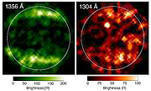
For the first time, astronomers have uncovered evidence of water vapor in the atmosphere of Jupiter's moon Ganymede. This water vapor forms when ice from the moon's surface sublimates—that is, turns from solid to gas. Scientists used new and archival datasets from NASA's Hubble Space Telescope to make the discovery, published in the journal Nature Astronomy. Previous research has offered circumstantial evidence that Ganymede, the largest moon in the solar system, contains more water than all of Earth's oceans. However, temperatures there are so cold that water on the surface is frozen solid. Ganymede's ocean would reside roughly 100 miles below the crust; therefore, the water vapor would not represent the evaporation of this ocean. Astronomers re-examined Hubble observations from the last two decades to find this evidence of water vapor.
Read the full article at: esahubble.org
Via Dr. Stefan Gruenwald
|
|
Scooped by
Antonios Bouris
July 23, 2021 4:52 AM
|
Get the design skills you need to build your brand. In a globally connected, constantly stimulated world, it can be difficult for businesses to stand out from the crowd. When you can't differentiate, you can't scale, and if your business isn't scaling, it's probably doomed to become one of the 20 percent of American businesses that fails within the first year. Read the full article at: www.entrepreneur.com
|
|
Rescooped by
Antonios Bouris
from Amazing Science
July 23, 2021 4:49 AM
|
Immunohistochemical stains for individual markers revolutionized diagnostic pathology decades ago but cannot capture enough information to accurately predict response to immunotherapy. Newer multiplex immunofluorescent technologies provide the potential to visualize the expression patterns of many functionally relevant molecules but present numerous challenges in accurate image analysis and data handling, particularly over large tumor areas. Drawing from the field of astronomy, in which petabytes of imaging data are routinely analyzed across a wide spectral range, Berry et al. developed a platform for multispectral imaging of whole-tumor sections with high-fidelity single-cell resolution. The resultant AstroPath platform was used to develop a multiplex immunofluorescent assay highly predictive of responses and outcomes for melanoma patients receiving immunotherapy. Read the full article at: bigthink.com
Via Dr. Stefan Gruenwald
Remote and online learning gave parents and students an education reaching far beyond core subjects in 2020
Read the full article at: www.eschoolnews.com
Via EDTECH@UTRGV
|
|
Rescooped by
Antonios Bouris
from Amazing Science
July 15, 2021 1:49 AM
|
Jupiter’s moon Europa and its global ocean may currently have conditions suitable for life. Scientists are studying processes on the icy surface as they prepare to explore. Jupiter’s icy moon Europa and its global ocean may currently have conditions suitable for life. Scientists are studying processes on the icy surface as they prepare to explore. It’s easy to see the impact of space debris on our Moon, where the ancient, battered surface is covered with craters and scars. Jupiter’s icy moon Europa withstands a similar trouncing – along with a punch of super-intense radiation. As the uppermost surface of the icy moon churns, material brought to the surface is zapped by high-energy electron radiation accelerated by Jupiter. NASA-funded scientists are studying the cumulative effects of small impacts on Europa’s surface as they prepare to explore the distant moon with the Europa Clipper mission and study the possibilities for a future lander mission. Europa is of particular scientific interest because its salty ocean, which lies beneath a thick layer of ice, may currently have conditions suitable for existing life. That water may even make its way into the icy crust and onto the moon’s surface. The new study, which was published July 12, 2021 in the journal Nature Astronomy, is a bit more pessimistic. In it, researchers modeled how Europa's surface is disturbed by small but frequent impacts — a real issue for a world without a substantial atmosphere to burn up incoming hunks of rock and ice. They found that such "impact gardening" likely churns the top 12 inches (30 cm) or so of Europan ice significantly, bringing previously buried bits up to the surface, where radiation can zap any interesting molecules into unrecognizable goo. "If we hope to find pristine, chemical biosignatures, we will have to look below the zone where impacts have been gardening," study lead author Emily Costello, a planetary research scientist at the University of Hawaii at Manoa, said in a statement. "Chemical biosignatures in areas shallower than that zone may have been exposed to destructive radiation." Previous work has suggested that just 8 inches (20 centimeters) of ice could likely shield any biomolecules that might exist on Europa from that punishing radiation environment, even in the hardest-hit regions of the moon. Read the full article at: www.jpl.nasa.gov
Via Dr. Stefan Gruenwald
Modern technologies help us not only in everyday life but in our professional life as well. Thanks to them, we spend much less time on routine activities, and the learning process is becoming much easier. Read the full article at: news.elearninginside.com
Via EDTECH@UTRGV
A survey finds that district leaders hope to offer virtual learning for the long haul, and shows they're focused on inequities in learning opportunities Read the full article at: www.eschoolnews.com
Via EDTECH@UTRGV
|
|
Rescooped by
Antonios Bouris
from Empathy Movement Magazine
June 11, 2021 3:23 AM
|
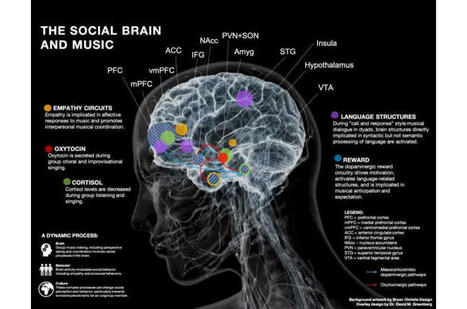
#EmpathyCircles: The best #Empathy building practice. http://www.empathycircle.com "These are - (1) empathy circuits,
- (2) oxytocin secretion,
- (3) reward and motivation, including dopamine release,
- (4) language structures, and
- 5) cortisol.
These five functions and mechanisms involve at least 12 important brain regions and two pathways which are mapped here. Empathy helps us to tune into how other people are thinking and feeling, and can be improved through interpersonal musical coordination." Read the full article at: medicalxpress.com
Via Edwin Rutsch
|
|
Rescooped by
Antonios Bouris
from Amazing Science
April 25, 2021 3:15 AM
|
Fiber optic technology is the holy grail of high-speed, long-distance telecommunications. Still, with the continuing exponential growth of internet traffic, researchers are warning of a capacity crunch. In AVS Quantum Science, researchers from the National Institute of Standards and Technology and the University of Maryland show how quantum-enhanced receivers could play a critical role in addressing this challenge. The scientists developed a method to enhance receivers based on quantum physics properties to dramatically increase network performance while significantly reducing the error bit rate (EBR) and energy consumption. Fiber optic technology relies on receivers to detect optical signals and convert them into electrical signals. The conventional detection process, largely as a result of random light fluctuations, produces 'shot noise,' which decreases detection ability and increases EBR. To accommodate this problem, signals must continually be amplified as pulsating light becomes weaker along the optic cable, but there is a limit to maintaining adequate amplification when signals become barely perceptible.
Read the full article at: phys.org
Via Dr. Stefan Gruenwald
|
|
Rescooped by
Antonios Bouris
from Amazing Science
March 27, 2021 2:19 AM
|
An arsenal of potential treatments takes aim at proteins that are key to the virus’ life cycle. In March 2020, as the full scope of the COVID-19 pandemic was coming into view, Jen Nwankwo and colleagues turned a pair of artificial intelligence (AI) tools against SARS-CoV-2. One newly developed AI program, called SUEDE, digitally screens all known drug-like compounds for likely activity against biomolecules thought to be involved in the disease. The other, BAGEL, predicts how to build inhibitors to known targets. The two programs searched for compounds able to block human enzymes that play essential roles in enabling the virus to infect its host cells. While SUEDE sifted through 14 billion compounds in just a few hours and spat out a hit, BAGEL created equally fast new leads.
Read the full article at: www.sciencemag.org
Via Juan Lama, Dr. Stefan Gruenwald
|
|
Rescooped by
Antonios Bouris
from Amazing Science
March 27, 2021 2:14 AM
|
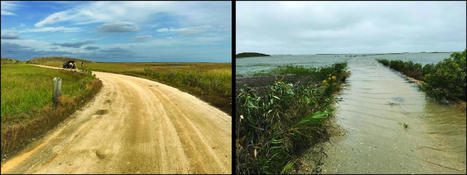
The rate of sea-level rise in the 20th century along much of the U.S. Atlantic coast was the fastest in 2,000 years, and southern New Jersey had the fastest rates, according to a Rutgers-led study. The global rise in sea-level from melting ice and warming oceans from 1900 to 2000 led to a rate that's more than twice the average for the years 0 to 1800—the most significant change, according to the study in the journal Nature Communications. The study for the first time looked at the phenomena that contributed to sea-level change over 2,000 years at six sites along the coast (in Connecticut, New York City, New Jersey and North Carolina), using a sea-level budget. A budget enhances understanding of the processes driving sea-level change. The processes are global, regional (including geological, such as land subsidence) and local, such as groundwater withdrawal. "Having a thorough understanding of sea-level change at sites over the long-term is imperative for regional and local planning and responding to future sea-level rise," said lead author Jennifer S. Walker, a postdoctoral associate in the Department of Earth and Planetary Sciences in the School of Arts and Sciences at Rutgers University-New Brunswick. "By learning how different processes vary over time and contribute to sea-level change, we can more accurately estimate future contributions at specific sites." Sea-level rise stemming from climate change threatens to permanently inundate low-lying islands, cities and lands. It also heightens their vulnerability to flooding and damage from coastal and other storms. Read the full article at: phys.org
Via Dr. Stefan Gruenwald
|
|
Rescooped by
Antonios Bouris
from Amazing Science
March 11, 2021 6:38 PM
|
Neanderthal fossils from a cave in Belgium believed to belong to the last survivors of their species ever discovered in Europe are thousands of years older than once thought, a new study said. Previous radiocarbon dating of the remains from the Spy Cave yielded ages as recent as approximately 24,000 years ago, but the new testing pushes the clock back to between 44,200 to 40,600 years ago. The research appeared in the Proceedings of the National Academy of Sciences and was carried out by a team from Belgium, Britain and Germany.
Read the full article at: phys.org
Via Dr. Stefan Gruenwald
|
|
|
Rescooped by
Antonios Bouris
from Amazing Science
August 1, 2021 1:35 AM
|
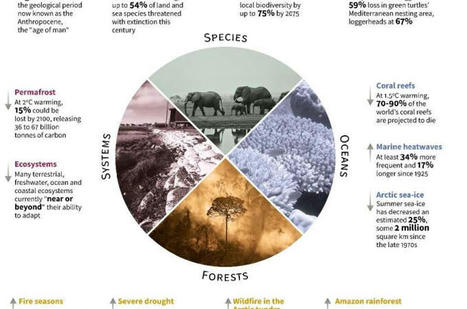
The global economy's business-as-usual approach to climate change has seen Earth's "vital signs" deteriorate to record levels, an influential group of scientists said Wednesday, warning that several climate tipping points were now imminent. The researchers, part of a group of more than 14,000 scientists who have signed on to an initiative declaring a worldwide climate emergency, said that governments had consistently failed to address the root cause of climate change: "the overexploitation of the Earth".
Since a similar assessment in 2019, they noted an "unprecedented surge" in climate-related disasters, including flooding in South America and Southeast Asia, record-shattering heatwaves and wildfires in Australia and the US, and devastating cyclones in Africa and South Asia. Of 31 "vital signs"—key metrics of planetary health that include greenhouse gas emissions, glacier thickness, sea-ice extent and deforestation—they found that 18 hit record highs or lows. For example, despite a dip in pollution linked to the pandemic, levels of atmospheric CO2 and methane hit all-time highs in 2021.
Greenland and Antarctica both recently showed all-time low levels of ice mass, and glaciers are melting 31 percent faster than they did just 15 years ago, the authors said. Both ocean heat and global sea levels set new records since 2019, and the annual loss rate of the Brazilian Amazon reached a 12-year high in 2020.
Highlights of a landmark Intergovernmental Panel on Climate Change (IPCC) draft report on the effects of a warming planet on nature. Echoing previous research, they said that forest degradation linked to fire, drought and logging was causing parts of the Brazilian Amazon to now act as a source of carbon, rather than absorb the gas from the atmosphere. Livestock such as cows and sheep are now at record levels, numbering more than four billion and with a mass exceeding that of all humans and wild land mammals combined, they said.
Tim Lenton, director of the University of Exeter's Global Systems Institute and study co-author, said the recent record-breaking heatwave in the Western United States and Canada showed that the climate had already begun to "behave in shocking, unexpected ways. We need to respond to the evidence that we are hitting climate tipping points with equally urgent action to decarbonize the global economy and start restoring instead of destroying nature," he said. Read the full article at: phys.org
Via Dr. Stefan Gruenwald
|
|
Rescooped by
Antonios Bouris
from Amazing Science
July 23, 2021 4:50 AM
|
Artificial intelligence (AI) still often overpromises and underdelivers, but we are seeing AI begin to understand us and adoption has accelerated rapidly. Are we prepared for what is coming? Read the full article at: www.forbes.com
Via EDTECH@UTRGV
|
|
Rescooped by
Antonios Bouris
from Amazing Science
July 15, 2021 2:00 AM
|
Changing climate patterns have left millions of people vulnerable to weather extremes. As temperature fluctuations become more commonplace around the world, conventional power-guzzling cooling and heating systems need a more innovative, energy-efficient alternative, and in turn, lessen the burden on already struggling power grids. In a new study, researchers at Texas A&M University have created novel 3D printable phase-change material (PCM) composites that can regulate ambient temperatures inside buildings using a simpler and cost-effective manufacturing process. Furthermore, these composites can be added to building materials, like paint, or 3D printed as decorative home accents to seamlessly integrate into different indoor environments. "The ability to integrate phase-change materials into building materials using a scalable method opens opportunities to produce more passive temperature regulation in both new builds and already existing structures," said Dr. Emily Pentzer, associate professor in the Department of Materials Science and Engineering and the Department of Chemistry. Dr. Emily Pentzer and her team have created novel 3D printable phase-change material composites that can regulate ambient temperatures inside buildings using a simpler and cost-effective manufacturing process. This study was published in the June issue of the journal Matter. Heating, ventilation and air conditioning (HVAC) systems are the most commonly used methods to regulate temperatures in residential and commercial establishments. However, these systems guzzle a lot of energy. Furthermore, they use greenhouse materials, called refrigerants, for generating cool, dry air. These ongoing issues with HVAC systems have triggered research into alternative materials and technologies that require less energy to function and can regulate temperature commensurate to HVAC systems. One of the materials that have gained a lot of interest for temperature regulation is phase-change materials. As the name suggests, these compounds change their physical state depending on the temperature in the environment. So, when phase-change materials store heat, they convert from solid to liquid upon absorbing heat and vice versa when they release heat. Thus, unlike HVAC systems that rely solely on external power to heat and cool, these materials are passive components, requiring no external electricity to regulate temperature. Read the full article at: engineering.tamu.edu
Via Dr. Stefan Gruenwald
|
|
Scooped by
Antonios Bouris
July 15, 2021 1:26 AM
|
Musician Kristjan Hrannar shared a photo of his hotel room phone, which features a special “Northern Lights Wake-Up” call button. Read the full article at: mymodernmet.com
|
|
Rescooped by
Antonios Bouris
from Educational Technology News
June 26, 2021 12:31 AM
|
What will happen if tomorrow artificial intelligence replaces teachers at school? Such a future is possible today when AI technologies have taken a big step forward. But artificial intelligence still has to learn from humans, and its functionality is limited. Read the full article at: elearningindustry.com
Via EDTECH@UTRGV
"One call center associate’s journey from onboarding hell to design thinking nirvana. Follow our heroine as she discovers how VR tech can create experiential learning that’s more fun than a TikTok dance video." Read the full article at: elearningindustry.com
Via EDTECH@UTRGV
|
|
Rescooped by
Antonios Bouris
from Amazing Science
June 11, 2021 3:21 AM
|
Psychology researchers at UC Santa Cruz have found that playing games in virtual reality creates an effect called "time compression," where time goes by faster than you think. Grayson Mullen, who was a cognitive science undergraduate at the time, worked with Psychology Professor Nicolas Davidenko to design an experiment that tested how virtual reality's effects on a game player's sense of time differ from those of conventional monitors. The results are now published in the journal Timing & Time Perception. Read the full article at: news.ucsc.edu
Via Dr. Stefan Gruenwald
|
|
Rescooped by
Antonios Bouris
from Amazing Science
April 25, 2021 3:16 AM
|
In 2017, three leading vaccine researchers submitted a grant application with an ambitious goal. At the time, no one had proved a vaccine could stop even a single beta coronavirus—the notorious viral group then known to include the lethal agents of severe acute respiratory syndrome (SARS) and Middle East respiratory syndrome (MERS), as well as several causes of the common cold and many bat viruses. But these researchers wanted to develop a vaccine against them all. Grant reviewers at the National Institute of Allergy and Infectious Diseases (NIAID) deemed the plan “outstanding.” But they gave the proposal a low priority score, dooming its bid for funding.
https://doi.org/10.1126/science.abi9939
Read the full article at: www.sciencemag.org
Via Juan Lama, Dr. Stefan Gruenwald
|
|
Rescooped by
Antonios Bouris
from Amazing Science
April 25, 2021 3:14 AM
|
The human body is made up of nearly 40 trillion cells, of many different types. Recent advances in experimental biology have made it possible to explore the genetic material of single cells. RAPIDS is a suite of open-source Python libraries that can speed up data science workflows using GPU acceleration. Starting from a single-cell count matrix, RAPIDS libraries can be used to perform data processing, dimensionality reduction, clustering, visualization, and comparison of cell clusters. Several examples are inspired by the Scanpy tutorials and based upon the AnnData format. Currently, examples provide for scRNA-seq and scATAC-seq, and can be scaled up to 1 million cells. The authors also show how to create GPU-powered interactive, in-browser visualizations to explore single-cell datasets. Dataset sizes for single-cell genomics studies are increasing, presently reaching millions of cells. With RAPIDS, it becomes easy to analyze large datasets interactively and in real time, enabling faster scientific discoveries. Github repository is here Read the full article at: developer.nvidia.com
Via Dr. Stefan Gruenwald
|
|
Rescooped by
Antonios Bouris
from Amazing Science
March 27, 2021 2:18 AM
|
USC researchers harness the power of living organisms to make materials that are strong, tolerant and resilient. Biological systems can harness their living cells for growth and regeneration, but engineering systems cannot. Until now. Qiming Wang and researchers at the USC Viterbi School of Engineering are harnessing living bacteria to create engineering materials that are strong, tolerant, and resilient. The research is published in Advanced Materials. “The materials we are making are living and self-growing,” said Wang, the Stephen Schrank Early Career Chair in Civil and Environmental Engineering and assistant professor of civil and environmental engineering in the Sonny Astani Department of Civil and Environmental Engineering (CEE). “We have been amazed by the sophisticated microstructures of natural materials for centuries, especially after microscopes were invented to observe these tiny structures. Now we take an important step forward: We use living bacteria as a tool to directly grow amazing structures that cannot be made on our own.” #abcdesRead the full article at: viterbischool.usc.edu
Via Dr. Stefan Gruenwald
|
|
Rescooped by
Antonios Bouris
from Amazing Science
March 11, 2021 6:42 PM
|
In traditional electronics, separate chips process and store data, wasting energy as they toss data back and forth over what engineers call a “memory wall.” New algorithms combine several energy-efficient hybrid chips to create the illusion of one mega–AI chip. Smartwatches and other battery-powered electronics would be even smarter if they could run AI algorithms. But efforts to build AI-capable chips for mobile devices have so far hit a wall – the so-called “memory wall” that separates data processing and memory chips that must work together to meet the massive and continually growing computational demands imposed by AI. Hardware and software innovations give eight chips the illusion that they’re one mega-chip working together to run AI. “Transactions between processors and memory can consume 95 percent of the energy needed to do machine learning and AI, and that severely limits battery life,” said computer scientist Subhasish Mitra, senior author of a new study published in Nature Electronics. Now, a team that includes Stanford computer scientist Mary Wootters and electrical engineer H.-S. Philip Wong has designed a system that can run AI tasks faster, and with less energy, by harnessing eight hybrid chips, each with its own data processor built right next to its own memory storage. This recent paper builds on the team’s prior development of a new memory technology, called RRAM, that stores data even when power is switched off – like flash memory – only faster and more energy efficiently. Their RRAM advance enabled the Stanford researchers to develop an earlier generation of hybrid chips that worked alone. Their latest design incorporates a critical new element: algorithms that meld the eight, separate hybrid chips into one energy-efficient AI-processing engine. Read the full article at: news.stanford.edu
Via Dr. Stefan Gruenwald
|