Ultrasound is a convenient, noninvasive tool for doctors to look inside the human body and check out a person’s liver, heart and other internal structures, as well as the developing fetus of a pregnant patient. But today’s ultrasound imaging technology is large and technical, so it’s only available in healthcare facilities and must be operated by highly trained technicians. Plus, patients, who take time out of their schedules to go to an appointment, have to be covered in a sticky gel.
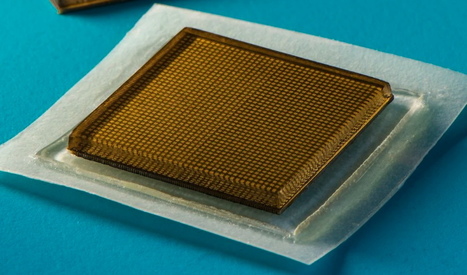
Now, researchers say they’ve developed an innovative solution to some of these challenges. Engineers at the Massachusetts Institute of Technology have unveiled a new adhesive ultrasound patch that’s about the size of a postage stamp and can provide continuous imaging of the body’s inner workings for up to 48 hours. The scientists shared their new technology in a paper published last week in the journal Science.
“We believe we’ve opened a new era of wearable imaging,” says Xuanhe Zhao, a mechanical engineer at MIT and one of the study’s authors, in a statement. “With a few patches on your body, you could see your internal organs.” In the past, engineers developing wearable ultrasound technologies have run into issues with image quality and flexibility, but the new MIT stickers seem to have struck the right balance. To create the small devices, which are about three millimeters thick and two square centimeters in size, engineers combined rigid transducers with a stretchy, sticky layer that encapsulates a layer of water-based hydrogel.
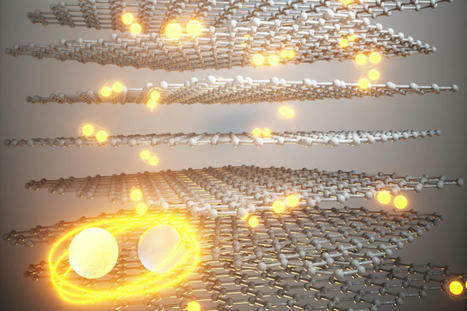
MIT physicsts identified new multilayered configurations of graphene that can be twisted and stacked to elicit robust superconductivity at low temperatures. The study establishes these configurations as the first known “family” of multilayer magic-angle superconductors.
When it comes to graphene, it appears that superconductivity runs in the family. Graphene is a single-atom-thin material that can be exfoliated from the same graphite that is found in pencil lead. The ultrathin material is made entirely from carbon atoms that are arranged in a simple hexagonal pattern, similar to that of chicken wire.
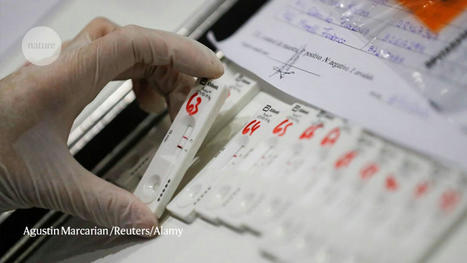
Those with SARS-CoV-2 are often advised to isolate for only a few days. But evidence is mounting that some people can continue to pass on the virus for much longer. When the US Centers for Disease Control and Prevention (CDC) halved its recommended isolation time for people with COVID-19 to five days back in December, it said that the change was motivated by science. Specifically, the CDC said that most SARS-CoV-2 transmission occurs early in the course of the illness, in the one to two days before the onset of symptoms and for two to three days after. Many scientists disputed that decision then and they continue to do so. Such dissent is bolstered by a series of studies confirming that many people with COVID-19 remain infectious well into the second week after they first experience symptoms. Reductions in the length of the recommended isolation period — now common around the world — are driven by politics, they say, rather than any reassuring new data. “The facts of how long people are infectious for have not really changed,” says Amy Barczak, an infectious-disease specialist at Massachusetts General Hospital in Boston. “There is not data to support five days or anything shorter than ten days [of isolation].” Barczak’s own research, published on the medRxiv preprint server, suggests that one-quarter of people who have caught the Omicron variant of SARS-CoV-2 could still be infectious after eight days.
Scientists are developing artificial photosynthesis to help make food production more energy-efficient here on Earth, and one day possibly on Mars.
Scientists have found a way to bypass the need for biological photosynthesis altogether and create food independent of sunlight by using artificial photosynthesis. The technology uses a two-step electrocatalytic process to convert carbon dioxide, electricity, and water into acetate. Food-producing organisms then consume acetate in the dark to grow. The hybrid organic-inorganic system could increase the conversion efficiency of sunlight into food, up to 18 times more efficient for some foods.
Photosynthesis has evolved in plants for millions of years to turn water, carbon dioxide, and the energy from sunlight into plant biomass and the foods we eat. This process, however, is very inefficient, with only about 1% of the energy found in sunlight ending up in the plant. Scientists at UC Riverside and the University of Delaware have found a way to bypass the need for biological photosynthesis altogether and create food independent of sunlight by using artificial photosynthesis.
When it comes to creative projects, giving and receiving feedback in a way that’s actually productive can be tricky. In this piece, the author offers two research-backed suggestions: First, ask for broad feedback out of curiosity around how you can improve. Second, offer feedback based on subjectivity. Importantly, managers need to understand that their opinions provide only potential trajectories a creative worker might try — not the “right” road to take. With these guidelines, both managers and their employees can improve process of sharing feedback on creative endeavors.
Imagine Bach's "Cello Suite No. 1" played on a strand of DNA.
This scenario is not as impossible as it seems. Too small to withstand a rhythmic strum or sliding bowstring, DNA is a powerhouse for storing audio files and all kinds of other media.
"DNA is nature's original data storage system. We can use it to store any kind of data: images, video, music -- anything," said Kasra Tabatabaei, a researcher at the Beckman Institute for Advanced Science and Technology and a coauthor on this study.
Expanding DNA's molecular makeup and developing a precise new sequencing method enabled a multi-institutional team to transform the double helix into a robust, sustainable data storage platform.
Mars will stay in the spotlight through the 2030s thanks to a sample return mission. But in the 2040s, Uranus will take center stage, and Saturn's moon Enceladus will steal the show in the 2050s. That’s according to the goals outlined in the latest decadal survey for planetary science.
With the release of “Origins, Worlds, and Life: A Decadal Strategy for Planetary Science and Astrobiology 2023-2032,” the planetary science community drafted a blueprint for how U.S. policymakers should invest limited resources available for space exploration. The decadal, the result of a steering committee that sought and received recommendations from the planetary science community, also helps set the international tone for solar system exploration.
And the mission priorities? A flagship orbiter and probe to study the ice giant Uranus. A flagship mission to Enceladus that will orbit the saturnian Moon, as well as land on it. A continuing program of Mars exploration, including a sample return mission. A host of other smaller mission possibilities. And, last but not least, defending our home world against asteroid impacts.
“The decadal,” as it’s typically referred to, is the blueprint for funding agencies like NASA and the National Science Foundation. And because American-led missions often include international instruments and investigators, the decadal has resonance for the global planetary science community.
Since the Covid-19 pandemic it’s unlikely that creativity and creative work will ever look the same again. Adobe investigates how we can enter this new phase with a positive, collaborative, and innovative approach.
If there’s one thing we can be certain of, it’s that the past two years have thrown the creative industry into whole new territories. The changes we’ve seen to how creatives work and to their practice are broad and expansive. But Scott Belsky, Adobe’s chief product officer opened at the company’s Future of Creativity event with some positive forward thinking: “I feel like there has never been a better, more exciting time to be a creative person.” Following on from the last Future of Creativity event in 2019, and being four years since Scott attended a community event in London, he was the first to express how happy he was to be able to get back together as a creativity community. “A lot has changed”, Scott states “but so many of the changes have been for the better.”
The Brooklyn-based artist Dustin Yellin (previously) was commissioned by the New York City Ballet to install a new series of his figurative collages. The artist refers to the sculptures as Psychogeographies because “they feel like maps of the psyche.”
Are we going to soon witness the creative genius of a virtual Picasso or Leonardo da Vinci?
We could be on the way with the latest trend in the AI field: visual generative models. While systems like GPT-3 create text from text, others like DALL·E 2 — a wordplay between Spanish painter Salvador Dalí and Pixar’s cute robot WALL·E — can create visual art from words. As you can see from the cover image of this article, this tech gives a new meaning to the idiom “an image is worth a thousand words.”
Those weird “loved ones come back from the dead to visit you” stunts pulled by celebrities like Kanye West may soon become a reality through your digital assistant.
At Amazon’s re:MARS conference, the company announced it’s working on a feature that can synthesize short audio clips of a person’s voice and then reprogram it as longer speech. Amazon’s Senior Vice President and Head Scientist for Alexa, Rohit Prasad, showed off a demonstration where, as TechCrunch described, “the voice of a deceased loved one (a grandmother, in this case), is used to read a grandson a bedtime story.”
Monkeypox, a less-lethal relative of smallpox that’s normally found in Africa, has recently been spreading in some western countries, largely among gay men, and is mainly transmitted through intimate contact when people are symptomatic. More than 700 cases have been seen globally, said Jennifer McQuiston, deputy director of the CDC’s division of high-consequence pathogens and pathology. Supplies available in the Strategic National Stockpile are sufficient to combat the current outbreak, the agency said. Vaccines available for use against monkeypox are Jynneos from Bavarian Nordic A/S and Emergent BioSolutions Inc.’s ACAM2000. Both are prioritized for use in high-risk contacts of patients. Through contact-tracing efforts, officials have identified hundreds of people who may have been exposed to the virus in the US, but so far only 20 were determined to be high-risk.
Intelligent alien life is likely because the universe is so big, the head of Nasa has said. Bill Nelson, the former space shuttle astronaut and US senator, said that the James Webb Telescope, which launched last Christmas, could help detect worlds where life could thrive. Speaking at the Financial Times Investing in Space Conference on Wednesday, Mr Nelson was asked whether he believed in intelligent extraterrestrial life. “The short answer is yes,” he said. “That would be a page one story, wouldn’t it? Look how big the universe is. We know that we have in our galaxy, millions, if not billions of suns. And we know that in addition to our galaxy, there are millions, if not billions, of galaxies with millions, or billions, of suns. Now is there a possibility in a universe that big that conditions like the Earth have been created? Of course, there is that possibility.” He added: “With the James Webb telescope, we’re going to be able to have such precision to look at a planet and determine the chemical composition of its atmosphere so we can determine if it has a possibility of a habitable atmosphere.”
Udemy is one of the largest online learning platforms for professional learning. According to the company, they have 35 million registered users. An analysis by Class Central shows they have launched over 157,000 courses since 2010.
The pandemic has boosted the fortune of many online providers. Udemy is no exception. In 2020 alone, the company raised $123 million and increased its valuation by over $1 billion. Overall, the company has raised ~$300 million at a valuation over $3 billion.
“We’re looking forward to victory. We have no doubt we will prevail. And this is what keeps us going.”
“These have been the most horrible months of my life, and the lives of every Ukrainian,” she said, speaking her country’s language through a translator. “Frankly I don’t think anyone is aware of how we have managed emotionally.” What inspires her, she told me, is her fellow Ukrainians. “We’re looking forward to victory. We have no doubt we will prevail. And this is what keeps us going.”
Supernal has given passengers a first look at what the cabin of its flying taxi may look like – and there are clearly some influences from parent company Hyundai Motor Group. The eVTOL (electric vertical take-off and landing) concept was revealed at the Farnborough International Airshow, in Hampshire, England, and it illustrates how the Advance Air Mobility (AAM) sector can take inspiration from the automotive market. Supernal says it teamed up with Hyundai’s design studios to create the cabin concept as it works to certify its eVTOL vehicle for commercial use in the United States in 2028, with the United Kingdom and European Union expected to follow shortly after.
In addition, it is collaborating with Hyundai’s external partners and more than 50 affiliates – spanning automobiles, automotive parts, construction, robotics and autonomous driving – to co-create the AAM value chain. The five-seat cabin concept strikes a fine balance between using automotive design processes and materials while meeting the safety standards of commercial aviation.
Continuing a 22-year downward trend, water levels in Lake Mead stand at their lowest since April 1937, when the reservoir was still being filled for the first time. As of July 18, 2022, Lake Mead was filled to just 27 percent of capacity. The largest reservoir in the United States supplies water to millions of people across seven states, tribal lands, and northern Mexico. It now also provides a stark illustration of climate change and a long-term drought that may be the worst in the U.S. West in 12 centuries.
The low water level comes at time when 74 percent of nine Western states face some level of drought; 35 percent of the area is in extreme or exceptional drought. In Colorado, location of the headwaters of the Colorado River, 83 percent of the state is now in drought, and the snowpack from last winter was below average in many places.
NASA’s James Webb Space Telescope has produced the deepest and sharpest infrared image of the distant universe to date. Known as Webb’s First Deep Field, this image of galaxy cluster SMACS 0723 is overflowing with detail.
Mojo Vision’s microLED display has record-breaking pixel density and a somewhat mysterious purpose.
A Silicon Valley-based startup has recently emerged from stealth mode to reveal what it claims is the smallest, most pixel-dense dynamic display ever built. Mojo Vision’s display is just 0.48 millimeters across, but it has about 300 times as many pixels per square inch as a typical smartphone display.
The display used microLED technology instead of OLEDs (as in several generations of Samsung devices and the iPhone X) or an LCD (as in every other iPhone). Made from gallium nitride, microLED displays can consume as little as 10 percent of the power of LCDs and are 5 to 10 times as bright as OLEDs. That combination makes them a good fit for head-up displays and other augmented reality applications.
Like other microLED companies looking to power augmented reality devices, Mojo Vision builds it gallium-nitride microLEDs as an array and then bonds the array to a silicon CMOS backplane that switches them on and off. Paul Martin, vice president for displays, says the company had to overcome several hurdles to build the 14,000 pixels-per-inch display. “The pixels are 1.3 [micrometers across], which means that the gap is only 0.5 µm. Smaller gaps creates harder and harder problems of fabrication.” He would not detail how the company overcame this problem and others.
In a recently published paper, NASA scientists and engineers give new details about the agency’s Deep Atmosphere Venus Investigation of Noble gases, Chemistry, and Imaging (DAVINCI) mission, which will descend through the layered Venus atmosphere to the surface of the planet in mid-2031. DAVINCI is the first mission to study Venus using both spacecraft flybys and a descent probe.
DAVINCI, a flying analytical chemistry laboratory, will measure critical aspects of Venus’ massive atmosphere-climate system for the first time, many of which have been measurement goals for Venus since the early 1980s. It will also provide the first descent imaging of the mountainous highlands of Venus while mapping their rock composition and surface relief at scales not possible from orbit. The mission supports measurements of undiscovered gases present in small amounts and the deepest atmosphere, including the key ratio of hydrogen isotopes – components of water that help reveal the history of water, either as liquid water oceans or steam within the early atmosphere.
We present Imagen, a text-to-image diffusion model with an unprecedented degree of photorealism and a deep level of language understanding. Imagen builds on the power of large transformer language models in understanding text and hinges on the strength of diffusion models in high-fidelity image generation. Our key discovery is that generic large language models (e.g. T5), pretrained on text-only corpora, are surprisingly effective at encoding text for image synthesis: increasing the size of the language model in Imagen boosts both sample fidelity and image-text alignment much more than increasing the size of the image diffusion model. Imagen achieves a new state-of-the-art FID score of 7.27 on the COCO dataset, without ever training on COCO, and human raters find Imagen samples to be on par with the COCO data itself in image-text alignment. To assess text-to-image models in greater depth, we introduce DrawBench, a comprehensive and challenging benchmark for text-to-image models. With DrawBench, we compare Imagen with recent methods including VQ-GAN+CLIP, Latent Diffusion Models, and DALL-E 2, and find that human raters prefer Imagen over other models in side-by-side comparisons, both in terms of sample quality and image-text alignment.
The Gaia space mission of the European Space Agency ESA is constructing an ultra-precise three-dimensional map of our Milky Way galaxy, observing almost two billion stars or roughly one percent of all the stars in our galaxy. Gaia was launched in December 2013 and has collected science data from July 2014.
Recenlty, ESA released Gaia data in Data Release 3 (DR3). Gaia data allows for the derivation of asteroid and exoplanet orbits and physical properties. The data helps unveil the origin and future evolution of the Solar System and the Milky Way and helps understand stellar and planetary-system evolution and our place in the cosmos.
Gaia revolves about its axis slowly in about six hours and is composed of two optical space telescopes. Three science instruments allow for accurate determination of stellar positions and velocities as well as the spectral properties. Gaia resides at about 1,5 million kilometers from the Earth in the anti-Sun direction, where it orbits the Sun together with the Earth in the proximity of the so-called Sun-Earth Lagrange L2-point.
Gaia DR3 on June 13, 2022 was significant across astronomy. Some 50 scientific articles are being published with DR3, of which nine articles have been devoted to underscoring the exceptionally significant potential of DR3 for future research. The new DR3 data comprises, for example, the chemical compositions, temperatures, colors, masses, brightnesses, ages, and radial velocities of stars. DR3 includes the largest ever binary star catalog for the Milky Way, more than 150 000 Solar System objects, largely asteroids but also planetary satellites, as well as millions of galaxies and quasars beyond the Milky Way.
There are so many revolutionary advances that it is difficult to pinpoint a single most significant advance. Based on Gaia DR3, Finnish researchers will change the conception of asteroids in our Solar System, exoplanets and stars in our Milky Way galaxy, as well as galaxies themselves, including the Milky Way and its surrounding satellite galaxies. Returning to our home planet, Gaia will produce an ultraprecise reference frame for navigation and positioning, says Academy Professor Karri Muinonen from the University of Helsinki.
Insect ecosystems are being pushed toward collapse in some parts of the world because of agriculture and warming temperatures.
Researchers analyzed data from a 20-year period for more than 6,000 locations and studied nearly 18,000 insect species, including butterflies, moths, dragonflies, grasshoppers and bees. They concluded that in areas with low-intensity agriculture, less climate warming, and a nearby natural habitat, insects only declined by 7%, compared to the 63% decrease in areas with less natural habitat cover. Many insects rely on plants for shade during sweltering days — the loss of nearby natural habitats could leave them more exposed and vulnerable to warming temperatures. And as climate change advances, scientists say these natural buffers may become less effective.
Outhwaite told CNN there are things we can do at an individual level to help stave off this crisis -- planting more native species and wildflowers, reducing pesticides used in gardens and even limiting the frequency of lawn mowing. "And then, thinking a little bit more broadly about perhaps protecting insects in other areas, it's probably a good idea to think about where the foods that we are buying are being sourced from," Outwaite said. "So if they're being sourced from tropical countries, there's probably going to be a high impact on biodiversity there."
She also noted that governments have a large role to play in recognizing the impact of trade and food production, and could try to not source food "from areas which are implementing deforestation."
"I think people are becoming more aware now that biodiversity and insects in particular are at risk, but we haven't quite got them into the thoughts and thought processes" that would result in protective action, Outhewaite said.
A recent UN report on adapting to the climate crisis underscored how the world's ecosystems are very much connected to human systems. And unless the planet slashes heat-trapping emissions, those systems will continue to see major losses in biodiversity — particularly insects.
"Whether these remaining insects can continue to support ecosystem functioning, or whether they will eventually be lost themselves is still an open question," Oliver said. "Under the precautionary principle, however, it would be best to act now so we don't ever find out about ecosystem collapse by experiencing it."
To get content containing either thought or leadership enter:
To get content containing both thought and leadership enter:
To get content containing the expression thought leadership enter:
You can enter several keywords and you can refine them whenever you want. Our suggestion engine uses more signals but entering a few keywords here will rapidly give you great content to curate.


 Your new post is loading...