


The Wandering Lensman is a blog about the passion of photography, sharing images as well as thoughts about life, travel, living, etc.


 Your new post is loading...
  Scoop.it! The Wandering Lensman is a blog about the passion of photography, sharing images as well as thoughts about life, travel, living, etc. 
No comment yet.
Sign up to comment
Scoop.it!

The Fujifilm 18-120mm f4 lens aims to satisfy videographers, still photographers, and content creators with its versatility.
hpc's insight:
Brittany Smith reviewed the Fujifilm 18-120mm f4 lens, which is aimed at bridging the gap between hybrid and still photographers. She describes the lens as a solid zoom lens with a moderate price, versatile focal length, and weather-resistant design. It performs well in subzero conditions, produces sharp images with beautiful bokeh, and focuses quickly in good lighting conditions. Although it is fully automatic, the lens is lightweight and easy to use. Smith gave the lens four out of five stars, saying it's a great option for those looking for an all-around lens.
Scoop.it!

Fujifilm - Fujifilm X series - Fujifilm X-Pro3 - Fujifilm X100V - Soul - Inspiration - Aesthetics and Beauty
hpc's insight:
Peter Poete disagrees with Sean Tucker's opinion on cameras. While Sean sees the camera as simply a tool, Peter believes that certain cameras can inspire and bring emotion to the photographer. Peter argues that not only the technical aspects but also the aesthetics of a camera matter to him. He believes that there are cameras that have soul, combining pleasing design, nostalgia and timelessness. Peter loves the Leica M-series, Leica Q(2), and Fujifilm X-Pro and X100 cameras for their soulful design. He thinks that having these cameras with soul can make him a better photographer as he would prefer to use them for his photography. However, Peter acknowledges that this would not directly make him a better photographer, but holding a camera that has soul can bring a sense of happiness and make him more eager to go out and take photos.
Scoop.it!
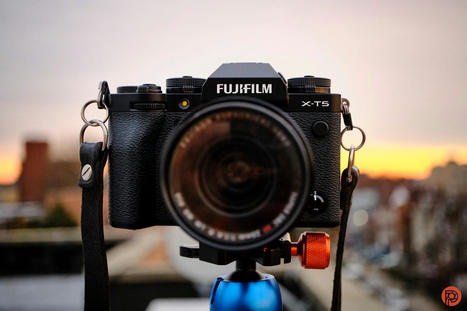
The Fujifilm XT5 Firmware updates that have come as of January 2023 really just fix issues. And one of them is really weird.
hpc's insight:
Read the original review above
Scoop.it!

The Wandering Lensman is a blog about the passion of photography, sharing images as well as thoughts about life, travel, living, etc.
hpc's insight:
Dennis Mook has been using cameras since the 1970s and has owned several digital cameras in the past, but the X-T5 has become his favorite due to its perfect fit for his photography needs. He explains that the X-T5 has everything he wants in a camera - from the feel in his hand to the number of pixels, the menu configuration, the knobs, dials, and buttons, and the viewfinder. He mentions that some may criticize the APS-C size sensor or the dynamic range, but he is content with it. He also mentions that the camera is relatively inexpensive compared to others with similar features. He notes that the X-T5 is not the best camera in the market, but it fits his needs perfectly and is capable of producing excellent image quality. He adds that his other cameras were excellent, but they always fell short in one way or another, whereas the X-T5 perfectly fits the bill for him.
Scoop.it!
Photographer Dustin Abbott shares a thorough review of the existing pro-grade telephoto zoom option on the Fuji X-mount platform - the Fujinon XF 100-400mm F4.5-5.6 R LM WR OIS | Read the Text Review: https://bit.ly/XF100_400da |
hpc's insight:
Dustin Abbott reviews the Fujinon XF 102-400mm F4.5-5.6 R LM OIS WR lens, which was released in 2016 and is considered an older lens in comparison to the newer 150-600mm lens. Despite its age, Dustin believes that the lens is still a viable option for those seeking a serious telephoto lens due to its compact size and ease of travel. The lens boasts features such as an aperture ring, weather resistance, dual linear motors, and optical image stabilization. The lens has a good focal range of 100-400mm and although it shows some pincushion distortion and vignette, correction profiles effectively correct them. Chromatic aberrations are well-controlled and the lens was tested on a 40-megapixel body, producing good contrast and detail in the center and mid-frame, with improvement when stopped down to F5.6. Diffraction limits improvements when stopped down to F6.3 and F22 is not recommended as it robs most of the contrast and detail. Overall, Dustin believes that the lens is still worth buying, especially for those looking for a compact lens with a decent aperture range.
Scoop.it!
The FUJIFILM XF 150-600mm f/5.6-8 R LM OIS WR lens is now shipping widely and we were lucky enough to get to visit and see firsthand how this unique lens is made. So grab a cup of coffee, sit back and enjoy our FUJIFILM XF 150-600mm factory tour!
Scoop.it!
Fujifilm X-T5 v Fujifilm X-T1 asking which camera is the best value for money. I take both cameras on a photo shoot to look at their capabilities and decide which is the best.
0:00 Intro
hpc's insight:
The author, Chris Orange, is comparing the Fujifilm XT-1 and the Fujifilm XT5 cameras. The XT-1 was a revolutionary camera when it was released and many professional photographers switched from using Canons to using the small mirrorless camera with a smaller sensor. The XT-1 still takes amazing photos and the author still uses it today. The question the author wants to answer is whether the XT5 is as revolutionary as the XT-1 was when it came out. The XT5 has all the latest technology from Fujifilm and the author is comparing photos taken with both cameras to see if the texture and quality of the image in the XT5 matches up to the XT-1. The author uses classic Chrome jpegs and puts a manual focus vintage lens on the XT-1 while using a 16-55 Red Label lens on the XT5. The author is impressed with the XT5's autofocus and says it has revolutionized Fujifilm's autofocus, making it reliable for tracking wildlife or people on video.
Scoop.it!
Fujifilm X-T5 review. I took the camera out to the coast to test out the autofocus and the colours of this new Fujifilm X-trans 5 sensor.
0:00 Intro
hpc's insight:
Chris Orange reviews the Fujifilm XT5 camera and is extremely impressed with its autofocus system. He compares it to Sony cameras and finds that the XT5 is on par with Sony's reliability but with the added bonus of having beautiful colors and texture. He states that it's a win-win situation and highly recommends the camera for anyone looking for a new camera in 2023. He also mentions a free resource for photography education on his website, photographymadesimple.uk.
Scoop.it!
hpc's insight:
Damian Brown discus his experience with the Viltrox F 1.2 pro lens, including its build and handling, weight, aperture, and focal length. Damian compares it to the Viltrox 85mm lens, which he also owns and are happy with. The author notes that the F 1.2 pro is better suited for larger camera bodies, but overall he is happy with their purchase and will continue to use it for a few more months before giving their final thoughts.
Scoop.it!
Discover the real reasons why I chose the Fujifilm X-T5 as my go-to camera. Resolution is not a factor in my decision, find out what truly matters to me in this video! From its compact design to its video specs, I'll share the top 5 reasons why I believe the X-T5 is a great choice for any photographer. Watch now to learn more!
hpc's insight:
Andrei Dima, a professional travel photographer, lists his five reasons for choosing the Fujifilm X-T5 camera. First, the camera's weight and size make it easier to carry and use for traveling and hiking. Second, the improved battery life allows for a full day of shooting, which is especially useful for those who shoot both photos and video. Third, the camera has impressive video specs including 6K recording, 10-bit internally and 4K 60. Fourth, the native ISO of 125 provides more flexibility during editing and allows for better results when pushing raw files. Finally, the autofocus has improved, making it better for both photo and video, and the firmware 3.0 on the X-H2s has made the autofocus even better.
Scoop.it!

We've shot the new Fujinon XF 56mm F1.2R WR lens against the original 56mm F1.2R, to check whether we should switch the lens we use for our studio test scene or maintain consistency.
Scoop.it!
|
Scoop.it!
Scoop.it!

Trying to understand if the Fuji 30mm F2.8 lens is for you? Well, check out this review as we examine the sub-par bokeh balls, the price-quality ratio, and more
Scoop.it!

The Fujifilm XT5 brings a 40-megapixel sensor to a classically-inspired body for beautiful images. But, not everyone is going to want it.
hpc's insight:
The original title of the review is "Beautiful, But Flawed: Fujifilm XT5 Review".
Scoop.it!

Viltrox is a bit of an outlier among Chinese lens manufacturers. Most are trying their luck in certain niches. e.g. Loawa is well-known for ultra-wide and macro lenses while others are bottom feeders. However, Viltrox has a very different approach. They are going for the mainstream market. ...
Scoop.it!
In this video I compare the Fujifilm X-H2 High ISO noise with the Fujifilm X-T2. Will the much more modern X-Trans 5 sensor with more megapixels deal with noise better or worse than the 7 year old X-Trans 2 sensor in the Fujifilm X-T2.
hpc's insight:
Jason Row recently moved from Ukraine. In this video, he compares the high ISO noise of the Fuji XH2 with its older sibling, the XT2. Jason had bought the XT2 in 2017 and loved it, however, when he upgraded to the XT4 a couple of years later, he did not like it as much as the build quality was not as solid as the XT2. In the end, he upgraded to the XH2, which he loves and thinks it's a much more traditional DSLR-style camera. Jason went out to take pictures of Durham Cathedral in a high-contrast low-light setting to test the high ISO noise of both cameras. He set both cameras to the same settings and took pictures at different ISO values, starting at 200 and going all the way up to 25,600 for the XT2 and 51,600 for the XH2. The results of the comparison will be shown in the next video.
Scoop.it!
Photographer Dustin Abbott shares a thorough review of longest telephoto option on the Fuji X-mount platform - the Fujinon XF 150-600mm F5.6-8 R LM WR OIS | Read the Text Review: https://bit.ly/XF150_600da
hpc's insight:
Dustin conducts a review of the Fujifilm Fujinon XF 150-600mm f5.6-8 lens, praising its matte silver or silver matte finish and its longest focal length on the X-mount platform. With the potential to reach up to 1350 millimeters with the 1.4 times or up to 1828 millimeter at full frame equivalent, the lens is compatible with Fujifilm's 1.4 times and two times teleconverters and is weather sealed with built-in optical image stabilization. He notes that the lens reminds him of his favorite lens, the Sony 200-600mm G lens, and although it is not short, it is 25% lighter than the Sony lens. However, it is designed for APS-c as opposed to full frame. Dustin also highlights the lens's performance in terms of vignette and distortion, and notes that chromatic aberration control is also good. He acknowledges that one of the challenges with testing a lens on a high resolution body is that diffraction starts to play a role at a relatively small aperture, and this affects the lens's performance. He suggests that the lens performs best at apertures of f8, but that stopping down to smaller apertures does not improve image quality.
Scoop.it!
I started the year using a new, old camera and the journey it took me on was not one I was expecting but reminded me of what I love about the magic of photography.
hpc's insight:
Rich Bell is a street photographer who has always been interested in the X-Pro1 camera, which is known for its 16 megapixel sensor. His friend allowed him to borrow the camera, and he was pleasantly surprised by its rugged and timeless design. At first, he was impressed with the quality of the images, but as he continued to use the camera, he realized that it was slow and required him to slow down as well. One day, he found himself taking a photograph outside a casino and was able to capture a moment and emotion that he wouldn't have been able to capture with a different camera. This experience reminded him of why he got into photography in the first place, and he appreciated the simplicity of the X-Pro1, which allowed him to treat each image with intention and not rely on bells and whistles. He says that a great image can be captured with any camera, but he loves the stripped-down approach of the X-Pro1, which gives him the ability to use interchangeable lenses with a great image quality for less than 300 pounds. While he wouldn't swap out his current gear for the X-Pro1 full time, he believes it's important to have options and to remember why he loves street photography so much. He emphasizes that you don't need the latest and greatest gear to get a great image or to have fun doing what you love.
Scoop.it!
I've decided to embrace the 'new year, new me' by documenting Glasgow street life in the form of monthly episodes to share my results as I (hopefully) get better & share the work of other local photographers if they want to hang out with me. There's some 'tips' mentioned throughout this video. Pat on the back for you if you can understand them through my very ill voice over.
hpc's insight:
Lee Jones is a street photographer who is interested in capturing people on the streets. He admits to being naturally quiet and anxious, which is why he is using street photography as a way to combat this. He is currently prioritizing taking simple photos of people who interest him over more complex scenes. Photographing strangers does not come naturally to him, so he is practicing to get better. He relies on a technique of using a shallow depth of field and a fast shutter speed to eliminate movement. He also finds that wearing bold colors helps him to appear less stealthy or weird. Lee sometimes asks people directly if he can take their picture, but he is mindful not to sound creepy. If someone says no, he simply moves on.
Scoop.it!
The Fujifilm X-T5 is an amazing camera, probably the best camera I've ever used. So why did I sell it?
hpc's insight:
Jason Longbrake had initially praised the XT5 camera from Fujifilm for its fast speed, excellent autofocus, and incredible picture quality. However, he found the camera to be too advanced for his personal shooting style and had trouble controlling it the way he wanted. He found the new features to take away the fun of photography, making it too easy and boring. He also did not like the menu system and preferred the traditional way of controlling shutter speed, aperture, ISO, and clicking the shutter button.
Scoop.it!
Why I upgraded. Or why I chose to upgrade. Or why I could justify this big expense to myself. Or why I told myself whatever lies I needed to so I could just go trade in my X-T4 and get my hands on this thing. 00:35 The iPhone 14 Pro Max problem
hpc's insight:
Andrei Dima, a photography enthusiast, bought an XT4 camera in September but later found that the iPhone was a better choice for vlogging and photography because of its powerful 48-megapixel sensor. Andrei switched to an XT5 camera and likes its tighter dials and digital teleconverter. He is excited to see if the new sensor will be brought to the X100 line, making that camera more interesting for everyone. Andrei's overall impression is that they are excited to have the XT5 as they can grow with it.
Scoop.it!

In my previous article, I wrote that the X-H2S was my pick for Fujifilm’s 'Camera of the Year' for 2022. It’s the most advanced X Series camera ever built and has taken the industry by storm with the new fifth-generation sensor and processor by utilising the stacked sensor technology. The X-H2S is also Fujifilm’s flagship camera and the most expensive X Series camera to date. However, the 'best' camera might not necessarily be the 'right' camera for everyone. Even though I know the X-H2S is the best fifth-generation camera from Fujifilm, it’s not the best camera for me. My personal pick is the latest X-T5 in silver and here are the reasons why. The main reason why I prefer the X-T5 over the X-H2S (and X-H2) is the camera design and layout. I admit the X-H series ergonomics is more comfortable and efficient, but I find the interface a bit stale for my taste. It feels like I’m shooting with a Sony or Canon mirrorless camera. I prefer the traditional film SLR top dials on my Fujifilm cameras, including the exposure compensation dial at my thumb. I also prefer the dedicated focus select dial vs a custom button on the
hpc's insight:
The author prefers the X-T5 over the X-H2S as their personal pick for Fujifilm's camera of the year for 2022. The main reason for this is the camera design and layout, with the author preferring the traditional film SLR top dials on Fujifilm cameras and the dedicated focus select dial. They also prefer the return of the three-way articulating screen on the X-T5 and the camera aesthetics. The author states that their decision to use one tool over another is not based solely on a spec sheet and they go with the camera that works for their style. They mention that they like the simple and beautiful design of the Leica M7 and the X-Pro3 in Dura Black.
Scoop.it!
hpc's insight:
Tongue, who has been using the Fujifilm XF 18-120 mm WR lens for several months. He has found it to be a great all-purpose lens for travel and video production, despite some reviewers calling it the worst lens of 2022. He disagrees and finds that the lens is not as sharp as other Fujifilm lenses, but that it provides a soft and cinematic look that is well-suited for video production. Tongue finds the build quality to be lightweight and weather-resistant and appreciates the lens's internal zooming, making it a good choice for use with gimbals. He overall finds the lens to be a good value for its price and recommends it for video creators and filmmakers. Tongue has some positive and negative things to say about it. He finds that the autofocusing is quick and snappy, but sometimes loses focus when tracking quickly moving cars. He also wishes that the lens had lens stabilization, but since he has a camera with in-body image stabilization, it's not a big deal for them. Furthermore, he also mentions that the lens has an exposure adjustment when doing a zoom and that it's not a firmware issue, but a design flaw of the lens. That the lens is par focal with an asterisk and that they wish it had a wider aperture, but understand that it would increase the weight and cost of the lens. Overall, they enjoy the lens, find it versatile and convenient, but also have some complaints about the quirks and exposure shift. Tongues concludes the lens is a good value for its price.
|




