


We have driven along the Oregon Coast several times in the past few years. Unfortunately, each time we encountered blue skies and strong sun, which in our view didn’t do justice to the beauty of th...


 Your new post is loading...
  Scoop.it! We have driven along the Oregon Coast several times in the past few years. Unfortunately, each time we encountered blue skies and strong sun, which in our view didn’t do justice to the beauty of th... 
No comment yet.
Sign up to comment
Scoop.it!
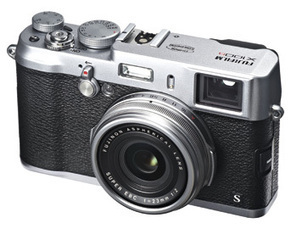
A retro-style compact for the manually inclined gets faster and smarter.
hpc's insight:
Nothing new in this review
Scoop.it!

The Fuji X was born into the conceptual line of sophisticated rangefinder cameras, such as the Leica M. Cameras of this type were always associated with shorter lenses due to the impracticality of viewing anything much longer than 135mm through a finder frame. The advent of the EVF (electronic view finder) made it a new ball game, as it enlarged the image to fit the frame. But old habits die hard, and I think many photographers, myself included, were simply not accustomed to using lenses longer than 135mm with a rangefinder style camera. It was for that exact reason I forced myself this past week to use the Fuji only with long lenses.
Scoop.it!

When Fujifilm introduced its X-system back in January 2012, it took the unusual step of starting out with a top-end professional model - the retro-looking but technologically innovative X-Pro1, which features the company's unique 'hybrid' optical/electronic viewfinder. Nine months later it followed this up with the enthusiast-orientated X-E1, which offers much the same feature set in a smaller body, but makes do with a purely electronic viewfinder. Now, nine months on again, comes the latest model: the distinctly mid-range-looking, miniaturized X-M1.
Scoop.it!

So I ordered the Thumbrest from Lensmate on the Monday sitting at my Mac from the USA 18.00 GMT. I ordered two items from Amazon at the same time: both items coming apparently from Germany to me in Scotland. The Lensmate thumbrest was in my door and on my camera on Thursday. Pretty impressive service. I'm still waiting ten days later for the Amazon items from Germany.
Scoop.it!

Fujifilm has announced the Fujinon XC 50-230mm F4.5-6.7 OIS lens, a relatively small, lightweight zoom for Fujifilm's mirrorless cameras, designed to compl
Scoop.it!

The Fujifilm X-A1 is an entry-level compact system camera with a 16.3-megapixel APS-C imager.
Scoop.it!

Over the summer, I had an opportunity to spend several weeks shooting in New York and Geneva with what’s become one of the most written about, and lavishly praised, cameras in recent memory: the Fujifilm X100S. To say that it’s been the recipient of gushing accolades is to say nothing at all; there have been numerous reviews that characterize it as one of the best digital cameras of all time and many photographers –like , for instance –that describe the X100S as nothing short of “the greatest” and assert its ability to replace in one fell swoop an entire bagful of gear.
Scoop.it!

So having recovered from the hangover that followed the band photoshoot in the pub, I elected to get some fresh air on Sunday and went along as one of the even photographers to a festival in Croydon.
hpc's insight:
part 2
Scoop.it!

Attached are images from my Fuji X-E1 and 14 2.8 in Peru from this past July and August. We were there for almost a month. We did the classic Huayhuash trek and then climbed two mountains, Yanapaccha and Chopicalqui, in the Cordillera Blanca.
Scoop.it!

Luna Park Sydney Engagement shoot. Fuji Xpro 1 and X100 camera system. With 35mm 1.4 and 18-55mm lens.
Scoop.it!

Bobster one of my blog readers requested to see the Roughed up version of my Fuji X100 as I mentioned it in a previous post. So I have posted this in response to Bobsters request and thought it wou...
Scoop.it!

For those of you that want to hear my subjective reasoning for sticking with my FF DSLR and couple of primes kit vs. my X-Pro-1 here are a few posts. They have everything to do with my personal desires not IQ or anything real technical… Here are my initial thoughts when starting to shoot both my D600 and X-Pro side by side.Here is where I ended up about a year later after shooting both or having the opportunity to shoot both for an extended time.There is probably a lot more stuff in-between those two posts scattered about in different context but here I re-explain some of my thoughts with some details that various people wanted specifics on as well.
|
Scoop.it!

Part 2 - Creating Colour with the Fujifilm X-A1
When I was given the opportunity to take a Fujifilm X-A1 with the new Fujinon XC 16-50mm lens for some test shooting I didn’t hesitate. From my previous experience using X-Series cameras I knew the image quality was going to be good, but like all new cameras I had to find out exactly what I was in for. So where better to take a camera in Australia for some serious image testing? The beach of course!
Scoop.it!

t has been a few weeks in the making but the day finally rolled around when the fencibles stormed the Howick historic village and our community project team had the chance to go along...
Scoop.it!

For the visit I decided to take along my Fuji X Pro 1, Fuji X100s, Fuji 18-55 and the Fuji 55-200mm lens. I also picked up the new Photoasy Extension Tube Set which has a 10mm tube and a 16mm tube with the communications connections so that the camera can still talk to the lens! This was ONLY available on Ebay but recently Amazon Prime has started offering this great set!
Scoop.it!
Scoop.it!

It seemed unlikely a few years ago that Fujifilm would join Leica in the world of digital ILC (interchangeable lens camera) rangefinders. Many manufacturers have dabbled in rangefinders in the past, but since the 1980's, most have decided to leave it to Leica to rule as king in this category and move on to SLRs, point and shoots.and other mixed categories. In recent years, many manufacturers have decided to create rangefinder-ish cameras with electronic viewfinders (EVF) in the ILC market, but many still prefer having a real optical viewfinder (OVF). That's why many offer the ability to mount an external OVF via the flash hotshoe; although there's no ability to see any exposure info, no focus, or parallax correction.
Scoop.it!

FUJIFILM Corporation (President: Shigehiro Nakajima) is today announcing the launch of its fourth interchangeable lens camera, the FUJIFILM X-A1.
Scoop.it!

It's been less than three months since Fujifilm introduced the X-M1, the least expensive entry into its excellent X-series of mirrorless cameras, but the company is now making an even more aggressive play for the lower end of the market. Fujifilm just announced the X-A1, an even more affordable X-series camera that includes nearly all of the features found in the X-M1. The highlight feature of the X-A1 is its price: $599.95 will nab you the camera body plus a 16-50mm f/3.5-5.6 lens. That's a full $200 less than the X-M1, but you're giving up a bit in the image sensor department. While the X-A1 comes with a 16.3-megapixel APS-C sensor, just like its more expensive counterparts, it lacks the X-Trans sensor used in other X-series models; this employs a different color array to allow formoiré-free photos without the antialiasing filter that slightly blurs images on other cameras. The X-A1 is the first camera in Fujifilm's X-series to remove the X-Trans sensor, a move undoubtedly made to meet its desired price point.
Scoop.it!

So I began a few days of event photography with a bad back and the fuji xe-1. Given the back pain there was no way I wanted to lug the 5d3 around so it seemed like a good time to test out the fuji.
hpc's insight:
Part 1
Scoop.it!
hpc's insight:
Gallery
Scoop.it!

Yes, I’m a Fuji fan boy. No, I’m not getting paid by Fuji. Yes, I got this camera for free No, that won’t hold me back to give you my honest opinion.
Scoop.it!

These bad boys did not let me down once!
Scoop.it!

In episode #3 of All About the Gear, Doug Kaye and I dive into the famed Fuji x100s camera. Find out if this little beastie lives up to all the hype, and if it’s actually the perfect walk-around camera. This camera sports a fixed 23mm f/2.0 lens, an APS-C sized sensor, 16 megapixels, and cool retro styling. Could this be the next camera to grace your gear collection?
|







As usual, I took a few initial exposures and checked all the data on our Fuji X-Pro1 paired with the XF 14mm F2.8 and Fuji X100s. The cameras were choosing apertures between 5.6 and 8 with shutter speeds fast enough for me to shoot from the hand. This allowed me to walk around freely, letting the camera do all the technical work. I could keep all my attention on the beautiful scenery, composition and light.