


Most travellers aim for the beautiful Oregon coast. After all, what could you see in inland Oregon? We thought the same way until on one of our trips we decided to take Route 97 instead of the more...


 Your new post is loading...
  Scoop.it! Most travellers aim for the beautiful Oregon coast. After all, what could you see in inland Oregon? We thought the same way until on one of our trips we decided to take Route 97 instead of the more... 
No comment yet.
Sign up to comment
Scoop.it!

Well, finally, today is the day. Our friends and team are arriving from all over America and meeting in Saint Mary tonight! I love to tease Jim, that it takes him three hours to drive a ten minute route, with needing to stop every ten feet to make a photo!!! I love his enthusiasm about territory undiscovered so I figured since the team arrives today at around 1:00 p.m. and it is a 2.5 hour drive to Saint Mary, I should give them about 7 hours to make it!! The drive up Going To The Sun Highway is not your average drive!
Scoop.it!
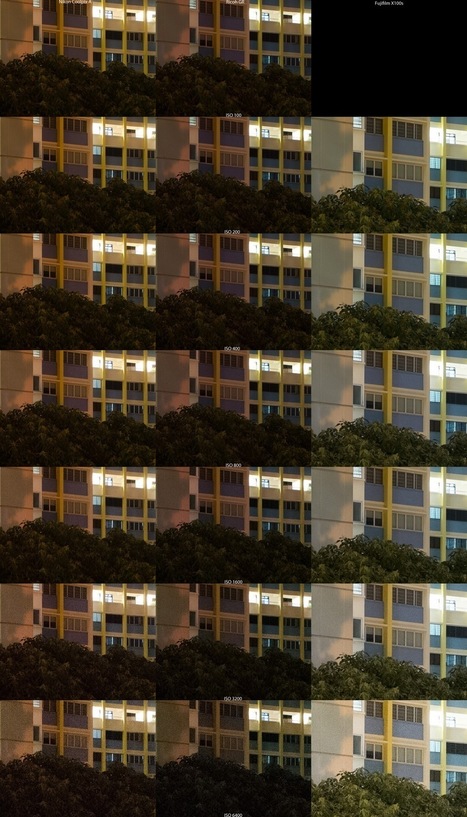
Welcome back for part two of our look at three compact cameras with large imaging sensors. Here we will look at the cameras’ performance and image quality, followed by our conclusions.
hpc's insight:
If you have not, read part one first!
Scoop.it!

You would think that all the years of international isolation, economic sanctions and general hardship would have exacted a devastating toll on the people on the island of Cuba.
hpc's insight:
Nice post, nice shots
Scoop.it!

I headed to Union Station yesterday without any real idea of what I wanted to photograph. As I wandered around Downtown Los Angeles, I came upon a freeway overpass that I'd driven under countless times. Having never seen the 101 Freeway from this angle, I instantly became mesmerized by the change in perspective. My first instinct (as it usually is these days) was to create some long exposure images of the freeway. With the help of a 10 stop ND filter and several sturdy railings, I was able to create the following images that depict something rarely seen here in Los Angeles; an empty 101 Freeway.
Scoop.it!

Over this past week, I’ve been posting photos from our trip up to Banff in late Aug. Here’s a single post with a compilation of my favorite 10 photos from the trip. Save for shots which have a bit of a human element (one my wife, the other my feet!) these are all landscapes. All photos were shot with the Fuji X-E1 and mostly the Fuji 14mm f2.8. Some were also with the 18-55mm kit lens (which I still adore) or the 35mm f1.4.
Scoop.it!

My wife and I allways wanted a big family, but after our two wonderful sons (now 8 and 9) it just never happened. Every time we visited a church, we lit a candle and prayed for a wonder. In those seven years there always was that empty space, and that question.. why? Last Christmas, we had a little family moment and we made a wish and send it off with a floating lantern.
Scoop.it!

For the end of the week I thought I would post a really short easy example of just one of the things I really really like about the Fuji X100S. The lens. Yes, the lens that has cause me consternation, pause, and delay of embracing the camera whole heartedly. I mentioned in yesterday’s part II evaluation against a full frame DSLR and 50mm that everything in DC was shot wide open except for a handful of shots on the X100S.
Scoop.it!

This is the first post in what will be at least two. A while back I decided on a D600 with a couple of primes and a Fuji X100S as my two digital cameras. That decision was in comparison to Just a full frame DSLR or just an X-Pro-1 and a couple of primes. I won’t go through the reasons again but a huge factor that I will discuss in depth is the lens attached to the X100S. Since I made that decision I have not treated the X100S as seriously as I should. In many cases I will take both the Fuji and the D600. Case in point - the DC trip. I would have loved to take just the X100S but just couldn’t do it.
Scoop.it!

Paul Remmelts fotograaf Deventer Overijssel, o.a. Portret, editorial, redactioneel, mode, reportage, lifestyle, reclame fotografie 0683344087
Scoop.it!
Scoop.it!

I have been grabbing the X100 and taking it everywhere for some time over the summer and its been great. So I felt as I am traveling off in the camper again next weekend I thought I should give the...
Scoop.it!
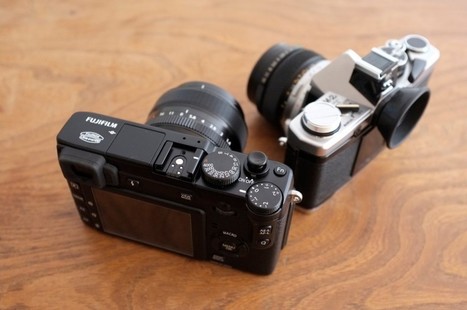
Fujifilm will hold a press event in Shanghai, China to announced the successor of X-E1: The Fujifilm X-E2. The date is October 18, 2013. Here are some sp
hpc's insight:
Just for the fun :
Some rumors are at unaccurate least in their wording. For example, in this one it is written that the X-E2 would have a "better Touch Screen".
|
Scoop.it!

In Los Angeles there are a lot of things to see: Disney World, the Universal Studios, Hollywood, Beverly Hills, and many more. So many we got lost and went to a museum first! The Getty museum is mu...
Scoop.it!

Just a few short years ago, there were generally two groups of cameras: Small cameras with small sensors, and large cameras with larger sensors. No matter what you tried to do, the best you could do if you wanted a small camera with a large sensor was to buy a small SLR and stick some small lenses on it. Then Sigma came up with their good but flawed DP1 along with Olympus and Panasonic with the mirrorless system cameras, and now we are lousy with small cameras with large sensors. This area is now gaining ground, and here in this shootout, we take a look at the three main contenders of 2013: The Fujifilm X100S, the Nikon Coolpix A, and the Ricoh GR. All pack APS-C sized sensors with a fixed lens, and are priced at about US$800 to US$1200, making them pretty close on paper.
Scoop.it!

I was out and about with my new street camera the Fuji x100s and I love it! I had my setting to shoot in a square format and in monochrome. All the shots are from a Jpeg and not raw. I did process for in Capature One 7 to tweak exposure, contrast, and a little punch and then played with the contrast a little more in Nik ColorEfex Pro 4 Pro Contrast. I love this camera for street photography because it is relatively small and very unassuming. I look like a tourist with it so no one pays attention to you when your shooting with it. The images are crisp and clear and I expect nothing less from Fuji.
Scoop.it!

I found out this week that five of my images, including the one above,
hpc's insight:
Congratulations
Scoop.it!

Over the past few weeks, I took an in-depth look at the various Metabones lens adapters for Nikon lenses, and at their remarkable Speed Booster model in particular. What started as a simple evaluation – do these lens adapters live up to their claims and to my expectations? – ended up with a comprehensive series of test shootings.
Scoop.it!

I work in an Animation and Illustration studio in London. Our building is currently at the start of a big refurbishment project. Our company has been in the building for 17 years and this is the first time it will have been properly updated. I got into the office before anyone else this morning so wondered around with my camera and took some shots to document the changes that are starting to happen. There are all sorts of things piled up, from artist materials to old computers. Some of which to go into storage, the rest waiting to be collected and thrown out or recycled. As furniture gets dismantled and electrical wires ripped out, it all makes for some interesting photos. I hope to document the progress the building work takes.
Scoop.it!

...
Why? Because they appear to make up the largest group of converts from DSLR to mirrorless – an intriguing fact as the Fuji X series is still relatively new, has a less-varied lens roadmap than Olympus and Sony, and certainly isn’t without its flaws in terms of speed and autofocus.
Scoop.it!

Yesterdays Fuji X100S vs Full Frame DSLR Part I post generated quite a bit of conversation on various forums, twitter, email, etc. All of it good. Those discussions were all over the map and as usual a lot of them I would have never predicted. One little conversation which was not at all adversarial but may sound so when I paraphrase it out of context was along the lines of well that’s not a fair comparison… followed by all of the reasons that it wasn’t fair.
Scoop.it!

Exposition photo gratuite au Musée du Quai Branly à Paris et sur les quais d’en face…
hpc's insight:
Il faut aller voir l'exposition.
Mais en attendant des photos de l'exposition..
Scoop.it!

Telling a story in pictures is an important skill for any professional or aspiring professional photographer. It is much harder than it sounds, but is the basis of any portfolio or commission brief and is essential to the success of both a shoot and a career in photography.
Scoop.it!

Mong kok, a district with one sole purpose, every woman's dream and a man's
hpc's insight:
FUJI XPRO1 gallery
Scoop.it!

Working with the Fujinon XF55-200mm lens
As great as the Fujifilm X-cameras and Fujinon XF lens are for my personal and freelance photography, I also try to use them for my day job.
This past week, I was shooting a four day conference in Vancouver and I was able to leave the DSLRs back at the office. I used only my X100s and XP1 with a variety of lenses. The missing lens that allowed me to do this was the Fujinon XF55-200mm zoom, which Fujifilm Canada loaned to me to test. Based upon other reviews of the lens, I believed that I could make it work for me, but I did have reservations about the variable maximum aperture of f3.5-4.8. So, how did it go shooting for a week with this long zoom?
|






Gallery