Your new post is loading...

|
Scooped by
Gilbert C FAURE
April 20, 4:23 AM
|
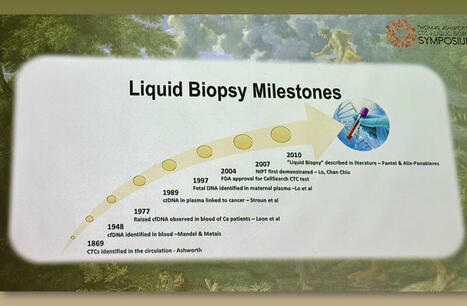
Liquid biopsy did not begin with sequencing.
It began in 1869, when Thomas Ashworth, an Australian physician, looked through a microscope 🔬 and saw tumor-like cells circulating in the blood of a patient with metastatic cancer.
Today, we know these as circulating tumor cells, or CTCs.
Twenty years later, Stephen Paget gave oncology one of its most powerful ideas: the “seed and soil” hypothesis 🌱🌍
He proposed that metastasis was not random. Cancer cells may travel through the blood, but they grow only when they find the right microenvironment.
In many ways, Ashworth saw the seed.
Paget imagined the soil.
For decades, the field waited for technology to catch up ⏳
That changed when CTC detection became more standardized, especially with the FDA-approved CellSearch® system in 2004.
For the first time, clinicians and researchers had a practical way to capture and enumerate CTCs from blood.
Then, in 2010, Klaus Pantel and Catherine Alix-Panabières gave the field a name that would define a new era: “liquid biopsy.” 💡
Today, liquid biopsy is often used almost interchangeably with circulating tumor DNA, or ctDNA 🧬
But the term was originally coined in the context of CTCs — the idea that blood could provide a noninvasive, real-time window into cancer biology.
As sequencing became faster, cheaper, and more sensitive ⚡
ctDNA moved to the forefront.
It allowed us to:
✔ Detect mutations
✔ Monitor resistance
✔ Assess minimal residual disease
All without repeated tissue biopsies.
But liquid biopsy is bigger than ctDNA.
In 2026, the International Society of Liquid Biopsy (@ISLB) has given the field a broader and more detailed definition 📘
https://lnkd.in/dktDMVaT
🩸 Liquid biopsy now includes the analysis of:
→ Cells
→ Nucleic acids
→ Proteins
→ Metabolites
→ Extracellular vesicles
→ Other molecules released into body fluids
This is an important correction.
Liquid biopsy is not one analyte.
It is not one platform.
It is not only blood.
It's a dynamic way to study disease through accessible body fluids.
The future will be multi-analyte and longitudinal 🔄
CTCs inform us of viable metastatic cells.
ctDNA may reveal genomic evolution.
Extracellular vesicles, proteins, RNA, metabolites, and immune signals may complete the picture.
The next chapter will not be about replacing tissue biopsy entirely.
It will be about asking better questions, earlier:
❓ Is disease still present?
❓ Is resistance emerging?
❓ Is treatment working?
❓ Can relapse be detected before imaging?
From Ashworth’s microscope 🔬
to Paget’s hypothesis 🌱
to Pantel and Alix-Panabières’ 2010 terminology 📖
to ISLB’s 2026 definition
Liquid biopsy has become one of oncology’s most powerful ideas:
A less invasive, more dynamic way to understand cancer as it changes.
#LiquidBiopsy #CTCs #ctDNA #Oncology #CancerResearch #PrecisionMedicine
Jayant Khandare Umberto Malapelle Prashant Agrawal Actorius Innovations and Research
|
|
Scooped by
Gilbert C FAURE
February 25, 5:48 AM
|
Prostate cancer is characterized by multifocality, inter- and intra-patient tumour heterogeneity, and differences in risk of progression to metastatic disease, castration resistance and lethality, which can make prognosis challenging. Consequently, sampling methods that provide accurate insight into disease phenotype to facilitate risk-stratification of patients are crucial. The variable biology of prostate cancer seems to be recapitulated in the phenotypic heterogeneity of circulating tumour cells (CTCs). CTC sampling offers a liquid biopsy method to achieve minimally invasive longitudinal sampling for disease monitoring. CTC analysis has also offered a crucial insight into aggressive phenotypes, disease metastasis and treatment response, particularly in clinical trials. The clinical use of CTC count for prognosis in advanced prostate cancer has been approved by the FDA, but is not routinely used clinically, as these cells are technically challenging to isolate and analyse. However, methodological advances continue to improve CTC enrichment and profiling. Understanding the clinical utility of CTCs and future innovations is crucial to incorporating CTCs into the clinical management of prostate cancer. Circulating tumour cells (CTCs) offer a minimally invasive biopsy strategy for prostate cancer monitoring. This Review discusses the use of CTCs at all stages of prostate cancer development and treatment, from CTC isolation and enrichment strategies to the prognostic and clinical utility of these cells in prostate cancer.
|
|
Scooped by
Gilbert C FAURE
August 11, 2025 10:26 AM
|
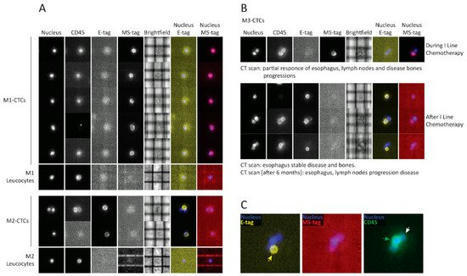
Heterogeneous circulating tumor cells (CTCs) have been implicated in the formation of new metastases. However, circulating cells expressing both tumor and immune cell proteins are often dismissed as insignificant findings in CTC studies. Two non-contemporaneous blood samples from a metastatic breast cancer patient were analyzed using an enrichment-free platform to identify canonical, epithelial-only CTCs (CD45-/cytokeratin + , epi.CTCs) and CD45 + /cytokeratin+ immune-like CTCs (im.CTCs). Single cells from both samples were subjected to copy number and protein expression profiling. A cohort of 36 metastatic breast cancer patients was then analyzed to search for additional cases with im.CTCs. Here, we identified and characterized a population of CTCs exhibiting an immune-like state. In two samples from an index patient, im.CTCs outnumbered epi.CTCs, comprising >97% of the CTC population. Single-cell copy number analysis of 43 im.CTCs and 30 epi.CTCs revealed clonal alterations across both populations, confirming a shared tumor origin. Furthermore, im.CTCs contained pseudo-diploid profiles that did not reflect dilution from the addition of a normal diploid genome, indicating that they were unlikely to have originated from tumor-immune cell fusion. Protein expression analysis showed that im.CTCs express CD45 as well as other immune-related markers, such as CD3 and CD4, and the cancer stemness marker, CD44. Subsequent analysis of a metastatic breast cancer cohort identified an additional patient harboring im.CTCs with the same tumor-derived, non-fusion genome as in the index case. Collectively, these genomic and proteomic features distinguish im.CTCs from previously reported circulating cells may represent a novel form of tumor cell plasticity. Tumor cells are known to take on features that allow them to survive and move to new sites. This variation can make it difficult to distinguish them from other cells in the blood. Using a platform to profile rare cells in blood samples, we identified a population of cells expressing cancer and immune cell proteins in a breast cancer patient. Genomics data confirmed that these cells originated from the tumor and that they were different from another cell type sharing a similar protein expression pattern. We analyzed additional samples and found a second patient with these immune-like tumor cells. These findings support the existence of a cancer-immune state that might play a role in helping tumor cells spread. Higa et al. analyzed circulating cells expressing cancer and immune cell markers in breast cancer patients. Based on genomic and protein expression profiling, they show that the cells were unlike previously described circulating tumor cells with immune-like phenotypes because they did not appear to arise from heterotypical cell fusion.
|
|
Scooped by
Gilbert C FAURE
February 13, 2024 11:08 AM
|
Abstract. Circulating tumor cells (CTC) and tumor-derived Extracellular Vesicles (tdEV) loads are prognostic of survival in carcinoma patients. The current meth
|
|
Scooped by
Gilbert C FAURE
November 14, 2023 5:46 AM
|
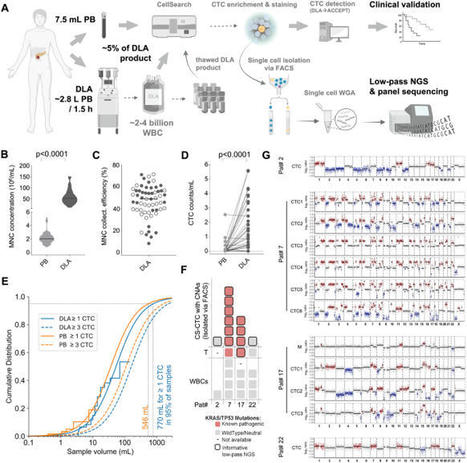
The limited sensitivity of circulating tumor cell (CTC) detection in pancreatic adenocarcinoma (PDAC) stems from their extremely low concentration in the whole circulating blood, necessitating enhanced detection methodologies. This study sought to amplify assay-sensitivity by employing diagnostic leukapheresis (DLA) to screen large blood volumes. Sixty patients were subjected to DLA, with a median processed blood volume of ~ 2.8 L and approximately 5% of the resulting DLA-product analyzed using CellSearch (CS). Notably, DLA significantly increased CS-CTC detection to 44% in M0-patients and 74% in M1-patients, yielding a 60-fold increase in CS-CTC enumeration. DLA also provided sufficient CS-CTCs for genomic profiling, thereby delivering additional genomic information compared to tissue biopsy samples. DLA CS-CTCs exhibited a pronounced negative prognostic impact on overall survival (OS), evidenced by a reduction in OS from 28.6 to 8.5 months (univariate: p = 0.002; multivariable: p = 0.043). Additionally, a marked enhancement in sensitivity was achieved (by around 3-4-times) compared to peripheral blood (PB) samples, with positive predictive values for OS being preserved at around 90%. Prognostic relevance of CS-CTCs in PDAC was further validated in PB-samples from 228 PDAC patients, consolidating the established association between CTC-presence and reduced OS (8.5 vs. 19.0 months, p < 0.001). In conclusion, DLA-derived CS-CTCs may serve as a viable tool for identifying high-risk PDAC-patients and aiding the optimization of multimodal treatment strategies. Moreover, DLA enables comprehensive diagnostic profiling by providing ample CTC material, reinforcing its utility as a reliable liquid-biopsy approach. This high-volume liquid-biopsy strategy presents a potential pathway for enhancing clinical management in this malignancy.
|
|
Scooped by
Gilbert C FAURE
December 26, 2022 7:25 AM
|
The potential clinical utility of circulating tumor cells (CTCs) in the diagnosis and management of cancer has drawn a lot of attention in the past 10 years. CTCs disseminate from tumors into the bloodstream and are believed to carry vital information about tumor onset, progression, and metastasis. In addition, CTCs reflect different biological aspects of the primary tumor they originate from, mainly in their genetic and protein expression. Moreover, emerging evidence indicates that CTC liquid biopsies can be extended beyond prognostication to pharmacodynamic and predictive biomarkers in cancer patient management. A key challenge in harnessing the clinical potential and utility of CTCs is enumerating and isolating these rare heterogeneous cells from a blood sample while allowing downstream CTC analysis. That being said, there have been serious doubts regarding the potential value of CTCs as clinical biomarkers for cancer due to the low number of promising outcomes in the published results. This review aims to present an overview of the current preclinical CTC detection technologies and the advantages and limitations of each sensing platform, while surveying and analyzing the published evidence of the clinical utility of CTCs.
|
|
Scooped by
Gilbert C FAURE
April 3, 2022 1:46 PM
|
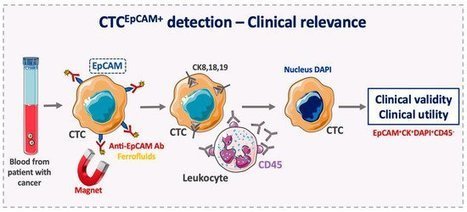
In the last few decades, the epithelial cell adhesion molecule (EpCAM) has received increased attention as the main membrane marker used in many enrichment technologies to isolate circulating tumor cells (CTCs). Although there has been a great deal of progress in the implementation of EpCAM-based CTC detection technologies in medical settings, several issues continue to limit their clinical utility. The biology of EpCAM and its role are not completely understood but evidence suggests that the expression of this epithelial cell-surface protein is crucial for metastasis-competent CTCs and may not be lost completely during the epithelial-to-mesenchymal transition. In this review, we summarize the most significant advantages and disadvantages of using EpCAM as a marker for CTC enrichment and its potential biological role in the metastatic cascade.
|
|
Scooped by
Gilbert C FAURE
November 29, 2021 6:32 AM
|
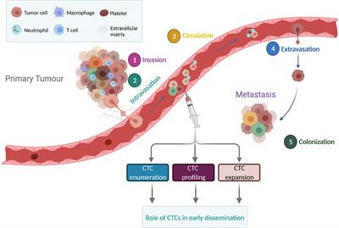
Circulating tumor cells (CTCs) are tumor cells that have sloughed off the primary tumor and extravasate into and circulate in the blood. Understanding of the metastatic cascade of CTCs has tremendous potential for the identification of targets against cancer metastasis. Detecting these very rare CTCs among the massive blood cells is challenging. However, emerging technologies for CTCs detection have profoundly contributed to deepening investigation into the biology of CTCs and have facilitated their clinical application. Current technologies for the detection of CTCs are summarized herein, together with their advantages and disadvantages. The detection of CTCs is usually dependent on molecular markers, with the epithelial cell adhesion molecule being the most widely used, although molecular markers vary between different types of cancer. Properties associated with epithelial-to-mesenchymal transition and stemness have been identified in CTCs, indicating their increased metastatic capacity. Only a small proportion of CTCs can survive and eventually initiate metastases, suggesting that an interaction and modulation between CTCs and the hostile blood microenvironment is essential for CTC metastasis. Single-cell sequencing of CTCs has been extensively investigated, and has enabled researchers to reveal the genome and transcriptome of CTCs. Herein, we also review the clinical applications of CTCs, especially for monitoring response to cancer treatment and in evaluating prognosis. Hence, CTCs have and will continue to contribute to providing significant insights into metastatic processes and will open new avenues for useful clinical applications.
|
|
Scooped by
Gilbert C FAURE
April 26, 2021 5:53 AM
|
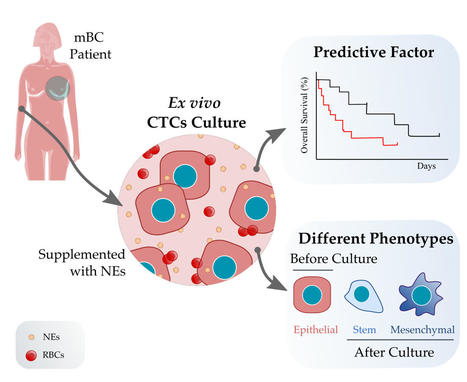
Background: Circulating tumor cells (CTC) have relevance as prognostic markers in breast cancer. However, the functional properties of CTCs or their molecular characterization have not been well-studied.
|
|
Scooped by
Gilbert C FAURE
August 8, 2020 9:55 AM
|
Enumeration and characterization of circulating tumor cells (CTC) hold the promise of a real time liquid biopsy. They are however present in a large b…
|
|
Scooped by
Gilbert C FAURE
July 8, 2020 1:13 PM
|
CTC detection using ISET is not suitable for lung cancer screening.
|
|
Scooped by
Gilbert C FAURE
May 30, 2020 4:10 AM
|
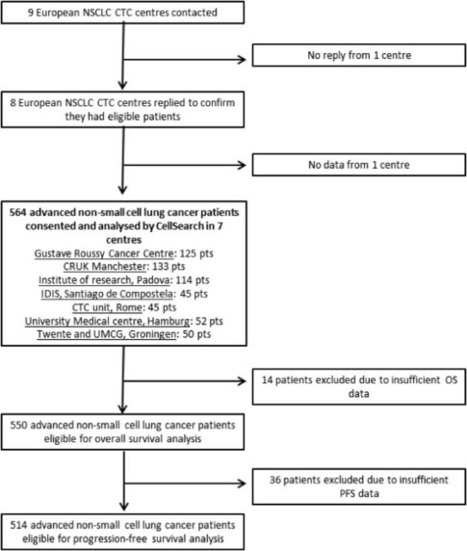
We assessed the clinical validity of circulating tumour cell (CTC) quantification
for prognostication of patients with advanced non-small cell lung cancer (NSCLC) by
undertaking a pooled analysis of individual patient data.
|
|
Scooped by
Gilbert C FAURE
April 4, 2020 3:43 AM
|
Metastases and cancer recurrence are the main causes of cancer death. Circulating Tumor Cells (CTCs) and disseminated tumor cells are the drivers of cancer cell dissemination. The assessment of CTCs’ clinical role in early metastasis prediction, diagnosis, and treatment requires more information about their biology, their roles in cancer dormancy, and immune evasion as well as in therapy resistance. Indeed, CTC functional and biochemical phenotypes have been only partially characterized using murine metastasis models and liquid biopsy in human patients. CTC detection, characterization, and enumeration represent a promising tool for tailoring the management of each patient with cancer. The comprehensive understanding of CTCs will provide more opportunities to determine their clinical utility. This review provides much-needed insights into this dynamic field of translational cancer research.
|
|
|
Scooped by
Gilbert C FAURE
February 27, 3:53 AM
|
🌹 ✨ International Day of Women and Girls in Science ✨ 🌹
February 11, 2026
✨ Let’s celebrate scientific women from yesterday, today, and tomorrow! ✨
☀️ On this meaningful day, we are proud to highlight the outstanding work of 3 women scientists from Liquid Biopsy LCCRH Lab - Laboratoire Cellules Circulantes Rares Humaines – CHU de Montpellier, whose dedication and excellence are helping advance translational oncology research.
📰 Their study has just been published in the highly regarded Journal of Experimental & Clinical Cancer Research (IF= 12.8), which trusted us with the publication of:
“Reconstructing the Metastatic Journey: Functional Circulating Tumor Cells and Disseminated Tumor Cells-based Models for Translational Oncology.”
🕊️ This achievement reflects their scientific rigor, commitment, and passion for better understanding metastasis to ultimately improve patient care.
📖 The article is open access — feel free to read and share it!
🌺 Today, and 🌺 every day, let’s continue to support, empower, and inspire women and girls in science.
Recherche et innovation – CHU de Montpellier, Anne FERRER-VILLENEUVE, Renan Targhetta, Pôle Biologie Pathologie du CHU de Montpellier, Laurence LACHAUD
Liquid Biopsy LCCRH Lab - Laboratoire Cellules Circulantes Rares Humaines, Sanglier caroline, Laure Cayrefourcq
Mauro Castelli
MedVallée Montpellier, Quinzaine Franco-Allemande d'Occitanie
Association Des étoiles dans la mer, vaincre le glioblastome, Laetitia Levère
European Liquid Biopsy Society, PANCAID, GUIDE.MRD
OncoDaily Aurélia Brégnac
ACADEMIE NATIONALE DE MEDECINE DE FRANCE
|
|
Scooped by
Gilbert C FAURE
February 12, 3:29 AM
|
🩸 ❓🩸 Do you want to learn more about the history of circulating tumor cell (CTC) lines and xenograft models, developed over the past 2️⃣2️⃣ years from CTCs isolated directly from cancer patients — and their biological insights, clinical relevance, and translational applications?
✨ This new review is for you !!!! GOOD READING !!!!
❤️ Proud to highlight the outstanding work of these women scientists from the Liquid Biopsy LCCRH Lab - Laboratoire Cellules Circulantes Rares Humaines (CHU de Montpellier), whose dedication and scientific excellence continue to advance translational oncology research.
📰 Our study has just been published in the excellent Journal of Experimental & Clinical Cancer Research (IF 12.8) :
✨ “Reconstructing the Metastatic Journey: Functional Circulating Tumor Cells and Disseminated Tumor Cells-based Models for Translational Oncology.” ✨
🕊️ A comprehensive overview of how functional CTC/DTC models help us better understand metastasis biology and move closer to improving patient care.
📖 The article is open access — feel free to read and share it!
Recherche et innovation – CHU de Montpellier, Renan Targhetta, Pôle Biologie Pathologie du CHU de Montpellier
Liquid Biopsy LCCRH Lab - Laboratoire Cellules Circulantes Rares Humaines, Sanglier caroline, Laure Cayrefourcq
Mauro Castelli
MedVallée Montpellier, Quinzaine Franco-Allemande d'Occitanie
Fondation ARC pour la recherche sur le cancer
European Liquid Biopsy Society, PANCAID, GUIDE.MRD
OncoDaily Aurélia Brégnac
ACADEMIE NATIONALE DE MEDECINE DE FRANCE
#LiquidBiopsy #CTCs #CancerResearch #TranslationalOncology #Metastasis #WomenInScience #OpenScience
|
|
Scooped by
Gilbert C FAURE
November 2, 2024 6:35 AM
|
🩸Liquid Biopsy Milestones since 1869 ...
✨Wonderful experience at the University of Technology Sydney (UTS) in #Australia.
CHU de Montpellier
Recherche et…
|
|
Scooped by
Gilbert C FAURE
January 17, 2024 4:26 AM
|
|
|
Scooped by
Gilbert C FAURE
April 11, 2023 4:34 AM
|
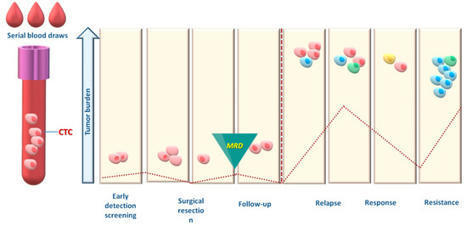
Over the last decade, liquid biopsy has gained much attention as a powerful tool in personalized medicine since it enables monitoring cancer evolution and follow-up of cancer patients in real time. Through minimally invasive procedures, liquid biopsy provides important information through the analysis of circulating tumour cells (CTCs) and circulating tumour-derived material, such as circulating tumour DNA (ctDNA), circulating miRNAs (cfmiRNAs) and extracellular vehicles (EVs). CTC analysis has already had an important impact on the prognosis, detection of minimal residual disease (MRD), treatment selection and monitoring of cancer patients. Numerous clinical trials nowadays include a liquid biopsy arm. CTC analysis is now an exponentially expanding field in almost all types of solid cancers. Functional studies, mainly based on CTC-derived cell-lines and CTC-derived explants (CDx), provide important insights into the metastatic process. The purpose of this review is to summarize the latest findings on the clinical significance of CTCs for the management of cancer patients, covering the last four years. This review focuses on providing a comprehensive overview of CTC analysis in breast, prostate and non-small-cell lung cancer. The unique potential of CTC single-cell analysis for understanding metastasis biology, and the importance of quality control and standardization of methodologies used in this field, is also discussed.
|
|
Scooped by
Gilbert C FAURE
June 23, 2022 2:42 AM
|
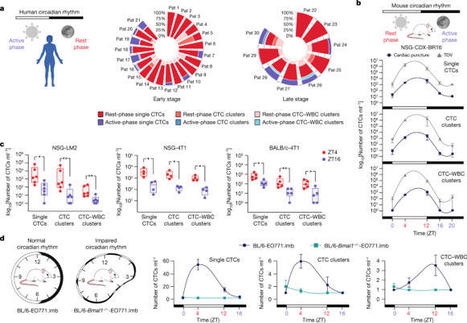
The metastatic spread of cancer is achieved by the haematogenous dissemination of circulating tumour cells (CTCs). Generally, however, the temporal dynamics that dictate the generation of metastasis-competent CTCs are largely uncharacterized, and it is often assumed that CTCs are constantly shed from growing tumours or are shed as a consequence of mechanical insults1. Here we observe a striking and unexpected pattern of CTC generation dynamics in both patients with breast cancer and mouse models, highlighting that most spontaneous CTC intravasation events occur during sleep. Further, we demonstrate that rest-phase CTCs are highly prone to metastasize, whereas CTCs generated during the active phase are devoid of metastatic ability. Mechanistically, single-cell RNA sequencing analysis of CTCs reveals a marked upregulation of mitotic genes exclusively during the rest phase in both patients and mouse models, enabling metastasis proficiency. Systemically, we find that key circadian rhythm hormones such as melatonin, testosterone and glucocorticoids dictate CTC generation dynamics, and as a consequence, that insulin directly promotes tumour cell proliferation in vivo, yet in a time-dependent manner. Thus, the spontaneous generation of CTCs with a high proclivity to metastasize does not occur continuously, but it is concentrated within the rest phase of the affected individual, providing a new rationale for time-controlled interrogation and treatment of metastasis-prone cancers. A study of patients with breast cancer and mouse models demonstrates that most circulating tumour cells are generated during the rest phase of the circadian rhythm, and that these cells are highly prone to metastasize.
|
|
Scooped by
Gilbert C FAURE
December 21, 2021 3:49 AM
|
Background: Here, we monitored the evolution of CTCs spread in 11 patients affected by locally advanced EC who were undergoing therapy. Methods: In this perspective study, we designed multiple blood biopsies from individual patients: before and after neoadjuvant chemo-radio therapy and after surgery. We developed a multi-target array, named Grab-all assay, to estimate CTCs for their epithelial (EpCAM/E-Cadherin/Cytokeratins) and mesenchymal/stem (N-Cadherin/CD44v6/ABCG2) phenotypes. Identified CTCs were isolated as single cells by DEPArray, subjected to whole genome amplification, and copy number aberration (CNA) profiles were determined. Through bioinformatic analysis, we assessed the genomic imbalance of single CTCs, investigated specific focal copy number changes previously reported in EC and aberrant pathways using enrichment analysis. Results: Longitudinal monitoring allowed the identification of CTCs in at least one time-point per patient. Through single cell CNA analysis, we revealed that CTCs showed significantly dynamic genomic imbalance during treatment. Individual CTCs from relapsed patients displayed a higher degree of genomic imbalance relative to disease-free patients’ groups. Genomic aberrations previously reported in EC occurred mostly in post-neoadjuvant therapy CTCs. In-depth analysis showed that networks enrichment in all time-point CTCs were inherent to innate immune system. Transcription/gene regulation, post-transcriptional and epigenetic modifications were uniquely affected in CTCs of relapsed patients. Conclusions: Our data add clues to the comprehension of the role of CTCs in EC aggressiveness: chromosomal aberrations on genes related to innate immune system behave as relevant to the onset of CTC-status, whilst pathways of transcription/gene regulation, post-transcriptional and epigenetic modifications seem linked to patients’ outcome.
|
|
Scooped by
Gilbert C FAURE
May 26, 2021 8:31 AM
|
Circulating tumor cells (CTCs) play a causal role in the development of metastasis, the major cause of cancer-associated mortality worldwide. In the past decade, the development of powerful cellular and molecular technologies has led to a better understanding of the molecular characteristics and timing of dissemination of CTCs during cancer progression. For instance, genotypic and phenotypic characterization of CTCs, at the single cell level, has shown that CTCs are heterogenous, disseminate early and could represent only a minor subpopulation of the primary tumor responsible for disease relapse. While the impact of molecular profiling of CTCs has not yet been translated to the clinic, CTC enumeration has been widely used as a prognostic biomarker to monitor treatment response and to predict disease relapse. However, previous studies have revealed a major challenge: the low abundance of CTCs in the bloodstream of patients with cancer, especially in early stage disease where the identification and characterization of subsequently “lethal” cells has potentially the greatest clinical relevance. The CTC field is rapidly evolving with development of new technologies to improve the sensitivity of CTC detection, enumeration, isolation, and molecular profiling. Here we examine the technical and analytical validity of CTC technologies, we summarize current data on the biology of CTCs that disseminate early and review CTC-based clinical applications.
|
|
Scooped by
Gilbert C FAURE
February 6, 2021 10:00 AM
|
Kirby, Dan and Glynn, Macdara and Kijanka, Gregor and Ducrée, Jens (2016) Rapid and Cost-Efficient Enumeration of Rare Cancer Cells from Whole Blood by Low-Loss Centrifugo-Magnetophoretic Purification Under Stopped-Flow Conditions. Cytometry A, 87A. pp. 74-80. ISSN 0196-4763 Download (554kB) | Preview Share your research more... Abstract We present a substantially improved design and functionality of a centrifugo‐magnetophoretic platform which integrates direct immunoseparation and cost‐efficient, bright‐field detection of cancer cells in whole blood. All liquid handling takes place in a disposable cartridge with geometry akin to a conventional compact disc (CD). The instrumentation required to process such a “lab‐on‐a‐disc” cartridge can be as simple and cost‐efficient as the rotor on a common optical disc drive. In a first step, target cells in a blood sample are specifically bound to paramagnetic microbeads. The sample is then placed into the disc cartridge and spun. In the second step, magnetically tagged target cells are separated by a co‐rotating, essentially lateral magnetic field from the background population of abundant blood cells, and also from unbound magnetic beads. A stream of target cells centrifugally sediments through a stagnant liquid phase into a designated detection chamber. The continuous, multiforce immunoseparation proceeds very gently, i.e. the mechanical and hydrodynamic stress to the target cells is minimized to mitigate the risk of cell loss by collective entrapment in the background cells or vigorous snapping against a wall. We successfully demonstrate the extraction of MCF7 cancer cells at concentrations as low as 1 target cell per μl from a background of whole blood, with capture efficiencies of up to 88%. Its short time‐to‐answer is a notable characteristic of this system, with 10% of target cells collected in the first minute after their loading to the system and the remainder captured within the following 10 min. All the above‐mentioned factors synergetically combine to leverage the development of a prospective point‐of‐care device for CTC detection. Item Type: Article Additional Information: Funding: Science Foundation Ireland Grant Number: 10/CE/B1821 and ERDF and Enterprise Ireland Grant Number: CF 2011 1317 Cite as: Kirby, D., Glynn, M., Kijanka, G. and Ducrée, J. (2015), Rapid and cost‐efficient enumeration of rare cancer cells from whole blood by low‐loss centrifugo‐magnetophoretic purification under stopped‐flow conditions. Cytometry, 87: 74-80. https://doi-org.jproxy.nuim.ie/10.1002/cyto.a.22588 Keywords: rare cell separation; centrifugal microfluidics; lab-on-a-disc; CTC detection; stopped flow; Academic Unit: Faculty of Science and Engineering > Experimental Physics Item ID: 13941 Identification Number: https://doi.org/10.1002/cyto.a.22588 Depositing User: Dan Nickstrom Date Deposited: 05 Feb 2021 09:35 Journal or Publication Title: Cytometry A Publisher: Wiley Refereed: Yes Funders: Science Foundation Ireland (SFI), European Regional Development Fund (ERDF), Enterprise Ireland URI: Repository Staff Only(login required) Item control page Downloads Downloads per month over past year
|
|
Scooped by
Gilbert C FAURE
August 6, 2020 6:59 AM
|
In the last few decades, the epithelial cell adhesion molecule (EpCAM) has received increased attention as the main membrane marker used in many enrichment technologies to isolate circulating tumor cells (CTCs). Although there has been a great deal of progress in the implementation of EpCAM-based CTC detection technologies in medical settings, several issues continue to limit their clinical utility. The biology of EpCAM and its role are not completely understood but evidence suggests that the expression of this epithelial cell-surface protein is crucial for metastasis-competent CTCs and may not be lost completely during the epithelial-to-mesenchymal transition. In this review, we summarize the most significant advantages and disadvantages of using EpCAM as a marker for CTC enrichment and its potential biological role in the metastatic cascade.
|
|
Scooped by
Gilbert C FAURE
June 23, 2020 12:35 PM
|
Circulating tumor cells (CTCs) are rare cells shed into the bloodstream by invasive tumors and their analysis offers a promising noninvasive tool to predict and monitor therapeutic responses. CTC
|
|
Scooped by
Gilbert C FAURE
May 11, 2020 5:05 AM
|
Circulating tumor cell (CTC) enumeration has emerged as a powerful biomarker for the assessment of prognosis and the response to treatment in metastatic breast cancer (MBC). Moreover, clinical evidences show that CTC-cluster counts add prognostic information to CTC enumeration, however, their significance is not well understood, and more clinical evidences are needed. We aim to evaluate the prognostic value of longitudinally collected single CTCs and CTC-clusters in a heterogeneous real-world cohort of 54 MBC patients. Blood samples were longitudinally collected at baseline and follow up. CTC and CTC-cluster enumeration was performed using the CellSearch® system. Associations with progression-free survival (PFS) and overall survival (OS) were evaluated using Cox proportional hazards modelling. Elevated CTC counts and CTC-clusters at baseline were significantly associated with a shorter survival time. In joint analysis, patients with high CTC counts and CTC-cluster at baseline were at a higher risk of progression and death, and longitudinal analysis showed that patients with CTC-clusters had significantly shorter survival compared to patients without clusters. Moreover, patients with CTC-cluster of a larger size were at a higher risk of death. A longitudinal analysis of a real-world cohort of MBC patients indicates that CTC-clusters analysis provides additional prognostic value to single CTC enumeration, and that CTC-cluster size correlates with patient outcome.
|