


Dr. Thomas Stricker, M.D. PhD is Director of the Center for Advanced Laboratory Diagnostics (CALDx), and Associate Director for the Genomic Technologies, VAN...
Follow, research and publish the best content
Get Started for FREE
Sign up with Facebook Sign up with X
I don't have a Facebook or a X account
Already have an account: Login

from Flow Cytometry to Cytomics
40.6K views |
+0 today
 Your new post is loading...
 Your new post is loading...
Your new post is loading...
 Scoop.it!
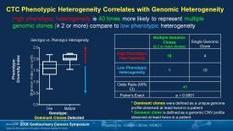
Budding technology with the capability of analyzing the molecular and genetic signatures of single circulating tumor cells (CTCs) in blood within a 48-hour window enables prostate cancers to be profiled in real time. Although this particular approach to liquid biopsy is still nascent, if and when validated, it may offer clinicians a rapid, straightforward tool to optimally sequence therapies for metastatic castration-resistant prostate cancer (mCRPC) while obviating the need for invasive surgical procedures to collect tissue samples. 
Scoop.it!

Welcome to Dx Digest, where FierceMedicalDevices highlights the highs and sometimes lows of the past week in the diagnostics industry.
Scoop.it!

Welcome to the Website of the 10th ISMRC International Symposium on Minimal Residual Cancer: Liquid Biopsy in Cancer Diagnostics and Treatment, March 19 - 21 2016 in Hamburg, Germany.
Scoop.it!
Gilbert C FAURE's insight:
Welcome The Cancéropôle du Grand-Est and the Comprehensive Cancer Center Freiburg are pleased to announce that they join forces to co-organize a meeting on Liquid biopsy in cancer. Both organizations would like to encourage local clinicians and scientists to engage in the new challenges that come with development of new patient care in the area of liquid biopsy. The symposium is built by Dr. Florence Schaffner and Prof. Dr. Nikolas von Bubnoff to encourage scientific discussion and possibly new collaborations between French and German scientists. To register to the tumor Liquid biopsy symposium, please fill out and submit the following form. Please register until Oct. 20th. by using the registration form below.
Scoop.it!
The mystery of unexpectedly low numbers of CTCs in a liquid biopsy may be explained by whether the blood is drawn from a vein or an artery.
Scoop.it!

Marie Thibault The Parsortix system from Angle plc captures and harvests circulating tumor cells.
Scoop.it!
SAN DIEGO, Aug. 11, 2015 /PRNewswire/ -- Epic Sciences announced today the publication of its research in...
Scoop.it!

If confirmed, this method of liquid biopsy would enable monitoring and genetic evaluation of pancreatic cancer from blood.
Gilbert C FAURE's insight:
cytometry at the end of page1
Scoop.it!

Mol Oncol. 2015 Jun 9. pii: S1574-7891(15)00124-6. doi: 10.1016/j.molonc.2015.05.009. [Epub ahead of print]
Gilbert C FAURE's insight:
Abstract
Immune checkpoint regulators such as PD-L1 have become exciting new therapeutic targets leading to long lasting remissions in patients with advanced malignancies. However, in view of the remarkable costs and the toxicity profiles of these therapies, predictive biomarkers able to discriminate responders from non-responders are urgently needed. In the present paper, we provide evidence that PD-L1 is frequently expressed on metastatic cells circulating in the blood of hormone receptor-positive, HER2-negative breast cancer patients. We performed western blot, flow cytometry and immunocytochemical analyses to demonstrate the specificity of the PDL1 antibody used in our study and established immunoscores for PDL1 expression on single tumor cells. We then selected sixteen patients with circulating tumor cells (CTCs) using the CellSearch® system and found PD-L1(+) CTCs in 11 patients (68.8%). The fraction of PD-L1(+) CTCs varied from 0.2 to 100% in individual patients. This is the first report demonstrating the expression of PD-L1 on CTCs. The established CTC/PD-L1 assay can be used for liquid biopsy in future clinical trials for stratification and monitoring of cancer patients undergoing immune checkpoint blockade.
A major characteristic of CTCs!
Scoop.it!

The definition of liquid biopsy has expanded to include the collection of cell-free DNA (cfDNA), along with various species of cell-free RNA and exosomes, all of which are capable of providing information on the disease status of patients with...
Gilbert C FAURE's insight:
The capture of whole, circulating tumor cells (CTCs) was the initial focus of liquid biopsies. Now, the definition of liquid biopsy has expanded to include the collection of cell-free DNA (cfDNA), along with various species of cell-free RNA and exosomes, all of which are capable of providing information on the disease status of patients with cancer.
Scoop.it!

EKF Molecular Diagnostics has agreed a collaboration with specialist medtech company ANGLE plc, to investigate the combination of ANGLE's Parsortix circulating tumour cell (CTC) harvesting platform with EKF Molecular's PointMan™ DNA enrichment...
Scoop.it!

At least 30 companies are seeking to develop the next generation of circulating tumor cell (CTC) technology, part of an emerging focus on analyzing the biofluids of patients with cancer as a “liquid biopsy,” particularly for solid tumors.
|
Scoop.it!
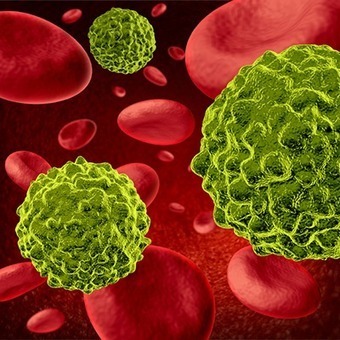
The last five years have seen substantial growth of interest in the development of liquid biopsies - non-invasive blood tests that allow the isolation of c
Scoop.it!

The exploitation of cerebrospinal fluid-derived circulating DNA as liquid biopsy promises a more accurate, effective and less invasive approach in unmasking the molecular characteristics of brain tumors.
Scoop.it!
The company will use the money to develop liquid biopsy versions of its solid tumor BRAF and KRAS diagnostics as part of a larger research collaboration.
Scoop.it!

EKF’s PointMan™ Used in Successful Liquid Biopsy Research read EKF Diagnostics news in the SelectScience scientific news archive
Scoop.it!

Arterial Blood Liquid Biopsy Detects Circulating Melanoma Cells
Scoop.it!
Br J Cancer. 2015 Sep 17. doi: 10.1038/bjc.2015.332. [Epub ahead of print]
Gilbert C FAURE's insight:
Our results illustrate the potential use of CTCs as a non-invasive, real-time liquid biopsy to determine PTEN gene status. The prognostic and predictive value of PTEN in CTCs warrants investigation in CRPC clinical trials of PI3K/AKT-targeted therapies.British Journal of Cancer advance online publication 17 September 2015; doi:10.1038/bjc.2015.332 www.bjcancer.com.
an EPIC Sciences study!
Scoop.it!

Publication of @EpicSciences research validates 'no cell left behind' CTC platform http://t.co/I2PB6PC64l #liquidbiopsy #cancer
Scoop.it!
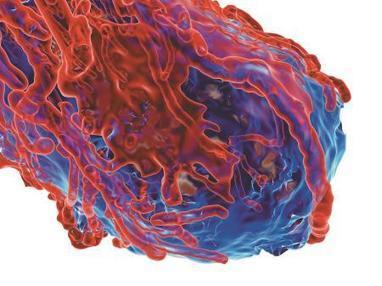
Solid cancer tumors typically are diagnosed, graded, and staged using tissue biopsy in which all or part of a neoplasm—usually the primary tumor—is removed for histological examination and genetic and molecular analysis. While tissue biopsy provides important diagnostic and therapeutic information, it has several inherent drawbacks that limit its clinical utility. To overcome these, new biopsy techniques, including liquid biopsy to detect tumor cells in the blood stream, are being developed and evaluated.
Gilbert C FAURE's insight:
via EPIC
Scoop.it!

It takes just three minutes for a precious 10 millilitre blood sample to be carried from the specialist cancer wards of the Christie Hospital in Manchester, down a corridor, and into a lab housing several large, white machines. Via Dominique Blanchard
Gilbert C FAURE's insight:
liquid biopsy, CTCs are a subject of interest on this topic! Caroline is communicating widely, good for the topic
Scoop.it!
SAN DIEGO, June 1, 2015 /PRNewswire/ -- Epic Sciences, Inc., a private diagnostics company that designs and...
Gilbert C FAURE's insight:
The amended agreement increases the available capacity of the facility from $5 million to $15 million and has extended the maturity by 27 months to April 1, 2019. The availability of additional capital provides Epic Sciences the option to accelerate the expansion of its research capabilities and product development efforts. Epic Sciences' technology enables the rapid and comprehensive characterization of circulating tumor cells (CTCs) from a liquid biopsy to inform therapy selection, including combination therapies, and the detection of early signs of drug resistance.
Scoop.it!

A new type of liquid biopsy for solid tumors based on analyzing exosomes from the blood is being tested by clinicians.
Scoop.it!

Epic Sciences will present an analysis of PD-L1 protein expression on circulating tumor cells (CTCs) from non-small cell lung cancer (NSCLC) patients.
Gilbert C FAURE's insight:
The poster presentation will take place November 19 at the 26th EORTC-NCI-AACR Symposium on Molecular Targets and Cancer Therapeutics in Barcelona. Because tumor biopsy material is often limited in lung cancer patients, Epic developed a new assay that detects PD-L1 protein on CTCs in a blood sample. Novel immunotherapies targeting PD-L1, and its receptor PD-1, have demonstrated efficacy in clinical studies for a number of cancers. Consequently, a test to accurately quantify PD-L1 expression in a liquid biopsy may help identify patients more likely to respond to therapy.

Xianglei WU's comment,
November 17, 2014 4:23 AM
D'après les études récentes, l'expression de PD-L1 sur cellule tumorale est inductible. Donc, est-ce que une évidence de CTC PD-L1 (+) pourrait vérifier le tumeur primaire PD-L1(+)?
|





