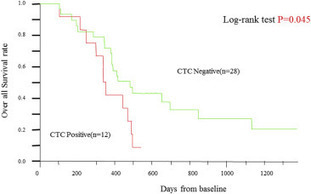
Among gastrointestinal cancers, the prognosis of pancreatic cancer is one of the poorest, with a large number of patients being diagnosed with unresectable tumors at the first visit to a doctor. The aims of the present study were to investigate the circulating tumor cells (CTC) in peripheral blood in order to assess their clinical significance in patients with pancreatic cancer.
Publication date: 15 May 2017 Source:Biosensors and Bioelectronics, Volume 91 Author(s): Claire L. O’Connell, Robert Nooney, Colette McDonagh In this work, ultra-bright fluorescent silica nanoparticles (NPs) labels have been shown to selectively bind to a model circulating tumour cell (CTC) line, MCF-7, a metastatic breast cancer by targeting epithelial cellular adhesion molecule (EpCAM) present on the MCF-7 cell membrane. Silica NPs approximately 40nm in diameter were doped with different concentrations of Cyanine5 dye molecules, using the reverse microemulsion method. The NPs were two orders of magnitude brighter than Cyanine5 free dye and the measured fluorescence intensity matched a homo-Förster Resonance Energy Transfer model. NPs were conjugated with anti-EpCAM antibody to the NP surface for immunospecific targeting. In flow cytometry experiments the NPs were twice as bright as two commercial anti-EpCAM red fluorophore conjugates, APC and AlexaFluor®647. This increase is achieved while keeping non-specific binding low as established in control tests with a non-metastatic cancer cell line (HeLa). The NPs were also immunospecific in fluorescence microscopy experiments performed at room temperature on non-fixed cells. Confocal microscopy was used to confirm the NPs were located on the surface of the cells, matching with the location of the EpCAM marker. These NPs labels have excellent potential in biomedical diagnostics, particularly when high signal to noise and good photostability are needed, for example, in point-of-care testing.
Hugh Market Research report of "Biotechnology: Circulating Tumor Cells (CTC) Technologies".This report on Circulating Tumor Cells (CTC) Technologies give
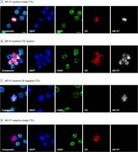
Real-time, single-cell multiplex immunophenotyping of circulating tumor cells (CTCs) is hypothesized to inform diagnosis of tissue of origin in patients with carcinoma of unknown primary (CUP). In 20 to 50% of CUP patients, the primary site remains unidentified, presenting a challenge for clinicians in diagnosis and treatment. We developed a post-CellSearch CTC assay using multiplexed Q-dot or DyLight conjugated antibodies with the goal of detecting multiple markers in single cells within a CTC population. We adapted our approach to size-based CTC enrichment protocols for capturing CTCs and subsequent immunofluorescence (IF) using a minimal set of markers to predict the primary sites for common metastatic tumors. The carcinomas are characterized with cytokeratin 7 (CK7), cytokeratin 20 (CK20), thyroid transcription factor 1 (TTF-1), estrogen receptor (ER) or prostate-specific antigen (PSA. IF has been optimized in cultured tumor cells with individual antibodies, then with conjugated antibodies to form a multiplex antibody set. With IF, we evaluated antibodies specific to these 5 markers in lung, breast, colorectal, and prostate cancer cell lines and blood from metastatic prostate and breast cancer patients. This advanced technology provides a noninvasive, diagnostic blood test as an adjunct to routine tissue biopsy. Its further implementation requires prospective clinical testing.
This is a great opportunity for DeNovo Sciences since Yixin brings extensive and critical expertise from his experience on development of several cancer diagnostic technologies, especially the first and only FDA approved circulating tumor cell (CTC) technology, CellSearch from Veridex.
Epic Sciences announced today that the company will present single cell sequencing data, from metastatic castrate resistant prostate cancer patients, at the 2015 annual meeting of the American Society for Clinical Oncology. This application expands the investigational utility of Epic Sciences' no cell left behind™ platform to characterize circulating tumor cell (CTC) genomic alterations. The study revealed that late stage patients have heterogeneous clonal CTC populations harboring separate genetic alterations. Furthermore, the data show an association between CTC copy number alterations and phenotypic features, in terms of both cellular morphology and resistance to therapy. The study, titled "Intra-patient genomic heterogeneity of single circulating tumor cells (CTCs) associated to phenotypic CTC heterogeneity in metastatic castrate resistant prostate cancer (mCRPC)," was conducted in collaboration with clinical investigators at Memorial Sloan Kettering Cancer Center.
OncLive CTC Panel Shows Promise as Survival Surrogate in CRPC OncLive Two-year survival of patients with low-risk levels of CTCs (<5 cells/7.5 mL of blood and any LDH) at 12 weeks was 46% versus 2% for patients with high-risk levels of CTCs ≥5/7.5...
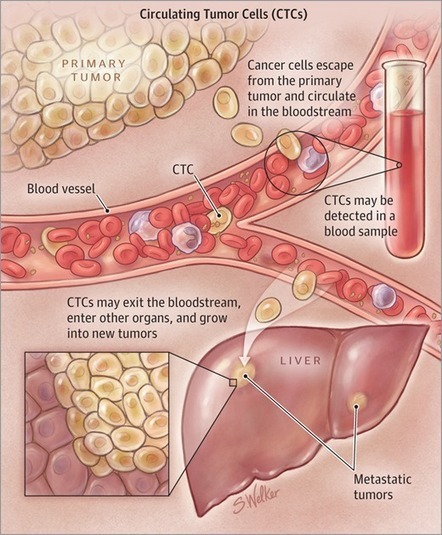
Circulating Tumor Cells (CTCs) have long offered the promise of transforming the way cancer can be diagnosed and treated. CTCs come from both primary an
Circulating tumor cells (CTC) in the blood of cancer patients are regarded as potential metastatic seeds, and their detailed characterization holds great promises for more exact prognosis, better diag
Small cell lung cancer (SCLC) is characterized by prevalent circulating tumour cells (CTCs), early metastasis and poor prognosis. We show that SCLC patients (37/38) have rare CTC subpopulations co-expressing vascular endothelial-cadherin (VE-cadherin
Epithelial–mesenchymal transition (EMT) is prominent in circulating tumor cells (CTC), but how it influences metastatic spread in this setting is obscure.
Research from JAMA Oncology — Association of AR-V7 on Circulating Tumor Cells as a Treatment-Specific Biomarker With Outcomes and Survival in Castration-Resistant Prostate Cancer
Conclusions and Relevance The results validate CTC nuclear expression of AR-V7 protein in men with mCRPC as a treatment-specific biomarker that is associated with superior survival on taxane therapy over ARS-directed therapy in a clinical practice setting. Continued examination of this biomarker in prospective studies will further aid clinical utility.
Howard I. Scher, MD1,2; David Lu, PhD3; Nicole A. Schreiber, BA1; Jessica Louw, BS3; Ryon P. Graf, PhD3; Hebert A. Vargas, MD4,5; Ann Johnson, MS3; Adam Jendrisak, MBA3; Richard Bambury, MB, BCh, BAO1,6; Daniel Danila, MD1,2; Brigit McLaughlin, BS1; Justin Wahl, BS3; Stephanie B. Greene, PhD3; Glenn Heller, PhD7; Dena Marrinucci, PhD3; Martin Fleisher, PhD8; Ryan Dittamore, MBA3 [+] Author Affiliations
JAMA Oncol. Published online June 04, 2016. doi:10.1001/jamaoncol.2016.1828
"I believe we have demonstrated that CTC characterization for PD-L1 expression is feasible using a CTC platform. This paves the way for the utilization of a CTC/PD-L1 assay in future clinical trials to explore whether it can stratify patients according to response, and potentially predict the efficacy of immune checkpoint blockade," comments study investigator Catherine Alix-Panabieres, Ph.D., Director of the Laboratory of Rare Human Circulating Cells, University Medical Centre of Montpellier, University of Montpellier EA2415, Montpellier, France.
Immune checkpoint regulators such as PD-L1 have become exciting new therapeutic targets leading to long lasting remissions in patients with advanced malignancies. However, in view of the remarkable costs and the toxicity profiles of these therapies, predictive biomarkers able to discriminate responders from non-responders are urgently needed. In the present paper, we provide evidence that PD-L1 is frequently expressed on metastatic cells circulating in the blood of hormone receptor-positive, HER2-negative breast cancer patients. We performed western blot, flow cytometry and immunocytochemical analyses to demonstrate the specificity of the PDL1 antibody used in our study and established immunoscores for PDL1 expression on single tumor cells. We then selected sixteen patients with circulating tumor cells (CTCs) using the CellSearch® system and found PD-L1(+) CTCs in 11 patients (68.8%). The fraction of PD-L1(+) CTCs varied from 0.2 to 100% in individual patients. This is the first report demonstrating the expression of PD-L1 on CTCs. The established CTC/PD-L1 assay can be used for liquid biopsy in future clinical trials for stratification and monitoring of cancer patients undergoing immune checkpoint blockade.
Your doctor may order a test for circulating tumor cells (CTCs) to help guide your cancer care. One of the major challenges in treating cancer is getting “all” of the cancer, including the parts we cannot see.
Research and clinical applications for CTCs have grown over the past couple of decades. When CTCs are present in the blood, their concentration is very low: as few as 1 CTC per 1 billion red blood cells. A new technique developed in the last few years allows for CTCs to be bound by surface receptors on the cancer cell to antibodies attached to magnetic nanoparticles that can then be separated, counted, and studied further.
A biomarker panel composed of circulating tumor cell number and lactate dehydrogenase level accurately served as a surrogate for survival in men with castration-resistant prostate cancer who received prednisone with or without abiraterone acetate,...
To get content containing either thought or leadership enter:
To get content containing both thought and leadership enter:
To get content containing the expression thought leadership enter:
You can enter several keywords and you can refine them whenever you want. Our suggestion engine uses more signals but entering a few keywords here will rapidly give you great content to curate.


 Your new post is loading...