


How to find inspiration in your failure, learn from your mistakes and come out better on the other side.Get the latest blog articles on business ideas and...

 Your new post is loading...
 Your new post is loading...
Your new post is loading...
 Scoop.it!
How to find inspiration in your failure, learn from your mistakes and come out better on the other side.Get the latest blog articles on business ideas and... 
No comment yet.
Sign up to comment
Scoop.it!
Beth Kanter's insight:
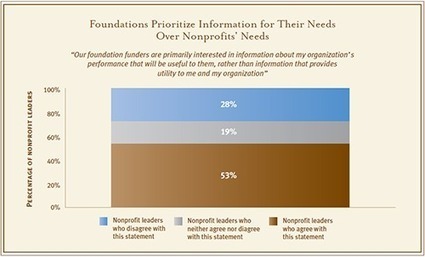
We surveyed the 300 nonprofit leaders who comprise CEP’s Grantee Voice panel about some of the issues they face in performance management. In addition to the fact that most nonprofits do not receive any financial or non-monetary help for performance measurement, nonprofits also said that their funders are more interested in focusing on assessment information that is useful to foundations than information that would be helpful to nonprofits.
Scoop.it!
Beth Kanter's insight:
The bit that caught my eye: The practice of being able to conduct quick, cheap and relatively painless tests, experiments or research exercises in order to gain invaluable insights, feedback, solutions to hypotheses and the like becomes vital in order to rethink, close the loop and ultimately “pivot” or change course based on integrating the new lessons into the model. Does this idea sound familiar? It should. It originates from the very segment that now struggles to understand and implement it in its operations: the world of big business. One might argue that many of these precepts are in fact basic tenets of direct marketing and the “Test. Learn. Evolve” methodology.
Scoop.it!

Corporate leaders often say they want employees to show creativity on the job, but few organizations do much to nurture it
Beth Kanter's insight:
What keeps organizations from being more creative? Fear, Narcissism, too many rules, and second guessing. Now, how do change that?
Scoop.it!
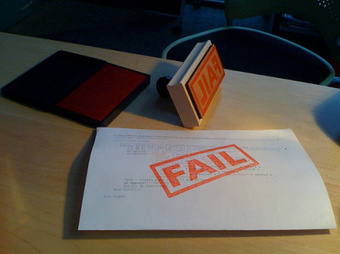
Eight years ago, I wrote a blog article about failure-friendliness in nonprofit technology. It was very much inspired by my friend and colleague, Dan Scharfman. Since Dan died this week, and this...
Scoop.it!

This might not work. I didn't realize how tired I was until I started driving away from the Icarus launch event on Wednesday. Since June, I've been working flat out on creating the four books that were part of the...
Scoop.it!
Seattle improviser and auctioneer Matt Smith shows how altering our physiological response to failure can lead to transparency, availability, flexibility and...
Beth Kanter's insight:
This is a great message and technique to incorporate into a session about letting failure go. The video is short and worth listening to all of it, but if you are impatient skip to minute 7 and listen to the last five minutes. Inner Voices: We all have inner negative headsets that we learned as kids. It boils down to: Don't Make A Mistake Then there is the "mistake" moment. We cringe .... Think of your last mistake -- personal or at work. Feel what your body does -- the cringe, the shame. What does it feel like. That's what is stopping us from learning from mistakes or failure. Our body gives in to the mistake. It's like gumby doing the bidding. I made a mistake! No matter you learned this as a child - in school or whatever. As an adult, it probably still haunts you. It keeps you from being creative, stops us, but here is a technique to get past it: The failure bow. Coming to Terms With A Mistake So You Can Learn Trapeze artists do it, improvisers, gymnists Don't go into cringe mode, do this: (1) Raise hands to offer it up and let it go (2) Dumb ass grin like a dog being trained and uses submission (3) Say thank you I failed and move on Don't walk into a meeting late and raise your hands and shout this, but you can do it under the table If you incorporate the failure bow, you are not glorifying failure - but rewarding the transparency, being accountable, being in the present, and paving the way to innovation. Visuals to incorporate http://www.flickr.com/photos/cambodia4kidsorg/galleries/72157632309133445/
Scoop.it!

This is an excellent overview and summary of the fail fast idea in the nonprofit sector. Taking a cue from Silicon Valley, nonprofits are learning to use their failures as an integral part of the process of innovation and, ultimately, progress.
Scoop.it!

Key Point: A healthier approach also means managing acceptable losses. That's different — and, ironically, much safer — than trying to prevent failures altogether, by over-relying on past data to try "managing" risks that are inherently unknowable. We need to see those losses not as failures but as investments in the future. To succeed, we have to make it cool to fail in the right places, as long as it's recoverable, and as long as we learn from the failures and adjust.
Scoop.it!

Leaders need to think about failure as a process we go through rather than an event to avoid at all costs.
Scoop.it!

These are the thoughts of Ben Smith, Founder of Merchant Circle, on the lack of risk-aversion of entrepreneurs. "If you are going to be a serial entrepreneur, you are probably going to get fired. And you certainly are going to fail. So maybe you should think about:
Will you accept failing to succeed?
Via Guillaume Decugis
|
Scoop.it!
Beth Kanter's insight:
It's exactly the advice your mother didn't give you, unless your mom was a rule-breaker like my mine. Fear means go. This was one of my mom's favorite principles. She said it when I was petrified to go to school for the first time; she said it when I was going to be on live television and was nervous I had nothing valuable to say. She believed fear was a compass — an indicator of the direction you should go in if you want to become the person you have the potential to be. Next time you're afraid of something, instead of turning around, take these three steps.
Over the years, I've learned that fear is a great teacher. If we pretend it doesn't exist, we miss out on all of its lessons. We aren't able to improve, become stronger, and build our self-confidence. On the other hand, if we embrace it as a guide, it can help us move through life's challenges and come into our ultimate purpose — making us more fulfilled, and increasing the positive impact we have on the world.
Scoop.it!
![Why 90% of Startups Fail [INFOGRAPHIC] | Failure and Learning | Scoop.it](https://img.scoop.it/m4Yej5RnwsHG8I4RldJlwTl72eJkfbmt4t8yenImKBVvK0kTmF0xjctABnaLJIm9)
It seems like there's a hot new startup in the limelight more often than not, but the cold truth is 90% of tech start ups fail.
Beth Kanter's insight:
Ninety percent of startups fail, and that includes startups that generate huge buzz in their early days. "[S]ome fail due to a lack of vision and others have terrible timing. Ultimately, there is a lack of foresight which might have saved their companies," says a spokesperson for Allmand Law, which analyzed successful and failed startups for an infographic included in this article.
Scoop.it!

Failure. It’s a harsh word. No one enjoys failure. No one ever really says, “Hey, I really want to fail today so I can learn.” Yet failure is an inevitable part of human existence and it plays a central...
Beth Kanter's insight:
Good definition of failure Failure in the entrepreneurial vernacular is reframed as intentional iteration and experimentation. It’s not failure in the catastrophic sense. Failure is simply a portfolio of setbacks, false starts, wrong turns, and mistakes that are expected and tolerated because the entrepreneur purposefully iterates in order to gather new, relevant, and timely information. Through iteration entrepreneurs seek not to kill an idea but to make it better, and this happens through an anticipated cycle of pivoting and adapting. Don't use the F word, simply pressing and unimportant.
Scoop.it!

The climate has never been better for entrepreneurs, but the startling reality is that for the past thirty years, the failure rate of new businesses hasn’t changed--and it’s pretty depressing.
Beth Kanter's insight:
The importance of learning how to "pivot" in the face of failure
Scoop.it!

Beth, I heard ths this story on the radio which aired Nov. 12 and thought there was a connection between a culture's attitude towards struggle and failure/success.
Beth Kanter's insight:
Great piece!
Scoop.it!

Video Answers: Peter Sims: What are two reasons you should build a company? Peter Sims is an award-winning entrepreneur and author.
Beth Kanter's insight:
Scoop.it!

How to Steps for the failfaire methodology
Scoop.it!

California arts organizations conducted 28 experiments to achieve new relevance for audiences, communities and professional artists with support from The James Irvine Foundation. Here’s an overview of what they did and what they learned.
Scoop.it!

Many firms tend to mix the terms and concepts of creativity and innovation. There is a view that catering for creativity automatically makes innovation happen.
Scoop.it!

I never fully understood the negative impact of fear in the workplace until I had left it and could look at it as an outsider.
Scoop.it!
At her Harvard commencement speech, "Harry Potter" author JK Rowling offers some powerful, heartening advice to dreamers and overachievers, including one hard-won lesson that she deems "worth more than any qualification I ever earned."... Via axelletess

Beth Kanter's comment,
October 27, 2011 12:11 AM
Thank you so much. G reat to find another curated list on failure ..
|








One of my favorite quotes comes from legendary auto entrepreneur Henry Ford. As a business owner, I appreciate it because it captures what our mistakesand failures really are: Opportunities.
"Failure is only the opportunity to begin again, only this time more wisely."