Loopholes in a draft EU law aimed at curbing global warming emissions from transport, buildings and agriculture will result in a mere 23% cut by 2030 instead of the 30% originally foreseen, environmental activists have warned, denouncing a cynical ploy by EU member states to dodge their pledges made under the Paris Agreement.
The new Dutch government has presented an unexpectedly ambitious climate policy,including new zero-emission cars only by 2030 and closure of all coal power.
A carbon “safety reserve” aimed at helping poorer EU member states cut emissions in the transport, building and agriculture sectors will be accessible only for countries that reach their 2030 greenhouse gas reduction targets early.
About this Course Unemployment. Inflation. Protectionism. Economic bubble. Debt. Fiscal deficit. These are not just terms in an economics textbook; these are real-life challenges tha
From 2000 to 2014, the energy infrastructure of the city of Hamburg was mainly in the hands of private energy monopolies such as Vattenfall and E.On that controlled most of Germany's electric power infrastructure. These companies had a strong interest in utilizing their coal and nuclear power plants as long as possible, thereby obstructing a shift to renewable energy. Moreover, they were reluctant to provide equal access to small power providers and invest in a smart grid that allows more effective management of variable, distributed power inputs.
Heidelberg is known as one of the important university towns of Germany, with its university founded in 1386. Millions of tourists flock to this city to visit its Altstadt (the old city) and the castle, which remained intact through World War II. The location on either side of the Neckar river as it exits the Odenwald hills and enters the Rhine plain adds greatly to the beauty of the city (an excellent video of the river as it enters and exits Heidelberg can be seen here).
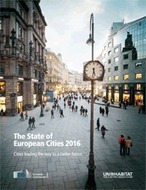
This report highlights how the unique characteristics of European cities can support the EU priorities of jobs & growth, migration and climate action. Cities boost innovation, embrace people from different backgrounds and reduce our impact on the planet. Cities that operate at the metropolitan scale and have sufficient autonomy and resources can better exploit these urban advantages.
Despite four decades of a cohesion policy designed to shrink economic gaps between EU regions, differences remain stark and may have been exacerbated by the 2008 economic crisis, it was heard as the European Union presented its seventh 'cohesion report' on Monday (8 October).
The first Polish feature film about climate change and the inevitable energy revolution. The film is directed by documentary filmmaker Łukasz Bluszcz, an
The EU’s Intelligent Energy Europe (IEE) Programme supported projects which sought to overcome non-technical barriers to the uptake, implementation and replication of innovative sustainable energy solutions.
On 28 September 2017, the European Commission launched the pilot phase of Level(s), a new voluntary EU framework for sustainable buildings which will help transform the building sector. It is the first tool of this kind that has been developed for use across the whole of Europe.
More and more European Union Member States are recognising the potential value of Open Data and are acting upon it. Open Data portals are in place, increasingly backed by solid Open Data policies. But it is not only the national level that matters. For a successful national Open Data initiative, the whole publication chain should be taken into account. Cities have an important role to play here. Specifically the larger European cities publish a lot of data on topics such as urban planning, tourism, and increasingly real-time data in the transport and mobility area, such as datasets on available parking spots. Moreover, cities also benefit from the use of Open Data to tackle typical urban challenges such as congestion and pollution, and to improve the quality of urban public services and the interactivity between the local government and citizens.
Paris souhaite débarrasser ses rues des véhicules diesel et essence d’ici à 2030. Tour d’horizon des mesures mises en place dans d’autres grandes villes européennes.
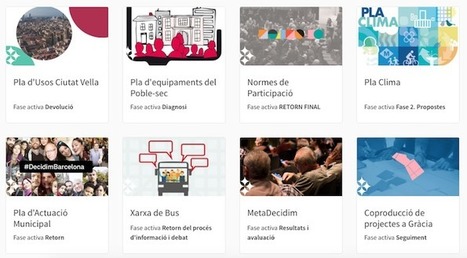
The word Decidim translated from Catalan means we decide, and it's the name of Barcelona's digital infrastructure for participatory democracy. One part functional database and one part political statement, organizers say Decidim is key to a broad digital transformation that is taking place in Barcelona — its institutions, markets, and economy.
The energy infrastructure that we inherited from the 20th century is one dominated by fossil fuels and uranium, mined in relatively few localities in the world. The distribution and refining of these fuels is tightly held by a few large corporations. Electricity generation typically occurs in plants that hold local or regional monopolies, with vast profit potential. While gasoline is burned in millions of vehicles, the distribution system remains within the control of a few corporations, which often have regional or national oligopoly or monopoly control.
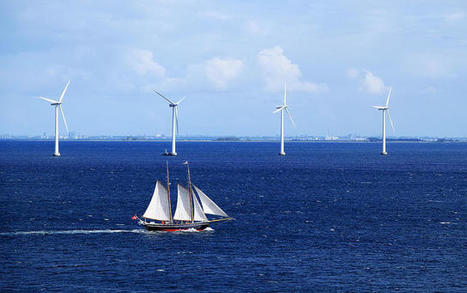
The establishment of a carbon-neutral energy system requires massive investments in infrastructure such as wind turbines. Because distributed energy systems do not fit the business models of the old energy utilities, they continue to invest far too little in this sector. Meanwhile, many individual electric power consumers are interested in investing in renewable power infrastructure, but these investments are too large and require a level of expertise too advanced for individual households to be able to support them. How can consumers take matters into their own hands?
Six bilateral visits, tens hours of discussion, around 20 places visited by Czech mayors in Waldviertel Kernland (WK) region, several inspirational places in the CR visited by Austrian partners – this is a brief summary of the experience exchange in terms of the project “100% RES communities”.
ALDA and the city of Sceaux (France) are partnering in the framework of the European project Co-Created, aimed at promoting citizens participation in the co-creation of local policies.
Co-Created, funded by European Union’s Erasmus+ programme targets municipalities with 10,000 - 30,000 inhabitants committed to strengthen their collaboration with civil society in order to improve services offered to citizens and public policies. The project is implemented by four partners in France, Italy, Spain, and Bulgaria.
Forte de quinze années d'expérience en matière de développement et d'aménagement durable, la Ville a renforcé sa démarche grâce à l'Application territoriale locale d'aménagement souhaitable (Atlas).
To get content containing either thought or leadership enter:
To get content containing both thought and leadership enter:
To get content containing the expression thought leadership enter:
You can enter several keywords and you can refine them whenever you want. Our suggestion engine uses more signals but entering a few keywords here will rapidly give you great content to curate.


 Your new post is loading...