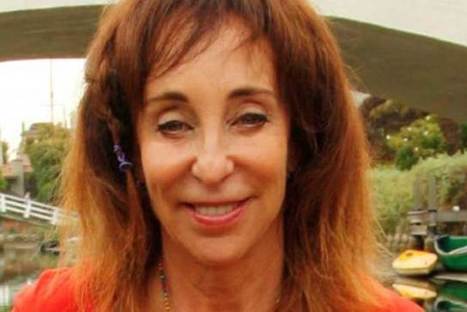
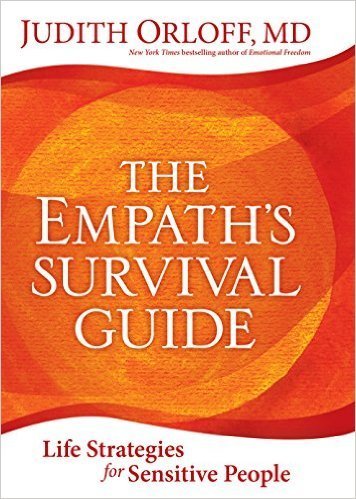
Her new book, The Empath’s Survival Guide: Life Strategies for Sensitive People, is a guide for a wide range of empaths and all sensitive people who struggle with managing the gifts — intuition, creativity and spiritual connection — with challenges that overwhelm them. The book also offers a much-needed acknowledgment that empaths are not imagining the things they feel and sense.
As Dr. Orloff explains, “As empaths, we actually feel others’ emotions, energy, and physical symptoms in our own bodies, without the usual defenses that most people have.”
Imagine being able to soak up all of those feelings, and being around a fake person. Being around inauthentic people is close to excruciating if you’re an empath.
By definition, empaths are emotionally sensitive people who absorb the emotions and feelings of others- even the ones other people don’t know they’re emitting. Sounds like an exhausting job, right? Well, imagine being able to soak up all of those feelings, and being around a fake person. It’s perplexing, frustrating, and yes, excruciating, for an empath to be around an inauthentic person. 5 Things to Recognize When An Empath Is In Your Presence
Empathy is when we reach our hearts out to others and put ourselves in their shoes. However, being an empath goes even farther. Like many of my patients and myself, empaths are people who’re high on the empathic spectrum and actually feel what is happening in others in their own bodies.
As a result, empaths can have incredible compassion for people–but they often get exhausted from feeling “too much” unless they develop strategies to safeguard their sensitivities and develop healthy boundaries.
In my book, “The Empath’s Survival Guide” I discuss the following intriguing scientific explanations of empathy and empaths. These will help us more deeply understand the power of empathy so we can utilize and honor it in our lives.
How can we collectively and individually heal during a time in history wherein we are faced with the most concrete demonstrations of human hatred? Why are we seeing this hatred now? Is there a reason?
I am an empath. I discovered I was an empath after I got involved in a very deep and highly destructive relationship with a narcissist.
I am writing this article from the perspective of an empath, however, would love to read the view from the opposite side if there are any narcissists that would like to offer their perception on this.
Through writing about the empath personality type I have connected with many other people who class themselves as an empath and time and again I have heard people tell me how they have also attracted relationships with narcissists. There is a link. So, I decided to explore it further.
Many people believe they absorb the emotions of the people they meet. But are they feeling the same thing?
Empathy research divides the phenomenon into three empathic subtypes: emotional, cognitive, and motivational. The idea is that when you see someone else experiencing emotion, you respond in one of three ways: You catch their emotional state yourself (emotional empathy), think about what they’re feeling and why (cognitive empathy), or feel compelled toward some action (motivational empathy, alternately known as compassion or empathic concern).
Empaths seem to experience a heightened, perhaps debilitating level of emotional empathy, taking on the pain and joy of other people to excess.
But what, exactly, is an empath? The word itself is a recent invention and wandered into general usage not from clinical language, but from science fiction. The earliest instance that the OED cites is in a 1956 short story of the same name, published in New Worlds magazine. In this scenario, an empath is capable not of heightened sensitivity of other's needs, but of outright emotional telepathy.
“How exactly does the government use empaths?” a character asks.
“We can tell the level of a man's loyalty just by meeting him,” the empath explains. “We can walk around a factory and sense there's going to be a strike.”
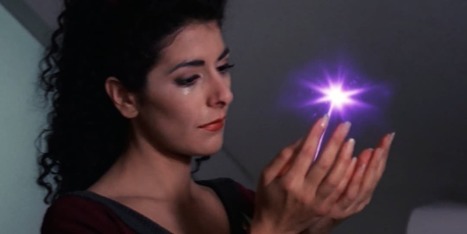
The word — and the concept of utilitarian empathy — became a genre convention in the following years, but didn't cross the spark gap between genre fiction and general pop culture until it lent its name to a 1968 episode of Star Trek, in which the Enterprise crew meets a woman whose species is capable of absorbing and relieving others' pain.
What is an empath? Being an empath is when you are affected by other people’s energies, and have an innate ability to intuitively feel and perceive others. Your life is unconsciously influenced by others’ desires, wishes, thoughts, and moods.
Being an empath is much more than being highly sensitive and it’s not just limited to emotions. Empaths can perceive physical sensitivities and spiritual urges, as well as just knowing the motivations and intentions of other people. You either are an empath or you aren’t. It’s not a trait that is learned. You are always open, so to speak, to process other people’s feelings and energy, which means that you really feel, and in many cases take on the emotions of others.
Many empaths experience things like chronic fatigue, environmental sensitivities, or unexplained aches and pains daily. These are all things that are more likely to be contributed to outside influences and not so much yourself at all. Essentially you are walking around in this world with all of the accumulated karma, emotions, and energy from others.
Often times an empath can feel anxiety attacks, panic attack symptoms, and are highly sensitive person (s) if they haven't harnessed their "superpower"
This video is about advice for empaths, signs you are an empath and to show how empaths forgot their power. By being in your body and in your center will assist with the law of attraction, motivation, joy, personal development, spiritual expansion and manifesting the life you want!
When dating, we're often made to feel like we're not enough. We need to determine our self-worth on our own instead of leaving it in the hands of others.
I am an empath. An empath is someone who is affected by other people’s energies, and have a natural ability to feel and perceive others. For those who identify as empaths, we often are made to feel that our emotions are too much.
We walk around weighted with the feeling that being so passionate and feeling everything deeply is somehow a flaw. It would occur to no one (least of all to us) that our heightened emotions were a part of our very nature and not a flair for drama.
As highly sensitive people, many of us have spent our lives feeling different from other people but not really knowing why. In some cases, others tell us that we’re different, usually in a critical, demanding way – you’re too sensitive, too intense, too shy, why are you hiding out here when everyone else is at the party?
These all too familiar phrases, even when they are well-meant, usually have the effect of making sensitive people feel unacceptable, unappreciated and inherently flawed in some way, leading us quickly down the road to feelings of shame, self-doubt and low self-esteem.
Deborah Ward is the author of Overcoming Low Self-Esteem with Mindfulness.
As a psychiatrist and an empath, I am fascinated by how the phenomenon of empathy works. I feel passionately that empathy is the medicine the world needs right now.
Empathy is when we reach our hearts out to others and put ourselves in their shoes. However, being an empath goes even farther. Like many of my patients and myself, empaths are people who’re high on the empathic spectrum and actually feel what is happening in others in their own bodies. As a result, empaths can have incredible compassion for people—but they often get exhausted from feeling “too much” unless they develop strategies to safeguard their sensitivities and develop healthy boundaries.
Judith Orloff MD Author,
'The Empath's Survival Guide: Life Strategies for Sensitive People'
Empaths, or highly sensitive people, know all too well the struggle of trying to balance their emotions in a world full of conflicting and intense energy. Most people would view empathy as a positive trait in an individual, but for an empath, they know the dark side of this innate characteristic.
Being able to empathize with what another person goes through and offering support and understanding can literally save someone’s life, in some cases, but empaths take on the energy and feelings from every person they encounter. This gets deeply embedded into their consciousness, and can drag them down for weeks, even months, after the interaction.
In my previous post (Part I) we explored the nuts and bolts of how empathy and psychic ability are interrelated, and come together in a sort of outer level of awareness, which is the imagination.
I promised a Part II of that post would shortly follow, in which we would move in the direction of applying this knowledge to actual psychic development.
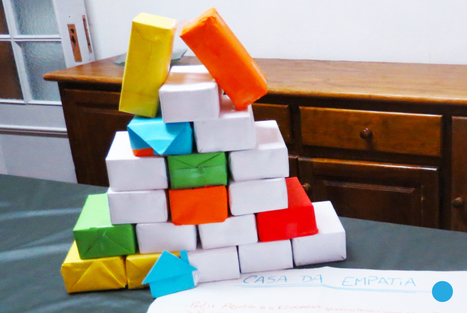
Houses of Empathy is an European project that aims to contribute to the reduction of violence amongst peers in residential care settings, by building a programme on bullying prevention.
Like the building of a house, the project proposes to develop and reinforce personal and social skills, the foundations of healthy relationships, in order to gradually promote empathy skills among children, young people and staff.
What makes Houses of Empathy an innovative project is its ecological approach. It intervenes on different levels, involving not only young people, but also the staff in residential care settings and other stakeholders in the child protection community.
Through awareness raising activities and dissemination of several resources, Houses of Empathy intends to activate all the community to prevent bullying in residential care settings; inviting all the actors to play a key role in the promoting positive environments in those contexts. To achieve this, in addition to an anti-bullying programme for young people, the project will promote training for professionals, seminars, conferences and also provides an online platform for support
The trademark of an empath is feeling and absorbing other people’s emotions and/or physical symptoms because of their high sensitivities. These people filter the world through their intuition and have a difficult time intellectualizing their feelings. As a psychiatrist and empath myself, I know the challenges of being a highly sensitive person.
When overwhelmed with the impact of stressful emotions, empaths may experience panic attacks, depression, chronic fatigue, food, sex, and drug binges, or exhibit many other physical symptoms that defy traditional diagnosis.
This article is about the seemingly negligible distinctions between being empathic and being an empath. Seemingly negligible because the practical distinctions are huge!
As an HSP, you’ll likely identify with being empathic. For various reasons, it can even be a preferable word to Highly Sensitive. Being empathic means that you are able to relate to how other people are feeling. So how is this different from being an empath?
Empath is another term for clairsentient. With that, we’re moving from the world of psychology to the world of spiritual healing. An estimated 2-4% of the population is clairsentient (I suspect those numbers may be much lower, but that is a separate discussion) and about 15-20% of the population is HSP.
"Highly sensitive people are too often perceived as weaklings or damaged goods. To feel intensely is not a symptom of weakness, it is the trademark of the truly alive and compassionate.
It is not the empath who is broken, it is society that has become dysfunctional and emotionally disabled. Anthon St Maarten
The truth is I believe it’s up to us empaths to turn the ship around, as underneath the layers and the colors, we will find nature herself—the universe herself—to be an empathic intelligence. Ever expanding, ever contracting, she relates herself on and on, to and from the patterns that compose her—she is as one with herself, feeling together with all that she is. She is the definition of empathy
The word empath is a hot trend in spiritual and personal growth circles, and we have an idea of what an empath is… but what does it mean to be an empath?
So yes… don’t know if you’ve all heard, but there’s this shift and awakening thing going on around the world. Have you noticed that?
So why is that actually? Why has your personal journey been so hectic and what is the point of all this empath stuff?
To get content containing either thought or leadership enter:
To get content containing both thought and leadership enter:
To get content containing the expression thought leadership enter:
You can enter several keywords and you can refine them whenever you want. Our suggestion engine uses more signals but entering a few keywords here will rapidly give you great content to curate.


 Your new post is loading...