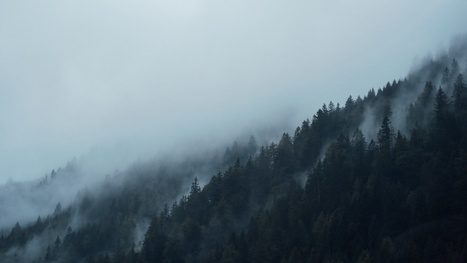
Michael Wardian ran 7 marathons in 7 consecutive days on 7 continents—all in under 3 hours each at World Marathon Challenge. This is his story.
Via 4PlayChannel

 Your new post is loading...
 Scoop.it! Michael Wardian ran 7 marathons in 7 consecutive days on 7 continents—all in under 3 hours each at World Marathon Challenge. This is his story. Via 4PlayChannel 

4PlayChannel's curator insight,
February 27, 2017 12:37 AM
Hesitant in pushing yourself physically? Read this athlete's story who ran 7 marathons on 7 continents in 7 days!!
Sign up to comment
Scoop.it!

From
qz

Just 10% of people aged 20-24 are out of work or not in school in Germany. As befits Germany’s reputation for efficiency and industrial success, this is one of the lowest levels in the world.
Via Sharrock
Scoop.it!

We are in a mission-critical state of losing democracy unless we train a laser-beam focus on broadening our definition of what it means to be literate in our society. It is not difficult to create the standards and write the assessments we need to measure our students’ web literacy skills. Certainly, being able to validate between fact and fiction must become a basic tenet of teaching reading across all channels of information. The curriculum to support these skills cannot be limited to a special course or an orientation in the library. As with reading print, web literacy needs to be embedded across the curriculum and within the design of assignments across all grades and subjects. Students need practice, practice, practice. Via Sharrock
Scoop.it!
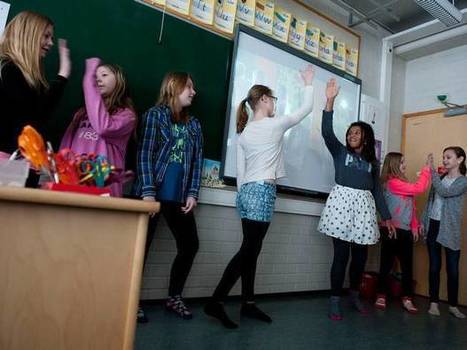
For years, Finland has been the by-word for a successful education system, perched at the top of international league tables for literacy and numeracy. . Pasi Silander, the city’s development manager, explained: “What we need now is a different kind of education to prepare people for working life. . “Young people use quite advanced computers. In the past the banks had lots of bank clerks totting up figures but now that has totally changed. . “We therefore have to make the changes in education that are necessary for industry and modern society.” . Subject-specific lessons – an hour of history in the morning, an hour of geography in the afternoon – are already being phased out for 16-year-olds in the city’s upper schools. They are being replaced by what the Finns call “phenomenon” teaching – or teaching by topic. For instance, a teenager studying a vocational course might take “cafeteria services” lessons, which would include elements of maths, languages (to help serve foreign customers), writing skills and communication skills. . More academic pupils would be taught cross-subject topics such as the European Union - which would merge elements of economics, history (of the countries involved), languages and geography. . Via Gust MEES, John Rudkin, Shaona Williams, Jim Lerman

jmoreillon's curator insight,
March 27, 2015 9:42 AM
This is what school librarians have been doing forever! 
María Florencia Perrone's curator insight,
April 8, 2015 4:00 PM
The world around us is not labelled or divided in categories, then why is academic content? Can we not relate topics and elaborate meaning on the basis of relationships and intertwined data? 
Dr. Helen Teague's curator insight,
April 13, 2015 9:11 PM
I wonder if this would work in the U.S.? Also, in Finland, students do not take standardized tests until the end of high school (Zhao, 2012, p. 111), so thankfully, perhaps the drill and kill process is diminished. *Zhao, Y. (2012). World Class Learners.
Scoop.it!
This is video is a great tool to drum up interest in an AP Human Geography course produced by David Burton. See more promotional videos/start-of-the-year clips at http://wp.me/P2dv5Z-1ec

Sally Egan's curator insight,
February 15, 2017 4:11 PM
Love this video introducing the study of Geography. Its dramatic and diverse in the issues it introduces.

K Rome's curator insight,
October 6, 2018 7:56 PM
This is just one of my favorite "start of the year" videos. I've compiled them for when you need to show the importance of geography, spatial thinking and geo-literacy. Collectively, they show why taking geography courses is so important, useful and interesting.
Tags: geo-inspiration, geography education, APHG.
Scoop.it!

Written by Joni Boyd Acuff, Ohio State University, and Laura Evans, University of North Texas As dear friends and colleagues, we met in the middle for the book Multiculturalism in Art Museums Today (Rowman & Litlefield, 2014). We -- Joni, an expert in critical multiculturalism, and Laura, whose specialty is art museum education -- had known…
Scoop.it!

India’s capital city Delhi has introduced a ban on disposable plastic. Cutlery, bags, cups and other forms of single-use plastic were prohibited by the National Green Tribunal (NGT). There is particular concern in the country about the amount of plastic waste it produces. According to the Times of India, it is responsible for an astonishing 60 per cent of the plastic that is dumped in the world’s oceans every year.
Via GTANSW & ACT
Scoop.it!

Victoria Hughes's curator insight,
March 2, 2016 9:59 PM
A great way to introduce the Unit on Landforms and Landscapes - including a discussion of scale and vertical exaggeration. Curriculum Links The different types of landscapes and their distinctive landform features The geomorphic processes that produce landforms, including a case study of at least one landform GeoWorld 8 Chapter 1: Distinctive landform features: values and protection Chapter 2: Diversity of landscapes Chapter 3: Restless Earth: geomorphic processes Geoworld 7 NSW
Scoop.it!
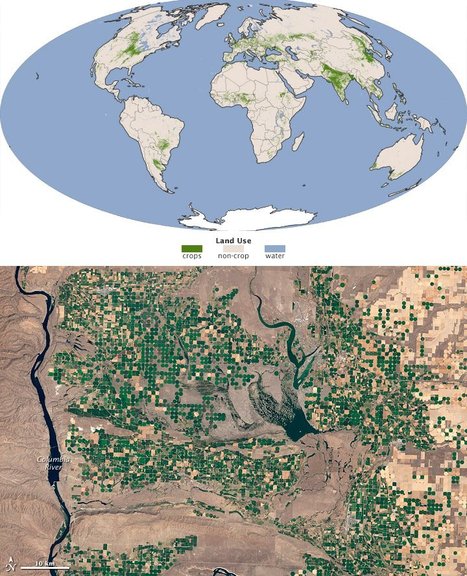
"With seven billion people now living on Earth, the ever growing demand is putting unprecedented pressure on global resources—especially forests, water, and food. How can Earth’s resources be managed best to support so many people? One key is tracking the sum of what is available, and perhaps nothing is better suited to that task than satellites." Via GTANSW & ACT, Leisa Mackey
Dennis Swender's insight:
Share your insight

Brady Jones's comment,
February 9, 2017 6:55 PM
Measurements from the Landsat satellite also make it possible to tell how much water the crops consume in an arid environment. Such measurements are likely to become more important as demands on limited water resources increase. Currently, agriculture accounts for 85 percent of the world’s fresh water consumption

Brieanna Hepburn's comment,
February 13, 2017 6:15 PM
With seven billion people now living on Earth, the ever growing demand is putting unprecedented pressure on global resources—especially forests, water, and food.
Scoop.it!

Just one generation ago Australian schoolkids were taught that Aboriginal people couldn’t count beyond five, wandered the desert scavenging for food, had no civilisation, couldn’t navigate and peacefully… Via Kim Flintoff
Scoop.it!
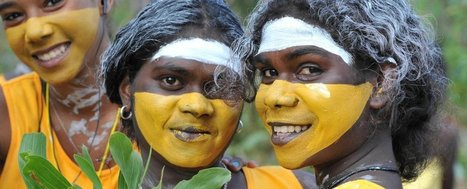
The most comprehensive genetic study of Indigenous Australians to date indicates that the group is the oldest continuous civilisation on Earth, dating back more than 50,000 years ago - and that modern Indigenous Australians are the descendants of the first people to settle Australia. Via Kim Flintoff
|
Scoop.it!

From
tcf
Foreword After decades in the political wilderness, school integration seems poised to make a serious comeback as an education reform strategy. Sixty-two y
Scoop.it!
From
hbr
The latter is harder to measure but just as important. Via Kasia Hein-Peters, Dean J. Fusto, Mark E. Deschaine, PhD
Scoop.it!

"The term ‘cultural heritage’ has changed content considerably in recent decades, partially owing to the instruments developed by UNESCO. Cultural heritage does not end at monuments and collections of objects. It also includes traditions or living expressions inherited from our ancestors and passed on to our descendants, such as oral traditions, performing arts, social practices, rituals, festive events, knowledge and practices concerning nature and the universe or the knowledge and skills to produce traditional crafts." (Excerpt)
Via Sharrock
Scoop.it!
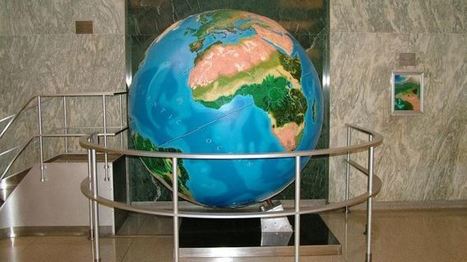
"The [importance of this study is that it] examines the dynamic between geography and area studies through their distinct understandings of space. As I argue, the dominance of the regional concept in geography, which took the multiple ways of bounding space as its central problematic, was reduced in area studies rendering of global space. This study assesses the transformation of geography during the two decades before and after the Second World War. This era was one of contrasts. On the one hand, geography was central to the war effort and in the creation of post-war programs, most notably area studies. On the other, this era also marked the relative marginalization of geography as a discipline in higher education."
Tags: education, geography, geography education, geopolitics, historical.
Scoop.it!

Source of image dana boyd has written a post in which she discusses why America is self-segregating and she comes up with a few suggestions such as the role of social media in segregating people into filter bubbles and echo chambers. But a key point she makes is that diversity, which is ‘often touted as… Via Ana Cristina Pratas
Scoop.it!

We ranked every state in America by its sheer physical beauty.
Dennis Swender's insight:
The ranking of Kansas as No. 50 is most appropriate, but I would submit it should come at the end and not the beginning for reasons that may be more deep than superficial. Kansas, especially the prairie terrain encompassing Chase County is every bit as awe inspiring as the Eiffel Tower in Paris, the majestic Swiss Alps, and the green waters of the Persian Gulf.
Kansas was twice-distilled from the great Permian seas that covered most of middle America from Denver to Pittsburgh for 50 million years, including the gigantic Nemaha Mountain Range in an earlier era. The beauty of the prairie is what remains of that range and those seas. Wayne Fields, in "Lost Horizon," (1988), writes, "For more than a generation, [pioneer] Americans viewed this [prairie] expanse, greater in size than the vast wooded regions they had just crossed, as some huge ocean separating east from west, itself no place at all. "[The prairie] immensity, its apparent visual redundancy, makes pointless a rush to somewhere else and creates an overwhelming suspicion that there is nowhere else." Earlier (1879), Walt Whitman, in "Specimen Days," acknowledges, "As to scenery (giving my own thought and feeling), while I know the standard claim is that Yosemite, Niagara Falls, the Upper Yellowstone, and the the like afford the greatest natural shows, I am not so sure but the prairies and plains, while less stunning at first sight, last longer, fill the esthetic sense fuller, precede all the rest, and make North America's characteristic landscape. Even (the prairie's) simplest statistics are sublime." [Both quotations from Heat-Moon, W. L. (1991). PrairyErth (a deep map). New York: Houghton Mifflin. ISBN 0-395-63752-x (pbk.)]
Scoop.it!
What if everybody in the world, all 7.4 billion of us all lived together in the same city? How big or small would this city have to be and how clos
Via GTANSW & ACT
Scoop.it!

clickable map quiz of Asian countries (RT @mhs_aphg: Links for the Asia Map Test tomorrow. Via Leisa Mackey
Scoop.it!
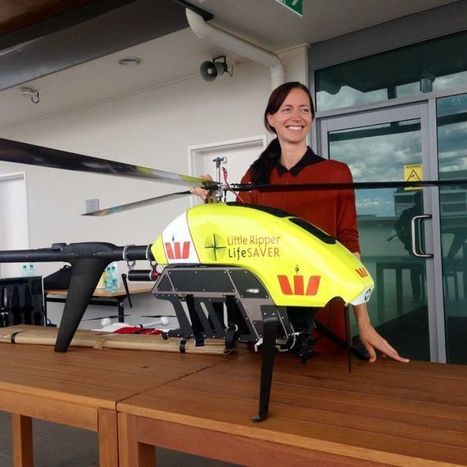
A trial looking into how drones can be used by Queensland councils to prepare for and recover from cyclones, storms, floods, and fires, is about to be launched.
Via GTANSW & ACT, Leisa Mackey
Scoop.it!

There is plenty of evidence to show Australia's Indigenous people had ways of counting big numbers, yet the myth persists they couldn't count more than a handful of things. Why? Via Kim Flintoff
Scoop.it!
Growing up with family and culture is a human right. It's also essential for healing | Natalie Lewis
Knowing who you are – a sense of self, a sense of place; of connection to ancestral culture – is an important right. It is a right that is unnoticed by many, and too often denied to our children. Via Kim Flintoff
|