


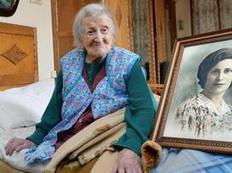
Emma Morano of Verbania, Italy was officially the last person born in the 1800s still living. She was born 29 November 1899 in the Piedmont region of Italy.

 Your new post is loading...
 Scoop.it! Emma Morano of Verbania, Italy was officially the last person born in the 1800s still living. She was born 29 November 1899 in the Piedmont region of Italy.
Dennis Swender's insight:
Besides genetics, Morano attributed her longevity to a diet of three eggs a day, two of them raw. As the oldest of eight siblings, she outlived all of them..

No comment yet.
Sign up to comment
Scoop.it!

Via Rick Davidson
Scoop.it!

If you haven't been to Google Arts & Culture lately (previously Google Art Project), then check out some of the new features. I recently discovered that you can organize and search by: Historical events, Historical figures, and Places. As a history and social studies teacher, this is a great feature. For example, if I'm teaching… Via Dr. Tom D'Amico (@TDOttawa)
Scoop.it!
You may not be as normal as you thought! Watch "Humans Are WEIRD!" https://youtu.be/8mpsIW1Mhs8 SUBSCRIBE: http://bit.ly/asapsci GET THE ASAPSCIENCE BOOK Via Ana Cristina Pratas, John Evans
Scoop.it!
Why do we need countries at all? They only lead to nationalism, trade wars, immigration problems, dictatorships, corruptions (name me a single government that is not corrupt?). Via David Hain
Scoop.it!

Here are some Culture Keys to optimize your chances for success while networking across cultures: Via David Hain
Scoop.it!

My Grandma had a few favourite phrases, one of which was "if you haven't got anything nice to say then it's best to say nothing at all". She was a… Via malek

malek's curator insight,
April 9, 2017 9:24 AM
Humans don't tend to like silence. It makes them feel awkward and uncomfortable so they have a tendency to try and fill in the gaps.
Scoop.it!

What are the kinds of ideas that convince people that they can change the world? Via John Evans
Dennis Swender's insight:
Share your insight
Scoop.it!

In one of the world's least recognized humanitarian crises, millions of people in northeastern Nigeria who have fled the violence of the terrorist group Boko Haram are sick and near starvation. More than 8 million people are in need of humanitarian assistance, 5.1 million are severely malnourished, most of them children. The displaced have crowded into squalid camps and towns too destitute to deal with the influx. Food, clean water, and sanitation are scarce or nonexistent, and these conditions create a perfect breeding ground for disease. In a deadly cycle, malnutrition renders children more susceptible to infection and less able to fight it. Epidemics of malaria and measles rage, polio has resurfaced, and child mortality is off the charts. The United Nations has asked for $1 billion for the crisis but has received only a tiny fraction, leaving health workers struggling with how to deliver lifesaving interventions when the needs are so great and the resources so paltry.
Scoop.it!

Infographic on Social Media world with Social media marketing, social media networking, and social media monitoring tools. Complete guide on social media Via Berend de Jonge
Scoop.it!

Digital Citizens is a coalition of consumers, businesses, and Internet experts focused on educating the public and policymakers on the threats people from all walks of life face on the Internet
Dennis Swender's insight:
Click on Cyber Criminals, College Credentials, and the Dark Web
Scoop.it!
"A group of geologists say they've enough evidence to confirm the existence of a new continent. Writing in the journal of the Geological Society of America, the group named the eighth continent 'Zealandia.' Scientists argue for an 8th continent, Zealandia, in the Geological Society of America."

David Stiger's curator insight,
December 7, 2018 9:16 AM
With 94% of Zealandia lying under water, most average people around the world will not care if National Geographic prints maps with an eighth continent. As cynical as that may be, geography should not be settled by human emotions and cultural expectations. Geography is a discipline that aims for understanding and precision. If continents are to be decided by continental shelves, rather than human cultural and ethnic patterns, then Eurasia is a continent and so is Zealandia. This latter outlook of focusing on physical geography is far more neutral and scientific. I would argue that is also more 'progressive'. Humans originate from one place (Africa) and are all one species. We have far more similarities than differences. Orienting our worldview to see that cultural geography is not the final arbiter of truth would ultimately bring people together. The logic follows that by acknowledging Zealandia, there is precedent for greater accuracy based on science, allowing geographers to teach about Eurasia. This is significant because it would alter the perception that Asians and Europeans are extremely distinct and separate groups due to a distorted notion that they lived on separate continents. The truth is that both groups existed on the same continent and were often brought into contact with each other throughout history. This idea, however, would further shatter the notion of a "pure, homogeneous Europe." Europe is only a "continent" because white Europeans were the first to possess the right combination of "guns, germs, and steel" to conquer other societies and elevate their own group's cultural status. Despite nature's evidence, Europeans awarded themselves an entire continent. In reality, Europe is a large peninsula of Asia. Just as Zealandia is an eighth continent sleeping underneath the waves.

Matt Danielson's curator insight,
December 12, 2018 4:45 PM
This is interesting to think about. What decides what separates continents, is it geological barriers, is it culture, is it ethnic origin, or maybe even plate tectonics? Either way you look at it New Zealand makes a great case for why they could become to be considered the eighth continent. I could argue either way, to keep it simple and go by culture and geological commonalities (Oceania Islands) I would prefer it does not form its own continent. These geologist would argue otherwise.
|
Scoop.it!

You’ve started holding hands with all your friends. And know it's a sign of genuine friendship and has nothing to do with romance.
Scoop.it!

In this year long campaign titled “It’s a Project-Based World,” Getting Smart is exploring the economic realities of a project-based world as part of the equity movement to ensure all students are prepared for college, career and citizenship. The purpose of this project is to promote equity and access to deeper learning outcomes for all students. We are cultivating a blog series exploring topics around the preparation of students, teachers and leaders for a project-based world. In addition to the blog series, the campaign includes podcast interviews, publications, infographics and speaking engagements. Via Dr. Tom D'Amico (@TDOttawa)

Lucia Boettjer's curator insight,
September 15, 2020 7:59 AM
This link provides a hub for other specific PBL. It integrates Social Studies PBL.
Scoop.it!

Ashcraft, who works with organizations and companies interested in making their workplace more inclusive, says employers should not just scrutinize their recruiting practices and demographics—but also re-evaluate their culture. “The first thing [employers] want to do is recruit, but they don’t realize they have cultural problems within the organization, and it can be difficult to focus on that,” says Ashcraft. Without fixing culture, she says “even if you successfully increase the pipeline, you won’t be successful if they leave once they get there.” Via Jim Lerman
Scoop.it!
Here are some Culture Keys to optimize your chances for success while networking across cultures: Via David Hain, Dennis Swender
Scoop.it!

In the beginning, Facebook Live was for celebrities such as Ricky Gervais, Gordon Ramsay and Deepak Chopra to send real-time video to their fans. Then in April 2016, Facebook expanded the service to everyone. The real power of the service didn't become clear until a couple of months later, when a woman named Diamond Reynolds turned on Facebook Live moments after police shot her boyfriend Philando Castile in a suburb of Saint Paul, Minnesota - letting the rest of the world watch as the scene played out (see our live-streaming feature in this issue). That was not something the company anticipated, says Fidji Simo, director of product for Facebook Live, but it now sees that kind of video as the way forward. Via David Hain
Scoop.it!

Stats Canada (2011) revealed that around half of the population living in the GTA area in Ontario were not born in Canada
Scoop.it!

The history of computers is not just an intriguing account of amazing innovations. More importantly, it is the story of the people who helped us get there. These stories teach us lessons that go far beyond computing—tales of determination, persistence and overcoming the odds. By sharing this history with our students we can help break the stereotypes about gender and race in computing. Via paul rayner
Scoop.it!

The extreme right wing has brought the discredited idea of eugenics back into the national conversation. Brave New World and Gattaca offer perspective.
Scoop.it!

When was the last time you, as a teacher, went out with a student's parent for karaoke or took a coffee break with your students during class? A look at different cultural norms in education systems around the world - and their benefits!
Scoop.it!
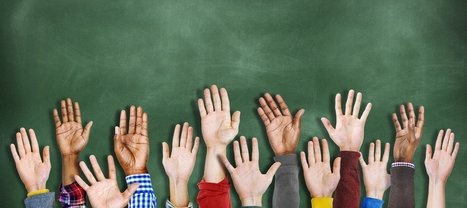
If you’d asked farmers a few hundred years ago what skills their kids would need to thrive, it wouldn’t have taken long to answer. They’d need to know how to milk a cow or plant a field. General skills for a single profession that only changed slowly—and this is how it was for most humans through history. Via John Evans, Mark E. Deschaine, PhD, MIND Research Institute
Dennis Swender's insight:
privileged hands?
Scoop.it!

From
www

Discover how WWI transformed America through the stories of those whose participation in the war to “make the world safe for democracy” has been largely forgotten.
Dennis Swender's insight:
April 10 premiere on PBS features stories from American Indians, African Americans, feminist activists and others
Scoop.it!

Most American citizens are proud of our “melting pot” status. After all, how many of us refer to ourselves as one ethnicity or another, and not just an “American”? It is a source of familial pride for us. Even African Americans, who do not always have an Ellis Island story in the family true, find collective strength in the stories of their ancestors and what it means for their lives today. While this blending of cultures can most definitely be a blessing—it can also be a curse. With more diversity than ever, teachers have to adjust methods from one student …
|






