In a system of reverse dominance, however, the many act in unison to deflate the ego of anyone who tries, even in an incipient way, to dominate them.
The following article makes an important point: Egalitarian societies didn’t just happen, they had a culture and ‘techniques’ that maintained it and Peter Gray calls it “reverse dominance”. In Christopher Bohm’s analysis of tribal governance in hunter-gathering societies, he argues it is based on an alliance between women and beta men, to avoid the power accumulation sought for by alpha males.
Ancient Greek democracy, and medieval communes had similar techniques, but they have all largely been forgotten, but to make organized networks work, to make digital commons work, to succeed in our P2P/Commons Transition, we need to revive them, which starts in my view by taking stock of that past.
For Simon Fraser University President Andrew Petter, the current challenge to community wellbeing stems from an urgent need for improved “social infrastructure,” or institutions and resources that serve the public good. Examples of social infrastructure include schools, hospitals, and libraries, in addition to all of the resources that they command. “There’s been a reduction in social infrastructure, and communities are becoming more strained,” says Petter. “This concern is accelerated by the fact that governments have less capacity fiscally than they used to. Where are communities to look in order to gain the support they need to create the connections that are necessary for healthy communities?”
Culturally responsive teaching is less about using racial pride as a motivator and more about mimicking the strategies students' communities use to teach them long before they come to school.
Deepen students’ understanding of resistance with these lessons that bring together the firsthand accounts of former Jewish partisans and historical context on the partisan movement.
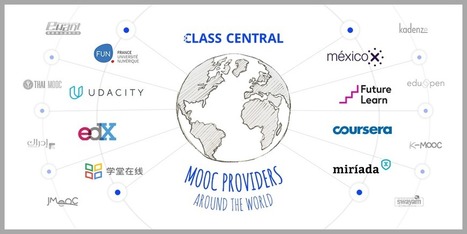
In the last three years I contributed to the EU-funded project ‘Higher Education Online, MOOCs the European way. Before summer the project closed in Brussels with a policy forum on European MOOCs reflecting on policies, strategies and linked initiatives. It was backed by a collection of short papers from all over Europe on strategies and policies of governments, MOOC platform providers, HE-institutions and Higher Education networks in which collaborating on online and open education.
Reading through these pages I am overwhelmed with the amount of plans and designs on different levels in European countries. At the start of the project I was particularly intrigued by the quest for business models and the effect of pedagogically well designed online courses, contributing to change in the European Higher Education ecosystem. Indeed, we came across a wide variety of MOOC-initiatives if which participating universities experiment and variate with pedagogical designs, business models and technologies.
The course commences through exploring the development of the conventional understanding of universal human rights and then moves to critiquing this concept from cultural relativist, postmodern, postcolonial and feminist perspectives. It also examines understandings of human rights from a range of cultural and religious perspectives as well as other contemporary rights issues.
Developing an awareness of contemporary issues in human rights is important in professions such as education, health, law, social work and development work, both in the public and private sector. You can also benefit from human rights knowledge in a voluntary capacity, advocating social justice, peace or building a sustainable future.
This course is part of the CurtinX Human Rights MicroMasters program.
If you take the verified certificate pathway for the three human rights courses you will qualify for the MicroMasters credential.
The MicroMasters credential is an achievement in itself, but if you want to study further, you can use it towards studying a Master of Human Rights at Curtin.
The PBS NewsHour just aired this segment on the recently released study on race and inequality (see The Best Commentaries On The Huge New Study On Race, Inequality & Gender). I think watching i…
Are you on the wrong side or the right side of history? Is there even a "wrong side" or a "right side"? What do those terms mean and why do politicians and pundits use them? Nationally syndicated columnist and best-selling author Jonah Goldberg explains
Want your students to actively engage in addressing inequality? Explore this annotated bibliography of resources for teaching students about social justice.
It’s been more than five years since online education got a massive boost when three free online courses, taught by Stanford professors, launched in October 2011. Each of these courses has had over…
We're proud to be one of only three unis in Australia invited to be part of #edX's new #MicroMasters program! We'll be launching our first MicroMasters program in January - it will be a MicroMasters in Human Rights. Completion of the three online human rights verified courses that contribute to this MicroMasters credential will provide a pathway into the Master of Human Rights degree we offer here at Curtin. #humanrights #MOOC
When it comes to success, it’s easy to think that people blessed with brains are inevitably going to leave the rest of us in the dust. But new research from Stanford University will change your mind (and your attitude).
Psychologist Carol Dweck has spent her entire career studying attitude and performance, and her latest study shows that your attitude is a better predictor of your success than your IQ.
Dweck found that people’s core attitudes fall into one of two categories: a fixed mindset or a growth mindset.
With a fixed mindset, you believe you are who you are and you cannot change. This creates problems when you’re challenged because anything that appears to be more than you can handle is bound to make you feel hopeless and overwhelmed.
People with a growth mindset believe that they can improve with effort. They outperform those with a fixed mindset, even when they have a lower IQ, because they embrace challenges, treating them as opportunities to learn something new.
Amid growing concerns that they compromise academic freedom and free speech, college administrators offer defense of Bias Assessment and Response Teams.
The Rio Olympics is the 28th Summer Olympic games. The first one took place in Athens in 1896 and since then the games have been held in 19 different countries.
"Jazz is often viewed as a uniquely American genre, frequently considered one of our nation's greatest artistic gifts to the world. The Rhode Island College course 'Jazz & Civil Rights' intensely traces the roots of Jazz from the dark times of slavery throughout the Civil Rights Movement. As a story map & timeline, this guide attempts to cohesively lay out key events in Jazz and the movement while incorporating the curriculum of the Jazz & Civil Rights course."
This Story Map was created by one of my students, exploring the history of Jazz from the times of slavery in the United States to the Civil Rights movement.
To get content containing either thought or leadership enter:
To get content containing both thought and leadership enter:
To get content containing the expression thought leadership enter:
You can enter several keywords and you can refine them whenever you want. Our suggestion engine uses more signals but entering a few keywords here will rapidly give you great content to curate.


 Your new post is loading...