IBM and the Eames Foundation have released a multimedia exploration of the fascinating history of mathematics for the iPad, Minds of Modern Mathematics.
* Get a bird's-eye view of the history of math
* See the interplay of ideas between contemporary mathematicians, culture and history
* 3D chronological view - one object at a time
* Mathematician profiles plus links to online resources
* 500+ high-resolution images of artifacts (from the original Mathematic exhibit)
* High-resolution version of original Men of Modern Mathematics poster (fully navigable)
* Eames mathematics films - watch nine original Eames educational films
Search, links, media sharing, social media, Wikipedia, games, open source etc. are ground breaking shifts in the way we learn, says Donald Clark. Unfortunate...
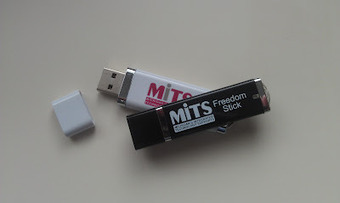
Once again Ira David Sokol has a post that provides resources for students. Although he is focused on students transitioning from secondary school to university, the tools he suggest will help all learners. The MITS Freedom Stick is a software package that you may download for free and install on a 4gb flash drive. It provides access to a wide range of tools that you may run from the flash drive or from a Windows computer. He also provides links to three other downloads: Learn Apps from RSC (the MITS Freedom Stick is based on this), AccessApps - for more visually impaired students, and TeachApps - classrom tool building. Additionally there are a number of SlideShare presentations about transition to college.
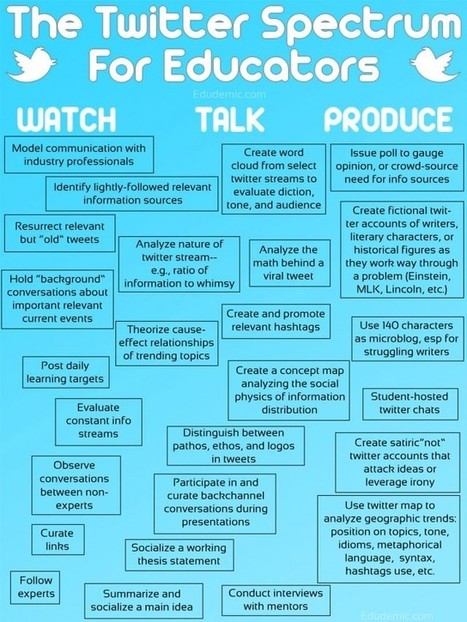
"...the Twitter Spectrum offers 25 different ways teachers can incorporate Twitter into the classroom.
It is organized by the categories WATCH (easiest degree of difficulty, TALK (moderate), and PRODUCE (highest degree of difficulty). We did our best to put each box in the appropriate place. Therefore, some of them are in between different degrees of difficulty, etc."
You are never too old to set another goal or to dream a new dream. C.S.Lewis There are whispers in corridors. Wanderings and wonderings. There are twists and bends. The unexpected, the predicted,...
A look at how digital story telling provides students a space to tell their story, what has value to them, stories that will help begin conversations that may lead to new areas of discover and reflection. Rich with resources and ideas this post has many valuable ideas.
"The Fred Rogers Center Early Learning Environment (Ele) is an innovative online space where early educators, families, and others who care for young children can come together in a safe environment to find and share digital resources that support early learning and development in children from birth to age 5. By focusing on Early Literacy and Digital Media Literacy, the information, media-based activities, and social networking opportunities within Ele are intended to advance learning, healthy child development, and school success..."
Ensuring a high level of reading literacy has become a priority of many governments around the world. However, what is often forgotten is that there is more than one type of illiteracy, and not all are addressed during formal education.
This post explores 20 types of illiteracy...technological, statistical, numerical, mental health, agriculture...with an image and brief descriptions of 20 types...how many of these do we address in our current education structure?
The Sloan Consortium is a professional leadership organization dedicated to helping online learning move into the mainstream of higher education.
As part of this mission they have published numerous effective practices for online education including their 5 Pillars of Quality Online Education. A closer look at these 5 principles and the associated resources serves as a gateway for examining and evaluating the effectiveness of online instruction. Here’s what they show us...
The Harvard Education Letter looks at a number of apps and discusses different ways to have students demonstrate their knowledge.
Ideas include using Twitter to "give kids a firsthand sense of history," a variety of math apps that help explore different concepts from telling time to geometrical proofs; tools for auditory learners like Librivox and much more.
Teenagers aren't the only ones on the Internet. Preteens, which we are classifying as kids ages 9-12, are growing up with easy access to smartphones, tablets and, most importantly, the Internet.
You should eat salmon before a test, berries to prevent Alzheimer's, or a vitamin supplement to increase your memory. You've heard the term "brain foods" since you were a kid, but how much do you really know about them?
These Google Docs tips inspire awesome ideas and tricks for collaboration, sharing, and staying productive.
"Google Docs is such an incredible tool...but there are so many options, both hidden and obvious, that there’s a good chance you’re not using Google Docs to its fullest capability. We’ve discovered 52 great tips for getting the most out of Google Docs ..."
Flipping the classroom is a technology-enabled technique that can make a significant difference in student learning and academic success, and is well suited for...
NationStates is a nation simulation game. Create a nation according to your political ideals and care for its people. Or deliberately oppress them. It's up to you.
"Creative Commons licenses are enabling an international partnership of accredited universities, colleges and polytechnics to provide free learning opportunities for students worldwide with pathways to formal academic credit. The OER university (OERu) will create a parallel learning universe for learners who cannot afford a tertiary education by offering CC-licensed courses — with the opportunity to acquire formal academic credit at greatly reduced cost when compared to full-tuition studies."
"Middle school boys rated reading more valuable as an activity after two months of using an ereader, according to a study by researchers in Texas. Classroom time spent using ereaders produced a positive attitude in boys in reading improvement classes at an urban middle school. However, the researchers from Southern Methodist University (SMU) in Dallas found the opposite result in girls."
"Since early 2001, every school accepting federal funding for discounted Internet access through the government’s E-rate program had to do two things – block “harmful” sites and create an Acceptable Use Policy...But recently – in the last two or three years – something has changed. Schools seem to be getting over their fears and want to bring the Web and social media and all the attendant digital tools into the classroom. You can see this change reflected in a slew of new Acceptable Use Policies..."
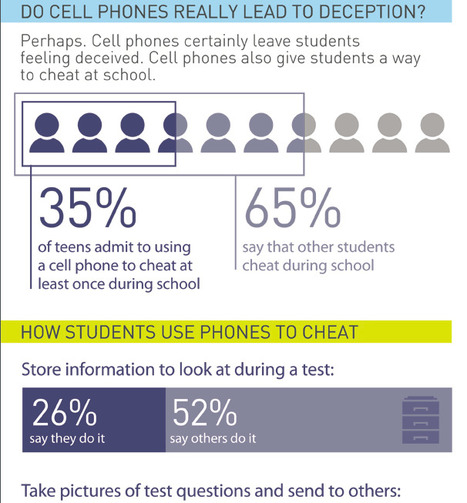
"Do text messages lend themselves to lies and deception? According to a recent study, people feel more deceived when they are communicating via text versus other forms of communication. And they might be right. These days, students are using cell phones to cheat on their tests and celebrities are using cell phones to cheat on their spouses.
Is this onslaught of cheating and deception a result of digital technology? Find out more about cell phones and lies in the below infographic."
I remember in public school I'd just cheat on tests by writing answers on my shoe or having my book open partway across the room (My eyesight was better then) fact of the matter is that this is nothing new. Kids who want to cheat on tests will cheat on tests somehow. Way I see it, if you're skilled enough to con your way through life, then have a ball!
21% of Americans have read an e-book. The increasing availability of e-content is prompting some to read more than in the past and to prefer buying books to borrowing them.
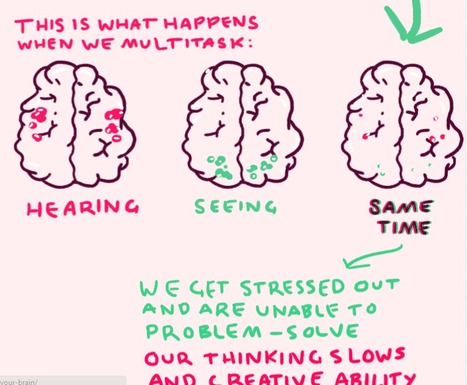
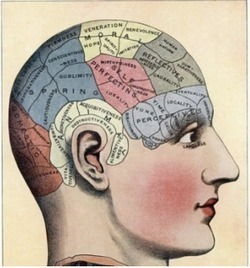
"Everyone Googles. When you get asked a question and you don’t know the answer – your answer is Google. But is this a good thing or a bad thing? In forensic psychology we dive into the minds of criminals, but because of the internet and sites like Google and Facebook, those minds are being altered...The studies show that the internet is having a negative impact on the way people think, analyze, and remember things. In fact, studies even say that heavy internet use can affect the brain..."
"Neuroscience may seem like an advanced subject of study, perhaps best reserved for college or even graduate school. Two researchers from Temple University in Philadelphia propose that it be taught earlier, however—much earlier. As in first grade..."
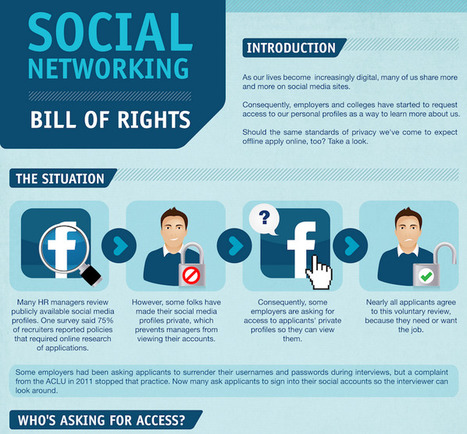
"As our lives become increasingly digital, many of us share more and more on social media sites. Consequently, employers and colleges have started to request access to our personal profiles as a way to learn more about us.
Should the same standards of privacy we've come to expect offline apply online? Take a look."
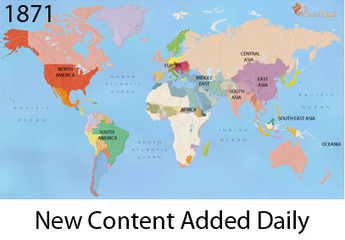
The FREE TimeMaps Atlas of World History is an award winning website for navigating around the big picture of world history or for taking a look at particular civilizations, nations or empires.
To get content containing either thought or leadership enter:
To get content containing both thought and leadership enter:
To get content containing the expression thought leadership enter:
You can enter several keywords and you can refine them whenever you want. Our suggestion engine uses more signals but entering a few keywords here will rapidly give you great content to curate.


 Your new post is loading...