


Facebook is restricted to users under age 13, but according to a new survey, that hasn't kept young children away.

 Your new post is loading...
 Scoop.it! Facebook is restricted to users under age 13, but according to a new survey, that hasn't kept young children away. No comment yet.
Sign up to comment
Scoop.it!

The most important thing to take from this infographic is that there are ways that you can maintain a healthy brain. The ways to do this are pretty simple and self-explanitory: Eat right, exercise (your mind and your body), get plenty of rest, and find ways to release stress. Some interesting factoids you may not have known: The brain produces twice the amount of neurons it needs during childhood. By age 6, grey matter is almost fully developed...
Scoop.it!

"Romantic types like to portray books as flights of fancy offering up imaginative escapes from everyday drudgeries of work, school, and the like. But literature, no matter the medium, holds some pretty amazing, scientifically analyzed perks right here on terra firma. Passionate readers generally enjoy more finely-tuned brains than those who prefer more passive (though not lesser) activities, so anyone hoping to improve their minds both psychologically and cognitively might want to think about taking up the habit of regular reading."
Scoop.it!
"The Department of Education released a draft report about big data and education today. It's called "Enhancing Teaching and Learning through Educational Data Mining and Learning Analytics," a title that's unlikely to win any converts to the notion of a data-curious* view of learning. Part of what's going to get stuck in the craw is that phrase "data mining," I reckon." Do we really understand what data mining? This post links to an interview that may help you understand this question. It also looks at the how data mining practices might be used in education, along with learning analytics around questions such as (and all quoted from the article): * What sequence of topics is most effective for a specific student?
Scoop.it!
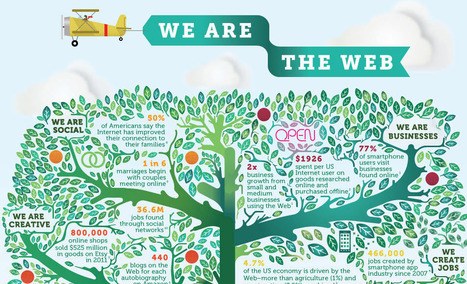
Google on Monday began asking users to share what they think are the ultimate uses of the Internet. To see the entire infographic and read more about Google - Take Action go to
Scoop.it!

Educators are doing amazing things with their learners in spite of (i.e., to show spite toward) the standards-based and accountability-driven movements. I’ve learned about so many exciting learning activities from educators who are publicizing their great projects via Twitter, Facebook, and Blogs. I’ve read about global collaborations, interesting ways technology is being integrated into the classroom, kids making a difference in their communities, and great project-based learning.
Scoop.it!

Quoting from the post: "The Ethics and Responsibilities of the 21st Century Classroom: A Collaborative Guide to Best Digital Learning Practices for K-12 Teachers and Administrators PREAMBLE: Tools aren’t teachers, they aren’t students, and they aren’t magic. We need to know the limits and possibilities of our twenty-first century tools and the role of teachers and administrators in ethically and responsibly using digital media to enhance and foster learning." This is a "public, participatory document" and folks are invited to add their ideas and concerns. Some of the other areas addressed include: teacher training and time for collaboration, administrators taking the lead with digital technology and encouraging high quality student input and output.
Scoop.it!

Recent brain imaging studies reveal that sections of our brains are highly active during down time. This has led scientists to imply that moments of not-doing are critical for connecting and synthesizing new information, ideas and experiences. Dr. Michael Rich, a professor at Harvard Medical School put it this way in a 2010 New York Times article: “Downtime is to the brain what sleep is to the body.”
Scoop.it!

From
www

Almost 40 years of data from the University of Bristol shows that reforms designed to boost student achievement are having the opposite effect.
Scoop.it!

"The science, technology, engineering, and math workforce is crucial to the economy and even though women represent more than half of the world’s population, women hold less than 25% of STEM jobs. In elementary, middle school, and high school, girls actually take more classes and earn better grades in math and sciences. As women progress into college, a decline in interest in math and sciences occurs and declines further at the graduate level and yet again in the professional level..."
Scoop.it!

Pinterest isn't just for wedding themes, DIY craft inspiration, and pretty pictures — it can also be a great educational tool!
Scoop.it!

Reboot Stories uses experimental education projects to keep kids in low-income areas engaged with learning. "Harnessing storytelling, technology and design science to form an innovation engine for digital literacy, cross-generational learning and social change." This article is from Mashable. To go directly to the Reboot Stories website: http://rebootstories.com
Scoop.it!

When Mark Zuckerberg created Facebook, he wanted to make a closed network for the elite at Harvard. Over time, he realized that by opening it up, he would be able to build something that cataloged the college experience for everyone. Today the majority of college students use social media. Look at the statistics and you decide if the experience of college students is "enhanced or hampered by social media." |
Scoop.it!

"Mapping Wikipedia is a groundbreaking visualisation of the world mapped according to articles in 7 different languages. The map displays both the global patterns and the vast number of geo-located items. The dataset was produced by the Oxford Internet Institute as part of a project that examines Wikipedia in the Middle East and North Africa. For more information contact Gavin Baily or Mark Graham." "To further explore the geography of the data, each Wikipedia article is associated with various attributes, such as word count, number of authors, and number of images etc. You can investigate these using the ‘map’ dropdown." Additional examples are available on the website.
Scoop.it!

"Your computer screen may be causing you more headaches than you know. On average, we sit in front of a computer screen more than six hours a day." Check out this infographic and learn some tips on how to keep your eyes healthy.
Scoop.it!

Are you looking for an educational technology conference that is both online and free? If so, you may want to check out Google Education On Air. On May 2nd from 12 – 10 pm (EST) Google will be providing a conference using Google+ Hangouts on Air. Areas of presentations are listed below. More information is available online.
Scoop.it!

"...for the past several decades, one brilliant mind has surpassed all the rest. Stephen Hawking, having turned 70 this year, has not failed to produce significant research and game-changing discoveries from the moment he began his career...he’s made some of the most notable scientific contributions of our time and dedicated his life to discovering how the universe works. He’s also been confined to a wheelchair for over 40 years. He’s the longest-surviving ALS patient..." Check out this infographic to learn more about this amazing man.
Scoop.it!
Question: You wrote recently about the importance of teaching search skills. What do you make of the whole idea that kids no longer need to learn facts because they can find answers so easily online? Do you think that is true?
Answer: When I was growing up, we used to say that you don’t need to know everything, just know how to find it. I firmly believe the same today, but I now appreciate that an integral part of search literacy is knowing enough background information to make informed decisions about what sources to believe. The ability to evaluate sources is one of the linchpin skills students need for navigating research both online and off.
Scoop.it!
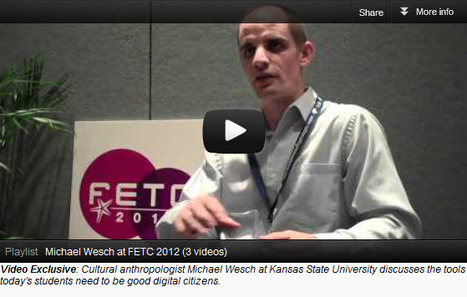
Schools have always been charged with the task of producing good citizens. But how has our definition of a "good citizen" changed over the ages? What skills should we be teaching? What knowledge do our students need to participate in the world as it is today, a world that has been transformed by technoloyg? "One of the challenges and important priorities for K-12 today has to be broadening our understanding of what it means to be a digital citizen, so that we're talking about young people as producers and managers of information and perspectives, and not simply as people we need to keep safe and civil..."
Scoop.it!

Check out our list for some great STEM resources that can help you build your knowledge about everything from calculus to zoology. 
t.s's curator insight,
December 27, 2014 6:57 AM
Blog thatgive 50best resources that can help you build your knowledge about stem education
Scoop.it!

A guide to more than 15 free tools to help detect plagiarized work. Free download from Educational Technology and Mobile Learning.
Scoop.it!

A new study suggests that 2.5 million laptops deployed in classrooms across 42 countries don't have any effect on academic performance. This article raises some important questions, but no where did I see a discussion about the teacher and the implementation within the classroom...food for thought.
Scoop.it!

"Right now is one of those peculiar moments in human development where generations can be divided into a before-and-after category with regard to a significant development in technology. Immediately, all people alive these days will fall into one of two categories: knowing only a life with the presence of the mobile technology, and those who can still remember the analog days of phone books and newspapers printed on actual paper...The study found that Digital Natives switch their attention between media platforms (i.e. TVs, magazines, tablets, smartphones or channels within platforms) 27 times per hour, about every other minute."
Scoop.it!
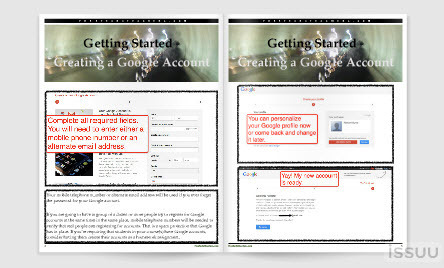
From Richard Byrne, "a new guide, Google Documents for Teachers. The 40 page guide (embedded below) is designed to help teachers who have never used Google Documents." Please note, this is part of a larger project he is working on, so changes may be made down the road.
Scoop.it!

Through the Wild Web Woods is an online game for teaching basic Internet safety in a fun and friendly fairy tale environment. The game is available in 14 European language versions. |





