Eclectic Technology
230.9K views | +0 today
Eclectic Technology
Tech tools that assist all students to be independent learners & teachers to become better teachers
Curated by Beth Dichter
Your new post is loading...
Scooped by Beth Dichter
January 14, 2013 8:10 PM
Scoop.it!

Creativity In The Digital Classroom-Over 40 Resources-Are They in Your School?

Creativity In The Digital Classroom-Over 40 Resources-Are They in Your School? | Eclectic Technology | Scoop.it

"I believe that creativity is necessary in today’s classroom. In fact, creativity is one of the important 4 C’s (Critical Thinking, Collaboration, Communication, Creativity) that make up part of the foundation of a 21st century education. The remaining foundation is of course another C (Significant Content). I believe that when you put all of these C’s together you get two more C’s which make up the 'Common Core'."

Beth Dichter's insight:

This post is the first in series and discusses free resources that may be stored on a local computer or a network. The list includes Scratch, Sketc-Up, Gimp, 3 free office suites, Alice, a variety of tools that will help you make movies and more. Most are described in some  detail and there are links to additional resources to help you learn the tool.

Additional posts will discuss Web 2.0 apps that may be used on the Internet (and across platforms), web apps and sites that promote literacy and student publication and web sites that promote student creativity.

Randy D. Nichols's curator insight, January 15, 2013 9:30 AM

A good list to help you start (or continue) bulding a "digital toolbox" for multimodal compositions. (I will steal some of these ideas for my delicious links!)


Scooped by Beth Dichter
January 12, 2013 11:18 PM
Scoop.it!

Let Children’s Play (with Technology) Be Their Work in Education

Let Children’s Play (with Technology) Be Their Work in Education | Eclectic Technology | Scoop.it
The importance of play as part of a child’s development has been the focus of educational specialists and research for decades.  Piaget and Montessori have emphasized that a child’s pla...
Beth Dichter's insight:

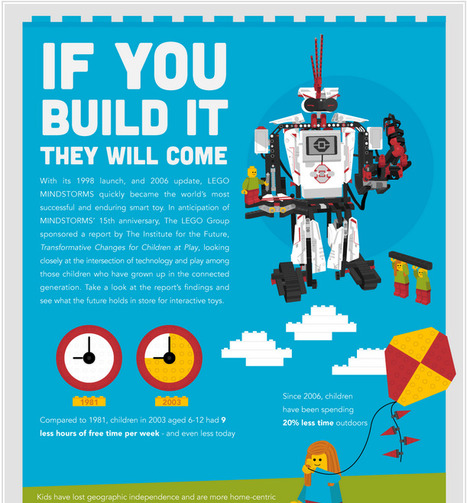
This post explores a report from the Institute for the Future, 'Transformative Changes for Children at Play' that was sponsored by the LEGO Group. The infographic provides a look at information found in the report, including sections on:

* How play is expanding social reach

* How play is empowering creativity

* How play impacts new visual literacies

* Blended play

* Deep personalization

* Emotional tech

* How tech is going mainstream

Within the post Jackie Gerstein summarizes "the key areas of the change nature of play as identified by Lego" as well as additional information from the report and provides her perspective on "some simple suggestions I have to facilitate play with technology in educational settings." 
Traci Selby's curator insight, March 24, 2013 9:48 AM

What child does not like legos or some type of building blocks? 

Recently there was a discussion on linked-in about this very subject and it has gotten a lot of responses. In my opinion PLAY is a necessity to child's development.....and if you haven't gotten to play with a child lately, take the time you will learn from them too!

Scooped by Beth Dichter
January 11, 2013 6:18 AM
Scoop.it!

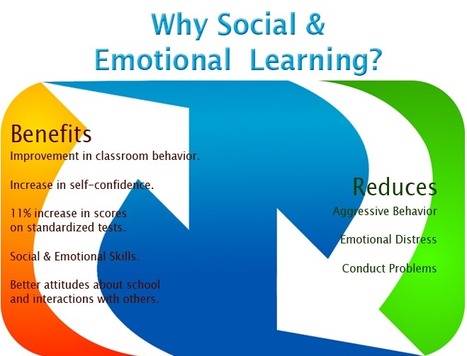
Technology-Enhanced Social-Emotional Activities

Technology-Enhanced Social-Emotional Activities | Eclectic Technology | Scoop.it
Source:  http://www.projecthappiness.org/programs/social-emotional-learning/
Beth Dichter's insight:

This new website from Jackie Gerstein explores technology use in social and emotional learning. Quoting from the site "This website has been designed to describe technology activities that facilitate social emotional learing.The links in the menu lead to descriptions of the individual activities. They can be sued within formal and inforrmal educational setting. Even though the focus of the activities are on building and enhacing social emtional learning, many can be connected with content standards related to language arts, oral communication, media literacy, and ISTE's National Education Standards for Students."
The website is very easy to use. There is a menu that provides a list of 14 activities, including Conflict Management Strategies Posters, Book Trailers, and Teach Tech to Grandparents. Most have samples of projects. Not all are relevant to all ages but she does state that she has used some with both elementary and college students.


No comment yet.
Scooped by Beth Dichter
January 10, 2013 10:47 PM
Scoop.it!

Teaching With the Library of Congress - Best Colleges Online

Teaching With the Library of Congress - Best Colleges Online | Eclectic Technology | Scoop.it
Discover how the Library of Congress' vast resources — both print and digital — can help educators boost their lesson plans.
Beth Dichter's insight:

The Library of Congress has amazing resources, and this infographic provides an overview of what is available!

No comment yet.
Scooped by Beth Dichter
January 9, 2013 10:32 PM
Scoop.it!

13 News Ways To Learn In 2013

13 News Ways To Learn In 2013 | Eclectic Technology | Scoop.it
Beth Dichter's insight:

Are you looking for ways to learn online this year? Check out this post which provides 13 possibilities for you to explore. A few of them are:

* Get inspired by great speeches - listen to speeches from turning points in history, movies and more!

* Directory of open access journals - do you need to research a topic? Check out journals that provide free access.

* Publish your own graphic novel - Use Comic Master to write a graphic novel (or perhaps, have students in your class use it).

* Explore maps - new and old. With GPS we may neglect maps, yet maps are an amazing tool. Learn about geograpgy, culture, history and more as you explore old maps (and new) at a variety of websites. 

Nine additional links await you when you click through to this post!

Scooped by Beth Dichter
January 8, 2013 10:25 PM
Scoop.it!

Case Studies: How Teachers Use Tech to Support Learning

Case Studies: How Teachers Use Tech to Support Learning | Eclectic Technology | Scoop.it

This post begins "Starting the year off with ideas on the best ways to use technology to support learning, Larry Ferlazzo collected an invaluable list of criteria last year from educators" and then shares MindShift's contribution as well as linking to Ferlazzo's work).

Beth Dichter's insight:

MindShift shares four areas:

* Games and group work

* Learning Latin

* Reaching Students

* Creativity Play

Games and group work looks at what happens when a teacher brings in a wide range of technology incorporates game playing as part of the class. You may be quite surprised by the results!

Learning Latin uses an online video game to teach Latin with great success.

Reaching Students looks at how cell phones may be used in a classrom

Creativity Play provides a look at how teachers are using Minecraft in the classroom).
Each section provides many links to additional resources (and articles that have appeared on Minecraft).

יפה בן-דרור- Yaffa Ben-Dror's curator insight, January 9, 2013 1:01 AM

MindShift shares four areas:

* Games and group work

* Learning Latin

* Reaching Students

* Creativity Play

Games and group work looks at what happens when a teacher brings in a wide range of technology incorporates game playing as part of the class. You may be quite surprised by the results!

Learning Latin uses an online video game to teach Latin with great success.

Reaching Students looks at how cell phones may be used in a classrom

Creativity Play provides a look at how teachers are using Minecraft in the classroom).
Each section provides many links to additional resources (and articles that have appeared on Minecraft).

cpeyronnet's curator insight, January 9, 2013 2:39 AM

MindShift shares four areas:

* Games and group work

* Learning Latin

* Reaching Students

* Creativity Play

Games and group work looks at what happens when a teacher brings in a wide range of technology incorporates game playing as part of the class. You may be quite surprised by the results!

Learning Latin uses an online video game to teach Latin with great success.

Reaching Students looks at how cell phones may be used in a classrom

Creativity Play provides a look at how teachers are using Minecraft in the classroom).
Each section provides many links to additional resources (and articles that have appeared on Minecraft).

Scooped by Beth Dichter
January 7, 2013 7:21 PM
Scoop.it!

15 Reasons Why Daydreamers are Better Learners

15 Reasons Why Daydreamers are Better Learners | Eclectic Technology | Scoop.it

"The student’s eyes drift to the classroom window and the teacher’s voice fades from consciousness.

The daydream begins. It’s a familiar scene, one we have likely both experienced as students and struggled against in our students as teachers. But daydreaming is not what it might seem. Recent research in both psychology and neuroscience makes clear that daydreaming is an essential part of mental processing, reasoning and, yes, even learning."

Beth Dichter's insight:

If you have wondered if daydreaming makes students better learners then this article will provide 15 reasons as well as many resources. A few of the reasons listed are (all are quotes):

* Daydreaming is the mind's natural state

* Daydreaming helps with critical thinking and problem solving

* Daydreaming...greatly increases the mind’s ability to smoothly shift in the face of unanticipated events and situations.

An additional 12 items are listed.

No comment yet.
Scooped by Beth Dichter
January 6, 2013 2:41 PM
Scoop.it!

Cube Creator - Bio, Mystery, Story or Create-Your-Own

Cube Creator - Bio, Mystery, Story or Create-Your-Own | Eclectic Technology | Scoop.it
Beth Dichter's insight:
ReadWriteThink provides templates for a variety of writing projects that incorporate a cube. The Bio Cube may be used after students have read, or before they write, a biography (or autobiography). The Mystery Cube will help them recall a mystery story after they have read it, or to pre-write one on their own. There is also a story Cube that will help them map out "key elements of a story" and there is Create-Your-Own Cube...you select the questions to a topic and then respons.
Coach Jeffery's curator insight, January 9, 2013 9:38 AM

ReadWriteThink provides templates for a variety of writing projects that incorporate a cube. The Bio Cube may be used after students have read, or before they write, a biography (or autobiography). The Mystery Cube will help them recall a mystery story after they have read it, or to pre-write one on their own. There is also a story Cube that will help them map out "key elements of a story" and there is Create-Your-Own Cube...you select the questions to a topic and then respons.

Alison Hewett's curator insight, January 30, 2013 1:17 PM

LITERACY. This would be an interesting tool to explore to see if it is useful at our upper year levels.

Scooped by Beth Dichter
January 4, 2013 11:10 PM
Scoop.it!

Can You Measure an Education? Can You Define Life’s Meaning?

Can You Measure an Education? Can You Define Life’s Meaning? | Eclectic Technology | Scoop.it
It's time to step back and think deeply about the purpose of education.
Beth Dichter's insight:

Today our schools are "obsessed with measurement." We take many hours of each school year testing our students. This post questions the value of this "obsession" noting that "children have become pawns in contests that pit parent against parent, teacher against teacher, school against school, and nation against nation in the struggle to see who can squeeze the highest test scores out of their kids."

It explores the questions "What is education? What is its purpose" and "Is it quantifiable?" by looking at the roots of education and how education has changed. If you want some food for thought on these issues this is a great post to read.

No comment yet.
Scooped by Beth Dichter
January 3, 2013 10:33 PM
Scoop.it!

Motivation, Not IQ, Matters Most for Learning New Math Skills | TIME.com

Motivation, Not IQ, Matters Most for Learning New Math Skills | TIME.com | Eclectic Technology | Scoop.it

"You don’t have to be born with math skills; solving problems is a matter of studying and motivation.

That may not seem like such a surprise, but it’s become easy to say ‘I just can’t do math.’ While some element of math achievement may be linked to natural inborn intelligence, when it comes to developing skills during high school, motivation and math study habits are much more important than IQ, according to a new study.

“It’s not how smart we are; it’s how motivated we are and how effectively we study that determines growth in math achievement over time,” says Kou Murayama..."

Beth Dichter's insight:

This study was done in Germany and looked at students from Grade 5 through Grade 10, and showed that motivation plays a large role in learning new math skills. An important finding was "the findings provide reassuring confirmation that academic success is not governed by a student’s cognitive abilities alone. Instead, students who want to learn math and who work at it may find they make faster gains and learn better than students who are bright but less motivated."

Kaley Hannon's curator insight, September 16, 2013 2:12 AM

A study done in Germany argues that it's not the children who have the high IQ's that are growing most in their math skills but it is the ones who are most motivated. Through the research conducted they collected evidence  that shows that the even though the kids with the higher IQ's started at a higher level when it came to understanding math the children who reported that they were motivated to learn math were the ones who picked up the math skills faster. 

Terri Goldson's curator insight, February 1, 2014 3:21 PM

Unfortunately the intelligence quotient has always been the standard measure used within education and beyond, that is said to determine our ability to learn. We know through common observation, that premise is not always an indicator of success. Other very important factors play a role in everyone’s ability to navigate through life.  Factors such as motivation, determination, perseverance and other intangibles are important influences. Tapping into those essential elements will make learning more meaningful for all learners.  Knowledge IS Power!

Chaeyeon Seo's curator insight, November 9, 2014 10:00 AM

Motivation is important not only in math but in every part of work

Scooped by Beth Dichter
January 2, 2013 11:18 PM
Scoop.it!

The Innovative Educator: Start the New Year with a new way to look at students who don't seem to care

The Innovative Educator: Start the New Year with a new way to look at students who don't seem to care | Eclectic Technology | Scoop.it

"My students don't know how to learn.  They don't know how to succeed.  And, it doesn't seem like they care to change any of that. " -Crystal Kirch, My biggest struggle this year.

"High school math teacher Crystal Kirch’s biggest struggle of 2012 was met with both cheers from those who could commiserate as well as jeers from those who were concerned that students were not the culprit, but rather the victims of a system that set them up for failure."

Beth Dichter's insight:

What happens when we close ourselves off from hearing a different point of view? In this post Lisa Nielsen takes a look at reactions that occurred in response to the post by Crystal Kirch. She divides the responses into two sections: 

* Reactions from those frustrated by children who don't want to learn

* Reactions from those who provided the alternate perspective (that Kirch referred to as 'an "intense attack") in defense of children

By looking through the lenses of other this post is asking us to "think about and learn from that which may not be so comfortable and look at our students who don't seem to care in a new way."

No comment yet.
Scooped by Beth Dichter
January 2, 2013 10:05 PM
Scoop.it!

10 Invisible Problems Impacting College Readiness - Best Colleges Online

10 Invisible Problems Impacting College Readiness - Best Colleges Online | Eclectic Technology | Scoop.it
Here we address a handful of the factors that are holding students back from being ready to start college.
Beth Dichter's insight:

What are the issues that impact our ability to meet the new College and Career Readiness standards in the Common Core? This post explores a number of issues. For example:

* Do standardized tests truly prepare students for college? 

* Are the expectations expected by high schools set at appropriate levels?

* Do students have the appropriate social skills necessary for college?

An additional seven issues are also explored in this post.

Tyler Crain's curator insight, October 27, 2014 10:58 AM

very important if not wanting to do college but not be there.

Scooped by Beth Dichter
January 1, 2013 8:21 PM
Scoop.it!

Games for Science | The Scientist Magazine®

Games for Science | The Scientist Magazine® | Eclectic Technology | Scoop.it
Scientists are using video games to tap the collective intelligence of people around the world, while doctors and educators are turning to games to treat and teach.
Beth Dichter's insight:

This is an in-depth article that looks at gaming from three perspectives. One part covers playing games in the realm of science, and discusses how using the cloud to solve problems has gained credence (specifically discussing Foldit).

The second portion discusses learning with games. In this section the author notes that "games help students engage in scientific concepts through immersive experiential learning, which often commands greater focus and provides greater rewards for success. For example, Steinkuehler’s research showed that students identified as troubled or struggling readers demonstrated dramatically improved reading skills while playing games, able to comprehend higher reading levels." It also makes note of a game that is being designed by MIT for release in later 2013 called Radix Endeavor (a mulit-player game for STEM learning in high school).

The third section discusses "a spoonful of learning" as in how games are now used in medicine. It turns out that games are used in medicine in a variety of areas from helping "stroke victims regain balance" to building universally acceptable maps—using audio and other sensory cues, like the sounds of running water near rivers" to games to help with weight control (not only good for overweight children but also for individuals on the autism spectrum). 

There is a wealth of information in this piece and it is worth reading.

No comment yet.
Scooped by Beth Dichter
January 13, 2013 6:55 PM
Scoop.it!

Meograph – 4 Dimensional Story Telling Web 2.0 Style

Meograph – 4 Dimensional Story Telling Web 2.0 Style | Eclectic Technology | Scoop.it
Beth Dichter's insight:

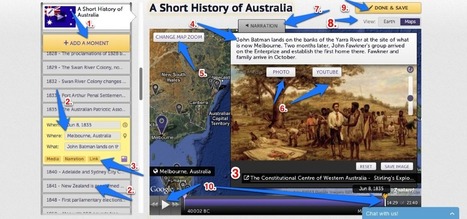
This post from Mark Gleeson provides a great overview of Meograph, a fairly new Web 2.0 tool that allows you tell stories using images/videos, text, maps and a timeline, or as Gleeson states the "who/what, when, and where." In addition Gleeson takes the time to describe how to use the tool in words as well as a video, and also discusses some of the issues that he experienced. The Meograph website is geared to journalism and education. The education section states that the benefits of the site include "making learning fun with interactive content, easy for students to create their own projects, and perfect for history, literature and more." To go directly to the education site click http://www.meograph.com/education.

Noelia Sarabia's curator insight, January 14, 2013 12:06 PM

aún en fase beta y con algunos detallitos, pero una herramienta interesante para quienes gustan de acompañar sus clases con narraciones

Carol Thomson's comment, March 22, 2013 9:34 AM
sadly doesnt work with ie which we have to use in school
Scooped by Beth Dichter
January 12, 2013 6:48 AM
Scoop.it!

26 Ways to Use Comics in the Classroom & 5 Free Tools for Creating Comics

26 Ways to Use Comics in the Classroom & 5 Free Tools for Creating Comics | Eclectic Technology | Scoop.it
Beth Dichter's insight:

Richard Byrne has updated one of his most popular posts, on creating comics in the classroom. As well as providing information of five tools to create comics  he also provides two slideshows (by B. Hendy). The first slideshow looks at strategies for using comics in the classroom. The second slideshow provides a quick look at how comics have the potential to have students use higher order thinking skills as well as providing materials on other sites that help to create comics.

No comment yet.
Scooped by Beth Dichter
January 10, 2013 11:05 PM
Scoop.it!

Public Broadcasting Interactive Resources & Educational Projects

Public Broadcasting Interactive Resources & Educational Projects | Eclectic Technology | Scoop.it

"...the best of public media’s interactive resources and educational projects for use with middle school and high school students, multimedia productions created by youth, and professional development videos for educators. The 800+ resources featured here are designed to bring educational content to life in engaging and innovative ways, and include games, activities, quizzes, quests, and other interactive experiences."

Beth Dichter's insight:

Great resources brought to you by the Public Broadcasting Corporation! Sections include the arts, careers, ELL, health and sport, language arts, math, media production, science and engineering and social studies.

Pegi Flynt, Ed.D.'s curator insight, October 12, 2014 6:25 PM

Review for inservice Language Arts Methods

Rebecca Wilkins's curator insight, July 31, 2015 9:33 AM

When educators think PBS, they think early childhood education.  There are tons of resources, however, geared toward secondary students.

Scooped by Beth Dichter
January 10, 2013 9:40 PM
Scoop.it!

Why Highlighting Is a Waste of Time: The Best and Worst Learning Techniques

Why Highlighting Is a Waste of Time: The Best and Worst Learning Techniques | Eclectic Technology | Scoop.it
Some of the most common strategies for retaining knowledge are the least effective, according to a new report
Beth Dichter's insight:

Does highlighting really help students retain knowledge or are there more effective techniques. This post by Annie Murphy Paul looks at highlighting as well as underlining, rereading, summarizing, distributive practice (as in spreading out your studying), cramming, practice testing (but not for a grade), flashcards, mental imagery, elaborative interrogation, self-explanation, interleaved practice, and mnemonics. Take some time to think about each of these practices and decide which ones you think are effective, and then click through to the post to see how close you are!

No comment yet.
Scooped by Beth Dichter
January 9, 2013 9:19 PM
Scoop.it!

How Can Teachers Prepare Kids for a Connected World?

How Can Teachers Prepare Kids for a Connected World? | Eclectic Technology | Scoop.it

"Educators are always striving to find ways to make curriculum relevant in students’ everyday lives. More and more teachers are using social media around lessons, allowing students to use their cell phones to do research and participate in class, and developing their curriculum around projects to ground learning around an activity. These strategies are all part of a larger goal to help students connect to social and cultural spaces."

Beth Dichter's insight:

A look at Henry Jenkins work on participatory learning and PLAY (Participatory Learning and You). So what is PLAY? "...'a mode of experimentation, of testing materials, trying out new solutions, exploring new horizons,' Jenkins said. It’s how kids interact with games – throwing themselves in without reading the rules, testing the limits and feeling free to try and fail."

This post provides a number of examples, discusses assesement and play, and provides links to additional articles on the subject.

No comment yet.
Scooped by Beth Dichter
January 8, 2013 10:10 PM
Scoop.it!

The Elements Of A Literacy-Rich Classroom Environment

The Elements Of A Literacy-Rich Classroom Environment | Eclectic Technology | Scoop.it

"Literacy-rich environments, as endorsed by the International Reading Association, have a significant impact on what goes on in the classroom and set the stage for interactions with a wide variety of genres...

 Perhaps we should begin by focusing attention on the classroom environment and making certain that it is a place that supports and encourages literacy learning. A literacy-rich environment not only supports the standards set by the Common Core, but also provides a setting that encourages and supports speaking, listening, reading, and writing in a variety of authentic ways – through print & digital media."

Beth Dichter's insight:

This post includes an infographic that looks at the top ten characteristics of a literacy-rich classroom as well as a range of suggestions and links to additional resources. Many great ideas!

PGI- VBCPS's curator insight, January 9, 2013 8:28 AM

This post includes an infographic that looks at the top ten characteristics of a literacy-rich classroom as well as a range of suggestions and links to additional resources. Many great ideas!

Nicole Schutter's curator insight, March 27, 2014 11:25 PM

Great ideas!

Scooped by Beth Dichter
January 6, 2013 5:47 PM
Scoop.it!

HapYak + YouTube (& Vimeo) = Creative Writing Task

HapYak + YouTube (& Vimeo) = Creative Writing Task | Eclectic Technology | Scoop.it
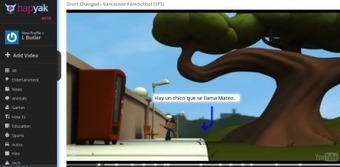
HapYak + YouTube = Creative Writing Task. HapYakHapYak allows you to add text blurbs and doodles on top of a YouTube or Vimeo video. Continue reading →
Beth Dichter's insight:

This tool is new to me and is pretty easy to use. You create an account at HapYak and then bring in a video from either YouTube or Vimeo. You can add text boxes, insert images, freeze the video, and write on a video. The finished product is stored on their server. 
For directions on how to teach this check out this post, or to go directly to HapYak and see some of the videos other have created go to http://hapyak.com/.

And if you are looking for fairly short videos that students might like to write on check out the Vancouver Film School that is suggested in this post. Great videos that are about 3 minutes in length!

Coach Jeffery's curator insight, January 9, 2013 9:37 AM

This tool is new to me and is pretty easy to use. You create an account at HapYak and then bring in a video from either YouTube or Vimeo. You can add text boxes, insert images, freeze the video, and write on a video. The finished product is stored on their server. 
For directions on how to teach this check out this post, or to go directly to HapYak and see some of the videos other have created go to http://hapyak.com/.

And if you are looking for fairly short videos that students might like to write on check out the Vancouver Film School that is suggested in this post. Great videos that are about 3 minutes in length!

Scooped by Beth Dichter
January 5, 2013 9:25 PM
Scoop.it!

Bloom's Taxonomy - Language for Communicating About Learning

Bloom's Taxonomy - Language for Communicating About Learning | Eclectic Technology | Scoop.it
Beth Dichter's insight:

A view of Bloom's Taxonomy that includes learning domains: 

Interpersonal, Affective, Psychomotor, Perceptual and Cognitive, as well as the Learning Levels: Remembering, Understanding, Applying, Analyzing, Evaluating and Creating. 

No comment yet.
Scooped by Beth Dichter
January 4, 2013 10:24 PM
Scoop.it!

Grom Social: Why An 11-Year-Old Built His Own Social Network

Grom Social: Why An 11-Year-Old Built His Own Social Network | Eclectic Technology | Scoop.it
This 11-year-old could not find a good enough Facebook alternative so he decided to build his own social network, Grom Social.
Beth Dichter's insight:

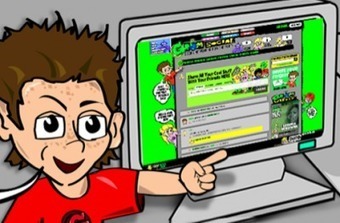
This is a pretty amazing site, created by an 11 year old as a safe social site for children. This post from provides a great overview, but perhaps the word of the founder says it the best...

"I have been building my site since Nov. 2011. I spend lots of time drawing new graphics, researching new games, fun facts, cool kids books, cool videos, nutrition tips and highlighting the best young up and coming athletes. It is coming along well.  Kids seem to like my site, especially the Grom Helpers and the games. I am excited to watch it grow. I am proud of my efforts in making my idea a reality." For more information click through to the post or go directly to the site: http://gromsocial.com/.

No comment yet.
Scooped by Beth Dichter
January 3, 2013 10:08 PM
Scoop.it!

10 Innovative Ways to Use ThingLink in the Classroom - Edudemic

10 Innovative Ways to Use ThingLink in the Classroom - Edudemic | Eclectic Technology | Scoop.it
It starts with an image. Present ideas. Pack it full of content. Create links to amazing sites. Explore, share and create with ThingLink in the classroom!
Beth Dichter's insight:

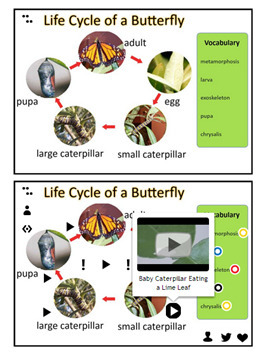
Take an image and add links to all sorts of websites that all content to be presented. The two images above provide a take on what happens as you embed links in your image. Each link is shown with a small image and as you mouse over information is provided and you may choose to go directly to the link. This post provides a wide range of ways to use ThingLink in your classroom. 

No comment yet.
Scooped by Beth Dichter
January 2, 2013 10:49 PM
Scoop.it!

20 Tips for Creating a Professional Learning Network

20 Tips for Creating a Professional Learning Network | Eclectic Technology | Scoop.it

"Networking is a prime form of 21st century learning.  The world is much smaller thanks to technology.  Learning is transforming into a globally collaborative enterprise.  Take for example scientists; professional networks allow the scientific community to share discoveries much faster...As educators, we aim to be connected to advance our craft.  On another level, we hope to teach students to use networks to prepare for them for a changing job market.  But what is the best way to approach PLNs?"
.


Beth Dichter's insight:

This is a thoughtful list of 20 tips for creating your own professional learning network (PLN) or professional learning community (PLC). The post is divided into two sections. Part 1 provides 10 tips for using PLNs and Part 2 provides 10 tools and strategies to establish a productive PLN/PLC. Links to many resources are also included in the post.

No comment yet.
Scooped by Beth Dichter
January 1, 2013 9:05 PM
Scoop.it!

3 Ideas That Will Not Transform Schools

3 Ideas That Will Not Transform Schools | Eclectic Technology | Scoop.it
In the spirit of “Festivus” and the tradition of “The Airing of Grievances” (sorry for the reference if you are not a Seinfeld fan), I wanted to share a couple of ideas that...
Beth Dichter's insight:

An interesting article that looks at three ideas that are popular today and discusses why they will not transform schools and provides some alternatives. The three ideas are:

* Flipping the classroom

* Bring your own device (BYOD)

* How we use student surveys

Each of these topics has received significan press over the past year and this post brings up isues that also need to be explored. 

No comment yet.