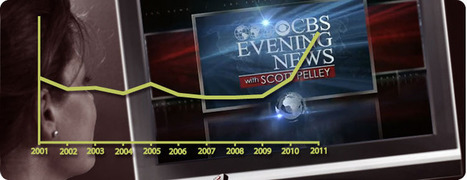
"The State of the News Media 2012 is the ninth edition of our annual report on the status of American journalism. This year’s study contains surveys examining how news consumers use social media and how mobile devices could change the news business and an update on the rapid changes in community news. And each industry sector chapter consists of two parts: a summary essay, which tells the story of that sector, and a data section, which presents a full range of statistics graphically rendered."
CamStudio is able to record all screen and audio activity on your computer and create industry-standard AVI video files and using its built-in SWF Producer can turn those AVIs into lean, mean, bandwidth-friendly Streaming Flash videos (SWFs).
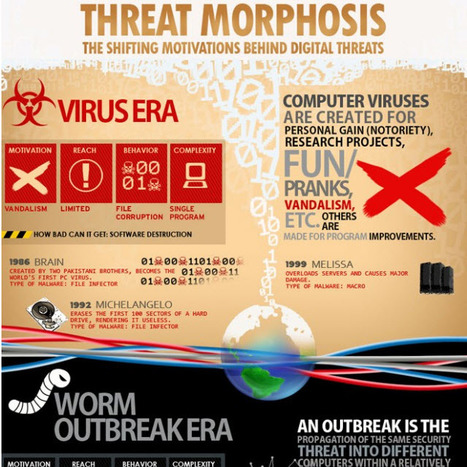
I love a good infographic! After all, knowledge is power and the visualization of data makes absorbing information all the easier. Well-designed infographics have a way of pulling me into a subject...
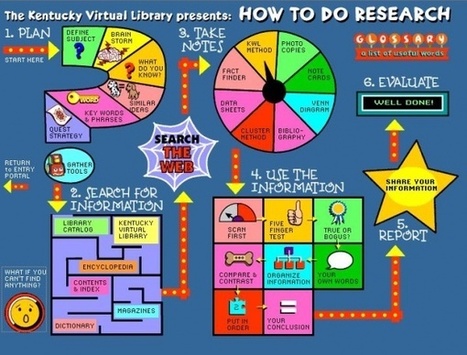
"Nowadays many pupils, when given a research task, immediately might think to themselves, 'I’ll just Google that'...There are many resources now available to help in developing pupil skills in searching more effectively using online search engines. And, of course, when they do find information how do pupils know it is appropriate for the task? Or how do they evaluate what is suitable, and how do they present it and show where the information was found."
Steelcase Inc. has commissioned a short documentary as part of the corporation's 100th anniversary celebration in 2012. Directed by Daniel Junge, the film captures the dreams of 10 year-old children in six locations around the world about what their future will be like. We now invite the rest of the world to join in a dialogue about the future.
This is a continuation of the 'Everything you know about curriculum may be wrong. Really' that I scooped yesterday. (Both by Grant Wiggins) In this post he continues to look at "an explosion of educational innovation" (which began in the 1930s). Along with Ralph Tyler (whom he brought up in his first post) he also presents work from Harold Fawcett, Hollis Caswell, and John Dewey. This post looks at the concepts of curriculum scope and sequence, with a focus on sequence, and if it is 'logical' or 'psychological'.
"There are a number of things which have been discovered over the years through research which are not entirely intuitive. In fact, many of the results that have been discovered are down-right odd."
Does extra pay improve or reduce performance?
Do children play with toys differently if they explore on their own or are told how to use it?
What happens if you do not teach math classes? Will the students catch up five years later?
Links to reseach on these topics and two other are included in this post.
The ASIDE blog takes a look at population using a variety of data visualizations: The Miniature Earth Project, Who is the World's Most Typical Person?, and Breathing Earth. All are "eye-catching presentations of images, data and design. The clarity and simplicity in the use of information mixed with sound, be it music or sizzling emissions, coalesce into an effective message. Their delivery engages the viewer to think and ask questions, and our students are fascinated by each one."
Grant Wiggins asks us to question what we know about curriculum in this piece...what would happen if we made a significan shift in how we look at curriculum?
"What if the earth moves and the sun is at rest? What if gravity is just a special case of space-time? Following both counter-intuitive premises revolutionized science and ushered in the modern world. Could a similar counter-intuitive thought experiment advance education from where I believe we are currently stuck? I believe so."
Do you use Bloom's Taxonomy in your classroom? Here are a number of images for Bloom's that you may want to share with students. There are two versions of each, on of which is digital. Links to the tools in the digital version are also listed below each version. You can see Bloom's Taxonomy as a Bloomin' Pinwheel, a Bloomin' Peacock, or an Um-bloom-ra Bloom's!
In an impassioned call to action, Diana Rhoten kicked off the 2012 Digital Media and Learning conference by suggesting that education will never see its long-overdue renaissance without "audacious goals." ... spoke of the urgent need for researchers, practitioners, teachers, educators, technologists, as well as entrepreneurs and investors, to join together in the cause of a learning revolution. Without "audacious goals" and a diverse community willing to come together at this historic moment of convergence, most would-be education reformers will probably "die trying," Rhoten said.
Prof. James R. Stone argues that the U.S. needs to organize learning opportunities to provide rigorous, world-class technical education to the many disengaged youth now suffering through ever-increasing academic requirements.
The Einstein Archives Online Website provides the first online access to Albert Einstein’s scientific and non-scientific manuscripts held by the Albert Einstein Archives at the Hebrew University of Jerusalem, constituting the material record of one of the most influential intellects in the modern era. It also enables access to the Einstein Archive Database, a comprehensive source of information on all items in the Albert Einstein Archives.
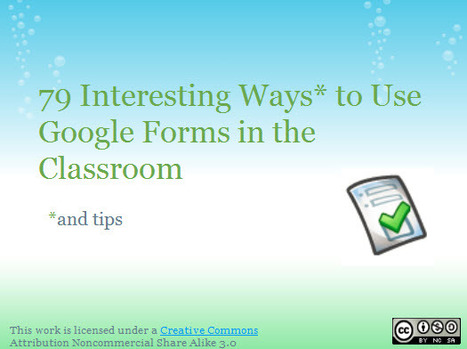
I first scooped this slide show in January, but it has been updated with new ideas and tips on how to use Google Forms in the classroom. If you are new to Google Forms, or are looking for some new ideas check out this presentation.
"For centuries, researchers have studied the brain to find exactly where mechanisms for producing and interpreting language reside. Theories abound on how humans acquire new languages and how our developing brains learn to process languages. We take a look at the mysteries of language and the brain in the infographic below."
Note to teachers: Continue reading below for ideas on how to use this graphic in your classroom!
As always, Ira Socol make me think. He begins this post "We tend to do everything wrong for kids between 12 and 15. We pretend they are "adults" in terms of care needs and responsibilities, which they are not. We pretend they are children intellectually and physically, and in terms of rights, which they are not. We dismiss their capabilities and hype their potential as threats. We are cruel to them, and we send every possible message that we don't care about them." If you teach in middle school this article is worth reading as is the National Geographic article that was published on the teenage brain (which I recommend you read as does he...he has included the link and it was scooped here on March 11th).
Have you heard the terms digital native and digital immigrant, and placed yourself in one space or the other? Have you seen a generation divide in learning and teaching? The article ‘The Fallacy of Digital Natives’ explores these issues. One source quoted is the Berkman Center for Internet and Society (Harvard University) “Those who were not ‘born digital’ can be just as connected , if not more so, than their younger counterparts.” A follow-up to this article is ‘Introducing the Digital Learning Quadrants’ where Dan Pontefract introduces “a classification that encompasses all ages and takes into account the realities of access and participation levels…” (at http://www.danpontefract.com/?p=1309)
In the first of a new TED-Ed series designed to catalyze curiosity, TED Curator Chris Anderson shares his boyhood obsession with quirky questions that seem t...
I want us to set the bar really high when it comes to education technology -- both in its development and its implementation. I don't think it's too much to ask. I mean, we're talking about teaching and learning here...
Check out "the Audrey Test" in this article. Would your techies be able to answer the questions? Would you be able to answer the questions? What would happen if we asked these questions in a broader forum in our communities?
NGA Images is a repository of digital images of the collections of the National Gallery of Art. On this website you can search, browse, share, and download images. A standards-based reproduction guide and a help section provide advice for both novices and experts. More than 20,000 open access digital images up to 3000 pixels each are available free of charge for download and use. NGA Images is designed to facilitate learning, enrichment, enjoyment, and exploration.
Failure is hot. The Harvard Business Review devoted an entire issue to the power of failure last year. Noted economist Tim Harford wrote a fabulous book about it – "Adapt: Why Success Always Comes from Failure." And tens of millions of children (and adults) happily subject themselves to it everyday. They play video games.
I just read an interesting article on the Salon about how long work weeks produce lower quality work, and that it seems that about 40 hours a week is when the maximum productivity occurs. Of course if this applies to workers, then it presumably (or a similar number) applies to students as well.
So an obvious question is, how many hours are students in school?
To get content containing either thought or leadership enter:
To get content containing both thought and leadership enter:
To get content containing the expression thought leadership enter:
You can enter several keywords and you can refine them whenever you want. Our suggestion engine uses more signals but entering a few keywords here will rapidly give you great content to curate.


 Your new post is loading...