


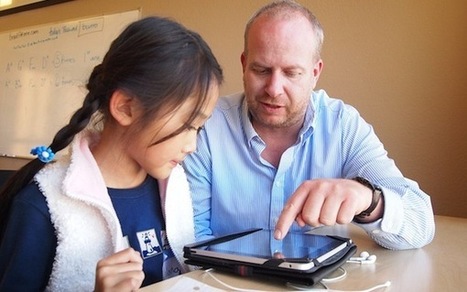

Tech allows students to learn in new and engaging ways, but many educators are struggling to incorporate digital into traditional classrooms.

 Your new post is loading...
 Scoop.it! Tech allows students to learn in new and engaging ways, but many educators are struggling to incorporate digital into traditional classrooms. No comment yet.
Sign up to comment
Scoop.it!
"What’s the key to effective learning? One intriguing body of research suggests a rather gnomic answer: It’s not just what you know. It’s what you know about what you know." This article looks at research in this area and provides a list of questions that one might use to have "students assess their own awareness." It also refers to the PISA report, stating “Students who use appropriate strategies to understand and remember what they read, such as underlining important parts of the texts or discussing what they read with other people, perform at least 73 points higher in the PISA assessment—that is, one full proficiency level or nearly two full school years—than students who use these strategies the least."
Scoop.it!

Students with learning disabilities are twice as likely as their peers to drop out of high school, according to the National Center for Learning Disabilities. This PBS News Hour special looks at an elementary schools "that practies early intervention - engaging students with technoogy and art to improve their chances of earning a diploma." There is also an interview with a "one-time dropout who's now a Harvard graduate student." 
Dalia Rodriguez's curator insight,
February 18, 2016 12:04 AM
Learning Disabilities can lead to the students drawing themselves away from the lesson so it's good to have them be a part of the lesson,
Scoop.it!

Google has lauched an update to their spell checking (in documents and presentations) that "grows and adapts with the web, instead of relying on a fixed dictionary. This update has a few big advantages over traditional spell checkers: 1. Suggestions are contextual. For example, the spell checker is now smart enough to know what you mean if you type “Icland is an icland.” 2. Contextual suggestions are made even if the misspelled word is in the dictionary. If you write “Let’s meat tomorrow morning for coffee” you’ll see a suggestion to change “meat” to “meet."
Scoop.it!

On March 1, 2012 the winners of the Badges for Lifelong Learning competition (DML4), part of the Digital Media + Learning Conference, were announced. The winners represent an enormous range of areas and competencies and would seem to be a strong indicator that digital badges are here to stay. Here is an overview of the concept, a look at some of the most interesting winners of the competition, and where the badges concept may go from here.
Scoop.it!

Do you "want to extend the concepts of the math curriculum beyond the pages of the text?" This site uses Google Earth as a "dynamic tool that will be used to accomplish this. Google Earth provides startling clear satellite views of the globe in an interactive 3D environment. Beyond the visual, users can add placemarks, annotations, photos, and models, as well as measure distances and draw paths."
Scoop.it!

Teen Generation Comparison Graphs - The ‘Those Kids Today…’ infographic compares the latest generation of teens with the teenagers of 1982. One can see with these comparisons th...
Scoop.it!

Unfortunately, I was educated in a school system that believed the world in which it existed would remain essentially the same, with minor changes in fashion. We had no idea what the world had in store for us.
Scoop.it!

Search and find unique images, rights-managed and royalty-free images, historic imagery, archival photos from museums, galleries and private collectors from all over the world. Free licenses for educational use. 
Simone O'Callaghan's curator insight,
May 22, 2015 11:03 AM
This follows on from discussions we have been having this week in oline teaching and learning about copyright and image usage, so a good resource for future lectures
Scoop.it!
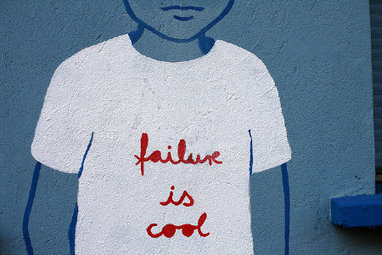
Sending students the message that struggling is a crucial part of learning helps them excel.
Scoop.it!
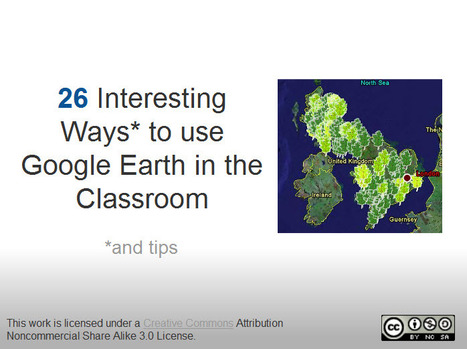
Have you thought about using Google Earth in your classroom? This Google Presentation provides a wide range of activities that may inspire you to make use of this tool.
Scoop.it!

"In a recent interview, the United States’ foremost educational historian Diane Ravitch told Big Think what really matters when it comes to learning, inside schools and out. Contrary to conventional wisdom, she says, it's not K-12 teachers who are most responsible for kids' progress -- ages 0-5 are some of the most developmentally important, with continued resonance throughout one's entire life. Watch the video..."
Scoop.it!

Teens are fervent communicators. Straddling childhood and adulthood, they communicate frequently with a variety of important people in their lives: friends and peers, parents, teachers, coaches... The volume of texting among teens has risen from 50 texts a day in 2009 to 60 texts for the median teen text user. In addition, smartphones are gaining teenage users. Some 23% of all those ages 12-17 say they have a smartphone and ownership is highest among older teens: 31% of those ages 14-17 have a smartphone, compared with just 8% of youth ages 12-13. For a look at the infographic, which looks at teens and texting, and that was published in July 2011 go to: http://blog.lab42.com/generation-text-teens-and-their-texting-habits
|
Scoop.it!
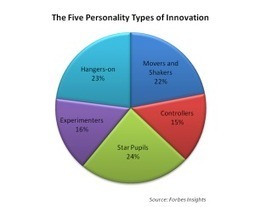
Whenever I try to conjure up what innovation looks like, the same slideshow of images clicks across my mind: that photo of Einstein with his tongue sticking out, Edison with his light bulb, Steve Jobs onstage in his black turtleneck, introducing... "Forbes Insights’ recent study, “Nurturing Europe’s Spirit of Enterprise: How Entrepreneurial Executives Mobilize Organizations to Innovate,” isolates and identifies five major personalities crucial to fostering a healthy atmosphere of innovation within an organization. Some are more entrepreneurial, and some more process-oriented – but all play a critical role in the process. To wit: thinkers need doers to get things done, and idealists need number crunchers to tether them to reality."
Scoop.it!

Teachers want less emphasis on testing and more on mastering skills and high-level concepts.
Scoop.it!

Being bilingual makes you smarter and can have a profound effect on your brain. The NY Times has a tiered subscription. Information included in this article may also be found at http://lifehacker.com/5895128/learning-a-second-language-can-give-your-brain-a-boost
Scoop.it!

"The recently announced update to Apple’s iBooks app has been lauded as an incredible change for education, reinventing the textbook as we know it, and allowing teachers to become content creators like never before. The upgraded app has its fair share of fans, but there are many teachers who just aren’t buying the hype. Common complaints include the cost of investment, closed software, and even the idea that students are in need of a bigger change than just multimedia books."
Scoop.it!
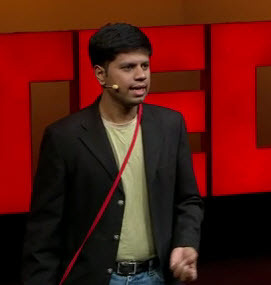
"One of the problems I think we have in schools is that we train students to fear failure, to avoid it at all costs. Now, to be clear, I'm not suggesting you go out and fail all your classes. But I am suggesting that you should take some risks in your learning. That instead of avoiding things that are hard (because you might fail), you challenge yourself to step up and take on things that are difficult." This also includes a TEDtalk by Myshkin Ingawale. The site states "The important point to realize is that he built this device - and it failed. So then he built it 32 more times until it worked."
Scoop.it!

Explore Science - One Game at a Time is offered online by the Center for Technology in Teaching and Learning at Rice University. This site has five science and health related games: Cool Science Careers - exerience science first hand, MedMyst - medical mysteries on the web , CSI: The Experience - learn forensic science and apply your knowledge, Reconstructors - travel into the future and reconstruct the science of substance abuse, and N-Squad - an adventure game about alcohol and body systems.
Scoop.it!

The rising cost of college doesn't just affect how much it costs to earn a degree — it's also changing how students and graduates live their lives because of the increased burden of student debt. 
Tom George's comment,
March 21, 2012 3:49 PM
Hi Beth,
You can share all your education content you curate from Scoop.it to Internet Billboards. No extra time involved and many benefits to doing this with my company. Let me know OK. Nice pick here I posted in education.
Scoop.it!

This is a fascinating study and infographic by the folks over at engineeringdegree.net. They drilled down into some recent studies to unearth some startling data. It focuses on the fact that studies have shown that girls are smarter than boys in many of the STEM subjects but most girls don’t end up pursuing careers in those fields.
Scoop.it!

Are you interested in project-based learning (PBL) & looking for a guide that will help you learn how to design & run projects for students, projects that begin with an enquiry & finish with a tangible project that you may display? If so, this may be the guide you are waiting for. It contains six main sections: Section 1 is an introduction which explains what PBL is; Section 2 provides inspiration with real life projects and how they worked; Section 3 looks at the foundations of PBL – multiple drafts, critique and exhibition; Section 4 helps you execute with a guide for planning & running projects; Section 5 focuses on integration & how to build a ‘culture of excellence’; & Section 6 helps to wrap it up.
Scoop.it!

The Reading Like a Historian curriculum engages students in historical inquiry. Each lesson revolves around a central historical question and features sets of primary documents modified for groups of students with diverse reading skills and abilities. This curriculum teaches students how to investigate historical questions employing reading strategies such as sourcing, contextualizing, corroborating, and close reading. Instead of memorizing historical facts, students evaluate the trustworthiness of multiple perspectives on issues from King Philip's War to the Montgomery Bus Boycott, and make historical claims backed by documentary evidence.
Scoop.it!

...“Baloney Detection Kit” for grown-ups from the Richard Dawkins Foundation for Reason and Science and Skeptic Magazine editor Michael Shermer — a 10-point checklist for assessing the believability of a claim, covering everything from telling the difference between science (e.g., SETI) and pseudoscience (e.g., UFOlogy) to detecting personal agendas. And in my opionion...it also works for kids.
Scoop.it!

A field guide to the art and science of the solid argument...six fantastic two-minute animations on various aspects of critical thinking, aimed at school ages 8 to 10, or kids between the ages of 13 and 15, but also designed to resonate with grown-ups. Inspired by the animation style of the 1950s, most recognizably Saul Bass, the films are designed to promote a set of educational resources on critical thinking... |





