



The organization has struggled to keep up with the spread and decline of the disease in specific localities.


 Your new post is loading...
 Scoop.it! The organization has struggled to keep up with the spread and decline of the disease in specific localities. 
No comment yet.
Sign up to comment
Scoop.it!

The death toll from the Ebola outbreak in West Africa's three hardest-hit countries, Guinea, Liberia and Sierra Leone, has risen to 5,147 out of 14,068 cases at the end of November.
Scoop.it!
The Liberian government is lifting its state of emergency after signs it's bringing the Ebola outbreak under control. But President Ellen Johnson-Sirleaf says the fight against the virus is not over.
Scoop.it!

Medecins Sans Frontiers "wasted time" by waiting too long to call for vaccines to fight an unprecedented outbreak of Ebola in West Africa, a veteran of the medical charity told Reuters. The group's response to the epidemic which has so far killed more than 5,000 people has been widely praised by governments and the World Health Organization. While Western donors dithered and other aid groups pulled out, MSF deployed hundreds to the Ebola "hot zones" and treated more than 3,000 patients.
Scoop.it!

The United States on Tuesday proposed that the International Monetary Fund write off some $100 million in debt it is owed by Guinea, Liberia and Sierra Leone to free up more resources for those countries, the hardest hit by the Ebola outbreak. The debt relief should enable the three impoverished West African countries to spend more on government services and to support their economies as they cope with the devastating epidemic, U.S. Treasury officials told Reuters. The countries now owe the IMF a combined $372 million, of which $55 million comes due over the next two years, officials said on condition of anonymity.
Scoop.it!

Accelerated clinical trials will be launched in West Africa to speed the search for a treatment for the deadly Ebola virus, Doctors Without Borders announced Thursday.The international humanitarian group said it will host clinical trials starting next month in three Ebola treatment centers using experimental drugs that haven't been through the usual lengthy process of study with animals and healthy people. Separate trials will be led by three different research partners and involve the U.N. World Health Organization and health officials in affected countries.
Scoop.it!

A new study examining a previous outbreak of Ebola in Uganda offers the first clues as to why children appear to be better than adults at fighting off the Ebola virus. Earlier research from the Uganda outbreak, which took place from 2000-2001, and a more recent study from the current outbreak analyzing data from a Sierra Leone hospital, have both suggested that children are more likely to survive the virus than adults. Now, a study recently published in the medical journal Emerging Infectious Diseases is exploring why that might be the case.
Scoop.it!

IFRC supports National Societies with international emergency appeals to combat Ebola in Guinea, Liberia, Sierra Leone, Nigeria and Senegal. The appeals employ a 5 pillar approach spelled out in an Ebola regional framework, comprising: (1) Beneficiary Communication and Social Mobilization; (2) Contact Tracing and Surveillance; (3) Psychosocial Support; (4) Case Management; and (5) Safe and Dignified Burials (SDB) and Disinfection. In addition, a regional appeal was launched to accommodate multi-country support needs. IFRC has also supported smaller preparedness and response operations financed under its Disaster Response Emergency Fund (DREF) in Mali, Cote d'Ivoire, Cameroon, Togo, Benin, Central African Republic, Chad, Gambia, Kenya, Guinea Bissau and Ethiopia, making a total of 16 countries that have emergency...
Scoop.it!
The aircraft was carrying much-needed supplies for the United Nations World Food Programme's (WFP) emergency response to the Ebola crisis, including prefabricated structures, generators, tents and other equipment.
Scoop.it!
It has emerged there are several truck drivers who enter Namibia through undesignated points of entry with unidentified Rwandese and DRC arrivals, which is likely to jeopardise the country's detection system for the deadly Ebola virus.
Scoop.it!

Millions of children aren't going to school because of Ebola. The fear is that some kids will never return to class. For others, the time off means putting their career dreams on hold.
Scoop.it!
United Nations peacekeepers from the Philippines are about to pull out from Liberia because of the Ebola outbreak. Liberia is the worst-hit country with more than 6,500 cases, about half the current total of 13,000 across the worst affected part of West Africa. The peacekeepers are unlikely to be replaced, leaving the country's security vulnerable.
Scoop.it!

WHO officially declares that Nigeria is now free of Ebola virus transmission.
|
Scoop.it!

The World Food Programme is providing Ebola survivors with food rations when they leave the treatment facilities in Sierra Leone.
Scoop.it!
Shutting schools doesn’t assure safety from Ebola. It damages chances for a nation’s recovery. ...Closed schools also mean more children will fall into illiteracy, which is already too high, and leave the society more vulnerable to future health crises. Sierra Leone’s Ebola victims include a disproportionate share who could not read the billboards and other public messages advising them how to stay safe....
Scoop.it!

...Fighting Ebola, they say, will require many of the same tools needed to fight AIDS, an epidemic that fundamentally transformed the way the world looks at diseases -- not just through the microscope of science, but through the wider lens of society and development....
Scoop.it!
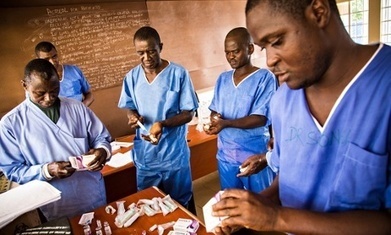
Aspen Medical says it has been already approached by 350 volunteers but only 25 to 50 Australians would go at a time
Scoop.it!
Since an Ebola outbreak began its deadly course through West Africa earlier this year, health officials worldwide have sought to inform the general public about the virus that has killed some 5,000 people. Doctors Without Borders (MSF) on Tuesday launched an online training program for its staff and others interested in fighting Ebola. Originally published at - http://www.voanews.com/media/video/25... Via VERONICA LESTER
Scoop.it!
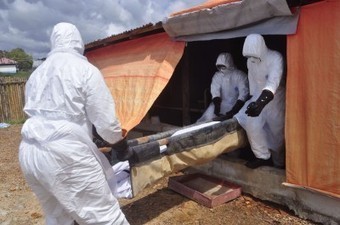
The Ebola outbreak is moving into a new phase that, in many ways, requires even greater attention and action than it has to this point. In addition to fears about the reach of the unforgiving virus and the spread of unfounded global panic, another concern has been added to the list: declaring “mission accomplished” too soon.
Scoop.it!
United Nations - A new WHO protocol for safe and dignified burial of people who die from Ebola virus disease emphasizes inclusion of family members and encouraging religious rites as an essential part of safe burials.
Scoop.it!
Dr. Anthony Fauci of the National Institute of Allergy and Infectious Diseases outlined plans Wednesday for clinical trials of a possible Ebola vaccine in West Africa and said researchers could...
Scoop.it!

Since the Ebola outbreak in West Africa was officially declared on 22 March in Guinea, it has claimed 4,959 lives in the region. The outbreak is the largest ever, and is currently affecting four countries in West Africa: Guinea, Liberia, Sierra Leone and Mali. One person in the United States of America (USA) is currently being treated for Ebola, and one has died. One person in Spain and two people in the USA have recovered. Outbreaks in Nigeria and Senegal have been declared over.
Scoop.it!
The World Bank Group’s Board of Executive Directors today approved a total of US$30 million to support Liberia’s medium-term strategy to strengthen its transparency and accountability mechanisms, expand the economy, increase access to quality education and improve health services that are critical to fighting the current Ebola epidemic.
Scoop.it!
Medical charity Medecins Sans Frontieres says Mali likely has limited its Ebola outbreak to just one case. Dozens of people are still under quarantine after a young girl brought the virus in...
Scoop.it!

Because of the anti-polio efforts, health workers in Nigeria were ready for Ebola. They had already been trained in contact tracing. And hospitals had procedures in place for reporting polio cases, says Jay Wenger, head of polio efforts at the Bill and Melinda Gates Foundation, which provides financial support to NPR as well as the Global Polio Eradication Initiative.... ....There's a lesson to be learned, says Wenger: it's a good idea to have resources and trained personnel capable of dealing with more than just a single disease. "Both polio and Ebola are examples of diseases we can handle if we have the adequate kind of health systems around," he says. "We need to do what we can to strengthen the health systems in many underdeveloped countries."...
|




