Un article du magazine Enjeux Les Echos de mai 2012 présente la Singularity University installée au cœur de la Silicon Valley. Il y est décrit comment des étudiants aux QI les plus élevés ainsi que...
Via Roberta Faulhaber
Get Started for FREE
Sign up with Facebook Sign up with X
I don't have a Facebook or a X account


 Your new post is loading...
 Your new post is loading...
Your new post is loading...
 Scoop.it!
Un article du magazine Enjeux Les Echos de mai 2012 présente la Singularity University installée au cœur de la Silicon Valley. Il y est décrit comment des étudiants aux QI les plus élevés ainsi que... Via Roberta Faulhaber 
No comment yet.
Sign up to comment
Scoop.it!
In this short talk from TEDxMaastricht, Singularity University faculty member Lucien Engelen discusses how technologies are enabling us to crowdsource our health. Via Substance Active
Scoop.it!

Want to see Google’s robocar? Check out these short videos of the autonomous car at Singularity University. Via Martin Talks
Scoop.it!

The Internet and social media are capturing the public’s attention, but some of the most significant advances today are happening in medicine. Technology and medicine are converging in new ways to make possible the types of innovations that could be seen on “Star Trek.” Consider this: We spend the majority of our health-care dollars on treating chronic diseases. Technological advances will enable us to shift those investments into improving our health and preventing disease. My colleague Daniel Kraft is a physician who chairs the medicine track and heads the FutureMed Program for Singularity University. The Silicon Valley-based university teaches business executives, technologists and government leaders about “exponential technologies.” These are inventions in fields that experience faster growth than average — such as robotics, nanotechnology and artificial intelligence. Singularity University’s founders believe that these technologies, when combined in new ways, could solve some of the world’s major problems, such as poverty, hunger, energy shortages and disease. Here are the three major trends Kraft sees in health and medicine: Medicine goes mobile and goes home. Many aspects of health care and disease management will become cheaper and more effective as our mobile phones and other, similar technology platforms become smaller, Web-enabled and interconnected. In essence, these smartphones will become health platforms. They already contain a wide array of sensors, including an accelerometer that can serve as a pedometer, a camera that can photograph external ailments and transmit them for analysis, and a global positioning system (GPS) that can track our locations. Developers are also looking beyond the smartphone when it comes to developing these new technologies. For example, Fitbit is a clip-on, Web-integrated device that helps track how many calories you burn during the day; Zeo is a wireless headband that helps you track the quality and duration of your sleep. Other devices, such as the Basis monitor, which is still in development, can keep track of heart rates and movement. Meanwhile, an array of devices, including scales, blood pressure monitors and blood glucose monitors, are becoming Wi-Fi-enabled. These technologies, when they are connected to electronic and personal health records and to social networks, can create powerful feedback loops with friends, and provide clinicians with better information for helping their patients. Expect to see products that keep track of your health by connecting to global health-care systems similar to the in-car assistance program OnStar. These will incorporate ubiquitous sensors embedded in toothbrushes and clothes, for example. They may even analyze our bathroom visits and food intake. They will likely use artificial-intelligence to constantly monitor our health data, predict disease and summon help in the event we fall ill. Personalization: From genomics to proteomics We learned how to sequence the genome a decade ago, and doing it cost billions of dollars. Companies like 23andMe are now offering partial DNA genotyping for as low as $99 (with a one-year subscription to their information service). Expect prices to continue to rapidly decline to that of a regular blood test. Via dbtmobile
Scoop.it!
L'augmentation exponentielle de la puissance des ordinateurs et des réseaux optiques, combinée au développement de l'intelligence artificielle, des nanotechnologies et autres, va permettre d'extraordinaires transformations, explique le docteur Larry Smarr, professeur d'informatique et d'ingénierie à l'UCSD Jacobs et directeur de l'institut des télécommunications et technologies de l'information de Californie. Via Jean-Philippe BOCQUENET
Scoop.it!
This post is written by Rob Nail - CEO of Singularity University, serial entrepreneur, angel investor, who loves to surf and surf the waves of accelerating change. Via LeapMind
Scoop.it!
From
www

At TEDxMaastricht, Daniel Kraft offers a fast-paced look at the next few years of innovations in medicine, powered by new tools, tests and apps that bring diagnostic information right to the patient's bedside. Daniel Kraft is a physician-scientist, inventor and innovator. He chairs the FutureMed program at Singularity University, exploring the impact and potential of rapidly developing technologies as applied to health and medicine. Via Ashish Umre
Scoop.it!
Synthetic biology is poised to become one of the big technologies of the 21st Century – a game changing area of science that could alter everything we know about health, energy, and humanity. But if the synthetic biology revolution ever wants to get off the ground, it’s going to need a new wave of entrepreneurs to develop companies and establish the industry. Singularity University is looking for those entrepreneurs…and it’s going to help them succeed. Via Jean-Philippe BOCQUENET
Scoop.it!
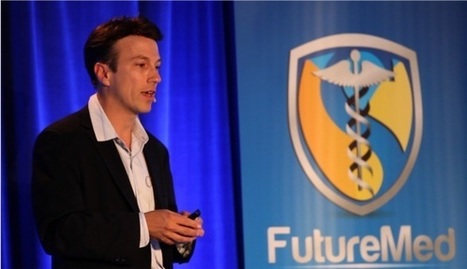
Exponential growth in technology is par for the course at Singularity University, the future oriented institution founded by Ray Kurzweil and Peter Diamandis located at NASA Ames in Silicon Valley. Few fields are developing as quickly as health and medicine, which is why in May of 2011 SU launched a specialized Executive Program called FutureMed. Via Jean-Philippe BOCQUENET
Scoop.it!

Three innovators in a program at Singularity University developed a robotic hand with ultrasonic sensors that can detect lumps in breasts. Via Efraim Silver
Scoop.it!

From
owni
Singularity University ? Ni secte, ni temple transhumaniste ! Eugénie Rives revient pour OWNI sur dix semaines de formation dans la Silicon Valley, au sein d'une institution qui croit aux nouvelles technologies et en leur capacité à sauver le monde. | owni.fr, Digital Journalism : Société, pouvoirs et cultures numériques Via Jean-Philippe BOCQUENET
Scoop.it!
FutureMed 2013 has officially arrived. On Monday, Singularity University kicked off day one at their NASA Moffet Field campus, a stone’s throw from Hangar One and the NASA Ames Research Center. Via LeapMind
Scoop.it!
Friends, a new world is waiting for all of us. It is a world without want, where every need is satisfied by boundless resources. It is a world of friendship, where war does not exist. And when we get there, we'll achieve immortality. I'm not talking about Heaven, Nirvana, or some other religious tenet - I'm talking about the future according to Singularity University. But is it really as close as the Singularity folks say? Via Sakis Koukouvis
|
Scoop.it!
Scoop.it!

Peter Diamandis, X Prize founder and co-founder of Singularity University, talks about how his latest venture connects some of the brightest minds with top experts, points them toward the greatest challenges of the 21st century, and helps them get... Via Martin Talks
Scoop.it!
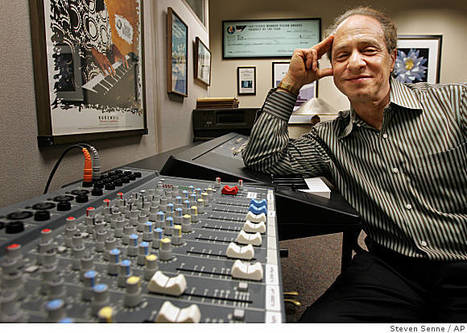
A new university is sprouting up in the Bay Area this summer with quite an ambitious charter: solving the world's biggest problems. Singularity University, which will be housed on the NASA Ames base near Mountain View... The school hopes to attract students from a cross section of emerging disciplines - including nanotechnology, biotechnology and information technology - to tackle huge issues facing humanity. Pandemics and global health care concerns would be typical in scope and import. Via Alastair Creelman
Scoop.it!
Sonia Arrison at Singularity Summit 2011 Sonia Arrison is the author of the book : 100 Plus: How the Coming Age of Longevity Will Change Everything, From Careers and Relationships to Family and Faith. She is a founder, academic advisor, and trustee at Singularity University, located in Mountain View, CA. She is also a senior fellow at the Pacific Research Institute (PRI) and a columnist for TechNewsWorld. Via Szabolcs Kósa
Scoop.it!
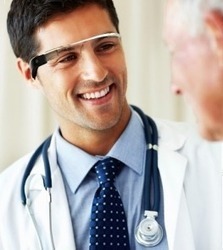
Angela Dunn interviews trauma surgeon Dr. Rafael Grossmann about Google Glass and the future of medicine at FutureMed 2013 at Singularity University. Via Brad Ovenell-Carter

Chris Long's comment,
April 17, 2013 11:22 AM
Great insight Brad! I'm interested in the 7 qualities of new schools you mentioned. Could you point me to anything further on that?
Scoop.it!
Singularity University is planning to exponentially advance itself, transforming from a provider of short supplemental classes into a sort of innovation... Via LeapMind
Scoop.it!
"Singularity University is partnering with Triple Ring Technologies to mentor and develop select synthetic biology teams between May and August 2012. We are looking for promising biotechnology entrepreneurs who we can help to incorporate and develop products and services that can be made and tested in a short amount of time (three months), and with little capital (on average less than $50k)..." Via Gerd Moe-Behrens
Scoop.it!

Image via Wikipedia A few quick impressions from last night’s FutureMed extravaganza put on by Singularity University at the Museum of Computer History, a stone’s throw from Google’s Mountain View headquarters. Via Jean-Philippe BOCQUENET
Scoop.it!

3D printing giant 3D Systems has announced a partnership with Singularity University (SU), educating students in understanding and using advanced technology. Via Kalani Kirk Hausman
Scoop.it!

"In the future we might not prescribe drugs all the time, we might prescribe apps." Singularity University's executive director of FutureMed Daniel Kraft M.D. sat down with me to discuss the biggest emerging trends in HealthTech. Via Henrik Safegaard - Cloneartist
Scoop.it!
Via Jean-Philippe BOCQUENET
Scoop.it!

This year’s Graduate Studies Program (GSP) at Singularity University — the learning institution focused on future-shaping technologies — is wrapping up an intense 10-week summer. Via Jean-Philippe BOCQUENET
|