Your new post is loading...

|
Scooped by
Beeyond
March 29, 10:00 AM
|
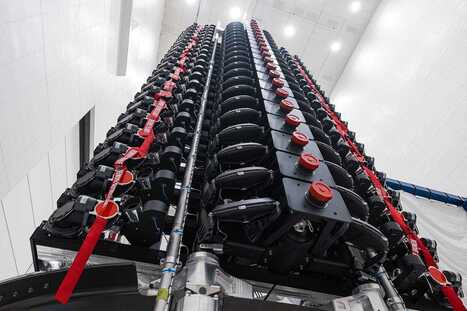
Telcos still frame Starlink as a niche solution for rural broadband, aviation, or maritime. That idea breaks the moment you look at the market potential.
In fact, the demand has always been there, but the challenge has been the Telco's cost structure. Extending fiber into low-density areas costs $3,000 to $10,000 per home passed, and often exceeds $20,000 in remote terrain, while monthly home broadband revenue in those same areas is $40 to $80 at best. The return profile does not close, so the investment never scaled beyond minimum coverage.
|
|
Scooped by
Beeyond
March 27, 11:48 AM
|
Telcos are rushing to throw GPUs, NPUs, and “AI infrastructure” across their networks, and that is a bad strategy. Not because hardware is wrong, but because the thinking is wrong. AI is not about placing computing everywhere. It is about controlling execution and capturing value. Infrastructure alone always commoditizes: Railways did, Fiber did, Mobile did, and Compute will do the same. If the plan is just to deploy hardware, the outcome is already known: more capacity, lower prices, zero differentiation.
In inferencing, the place where telcos have an advantage is where inference cannot move. When latency, data gravity, or sovereignty force execution locally, that is where control exists. But hardware is not enough. You need a system. Network, local cloud, model layer, orchestration, and APIs that expose it. China Mobile is building exactly that. Without this, telcos will do what they have always done: invest billions, scale infrastructure, and watch others capture the value.
|
|
Scooped by
Beeyond
March 25, 10:30 AM
|
Mobile money has crossed $2 trillion in annual transaction value, scaling faster than telecom itself and reaching hundreds of millions of active users worldwide. This did not happen by chance. Telcos built the foundation. SIM-based identity, nationwide agent networks, airtime distribution, and trust at the last mile made services like M-Pesa possible. In many markets, mobile money did not ride on top of telecom infrastructure. It was telecom infrastructure. Few industries have created something this large, this fast, and this embedded into everyday economic life.
But the economics tell a different story. Against more than $2 trillion in flows, telcos capture only $10 to $25 billion in revenue globally, roughly around 1% of the value moving through the system. That is not a failure of execution. It is how the market evolved. Telcos built the rail and optimized it for access, scale, and inclusion. The higher value layers, merchant payments, credit, savings, and financial services, expanded around that rail, often outside of it. The result is a quiet paradox. Telcos created one of the largest financial systems in the world, yet capture only a thin edge of its value.
|
|
Scooped by
Beeyond
March 23, 10:43 AM
|
Artificial intelligence is not a telecom strategy. It is the fastest and most unforgiving way to discover whether one exists. The assumption behind much of the current discourse is that intelligence can be added to an organization in the same way capacity or software is added. Deploy a model, integrate it into workflows, automate decisions, and the organization becomes smarter. That logic is appealing because it frames AI as an upgrade. It avoids confronting the structure of the business itself. But organizations are not empty systems waiting to be enhanced.
|
|
Scooped by
Beeyond
March 22, 7:05 AM
|
It might sound like déjà vu, but it isn’t. According to recent Reuters reports, Amazon is quietly preparing to reenter the smartphone market under the highly classified “Project Transformer.”
Twelve years after the catastrophic failure of the Fire Phone, the company is attempting a surgical hardware reboot. This time, the strategy is radically different. Rather than engaging in a head-to-head battle with the Apple and Google app store duopoly, Amazon is pivoting to an entirely new category: an AI-assisted “anti-smartphone.” This minimalist, agentic dumbphone is not designed to compete on hardware specs or app ecosystems; it is engineered strictly as a frictionless tether to accelerate Amazon’s proprietary flywheel of e-commerce, advertising, and Prime media.
|
|
Scooped by
Beeyond
March 19, 3:01 PM
|
Cette semaine, le strict superflu ne sait plus à qui faire confiance. Aux parents qui prétendent contrôler le temps d’écran ? Aux experts en IA qui croient justement que ce sur quoi ils ont misé va tout transformer ? Aux conseils en relations amoureuses recyclés sur des forums de plus en plus dépités ? Heureusement, il reste les scrutateurs bénévoles du second tour ! Si vous ne l’êtes pas encore, vous pouvez toujours vous abonner pour 5 euros par mois, soit le prix d’une barquette de fraises, ou de 40 euros par an, soit le prix d’un fraisier pour 6 personnes chez un bon pâtissier.
|
|
Scooped by
Beeyond
March 18, 5:36 AM
|
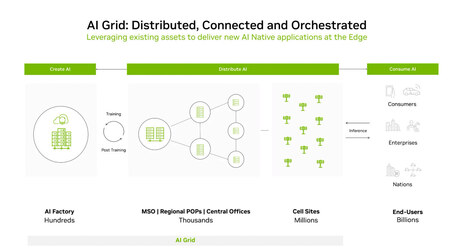
AT&T is entering the AI token economy in full force, together with Cisco and NVIDIA, officially becoming the last mile of the global AI intelligence grid. For the past three years, the tech world has been obsessed with centralized training, building gigawatt cloud data centers to birth foundational models. But as AI scales into physical, real-world enterprise production, pure centralized cloud inferencing has a physics problem. You simply cannot run autonomous industrial robots, massive smart-city camera grids, or real-time agentic systems if every single AI token requires a latency-heavy, bandwidth-choking round-trip to a distant server farm.
The bottleneck is the network, and by tokenizing the edge, this new architecture actively eliminates it. By retrofitting localized cellular switching offices with NVIDIA RTX PRO 6000 Blackwell GPUs and Cisco’s AI-optimized routing, AT&T is transforming its infrastructure from a passive transport layer into a low-latency compute engine. They are no longer just hauling raw data back to the cloud; they are intercepting it, computing it, and generating tokens directly at the perimeter. This is a fundamental techno-commercial pivot.
|
|
Scooped by
Beeyond
March 17, 6:54 AM
|
I’m not exaggerating: “Robotic AI Radio” is the exact phrase Jensen used during GTC 2026. What we are witnessing is a fundamental rewiring of how the world computes, and this groundbreaking development was showcased alongside 120 different robots at GTC 2026 today. This deployment is the first fruit of the partnership between Nokia and NVIDIA for building their Aerial RAN product. It is a massive architectural shift that incorporates GPUs directly into the RAN (Radio Access Network) for two critical purposes: improving RF signal processing and, crucially, enabling physical AI inference right at the edge. Although we are really early in the game, it is abundantly clear that AI has left the central datacenters and training labs. It is now all about the physical world and inference, where telcos can play a big role.
|
|
Scooped by
Beeyond
March 13, 12:38 PM
|
If you want to understand why smart executives intentionally set their own money on fire, you have to look at what they are paid to do. Over the last decade, global telecom revenue growth has flatlined, often trailing inflation. Yet, these companies continue to lay fiber, upgrade towers, and deploy core networks to build a technological miracle. And then they hand it over as a free garnish.
Why?
Because telecom leadership is ruthlessly measured by Wall Street on three metrics: Ebitda, Gross Adds, and Churn. When the board demands immediate subscriber retention, the pressure flows down to the marketing department. Desperate people do desperate things. So, they spend a fortune on customer acquisition, subsidizing devices and saturating the airwaves, just to lock a user into a cheap bundle where the lifetime value barely covers the cost of the bribe. The math is entirely broken, but because the quarterly subscriber numbers look green, the hallucination continues
|
|
Scooped by
Beeyond
March 12, 4:00 AM
|
NVIDIA’s ambition is not to conquer a relatively small, low-growth niche business. As is typical of CEO Jensen Huang’s playbook, the strategy is far more visionary. NVIDIA is putting immense effort into telecom because it is the necessary physical gateway to a much larger prize: a $500 billion top-line opportunity driven by the automation of the physical world. They aren’t trying to build better radios; they are building the global nervous system for Physical AI.
|
|
Scooped by
Beeyond
March 10, 10:11 AM
|
Networks will continue transporting packets across fiber, spectrum, and routers. The strategic shift concerns where value accumulates in the stack. AI workloads generate traffic across telecom infrastructure, yet the economic meter of the AI economy sits in the compute systems that produce tokens. The question for operators is whether they remain the transport layer for that traffic or participate in the infrastructure that generates tokens.
|
|
Scooped by
Beeyond
March 8, 8:49 AM
|
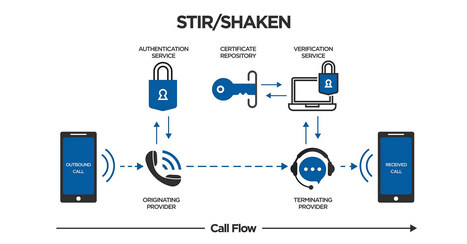
AI expands the attack surface faster than anyone can adapt. Deepfakes undermine identity, autonomous agents execute attacks at machine speed, and AI systems introduce entirely new vulnerabilities across prompts, models, and data pipelines. In this environment, the central problem becomes trust. Who is communicating? Where is the system located? Is the interaction authentic? Telecom needs to decide what role they play in this architecture. An industry cannot stand for twenty different things; It needs a clear identity in the digital economy.
The strongest companies own one word. AWS equals cloud, Cisco equals networking, NVIDIA equals AI acceleration, Volvo equals safety, Disney equals magic, and Red Bull equals energy. In an AI economy where reality and synthetic content become indistinguishable, the missing infrastructure layer is trust. Telecom networks already operate key components that enable them: SIM-bound identity, device authentication, network location verification, and resilient connectivity, all under regulatory oversight. If hyperscalers dominate compute and models, operators can anchor the verification layer of the intelligence grid. Telco must become synonymous with trust.
|
|
Scooped by
Beeyond
March 7, 9:56 AM
|
À l’ère de la 5G et de l’intelligence artificielle, la qualité du réseau mobile à l’intérieur des bâtiments devient un enjeu stratégique. Validation indépendante, modèle multi-opérateurs et nouvelles attentes transforment déjà l’économie immobilière.
|
|
|
Scooped by
Beeyond
March 29, 9:59 AM
|
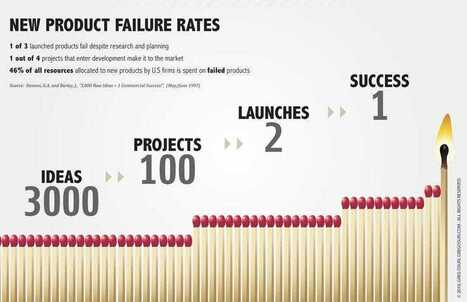
Innovation follows a distribution, not really a plan. The most cited industry data shows it takes roughly 3,000 raw ideas to generate one commercial success. BCG finds that companies in the top quartile of innovation performance run 2 to 3 times as many experiments as their peers and generate up to 30% higher revenue from new products. McKinsey shows a similar pattern. The difference is not better ideas but more attempts.
Now compare that with how telecom operates in a strict regulatory environment with a five-nines regime. Ideas are filtered early, often before any test. Business cases are required up front, and risk is evaluated before learning occurs. In many teams, individuals are implicitly pushed to bring one or two ideas per cycle. If a unit of 100 people generates 200 ideas in a year, the expected number of real successes, based on the 3,000-to-1 ratio, is close to zero. The math does not work.
|
|
Scooped by
Beeyond
March 26, 9:07 AM
|
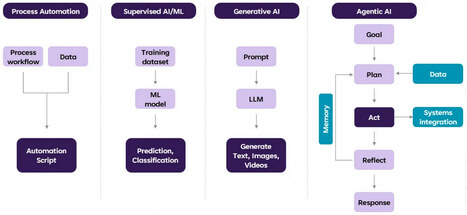
Last week, I built an agent that can answer my calls, transcribe the conversation in real time, extract intent, summarize the outcome, and book a meeting directly in my calendar. It actually works. Speech-to-text runs with low latency, the model understands context, and the workflow executes end-to-end without friction. For the first time, it feels like a real replacement for missed calls and voicemail. Except for one thing: I cannot connect it natively to my mobile number. My carrier does not expose a clean interface for my AI agent to take control of an incoming call, decide what to do, and act. I can route around it using VoIP or a programmable voice provider, but that proves the point. The intelligence layer is ready, but the Telco network interface is not.
The problem is that Telco products and services still rely on human interaction. AI agents will not use your app, your portal, or your retail channel. They will not tolerate friction, delays, or manual workflows. They will consume identity, voice, messaging, QoS, and billing as programmable building blocks. They will select infrastructure based on APIs, latency, reliability, and price, just as developers chose cloud over data centers. Hyperscalers and CPaaS players are already aligned to this model, but telcos are not. As agents scale into tens of millions of active workloads, they will become a major consumer of compute, APIs, and network resources. The question is not whether agents will use telecom infrastructure, but if they will use yours.
|
|
Scooped by
Beeyond
March 24, 10:44 AM
|
The sheer volume of AI agents about to hit the internet is hard to comprehend. Access to near-zero-cost compute and frictionless LLM tooling means that deploying an autonomous agent is no longer a software engineering task; it is the full consumerization of AI. We will soon count machine agents in the billions, with enterprises managing hundreds of thousands of concurrent autonomous actors. They will not just summarize text; they will execute financial workflows, trigger infrastructure APIs, and process Personally Identifiable Information at machine speed.
To understand the trust crisis this creates, we must look at the exact same failure the telecom industry just experienced, but on a slightly smaller scale.
|
|
Scooped by
Beeyond
March 22, 11:29 AM
|
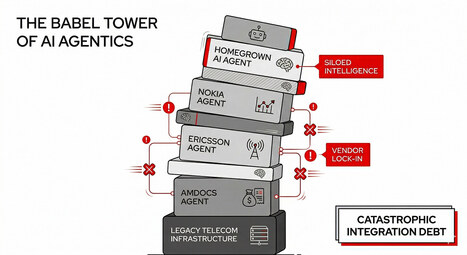
I have survived the mainframe era, the client-server bloodbath, the dot-com bubble, and the migration to the cloud. If you stick around in software engineering long enough, you realize technology doesn’t just repeat itself; it stutters. This usually happens because a new generation of management thinks they are the first ones to discover fire. Right now, the Telecom industry is looking at Agentic AI and, with absolute conviction, deciding to reinvent the 1960s.
When computing was new, mysterious, and painfully expensive, everything was built as a vertical stack. If you bought an IBM mainframe, you ran IBM’s proprietary operating system, which was hardcoded specifically for that exact silicon architecture. The hardware, the routing logic, and the application were inextricably welded together. It gave you maximum performance for one specific workload, and absolutely zero flexibility for anything else. You were locked in a very expensive, incredibly rigid box.
|
|
Scooped by
Beeyond
March 21, 6:20 AM
|
Walmart has quietly become one of the biggest telecom success stories in the world. Its brand Bait is already the second largest mobile player in Mexico and the largest MVNO globally. Yet none of this came from a telecom strategy. There was no ambition to compete with Telcel or AT&T. The objective was far more pragmatic: use connectivity as a programmable incentive to influence how often customers show up, how much they spend, and how tightly they stay within the Walmart ecosystem.
That is what makes this emerging trend interesting. In fact, Walmart is not an exception, just an early signal. The MVNO model is moving away from low-margin prepaid reselling toward a B2B2C infrastructure layer. Retail, fintech, and digital platforms are starting to embed connectivity into their core economics, not to monetize data plans, but to shape behavior across much larger revenue pools. The traditional MVNO, built on price competition and thin margins, starts to look obsolete compared to a model in which connectivity is simply the cheapest and most effective lever for driving demand.
|
|
Scooped by
Beeyond
March 19, 4:32 AM
|
For years, I’ve been pointing out a hard physical limit that the industry sometimes ignores: You cannot run every real-time, interactive intelligence out of a centralized cloud. Routing tokens back and forth to a hyperscale data center guarantees garbage latency, and brute-forcing massive LLMs (or constantly re-reading context windows) ruins your unit economics.
This week, NVIDIA and Comcast announced a deployment that finally stops fighting physics. They are dropping GPUs directly into the network edge to run stateful Small Language Models (SLMs) mere milliseconds from the endpoint. It’s a straightforward, brutal correction to how inference is routed. By combining edge proximity, sub-15ms latency, and the localized token generation of SLMs, Comcast is turning its last-mile infrastructure into the actual execution layer. Every other telco needs to look at this exact blueprint right now, or get used to being nothing but a dumb pipe.
|
|
Scooped by
Beeyond
March 17, 12:42 PM
|
We are so, so early.
While the tech industry fixates on trillion-parameter models and massive training clusters, the actual human distribution of frontier AI remains a statistical rounding error. Of the 8 billion people on Earth, fewer than 10% regularly interact with advanced models. The math of training intelligence has been solved; the structural bottleneck is now distribution. The fundamental economic unit of AI has shifted from the model to the inference token. As the global economy pivots from static prompts to continuous, autonomous agentic workflows, inference tokens will be consumed daily like industrial water.
Serving trillions of generated tokens cannot rely on routing raw data across intercontinental fiber backbones to a few dozen centralized hyperscaler clouds. The physics of latency and the economics of bandwidth simply break at that scale. This bottleneck makes the telecom industry the most viable distribution platform for the AI era. Telcos already have a billing relationship with 5.6 billion unique subscribers and operate a physical grid of over 4 million edge base stations. By reframing the radio access network (AI-RAN) as distributed compute nodes, operators can shift from passively transporting third-party data to actively manufacturing AI tokens at the edge.
|
|
Scooped by
Beeyond
March 15, 2:27 PM
|
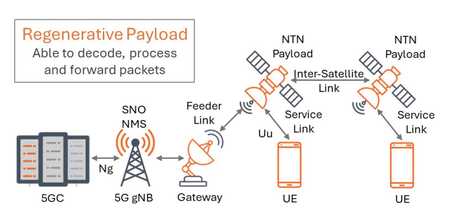
People look at telco-satellite deals and think it’s just about sending SOS texts or tracking sheep in the desert. That completely misses the architectural shift. Satellites used to sit outside the cellular stack as weird, proprietary backhaul. Now, with 3GPP NTN baked into commercial basebands, a satellite terminates the exact same radio protocols as a regular rooftop cell tower. To the 5G core, the orbit is just another RAN layer. When the N2 and N3 interfaces look identical, the AMF doesn’t care that the gNodeB happens to be flying at 27,000 km/h. Physics basically drops out of the control plane. Nobody is overselling the physics here. It´s obvious that a LEO node will never match the capacity of an urban midband site, and it doesn’t have to. The point is moving from isolated orbital fleets to hundreds of thousands of nodes that just act like native mobile infrastructure. Once space is fully integrated into the standard cellular stack, it ceases to be a niche coverage add-on. It rewrites the telecom value chain, shifting leverage away from pouring concrete for towers and straight into spectrum policy, baseband silicon, and whoever owns the software switching layer between Earth and orbit.
|
|
Scooped by
Beeyond
March 13, 7:28 AM
|
Telecom spent the last decade building data lakes to understand the network. AI agents change the objective completely. The goal is no longer to analyze the past. The goal is to act on the present. A few experimental agents can survive on batch pipelines and historical tables. A fleet of autonomous agents cannot. At that scale, the network behaves like a distributed control system where milliseconds matter, and every decision touches live infrastructure.
That shift forces a different architecture. Data lakes remain useful for analytics and training, but they cannot operate the network. Agents require continuous state, explicit relationships between systems, and strict control over every action they execute. The problem moves from storing data to governing machine decisions. The telco that solves the control plane will run the autonomous network
|
|
Scooped by
Beeyond
March 11, 11:27 AM
|
Elon Musk does not build global infrastructure to serve the fringes; he builds it to own the core. I'm not saying that SpaceX harbors malicious intentions, but about the cold, aggressive math of orbital scale. Telcos, tower companies, and regulators need to strip away the PR fluff and urgently understand the true risks, the structural benefits, and exactly what terrestrial turf they actually have left to protect.
|
|
Scooped by
Beeyond
March 9, 11:47 AM
|
MWC 2026 is over, and the hype hangover begins. Back to reality, there is one metric the telecom industry should look at right now: how much money we are actually making from AI. Not how much AI we deploy internally, not how many partnerships we announce, but real revenue generated by operators. This has been the industry’s problem for decades as Telcos build the infrastructure, enable the ecosystem, carry the traffic, and then watch someone else capture the value.
In 2025, the global AI economy generated roughly $1.5 trillion. At best, telecom operators captured about $300 million in direct AI revenue. Even if the definition is stretched to include connectivity and other indirect services, the most optimistic estimates reach around $4 billion. The sense of déjà vu is hard to ignore.
Telcos have already invested well over $300 million in AI and are deploying it across networks and operations, yet we capture only about 0.02% of the AI economy. The opportunity is massive. But if telecom does not fix how value is captured, AI will repeat the same story we already lived through with cloud, apps, and streaming.
|
|
Scooped by
Beeyond
March 7, 9:59 AM
|
Au cœur du Mobile World Congress 2026, les projecteurs se tourneront indéniablement vers Nordic Semiconductor. L’entreprise s’apprête à révéler une extension d’envergure de son portefeuille dédié à l’IoT cellulaire, ambitionnant ainsi de renforcer sa place parmi les acteurs mondiaux du secteur. Ce virage stratégique s’incarne notamment dans le lancement de deux nouvelles séries de produits, sans oublier des évolutions majeures pour la gamme nRF91 Series. Tout cela s’inscrit dans une trajectoire résolument tournée vers la future compatibilité avec la technologie 5G eRedCap.
|