Your new post is loading...
The lab will beam back data to train AI models to predict how proteins behind age-related diseases like Alzheimer’s and certain cancers behave. Space is becoming the next frontier in longevity research. A British startup just launched self-run chemical experiments into orbit, in the hopes zero-gravity data might shine a light on a group of disease-causing proteins too difficult to study on Earth. But first they need to check whether their autonomous laboratory will work in space.
A federal appeals court affirmed Monday dismissal of Gov. Ron DeSantis’ 2023 challenge to the college accrediting process, which he believes enforces diversity and related interests he considers “woke.” The U.S. Court of Appeals for the Eleventh Circuit rejected the state’s argument that existing accrediting agencies wield unchecked power to overrule Florida’s political decisions about how its universities operate — in other words, that the system gives “unconstitutionally delegated governmental power to these private accreditors.” The U.S. District Court for the Southern District of Florida earlier rejected the state’s claim. The appeal questioned whether the federal government can rely on ratings by private accreditors to disburse federal funds. In announcing the lawsuit in 2023, DeSantis complained “a totally unaccountable, unappointed, unelected accrediting agency can trump what the state of Florida is doing.”
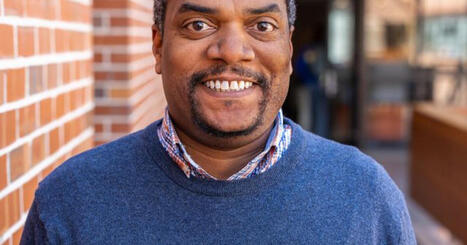
This episode features Dr. Antoine Haywood, a Journalism assistant professor at the University of Florida College of Journalism and Communications who studies community participation and representation in local media. Haywood is keen on understanding how communities use local communication infrastructure such as community-made video, radio, press and digital publications to articulate regional identity, build social capital and fill local news and information gaps.
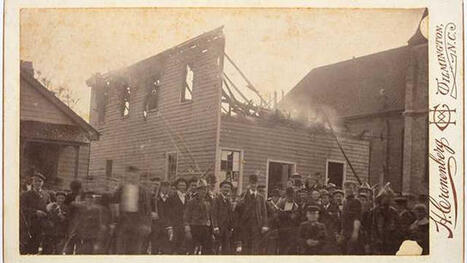
Fear, loathing, and the only successful coup d’état in American history. This is the story of the only successful overthrow of a domestic government in American history. Once generally referred to as a “riot,” the events of 1898 in Wilmington, North Carolina are now more widely understood to have been a massacre of its African American citizens, and the overthrow of an elected government. One year earlier, North Carolina’s white supremacist Democratic Party embarked on a carefully orchestrated campaign to drive Fusion coalition politicians, some of whom were Black, out of office during the upcoming election. (At the time, Democrats were businessmen, well-off farmers, and former Confederates, whereas the biracial Fusion coalition contained Populist Party politicians—supported by small, struggling farmers—and Republicans, which represented most Black North Carolinians.) The white supremacy campaign utilized speeches, propaganda cartoons, and the threat of violence to create support for the coup d’état. On November 8, 1898, North Carolina’s Democrats used threats and intimidation to stop African Americans from voting. Pro-Democratic Party election officers tampered with the returns. Because of these tactics, Democrats swept the election. On November 10, 1898, two days after the contested election, a violent mob then took to the streets, and attacked African Americans, an unknown number of whom were killed. Local elected officials were forced to resign at gunpoint, and were replaced by white supremacist leaders. Other prominent people—white and Black—were “banished” from the city. Following the coup, many white newspapers throughout the country reported the incident as a “race riot” and suggested that Black citizens were the aggressors. No one was ever prosecuted for the violence.
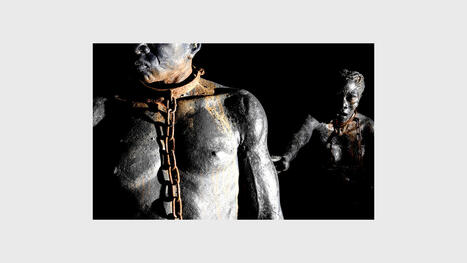
This week on Reveal, host Al Letson travels to Montgomery to interview Stevenson as America marks its 250th anniversary. He talks about the importance of memorializing the nation’s darkest chapters as the Trump administration attempts to erase slavery from America’s museums and explains why he sees today’s narrative struggle for racial justice as a generational battle.
Someone asked me recently why Public Media Network even needs to exist. YouTube is free. Facebook reaches everyone. Why bother? It’s a fair question. And honestly, it’s one I don’t mind answering, because the people asking it aren’t wrong about the tools. They’re just working with an incomplete picture. We use YouTube. We use Facebook. Public Media Network posts content on both platforms regularly, because that’s where people are, and reaching people matters. If you’ve ever learned about a city commission meeting or a community talk show through our Facebook page, or watched a program on our YouTube channel, those platforms did exactly what they’re supposed to do. I’m not here to tell you they don’t work. But here’s what I’ve come to understand after years of working in community media: the question was never really about reach. It’s about who owns the infrastructure.
Massachusetts and Rhode Island are being sued by the Department of Justice, which accuses the states of discriminating against U.S. citizens who cannot get the same reduced tuition as students without legal residency who live in those states. The DOJ has sued a dozen states over similar policies.
Providing digital book access via libraries has been a controversy since 2011. Communications initiatives, meetings, convenings, committees, market innovations, legislation, a lawsuit, and research have been employed in the effort to resolve this controversy. Despite this well-intentioned effort, many stakeholders remain dissatisfied. This paper reviews the trajectory of the library digital book issue since 2011 and finds that a more strategic and long-term perspective are needed—to go beyond the “firefighting” that has characterized the effort thus far.
Carr cites screen time concerns, is accused of trying to be "the nation’s parent." The Federal Communications Commission was roundly criticized today for proposing to scale back or eliminate E-Rate, a $2 billion-a-year Universal Service program that provides discounts for telecom services and equipment in schools and libraries. FCC Chairman Brendan Carr said E-Rate should be changed because students are getting too much screen time. He led a 2-1 vote to issue a Notice of Proposed Rulemaking (NPRM) that proposes changes and asks the public to comment on them.
Two researchers — one in Massachusetts and one in Shanghai — hoped for the same breakthrough: a gene therapy for deaf children. New Chinese investment in science propelled the one who got there first.
Americans tend to see the Declaration of Independence and the Revolutionary War as milestones in world history that inaugurated the era of modern democracy. But the British unsurprisingly, see these events quite differently. David Remnick talks with the historians who host the popular podcast “The Rest Is History,” Dominic Sandbrook and Tom Holland. Growing up in Britain, Sandbrook explains, the Revolution seemed like “a parade of quite boring men talking very earnestly about liberty, [with] battles that involved twenty people in a field somewhere. . . . It’s not Waterloo!” The King was “annoyed” to lose the thirteen colonies to the new nation, but, for his government, “it could have been a lot worse.” Sandbrook and Holland discuss historical events that overshadow the American Revolution in the British mind; the 1619 Project and the subject of slavery; the “colossally consequential” Presidency of Donald Trump; and the fate of the British monarchy.
Grain by packed grain, sand artist Sean Fitzpatrick creates the Yarmouth sand sculpture trail. This year marks the 15th anniversary of dozens of seasonal works of arts scattered across this mid-Cape Cod town.
The inspiration behind the VICE TV six-part mini-series Why the Rest of Us Die!
The shocking truth about the government’s secret plans to survive a catastrophic attack on US soil—even if the rest of us die—is “a frightening eye-opener” (Kirkus Reviews) that spans the dawn of the nuclear age to today, and “contains everything one could possibly want to know” (The Wall Street Journal).
Every day in Washington, DC, the blue-and-gold first Helicopter Squadron, codenamed “MUSSEL,” flies over the Potomac River. As obvious as the Presidential motorcade, most people assume the squadron is a travel perk for VIPs. They’re only half right: while the helicopters do provide transport, the unit exists to evacuate high-ranking officials in the event of a terrorist or nuclear attack on the capital. In the event of an attack, select officials would be whisked by helicopters to a ring of secret bunkers around Washington, even as ordinary citizens were left to fend for themselves.
“In exploring the incredible lengths (and depths) that successive administrations have gone to in planning for the aftermath of a nuclear assault, Graff deftly weaves a tale of secrecy and paranoia” (The New York Times Book Review) with details “that read like they’ve been ripped from the pages of a pulp spy novel” (VICE). For more than sixty years, the US government has been developing secret Doomsday strategies to protect itself, and the multibillion-dollar Continuity of Government (COG) program takes numerous forms—from its potential to evacuate the Liberty Bell from Philadelphia to the plans to launch nuclear missiles from a Boeing-747 jet flying high over Nebraska. Garrett M. Graff sheds light on the inner workings of the 650-acre compound, called Raven Rock, just miles from Camp David, as well as dozens of other bunkers the government built for its top leaders during the Cold War, from the White House lawn to Cheyenne Mountain in Colorado to Palm Beach, Florida, and the secret plans that would have kicked in after a Cold War nuclear attack to round up foreigners and dissidents and nationalize industries. Equal parts a presidential, military, and cultural history, Raven Rock tracks the evolution of the government plan and the threats of global war from the dawn of the nuclear era through the War on Terror.
|
A study based on 47 million galaxies found that the cosmic web retains patterns on enormous scales, which could force a reevaluation of a pillar of cosmology. One of the fundamental pillars of modern cosmology may be beginning to wobble. A study published in Nature has found evidence that the universe may not behave the same way in every direction on the largest observable scales. “What we found is a network of enormous filaments and walls of galaxies that remain aligned and interconnected across billions of light-years,” says Francesco Sylos Labini, research director of physics at the Enrico Fermi Research Center in Italy and the study's lead author.
A bill moving through California’s legislature would require schools to test kindergarteners' math skills. California could begin testing students as early as kindergarten in math. Proponents of Senate Bill 1067, including state Sen. Akilah Weber Pierson, say the goal is to identify students who are falling behind in math early so they can get help. More than 60% of California students perform below the benchmark on the state’s standardized math test.
Frederick Law Olmsted: Designing America is the latest film from Lawrence Hott and Diane Garey for PBS’s American Experience series. It is made in the traditional PBS style, perfect for the Olmsted neophyte and ideal for classroom use because of its length (55 minutes) and subject matter. You can stream it from the American Experience website. That Hott and Garey have made a film about the father of American landscape architecture and his legacy is of little surprise. As pioneers in the film genre of environmental biography, they have been circling Olmsted as a topic for a quarter century. Their first two films produced for PBS broadly examined the history of wilderness in the United States. This new film covers the fascinating life and work of Frederick Law Olmsted. Born in 1822 to a prosperous Connecticut family, Olmsted spent the first 35 years of his life failing upwards. His formal education was limited due to frequent eye problems and he learned mostly through reading in the family’s book collection and observation while wandering the countryside. Oddly, this and some other telling details are not in the film. But we do learn that at 18, he started a series of jobs and unhappily labored as a surveyor, a clerk, and a deckhand on a merchant ship sailing to China (and nearly died) before his father bought him a farm at age 24. For six years he tried his hand at “scientific farming.” He failed at all these things but the experiences would be incorporated into his life’s work.
For several years, the College Board offered AP Computer Science A, an introductory college-level programming course focused on object-oriented design and problem-solving using the Java language. During that time, CB assessed that (in 9 states) specific groups (mainly girls and students of color) were not enrolling in the more conventional course or taking the exam. In 2016, I taught the first full implementation of AP Computer Science Principles and my curriculum was focused on art. To kick-off the last unit I presented Deep Dream Generator or DDG to my students. At the time, DDG was primarily GAN-based. GAN refers to generative adversarial network, which generates new data by learning through competition between two artificial neural networks: generators vs. discriminators. The process begins with random noise, which acts as a seed. The generator creates synthetic images from random noise, while the discriminator tries to guess whether the image is real or fake. This perpetual loop causes the AI to continually refine its outputs. The process reminds me of jazz, specifically riffing that pits one section of a band against another, creating a conversational, energetic effect.
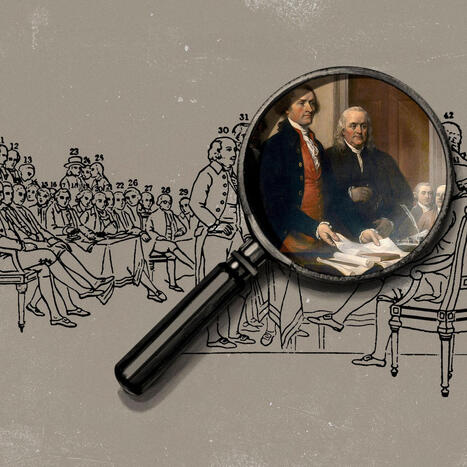
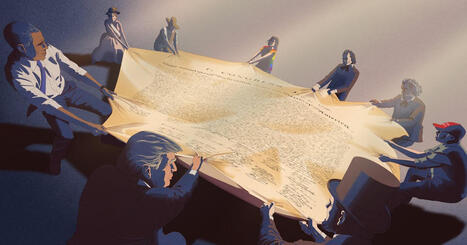
The founding document has been fought over since it was written. Today, we can let Trump claim it, or we can take up its battle cry to “alter or to abolish” what’s destroying our country. Last year, The Atlantic reported that President Donald Trump had queried advisers about putting the delicate original copy of the Declaration of Independence on display in the Oval Office. “Trump’s request alarmed some of his aides, who immediately recognized both the implausibility and the expense of moving the original,” The Atlantic’s Ashley Parker and Michael Scherer wrote. “Displayed in the rotunda at the National Archives Building in Washington, D.C., it is perhaps the most treasured historical document in the U.S. government’s possession.” Trump eventually settled for displaying a copy, but the document has clearly been on the administration’s mind—perhaps predictably so, given the semiquincentennial celebrations Trump will soon preside over. It was announced in April, for instance, that a limited edition of passports this year would feature John Trumbull’s iconic painting of the draft declaration’s presentation to Congress alongside the text of the declaration—with Trump’s portrait overlaid on top of it, naturally.
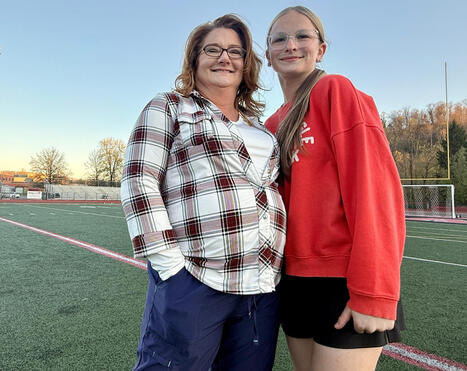
SCOTUS upheld bans on transgender athletes in women’s sports, sidestepping evidence and narrowing its own logic on trans discrimination. he Supreme Court has delivered another blow to LGBTQ rights, upholding legislation that bars trans girls and women from participating in women’s sports. The Court’s 6–3 decision in West Virginia v. B.P.J. (consolidated with Little v. Hecox) addressed laws in West Virginia and Idaho but, in effect, affirmed 27 state-level bans on trans women’s participation in women’s sports. Although Idaho’s Fairness in Women’s Sports Act (2020)—the nation’s first ban on transgender athletes—and West Virginia’s Save Women’s Sports Act (2021) both bar transgender student athletes from participating on teams that match their gender identity. The cases raised different legal questions.
The Thomas Jefferson Foundation had spent a decade shifting the center of gravity away from solely Jefferson-as-genius and toward the full world that existed on that mountain. How a right-wing smear campaign tried to silence the reality of Thomas Jefferson’s life, and in some ways succeeded.
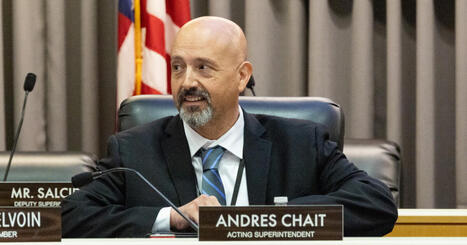
Andrés Chait is the first LAUSD insider to fill the top job in a decade after two high-profile external candidates. Andrés Chait has worked in the Los Angeles Unified School District for nearly 30 years and has never tried the district’s famous coffee cake. “For a long time, I would get teased about it, and so one day, I — and this was back when I was a principal — I told the kids, ‘I will have my piece of coffee cake on my last day of work with the district.” It’s unlikely that day will be anytime soon. The district’s board appointed the longtime administrator superintendent of schools during its last scheduled board meeting of the 2025-26 school year.
The school board placed Carvalho on paid administrative leave in February following FBI searches of his home and office. Superintendent Alberto Carvalho has resigned as leader of the Los Angeles Unified School District, four months after the FBI searched his home and office. "Placing students first has always guided my work," Carvalho wrote in his resignation letter, provided to LAist by his attorney. "Because I believe our schools must remain focused on students and learning without distraction, I am resigning as Superintendent of LAUSD effective today." A district spokesperson confirmed receipt of the letter Sunday night. The reason for the timing wasn’t immediately clear.
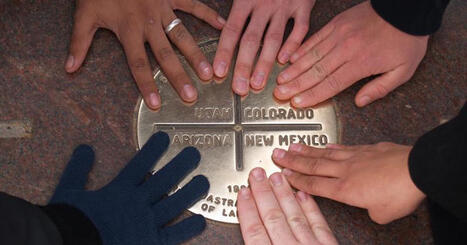
Sarah Vowell has a theory that you can tell the entire history of the United States by standing on one street corner—specifically at Michigan Avenue and Wacker Drive in Chicago—and describing all the events that happened within eyeshot of the corner. She covers three centuries of history, from Louis Joliet to Keanu Reeves. (21 minutes) https://www.thisamericanlife.org/128/four-corners/act-one-3
The asteroid will be visible for several nights from different parts of the world. We’ll tell you when and where to look, and what equipment you’ll need to spot it. The European Space Agency (ESA) confirmed that this weekend, asteroid (152637) 1997 NC1 will make its closest approach to Earth in 400 years. There's no risk it will hit Earth, but it will be visible through commercial telescopes and astronomical binoculars from various parts of the world. The closest approach will occur on Saturday, June 27, when the asteroid will pass 2.56 million kilometers (1.59 million miles) from Earth—a distance equivalent to 6.6 times the distance between Earth and the moon. The object—with a diameter estimated to be between 700 meters and 1.6 kilometers—will not come this close again until 2133, according to the ESA.
The legendary legal scholar says we must ‘resist the stories that we’re being told that tell us that there’s nothing that we can or should do to change the circumstances’ Intersectionality. Critical race theory. These are the concepts Kimberlé Williams Crenshaw is famous for coining. With them, she’s given us a vocabulary to talk about the ways the law and our society erase significant portions of our population — particularly Black women. Crenshaw, who is a distinguished professor of law at UCLA, the Isidor and Seville Sulzbacher Professor of Law at Columbia Law School, and the co-founder and executive director of the African American Policy Forum, has written a new book, Backtalker: An American Memoir. Backtalker details Crenshaw’s experiences at the intersection of racism and sexism — and explores how she and her parents responded to them.
|