Your new post is loading...
"No matter how many “courageous” speeches Barack Obama gives, America will never be a “Let’s talk about race” kind of place. It’ll always be a “Let’s talk about how we can’t talk about race” kind of place." — Wesley Morris "The brute caricature is arguably the most deadly caricature on this list. Depicting Black men as violent and hypersexual rapists of white women, this caricature was used as a way to villainize Black men during the height of the abolitionist movement and reconstruction era." "In the present day, the brute caricature still makes a massive impact." — Jaida Noble Algorithmic truth refers to an ‘epistemic regime’ where the determination of what is considered factual, true, or credible is increasingly produced, validated, and circulated by artificial intelligence systems and computational processes. It is a form of “constructed truth,” shifting away from traditional human-based, subjective, or journalistic deliberation toward probabilistic reasoning, data-driven inference, and pattern recognition. Donghee Shin (2025) writes that algorithmic truth is not a neutral mirror of reality. It is a socio-technical (and socio-political) output shaped by datasets, classification schemas, and the normative assumptions of the people and organizations that create them. Four years ago my field review “Interrogating AI Bias through Digital Art” explored how racial bias in early photographic and film techniques carried over into deep (machine) learning and facial recognition AI, which has led to harmful technological designs.
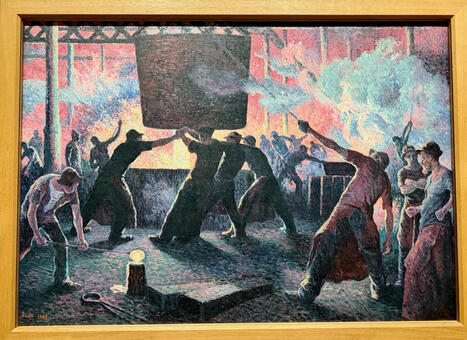
It’s quite a leap from taking an art appreciation class with your daughter in your mid-thirties to assembling an enormous collection of paintings by radical art-world revolutionaries and anarchists. But that’s what one woman did and and the work is on display in Radical Harmony: Helene Kröller-Müller's Neo-Impressionists, on view at the National Gallery in London through February 8, 2026. Crowds have been flocking to see incredible works by Seurat, Signac, and Van Gogh, and meet the Dutch and Belgian painters who adopted their breakthroughs and ran with these innovations for two decades at the end of the 19th century.
Donald Trump is now demanding $1 billion from Harvard after The New York Times reported he’d backed down from a request for the university to pay his administration off. For a moment, it appeared that Trump’s extortion scheme had failed at Harvard. Six other elite schools agreed last year to settle civil rights investigations and regain federal funding by adopting Trump’s authoritarian “compact” on school policy and by signing checks that amounted to millions of dollars to the U.S. Treasury. Harvard, however, refused to settle, though it has faced a whopping 13 investigations by 10 federal agencies in the past year alone. Just hours after the Times reported that anonymous Trump officials and Harvard officials had both quietly accepted that the Ivy League institution wouldn’t pay the president’s ransom, Trump attacked Harvard and the Times—and issued a furious new demand.
Riverstone Academy officials closed the school building to students starting Monday after Pueblo County officials warned that they were prepared to disconnect the utilities.
Forth Worth teacher Chanea Bond says sticking with pen and paper keeps generative artificial intelligence out of her American literature classes.
Young children would still be required to get vaccinated before entering a Florida school or day care, but it would be easier for parents and guardians to opt out of those vaccinations under a bill passed by the Senate Health Policy Committee Monday afternoon. In addition to addressing school vaccine requirements, SB 1756 would allow Florida […]
Introduction Terrorist attacks, whether by individuals or groups, are usually followed by attempts to explain the rationale and causes behind them. The core reasons, however, lie not in surface-level factors but in the deeper “machinery” of society: the values and worldviews that children absorb at home, in schools, and in their communities. This early socialization shapes the beliefs and perceptions that later guide adult behavior. Among the social mechanisms that can be changed to prevent such attacks in the future, education and community life are crucial. The definition of terrorism provided by the Office of the United Nations High Commissioner for Human Rights states that “As a minimum, terrorism involves the intimidation or coercion of populations or governments through the threat or perpetration of violence, causing death, serious injury, or the taking of hostages.” However, the Stanford Encyclopedia of Philosophy provides a deeper understanding of terrorists:
he Annenberg School for Communication Library Archives (ASCLA) began a decade ago with the gift of the TV Guide Prime-Time Script Collection, including 29,000 scripts of TV series, specials, and movies, such as “Seinfeld” and Agnes Nixon soap operas including “One Life to Live” and “All My Children.” Lead archivist Samantha Dodd Summerbell says the number of scripts increases each year, and the archives have also grown to include memorabilia, research, and more. Researchers from around the world come to look at scripts, she says. Annenberg not only possesses these documents; it also played a role in the history of many. Annenberg founder Walter Annenberg founded TV Guide, and ASCLA holds issues published from 1953 to the mid-1990s. It also houses the papers of former dean George Gerbner, a pioneer in research on television’s impact on viewers’ perceptions of the world and the effects of violent media on children. This year marks the 100th anniversary of the first public demonstration of television. Reflecting on this milestone, Penn Today took a look inside ASCLA’s collections. Here are a few TV-related highlights.
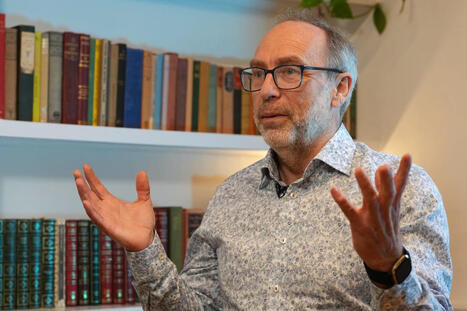
Wikipedia plans to use AI to assist editors and improve search experiences, while addressing criticism of bias and competition from rivals like Grokipedia.
As public confidence erodes and Trump-era funding cuts mount, colleges are launching ad campaigns and joint messaging to defend their value.
We create the conditions for higher education to be accessible and free from political interference. We champion a higher education system where all students can succeed. We protect the free exchange of ideas and ensure truth is grounded in facts, and knowledge is never criminalized. Our work spans thought leadership, cross-sector collaboration, policy, and leadership training. We speak as a collective voice for all post-secondary education, from community colleges to doctorate-degree granting institutions.
Some immigrants in Minneapolis have said they're scared to go out because of ICE agents across the city. When one 12-year-old needed to run an errand, it triggered a network of underground volunteers.
Some families aren't leaving their homes as aggressive ICE operations continue in Minnesota, leaving their children confined and stressed. Across the Twin Cities, kids are anxious and afraid.
|
Chicago schoolteacher Claudia Morales may have been reflecting the feelings of most Americans about life under the Trump presidential administration when she told Our Schools, “Every day, there’s yet another abuse. It’s scary. And it’s coming from our own government.” In her work as a bilingual program teacher and bilingual coordinator at Curie High School in Chicago Public Schools (CPS), she’s been witness to one trauma after another.
The administration’s assault on colleges and universities is meant to undermine the economic and social progress women have made in the last half-century.
Teton School District 401 is taking a major step forward to support students and families through the Community School Strategy. This evidence-based approach transforms public schools into neighborhood hubs by integrating academics with social services, extended learning opportunities, and family and community engagement. It aims to address the root causes of learning barriers by leveraging community assets and partnerships to support the whole child. In the 2024-25 school year, the Education Foundation of Teton Valley provided funding for two district-level community coordinators, in a targeted effort to support students, staff and families in the transition to a four-day school week, as well as to better position the district in their effort to join a cohort of rural schools across Idaho adopting the Community School Strategy.
A Florida House committee sent to the House floor a bill that would define how school library materials may be “harmful to minors,” building on a controversial 2023 law that led to removal of library books from schools based on objections from the public. The House Education & Employment Committee approved HB 1119, its second […]
Jessica Winter on how Operation Metro Surge is upending the Columbia Heights school district, after a five-year-old boy and other young students were taken into federal custody.
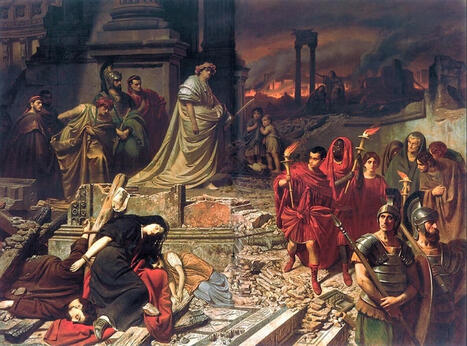
While we may be most familiar with modern-day conspiracy theories about government intelligence, unidentified flying objects, anti-vaccination, COVID-19, and more, conspiracy theories have existed for centuries. In July of AD 64, the great fire of Rome destroyed two-thirds of the city-state—which had a population of around 2 million—resulting in widespread death and homelessness. Despite several contributing factors such as intense summer heat, dry winds, and the prevalence of wooden houses, various conspiracy theories emerged, ranging from Emperor Nero “deliberately” starting the fire to “blaming” the Christian community for it. When the fire began, Nero was in a different city altogether, leading to claims that he had conspired to bring about the catastrophe to rebuild Rome. Coincidentally, the Domus Aurea, an extravagant palatial project, was constructed on a portion of the ruins, which fueled conspiracy theories about his alleged involvement, despite evidence that he also supported relief efforts. In turn, Nero placed the blame on Christians, resulting in the crucifixion and burning alive of many from the religious community. There is also evidence that some Christians believed in prophecies about a forthcoming catastrophic fire in Rome at the time. While the actual cause of this infernal disaster remains unproven, it illustrates how conspiracy narratives can arise from social crises. Psychologically, fear and uncertainty can be strong motivators, and conspiracy theories empower people by filling a knowledge gap. Socially, tribalism and in-group/out-group tendencies may also contribute to the birth of such theories; a united front can foster a sense of control. These psychosocial explanations reveal that we want to feel in control, and information is power.
AI art history traces from early algorithmic experiments in the 1960s and Harold Cohen’s pioneering AI-driven software (1970s) to the deep learning revolution of the 2010s with Generative Adversarial Networks or GANs (2014) and diffusion models (2021–2022), leading to mainstream tools like DALL-E, Midjourney, and Stable Diffusion, transforming art creation, analysis, and museum engagement, raising questions about creativity and originality, and integration into contemporary art culture. Creative AI isn’t a new development. It’s a continuum that keeps on going, often changing slowly over time, or emerging quickly in mainstream culture. Computer art pioneers such as A. Michael Noll and H. Philip Peterson spent the last half of the 1960s developing computer languages that manipulated graphical data. They explored new and emerging forms of computer-generated art and examined various aspects of human pattern perception. I was exposed to this development at a young age. In the 1970s, my mother, who worked as a computer programmer/analyst, often sent me to school with prints of ASCII graphics she created on her computers (e.g. Peanuts characters). My teachers hung these banners on their walls.
Harvard’s lawsuit fighting the Trump administration’s freeze on research grants is one that every higher education institution should join.
President Emmanuel Macron has requested that the legislation be fast-tracked and it will now be discussed by the Senate in the coming weeks.
The Columbia Heights Public School district says federal agents have detained four of its students in four separate incidents over the last two weeks. One child is a 5-year-old boy who attends a district elementary school and was used as “bait” to draw family members out of their home. “Why detain a 5-year-old? You can’t tell me that this child is going to be classified as a violent criminal,” Zena Stenvik, the Columbia Heights superintendent, told reporters Wednesday. According to Stenvik, masked agents apprehended 5-year-old Liam Conejo Ramos in his driveway on Tuesday as he returned home from school with his father. “Another adult living in the home was outside and begged the agents to let him take care of the small child, and was refused,” Stenvik said. “Instead,” she said, “the agent took the child out of the still-running car, led him to the door and directed him to knock on the door asking to be let in in order to see if anyone else was home, essentially using a 5-year-old as bait.” Agents later took the father and child away in a vehicle and sent them to Texas.
Louisiana has long struggled with maternal and infant mortality. In New Orleans, free home visits by nurses help spot medical problems early. It's a reproductive health policy with bipartisan support.
|