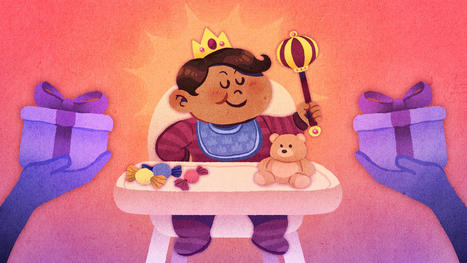
Giving in to your kid too much can be harmful to their development. Take the 'Test of Four' to examine your relationship with your child — then find out how to say 'no' and enforce rules that stick.
Get Started for FREE
Sign up with Facebook Sign up with X
I don't have a Facebook or a X account


|
Scooped by
Chuck Sherwood, Former Senior Associate, TeleDimensions, Inc
onto Schools + Libraries + Museums + STEAM + Digital Media Literacy + Cyber Arts + Connected to Fiber Networks September 24, 2023 6:06 PM
|
 Scoop.it!
Giving in to your kid too much can be harmful to their development. Take the 'Test of Four' to examine your relationship with your child — then find out how to say 'no' and enforce rules that stick.

 Your new post is loading...
 Your new post is loading...
Your new post is loading...
Scoop.it!

From
www

Barbara Rose Johns was 16 when she led a walkout at her high school, credited with helping end school segregation. Her statue replaces Robert E. Lee's, which was removed in 2020.
Scoop.it!

Traipsing through entire clearings of trees may sound like it does more harm than good, but every time elephants pluck their favorite fruit and trample trees, they’re contributing to a cleaner environment.
In a Saint Louis University study, Stephen Blake — an assistant professor of biology at SLU — collected data on the ecological impacts of megaherbivores and found that “the role of forest elephants in our global environment is too important to ignore.”
“Elephants are the gardeners of the forest,” Blake wrote, explaining that when elephants eat the fruit from high carbon density trees, they then disperse the seeds of new trees through their dung. And they do this all while trampling lower density trees, and thinning forests for the better.
Scoop.it!

Astronomers have observed a Jupiter-sized planet more than 700 light years from Earth that is unlike anything spotted before and defies explanation.
Known as PSR J2322-2650b, the exoplanet is shaped like a lemon, boasts baffling skies, and may have hidden troves of diamonds in its belly. The distant world closely orbits a pulsar, a type of hyper-dense dead star that is tugging on the gassy planet, giving it the distended shape.
Pulsar companions are normally other stars. These are called “black widow” systems because winds from the pulsar weather down the stellar companion, eventually destroying it, similar to the deadly embrace of the namesake spider. It is very rare to see a black widow system with a planet as the pulsar companion.
Scoop.it!
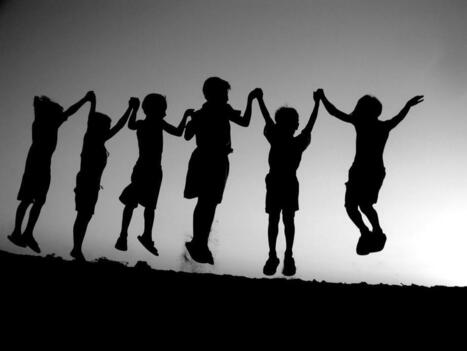
From child labor to trafficking—and even foster care, sports, and detention—institutions meant to protect children often cause the greatest harm.
There’s an invisible emergency in America: children toil in slaughterhouses, factories, and fields—night and day, unseen, unprotected, and endangered. A century ago, reforms such as compulsory schooling and restrictions on child labor marked a historic advance, shielding children from exploitation—a model still emulated worldwide. Yet today, austerity budgets, systemic neglect, and the ideology of “rugged individualism” are eroding those protections.
Scoop.it!
Americans are reading less than ever—a cultural shift that affects how we learn, think, and connect.
The United States is in the grip of a reading recession—nearly half of Americans didn’t read a single book in 2023, and fewer than half read even one, according to data from YouGov and the National Endowment for the Arts (NEA).
Since the early 2000s, leisure reading has plunged by nearly 40 percent, a decline mirrored in falling reading scores and broader academic performance. What is at stake is not merely how people spend their free time, but a deeper erosion of the habits that sustain knowledge, empathy, and democratic life.
Reading is one of the few activities that consistently bridges social divides—strengthening communities, encouraging civic participation, and sustaining democracy.
Scoop.it!

From
prospect
Amazon Business is billed as a convenient one-stop shop for schools. Reality is more expensive.
For over two decades now, Amazon has been seen as a one-stop shop to buy virtually anything, and get it delivered in no time flat. It’s been estimated that the platform has over 310 million active users, and just in the U.S. during 2023, sold over 4.5 billion items.
Amazon claims to be guided by four principles: “customer obsession rather than competitor focus, passion for invention, commitment to operational excellence, and long-term thinking.” Certainly there is a very large quantity of retail items for sale on the platform, even if their quality or identity may be questionable.
But in another much more obscure part of the business, Amazon’s supposed obsession with its customers and “commitment to operational excellence” falls flat.
Scoop.it!
From
www
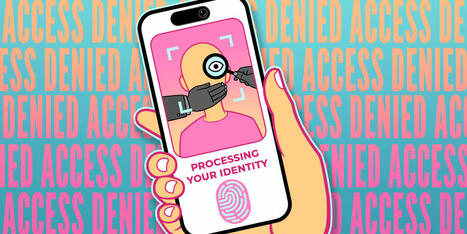
Age verification laws are proliferating fast across the United States and around the world, creating a dangerous and confusing tangle of rules about what we’re all allowed to see and do online. That's why today, we're launching EFF.org/Age, a one-stop shop for users seeking to understand what these laws actually do, what’s at stake, why EFF opposes all forms of age verification, how to protect yourself, and how to join the fight for a free, open, private, and yes—safe—internet.
Scoop.it!
What ghost forests tell us about ecological belonging | by Frederick Hewett | Cognoscenti | WBUR.org
From
www
Between now and the end of the century, climate change will trigger a cascade of rapid, irreversible environmental changes that will make it impossible for people to establish a sense of place, writes Frederick Hewett.
Scoop.it!
"Pigeons are having a moment,” I tell my friend.
“Tove,” she kindly says, “I think that’s just your algorithm.”
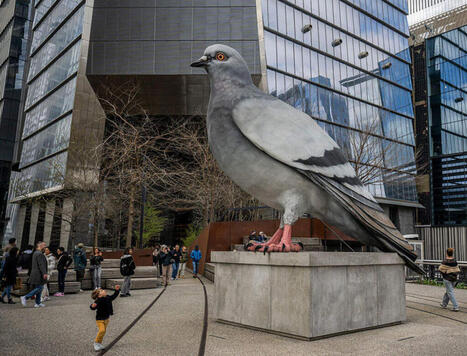
When I scroll through my Instagram feed, I see a video of someone putting makeup on to look like a pigeon. Then there’s a pigeon using a water bottle refilling station to take a nice little bath. An illustrated ode to pigeons. Someone dresses up like a pigeon and visits New York City’s “pigeon house.” There’s a gigantic pigeon sculpture on display at The High Line through spring 2026. PBS just aired a new documentary called "The Pigeon Hustle,” which reveals the secret world of urban pigeons. I heard about the documentary on social media, too.
And, yes, it does appear that over half of the pigeon videos I’ve been watching were “suggested posts” — not content from people I follow. The algorithm has correctly deduced that I will stop scrolling to watch if there’s a pigeon on the screen. Yet I also wonder if the algorithm itself is behind my love of pigeons.
Scoop.it!

From
www
Legal challenges put SAVE borrowers in limbo for months, a time during which they were not required to make payments on their loans. That would change if the proposed settlement is approved.
Scoop.it!
FAFSA delays are putting a strain on families and colleges | by Nicole Cohen & Cory Turner | NPR.org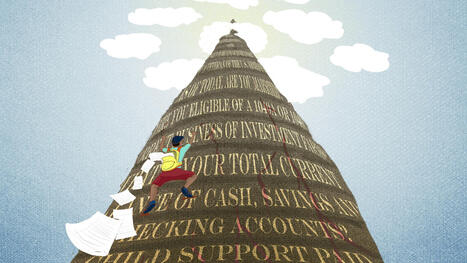
This year's federal aid form is new and improved. But it came three months later than normal, and in its first week, online access has been unpredictable.
Scoop.it!
What is at stake is far more than a rejection of gangster capitalism and the global misery it produces. The deeper danger lies in recognizing that education has become the primary battlefield in the cultural and ideological wars waged by authoritarianism.
Neoliberal capitalism, in its fascist mutation, does not simply impoverish; it seeks to colonize consciousness, to erode the capacity for critical thought, and to replace democratic imagination with the deadening certainties of hierarchy and fear.
Universities now sit at a dangerous crossroad where truth is contested, civic memory is either erased or preserved, and the formative conditions for democratic life are nourished, or systematically destroyed.
To defend higher education, then, is to reclaim its power to cultivate the forms of agency, solidarity, and critical awareness necessary to challenge the lies, brutalities, racism, corruption, and manufactured ignorance that sustain authoritarian rule.
Scoop.it!
My work connects to the concept of cultural war primarily as a cultural critic and academic who writes about representation, identity, and the role of art and technology in challenging the status quo. For Art21 I examined the “American Culture Wars” of the 1980s and 1990s, which were fought over issues of identity politics and the exclusion of underrepresented minorities in the arts:
"[C]ulture wars are intellectual, political, religious, and/or social conflicts over cultural pluralism in Western societies. Culture wars have polarized Americans over social issues such as race and representation, education..."
The theme of my essay was multiculturalism that offered a distinct culture war fought over issues of exclusion and identity politics. By the 1990s, multiculturalism had become an all-purpose word that evoked a range of meanings and implications. However, with the back-to-back elections of President Barack Obama, the U.S. entered an illusory period of “post-racialism” when the decades-old fight for inclusion and racial equity was side-lined.
Many people bought into the idea that racial prejudice no longer existed or was no longer seen as a major social problem. In reality, there was a movement growing in power to dismantle civil rights legislation and affirmative action through litigation and policy changes. Some might say that post-racial backlash led to the election and re-election of Trump.
|
Scoop.it!

From
www
School districts from Utah to Ohio to Alabama are spending thousands of dollars on these tools, despite research showing the technology is far from reliable.
Scoop.it!

Libraries are indispensable not only for climate and informational literacy but also as valuable hubs for creating community solutions to our planet’s most pressing problems.
Scoop.it!
The artist’s hand refers to the evidence of an artist’s personal and unique touch left in a work. This can be seen in the specific brushstrokes of a painting, the modeling of a sculpture, or even the overall emotional quality of a piece. The proof left behind reveals or provides insight into the artist’s role in creating the art. But can the artist’s hand emerge in AI art?
Aaron Hertzmann first mentioned the artist’s hand to me in a chat thread (see below). Hertzmann is a principal scientist at Adobe Research and he specializes in computer graphics, computer vision, and machine learning. Hertzmann argues that computers do not make art; people do. He consistently rejects claims of machine creativity, emphasizing that art is a social phenomenon and that AI algorithms, despite their impressive capabilities, are tools used by human artists.
Scoop.it!
From
go
A charter school “shitstorm” in Florida shows how the industry intends to take over public education.
The letters started coming in October 2025. In the first wave, according to the Florida Policy Institute (FPI), “at least 22 school districts in Florida” got letters alerting them them that charter school operators, including a for-profit charter school management company based in Miami, intended to use a state law recently enacted to open new charter schools on the campuses of existing public schools beginning August 2027. ... Once the charter occupies part of the public school, Dollard explained, it operates rent free, and the public school district becomes responsible for much of the charter’s costs, including those for services charters don’t customarily provide, such as bus transportation and food service, as well as costs for school support services like janitorial, security, library, nursing, and counseling. Even any construction costs the charters might incur have to be covered by the public school.
Scoop.it!

Astronomers have used the James Webb Space Telescope to confirm the first runaway supermassive black hole, one of the fastest bodies ever seen, pushing a galaxy-worth of material ahead of it and forming stars in its wake.
Scoop.it!

What if a portrait didn’t just represent someone, but remembered them?𝑮𝒂𝒔𝒌𝒊𝒏𝒔 𝒇𝒂𝒄𝒆𝒔 𝒕𝒉𝒆 𝒗𝒊𝒆𝒘𝒆𝒓 𝒅𝒊𝒓𝒆𝒄𝒕𝒍𝒚, 𝒇𝒓𝒂𝒎𝒆𝒅 𝒃𝒚 𝒂 𝒓𝒊𝒏𝒈 𝒐𝒇 𝒄𝒐𝒍𝒐𝒖𝒓𝒆𝒅 𝒃𝒍𝒐𝒄𝒌𝒔 𝒕𝒉𝒂𝒕 𝒔𝒊𝒕𝒔 𝒔𝒐𝒎𝒆𝒘𝒉𝒆𝒓𝒆 𝒃𝒆𝒕𝒘𝒆𝒆𝒏 𝒔𝒕𝒂𝒊𝒏𝒆𝒅 𝒈𝒍𝒂𝒔𝒔 𝒂𝒏𝒅 𝒊𝒏𝒕𝒆𝒓𝒇𝒂𝒄𝒆. 𝑯𝒆𝒓 𝒃𝒓𝒂𝒊𝒅𝒆𝒅 𝒉𝒂𝒊𝒓 𝒂𝒏𝒅 𝒑𝒂𝒕𝒕𝒆𝒓𝒏𝒆𝒅 𝒔𝒄𝒂𝒓𝒇 𝒑𝒍𝒖𝒈 𝒊𝒏𝒕𝒐 𝒕𝒉𝒊𝒔 𝒔𝒕𝒓𝒖𝒄𝒕𝒖𝒓𝒆 𝒔𝒐 𝒕𝒉𝒂𝒕 𝒇𝒊𝒈𝒖𝒓𝒆 𝒂𝒏𝒅 𝒃𝒂𝒄𝒌𝒈𝒓𝒐𝒖𝒏𝒅 𝒇𝒆𝒆𝒍 𝒍𝒊𝒌𝒆 𝒐𝒏𝒆 𝒄𝒊𝒓𝒄𝒖𝒊𝒕. 𝑻𝒉𝒆 𝒔𝒆𝒍𝒇-𝒑𝒐𝒓𝒕𝒓𝒂𝒊𝒕 𝒒𝒖𝒊𝒆𝒕𝒍𝒚 𝒔𝒕𝒂𝒕𝒆𝒔 𝒊𝒕𝒔 𝒑𝒐𝒔𝒊𝒕𝒊𝒐𝒏: 𝒂𝒏 𝒂𝒓𝒕𝒊𝒔𝒕 𝒘𝒉𝒐 𝒊𝒏𝒔𝒆𝒓𝒕𝒔 𝒉𝒆𝒓 𝒐𝒘𝒏 𝒑𝒓𝒆𝒔𝒆𝒏𝒄𝒆 𝒂𝒕 𝒕𝒉𝒆 𝒄𝒆𝒏𝒕𝒓𝒆 𝒐𝒇 𝒕𝒉𝒆 𝒕𝒆𝒄𝒉𝒏𝒐𝒍𝒐𝒈𝒊𝒄𝒂𝒍 𝒂𝒏𝒅 𝒄𝒖𝒍𝒕𝒖𝒓𝒂𝒍 𝒔𝒚𝒔𝒕𝒆𝒎𝒔 𝒔𝒉𝒆 𝒘𝒐𝒓𝒌𝒔 𝒘𝒊𝒕𝒉, 𝒓𝒂𝒕𝒉𝒆𝒓 𝒕𝒉𝒂𝒏 𝒂𝒕 𝒕𝒉𝒆𝒊𝒓 𝒎𝒂𝒓𝒈𝒊𝒏.
Dr. Nettrice R. Gaskins is a digital artist, educator, and cultural critic whose practice bridges algorithmic art, Afrofuturism and STEAM learning. She holds a BFA in Computer Graphics (Pratt Institute, 1992), an MFA in Art & Technology (School of the Art Institute of Chicago, 1994) and a PhD in Digital Media (Georgia Tech, 2014). Her work includes AI‑generated portrait series exhibited at the Smithsonian Arts and Industries Building and large‑scale murals in Brooklyn.
In a AI market flooded by generative portraits, emotional rarity is the new blue chip. Nettrice R. Gaskins doesn’t generate faces—she constructs legacies. Each portrait she creates becomes a vessel of symbolic memory, not just an AI artifact.
Scoop.it!
From
prospect
The most affordable of all the federal repayment programs is ending sooner than planned after Trump conspired with red-state attorneys general to kill it.
Scoop.it!
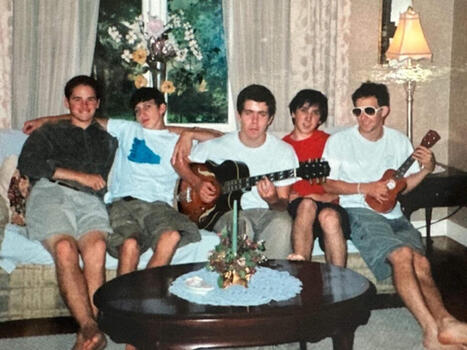
Recently, for reasons both generational and chronological, I find myself looking back at people who have helped shape my life, writes David Tanklefsky. Some of them know their impact, but not all.
Scoop.it!

From
www
Students are using AI tools more than ever.
An Angelo State University professor designed a way to figure out if his students were using artificial intelligence on a recent paper.
We speak with Will Teague, who says students are sacrificing their own agency to artificial intelligence.
Scoop.it!

From
www
The department said recalling these fired staffers would "bolster and refocus" civil rights enforcement "in a way that serves and benefits parents, students, and families."
Scoop.it!

In both parties, the share that say the higher education system is going in the wrong direction has gone up by at least 10 percentage points since 2020.
Scoop.it!

Only five of the agency’s civil rights offices remain nationwide. Those who are still with the department say it will now be “virtually impossible” to resolve discrimination complaints.
|





