



China's reputation for manufacturing has been built on being fast and cheap. Now Beijing wants to raise its game.

 Your new post is loading...
 Your new post is loading...
Your new post is loading...
 Scoop.it!
China's reputation for manufacturing has been built on being fast and cheap. Now Beijing wants to raise its game. 
No comment yet.
Sign up to comment
Scoop.it!
South Asia is highly vulnerable to climate change. Rising temperatures and more erratic rainfall will create hotspots across the region where more than 800 million people will experience a decline in their living standards. Hotspots will become more severe if the global community takes no action to limit carbon emissions. So now is the time to address this developing calamity. Via Graham Watson

Graham Watson's curator insight,
June 28, 2018 2:59 AM
This World Bank clip looks at the adverse effects of climate change on South Asia, with there being a threat to the lives of 800 million people, among them many of the world's poorest.
Scoop.it!
In Zambia, sugar and cement are major industries with few market players. Leading companies in these industries were using their market position to charge higher prices. The World Bank Group provided technical assistance to the Government of Zambia in an effort to improve market competition in the country. Via Graham Watson
Graham Watson's curator insight,
June 22, 2018 2:55 AM
Crikey! Microeconomics in a developmental context. However, for IB students, this is a good example of the need for market-oriented reform to foster development.
This World Bank clip look at how dominant producers in two sectors - sugar and cement - exploited their market power to raise prices and this adversely affected both consumers and producers who used the products as a factor of production.
Scoop.it!
On average, Mongolian women are better educated than their male peers, yet they are less likely to make use of this education. Instead, the gender gap in labour force participation rates has more than doubled in the last twenty years, exceeding 12.6 percent today. A new World Bank study helps understand the underlying constraints behind gender disparities and provides critical recommendations to address them. Via Graham Watson
Graham Watson's curator insight,
June 19, 2018 2:32 AM
This World Bank clips flags up the growth in female participation in Mongolia's labour force, and the policies that have been adopted to encourage it.
But think about it - women are better educated than men, and previously were largely excluded from the workforce. Thus, any increase in female participation will boost LRAS, but the same is also true, even if a given number of women replace men: their education means that even though the quantity of people in the labour force remains the same, the quality has improved.
As a result, it is also likely to enhance development.
Scoop.it!
The Beijing-Tianjin-Hebei region, known as Jing-Jin-Ji, has the highest level of air pollution in China. The World Bank and the Hua Xia Bank are working together to implement an Innovative Financing for Air Pollution Control in Jing-Jin-Ji Program. After only a year of implementation, the program has had substantial progress, reducing CO2 emissions by 1.4 million tons.
Scoop.it!

Timber producers in Zimbabwe are having to diversify in an increasingly difficult market.
Scoop.it!

The financing loan would be made over a three-year period and is still subject to IMF board approval. Via Graham Watson
Graham Watson's curator insight,
June 8, 2018 11:45 AM
The IMF has decided to bail out Argentina: their proposed rescue package will come in the form of a three year loan worth up to $50bn. The cynic in me says "We've been here before"
Scoop.it!

A new plant in Addis Ababa will convert waste into a source of energy for the city. Via Moses Junior

Moses Junior's curator insight,
April 11, 2018 8:53 PM
"A new plant in Addis Ababa will convert waste into a source of energy for the city."
Scoop.it!

Known for its sugarcane, Mauritius has also starting farming the more challenging vanilla crop. Via Graham Watson
Graham Watson's curator insight,
March 17, 2018 4:15 AM
An interesting look at the growth of the vanilla industry on the island of Mauritius, which started by looking at the long leadtime - it takes 5 years before a vanilla orchid starts bearing vanilla pods. However, vanilla is a luxury good, and as a consequence, it will account for a higher proportion of global income over time, especially when its added to rum, another luxury good. However, the development of both markets could potentially enhance development.
Scoop.it!
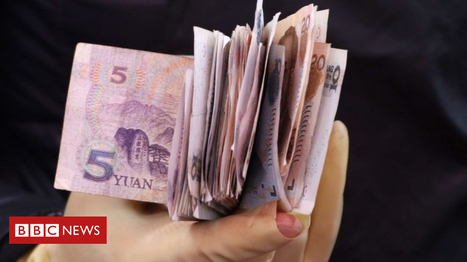
The move to merge the banking and finance regulators is part of efforts to reform the sector and rein in debt.
Scoop.it!

'If children can't come to school, then the school should come to them." Lessons delivered by taxi, truck and boat.
Scoop.it!

Announced at the annual National Party Conference, the figure is below last year's 6.9% expansion.
Scoop.it!
Some parts of Cote d’Ivoire have complariend of "severe heat", the ICCO says, as it details reasons for expecting a drop in world production this season
|
Scoop.it!
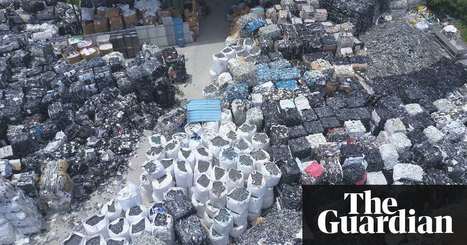
Graham Watson's curator insight,
June 28, 2018 10:15 AM
Unusual story this, with the waste from electronic items such as computers increasingly ending up in other parts of South-East and East Asia, rather than China, after the latter banned waste imports.
This highlights the negative externalities associated with waste, and the fact that those externalities are generated by the consumers of these products whose relative affluence allows them to impose the external cost on the developing world, where this can adversely affect developmental outcomes and is also patently unfair.
Scoop.it!
China's message for couples after decades of limiting families to just one child? Please have more children! Why the turnabout? China’s aging. By 2040, projections show that 24 percent of the population will be aged 65 or older, a slightly higher rate than in the U.S. and more than twice India’s share.
Scoop.it!
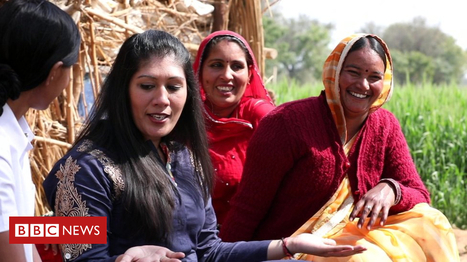
In India's desert state of Rajasthan, rural women are training as solar entrepreneurs, to bring power to those living off grid. Via Graham Watson
Graham Watson's curator insight,
June 22, 2018 2:45 AM
Two development issues for the price of one - female empowerment and renewable energy - the BBC investigates the role of women as both solar entrepreneurs living off grid, and as significant influencers, encouraging others to follow their lead.
Both can only have positive developmental impacts.
Scoop.it!

The surprise increase in the mobile levy will see Kenyans pay a 12 per cent excise duty on money transfer services, up from 10 per cent. Via Moses Junior
Moses Junior's curator insight,
June 18, 2018 1:44 PM
"Kenyans are bracing for harder economic times ahead after the government raided their pockets to fund its Sh3 trillion, about 30 billion dollars spending plan for the next 12 months."
Scoop.it!

Demonstrators in several cities fear Chinese investors will dominate the new economic areas.
Scoop.it!
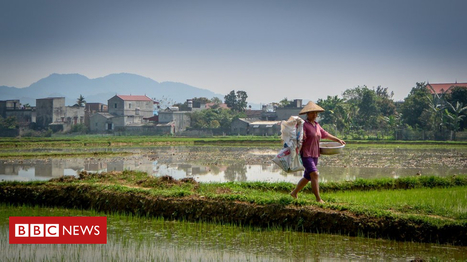
Scientists in Vietnam hope 'super bacteria’ could help to feed the world whilst reducing the pollution caused by intensive farming. Via Graham Watson
Graham Watson's curator insight,
June 8, 2018 11:58 AM
Lovely, lovely, lovely.
Technology, food security, scarcity and choice, development, negative externalities. Start where you like and extrapolate. There's so much good economics here in this article that looks at whether we might be on the point of developing crops that effectively feed themselves.
Scoop.it!
At the Beijing Summit of the Forum on China-Africa Cooperation in 2006, China promised to establish three to five overseas economic and trade cooperation zones in African countries within three years. So far, China has built six economic and trade cooperation zones in Africa. But with the development of China-Africa economic and trade cooperation, more… Via Moses Junior
Moses Junior's curator insight,
June 4, 2018 6:38 PM
"At the Beijing Summit of the Forum on China-Africa Cooperation in 2006, China promised to establish three to five overseas economic and trade cooperation zones in African countries within three years."
Scoop.it!

Moses O. Ogutu's curator insight,
March 20, 2018 6:59 AM
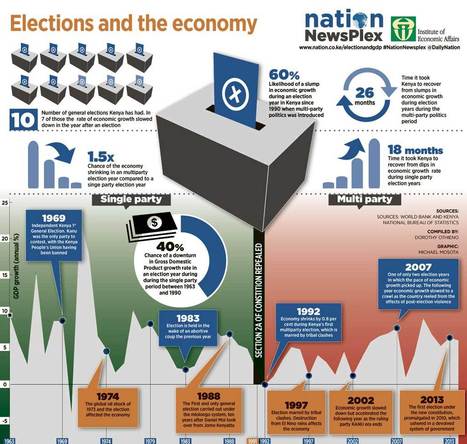
"Out of the 10 #elections #Kenya has held, the #economy slowed or failed to grow in three of the five multiparty elections and in two of the five single party elections. The time it takes to recover from the slowdown is also longer in the multiparty system period by eight months on average, the analysis done jointly with the #Institute of #Economic #Affairs reveals."
Scoop.it!

Graham Watson's curator insight,
March 14, 2018 3:39 AM
The BBC looks at the importance of remittances to development, highlighting the fact that, for many countries, this is now a more important source of funds that formal aid programmes. This article illustrates how El Salvador has benefit from the Salvadorean diaspora based in the United States.
Scoop.it!
Rwanda has become a world leader in the field of gender equality, thanks to laws and policies that are creating a generation of women who are leaders, businesswomen, and entrepreneurs. This is providing an example for countries everywhere, particularly those in sub-Saharan Africa.
Scoop.it!
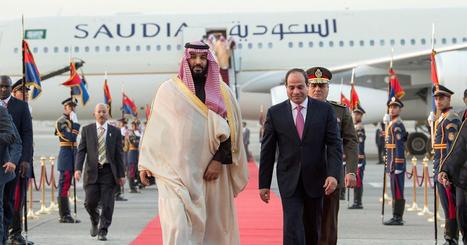
Saudi Arabia and Egypt have agreed to create a $10 billion joint fund to develop a mega-city in Egypt's southern Sinai Peninsula. Via Ihozo Nice

Ihozo Nice's curator insight,
March 5, 2018 4:44 AM
"Saudi Arabia and Egypt have agreed to create a $10 billion joint fund to develop a mega-city in Egypt's southern Sinai Peninsula, with both countries committing more than 1,000 square kilometers (386 square miles) of land to the new project." 
Nick Orazi's curator insight,
March 31, 2018 2:14 AM
In this article it talks about the recent mega deal the Saudi Arabia and Egypt just made on building a mega city. Both of these countries have the money to make this city. Although this can bring more tourism and business to this area. While also creating a stronger connection between these two countries.
Scoop.it!
Venezuelan cash crisis: Where a coffee costs wads of banknotes In most parts of the world, getting cash out of the bank is an errand. But in Venezuela, it is a complicated or sometimes impossible task. The BBC's Vladimir Hernandez explains how the Venezuelan Bolivar notes have become almost worthless.
|




