Creativity is an inborn capacity for thinking differently than most, seeing differently, and making connections and perceiving relationships others miss. But most importantly, it is the ability to then extrapolate contextually useful ways of employing that data: to create something that meets a specific challenge. ...
The siren song of creativity is likely responsible for more bad design than any other factor. Some might think this overly dramatic, but I believe we should regard creativity as a rather dangerous tool.
"You received a score of 124 out of 147, which is the 94th percentile. Great job on that! That's one of the highest scores we've seen so far!"
When Lisa Williams and David DeSteno told this to their participants, they noticed a significant increase in perseverance on a difficult cognitive task. When they took out the "Great job" part and just told the participants they performed exceptional, they saw no increase in perseverance. They also put people in a generally positive mood by having them look at pleasant pictures, such as a wedding and a tropical landscape. Again, no increase in perseverance. What was it about this particular phrasing that increased motivation? The winning phrasing was effective because it activated one of our most deeply-rooted emotions: pride.
Can You Make Yourself Smarter?, The New York Times. "Harold Hawkins, a cognitive psychologist at the Office of Naval Research who oversees most of the U.S. military’s studies in the area, expressed a common view. For him, the question now is not whether cognitive training works but how strongly and how best to achieve it. “Until about four or five years ago, we believed that fluid intelligence is immutable in adulthood,” Hawkins told me. “No one believed that training could possibly achieve dramatic improvements in this very fundamental cognitive ability. Then Jaeggi’s work came along."
The brain training program "Lumosity began in 2007 and is now by far the biggest of the services, with more than 20 million subscribers." Learn more at the company site
"Wattpad is the world's largest community for discovering and sharing stories on the web and across every mobile device. It’s a new form of collaborative entertainment that connects readers and writers through storytelling and creative fiction! Wattpad is the only place offering a mobile, social, eReading experience."
Creativity researcher Mihaly Csikszentmihalyi says, “If there is one word that makes creative people different from others, it is the word complexity.
“Like the color white that includes all colors, they tend to bring together the entire range of human possibilities within themselves. Creativity allows for paradox, light, shadow, inconsistency, even chaos – and creative people experience both extremes with equal intensity.”
You don't need to be a genius or a 'big name' artist to be creative. Creativity researcher Keith Sawyer advises us to "forget those romantic myths that creativity is all about being artsy and gifted and not about hard work."
He notes that while we're waiting for a Muse or that full-blown moment of inspiration, we may never start working on what could be a meaningful creative project.
It’s not unusual for me to hear from my coaching clients that one of their problems is that they need to speak up more and to think on their feet. ...I ask my clients how they benefit from being quiet in meetings and the advantage of not being so outgoing. When they reply easily and with energy (and usually with a look of relief on their faces) it reveals that their quietness is their strength. They don’t have a problem; the people around them do.
Highly Sensitive Men are often musicians, actors, visual artists and other creators.
This article notes, "Dr. Elaine Aron, along with other researchers studying the trait of high sensitivity, often cites the statistic that approximately 15-20% of the population fits the defintion of a "highly sensitive person." Furthermore, the indications are that equal numbers of men and women are highly sensitive."
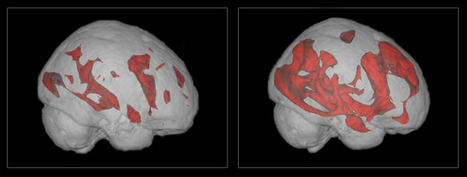
UCLA scientists have found that for computer-savvy middle-aged and older adults, searching the Internet triggers key centers in the brain that control decision-making and complex reasoning. The findings demonstrate that Web search activity may help stimulate and possibly improve brain function. The study, the first of its kind to assess the impact of Internet searching on brain performance, is currently in press at the American Journal of Geriatric Psychiatry and will appear in an upcoming issue.
Additional details on the study and further research on the impact of computer technologies on the aging brain are highlighted in Small's book, "iBrain: Surviving the Technological Alteration of the Modern Mind". http://vsb.li/73nopw
What is it like to be fully alive, right now, engaged with what you are doing? That’s the psychology of flow. When creativity expert Mihaly Csikszentmihalyi was studying how painters work, he noticed an odd thing. When their painting was going well they didn't care about getting tired, hungry or uncomfortable, they just carried on. [PsyBlog]
~~~
Related post: Getting Into Flow For More Creative Thinking
Patt Morrison: So many things get thrown into the sci-fi category. Ray Bradbury said he didn't like that label.
Walter Mosley: Understandable. He was telling parables and speculating about the nature of humanity. I'm trying to do the same thing. I don't mind calling it science fiction or speculative fiction. The problem today is that everybody has forgotten that some of the most important literature of the 19th and early 20th century was science fiction.
1. Do you incorporate creativity-boosting activities into your daily routine? If so, what activities do you do?
I try to keep creativity perpetually at my fingertips. I write lots of short poems and make quick doodles throughout the day, all to keep the creative channel open as much as I can. I also have a 4-year-old son, which aids creativity immensely. It’s amazing how many solutions and resources open to us when we play!
2. What are your inspirations for your work?
For me, it’s all about ideas. Creative ideas are the bright shining lights of our souls. My very favorite part of my work is helping people connect the dots of their own idea-lights, unveiling new constellations that bring more light into the world. [continued]
Book trailer for A YEAR OF WRITING DANGEROUSLY -- A guide for jumpstarting your writing and getting over writer's block: 365 days of inspiration, encouragement, and advice from great writers. Written and compiled by veteran writing teacher Barbara Abercrombie of the Writers' Program at UCLA Extension.
One of the quotes in the book: "I believe that – if you are serious about a life of writing, or indeed about any creative form of expression – that you should take on this work like a holy calling." Elizabeth Gilbert.
Emma Stone said she feels "hyperaware that everything could end. That’s always been in my mind, for whatever reason, since I was very small.” She experienced her first panic attack at 8 years old and spent two years in therapy. “I was just kind of immobilized by [anxiety]. I didn’t want to go to my friends’ houses or hang out with anybody, and nobody really understood.” Improv comedy, starting at age 11, she said, "gave me a sense of purpose. I wanted to make people laugh. Comedy was my sport. It taught me how to roll with the punches.” While filming Spider-Man, she baked to stay calm. “I felt really out of control of my surroundings. I was just baking all the time. It made me feel, if I put these [ingredients] in, I’ll know what the outcome is.” [The Sunday Times (U.K.) via The Week mag. June 28, 2012 theweek.com]
Read more quotes by talented actors about their stage fright and other forms of anxiety, including Edie Falco, Hugh Grant, Alison Pill, Helena Bonham Carter, Colin Firth and others, in the article Celebrities with anxiety and panic attacks. http://anxietyreliefsolutions.com/celebrities-with-anxiety-and-panic-attacks/
[This is the second of a series on ways to encourage creativity into the workplace.] Creativity is for the rabble-rouser. The boat-shaker. The status-quo decimator.
~~~~~~
Related post: Killing or Enhancing Creativity and Innovation in Business
Creativity coach Lisa Riley points out that many of us have experienced some form of procrastination about our creative work - "Where we give into the rationalization that once these convenient distractions are completed and put to rest, we can create. When in reality, this is an indication of our own internal resistance to facing the act of producing something.
“Feelings of self-doubt, criticism and negative beliefs can produce anxiety around the creative process.”
The biggest problem with Jonah Lehrer’s new book Imagine, currently residing on The New York Times bestseller list, is that it is too good to generate reviews as colorful as Strohminger’s. Nevertheless, it did lead Christopher Chabris to conclude in the Times that Lehrer’s “stories too often feature clichéd piffle (a chance interaction, he says, can “change the way we think about everything”) and end with treacly flourishes (“This is what we sound like when nothing is holding us back”).”
~~~
Related: Jonah Lehrer on the Science of Creativity & Innovation
Many of us have experienced various forms of distraction that indicate our internal resistance to facing the act of producing something creative.
“To begin…To begin…How to start? I’m hungry. I should get coffee. Coffee would help me think…”
That is writer ‘Charlie Kaufman’ [played by Nicolas Cage] in the movie “Adaptation” by the real screenwriter Charlie Kaufman. It’s a great film about the kinds of insecurities, anxieties and distractions that can so often beset creative people.
Creativity coach Lisa A. Riley describes a common scene for many of us: “So you’ve decided to get an early start and be productive. Facing the screen...Nothing comes to mind. Your eyes conveniently notices the flashing email icon in the corner of your screen, suddenly drawn like a magnet, you decided to check your email.
"John Cleese of Monty Python fame gave a talk for Video Arts on creativity at the Hotel Grosvenor House in London. I listened to the lecture and am presenting below a summary of the talk."
~~~
John Cleese has pointed to research by psychologist Donald MacKinnon, who looked at differences between highly creative architects with their less gifted counterparts. The difference between them, Cleese said, was “The more creative ones had a facility for switching into a more playful mode. It’s a leisurely mode.” - From post: The Creative Personality: Both Smart and Naive http://blogs.psychcentral.com/creative-mind/2011/02/the-creative-personality-both-smart-and-naive/
One commonality that Pablo Picasso shares with other creative geniuses, according to biographical accounts, is that they all have a "childlike" way of seeing familiar things as if for the first time. Creative geniuses love what they do, and this love can be described as a childlike delight in painting, or composing, or searching for a grand new theory of nature.
~~~
Related post: Developing Creativity: Creating From Childhood
"Creative people often acknowledge that they respect and make use of their childhood interests, experiences and personalities, perhaps in ways that other people don’t, or tend to discard as adults."
Creating is a non-linear process involving the inner chaos of divergent thinking and imaginational intensity - and often the outer chaos of messy desks.
Mary-Elaine Jacobsen notes in her book “The Gifted Adult” that creative people “can feel badgered by a sense that they must constantly deliver winning results, which is why many gifted individuals quit their artistic quests prematurely.”
In American society, she says, “the creative process is rarely seen as its own reward, so the evolutionary must remember that the final product only hints at the aliveness and transcendent power of the process of innovation.”
Interested in self-publishing books? If you have a website, you can re-purpose your top articles into a book.
Think about it. After you write heaps of quality articles and lots of traffic on your website, why not reuse it, all the same articles in a printed book, PDF eBook, audio books and Kindle book getting the most out of your time and work.
"That ‘I’ is full of likes and dislikes, fears and failings, desires and disasters, opinions and information. That ‘I’ is never quite satisfied...
"There is another ‘I’ in you. It is the one that, in reading this, recognises the futility of that seeking, the redundancy of much of your thought, that you are something more than your social identity.
To get content containing either thought or leadership enter:
To get content containing both thought and leadership enter:
To get content containing the expression thought leadership enter:
You can enter several keywords and you can refine them whenever you want. Our suggestion engine uses more signals but entering a few keywords here will rapidly give you great content to curate.


 Your new post is loading...