Your new post is loading...

|
Scooped by
Douglas Eby
September 27, 2012 1:03 AM
|
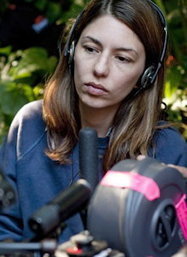
One way many talented people can be self-critical is to judge their wide-ranging serial interests as superficial or insubstantial. Talking about the topic of her movie “Marie Antoinette,” director Sofia Coppola once commented, “You’re considered superficial and silly if you are interested in fashion, but I think you can be substantial and still be interested in frivolity.”
|
|
Scooped by
Douglas Eby
September 24, 2012 1:25 PM
|
Are you waiting for a muse? Are you telling yourself you are not creative? Those are two of the limitations creativity author Michael Michalko addresses in his article The Seven Deadly Sins that Prevent Creative Thinking.
|
|
Scooped by
Douglas Eby
September 22, 2012 2:49 PM
|
Seventeen years after Jagged Little Pill, Alanis Morissette has shaken off the title of pop's queen of angst. Her new album, Havoc and Bright Lights, is a thing of joy, writes Mark Sutherland. Morissette began to suffer anxiety attacks, including one on a long-distance flight ("If you’re going to have one, mid-air surrounded by strangers is definitely the place to have it," she deadpans). Until that point, she had often visualised various career goals; clear mental images would come to her unprompted, but once success arrived those images dried up. "I’d always had these prophetic visions of what was next. I’d see myself touring or writing a book or whatever it was. "But after Jagged Little Pill the pictures completely vanished..." ~~~ More quotes in post: Alanis Morissette: Channeling rage and finding joy in creativity
http://talentdevelop.com/6083/alanis-morissette-channeling-rage-and-finding-joy-in-creativity/
|
|
Scooped by
Douglas Eby
September 20, 2012 1:25 PM
|
Ruts can limit our fulfillment and creativity
In his book Your Own Worst Enemy: Breaking the Habit of Adult Underachievement [ http://amzn.to/qQyPqo ], psychologist Kenneth W. Christian, PhD talks about styles or patterns of thinking and behavior that we probably developed in school, and that solidify into ruts that can limit our fulfillment, achievement and creativity. One example is a group of people he calls Extreme Non-Risk-Takers – who "focus totally on minimizing risk in their lives… because they try to avoid situations in which they could possibly fail, they gravitate toward occupations, relationships and activities that do not present serious challenges or reflect their real interests." I experienced some of that pattern when I failed Organic Chemistry in college, and - in addition to the blow to my self-esteem - considered it a "message" that I was not meant to be a physician. Addled adolescent thinking, more than clear judgment. [Photo: A man walks the tightrope in a remote mountain village in Russia.] Related post: Adult Underachievement: Kenneth Christian, Ph.D. on living up to the “gifted” label – or not
http://highability.org/72/ Quotes from my book "Developing Multiple Talents: The personal side of creative expression"
http://t.co/KqYN0ORZ
|
|
Scooped by
Douglas Eby
September 18, 2012 10:00 PM
|
Psychologist Ellen Langer writes that pursuing creative expression may hold the key to finding meaning and fulfillment in the rest of our lives. She notes some of what holds people back is fear: “As much as we’d love to play the recorder or write poetry, it’s easier and safer to put it off because we are afraid of making fools of ourselves. Of course, we know we shouldn’t worry about what other people think, but we do. “Or when we actually give writing or drawing a try, the trying turns out to be more terrifying still, and we too quickly put our creative activity aside. Something interferes with just enjoying painting or playing an instrument for the pleasure it brings us.”
|
|
Scooped by
Douglas Eby
September 17, 2012 4:31 PM
|
When my writing is not going well, there are two things I do in the hope of luring the words back: I read some pages of books I love or I watch the world. — Chimamanda Ngozi Adichie Chimamanda Ngozi Adichie writes that her view in Lagos, Nigeria, is an ordinary view but because it’s full of people, the view is "choked with stories"... An excerpt from A Year of Writing Dangerously by Barbara Abercrombie. http://vsb.li/mZK93L ~~~ More posts and resources: http://theinnerwriter.com/
|
|
Scooped by
Douglas Eby
September 17, 2012 11:25 AM
|
'The psychology of creativity–both empirical research and popular literature for the lay audience–misses this. It reduces creativity to warm showers and blue rooms, forgetting that the life of the eminent creator is not soothing; it is a struggle–a grossly uneven wrestling match with the muses. For Gardner, eminent creators are locked into a Faustian bargain, in which fulfilling their vision comes at the cost of an otherwise fulfilling personal life: "…the creators were so caught up in the pursuit of their work mission that they sacrificed all, especially the possibility of a rounded personal existence… unless this bargain has been compulsively adhered to, the talent may be compromised or even irretrievably lost. And, indeed, at times when the bargain is relaxed, there may well be negative consequences for the individual’s creative output." ~~ Book: Creating Minds: An Anatomy of Creativity as Seen Through the Lives of Freud, Einstein, Picasso, Stravinsky, Eliot, Graham, and Gandhi, By Howard E. Gardner. http://vsb.li/a8XKG1
|
|
Scooped by
Douglas Eby
September 14, 2012 1:03 PM
|
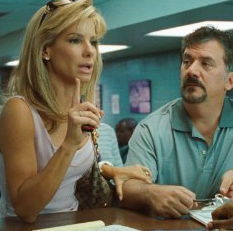
The quality and intensity of fear we call anxiety can both motivate, or disrupt, creative expression. "I don’t do anything anymore that feels safe. If it doesn’t scare the crap out of you, then you’re not doing the right thing.” - Sandra Bullock Psychotherapist and mystery author Dennis Palumbo writes that “there is something to be said for accepting—and learning to navigate—the minor turbulences of life. I’m talking here about common, everyday anxiety. The jitters. Butterflies..."
|
|
Scooped by
Douglas Eby
September 12, 2012 9:45 PM
|
Celebrity and Acquired Situational Narcissism
In a NY Times article, Robert B. Millman, professor of psychiatry at Cornell Medical School, talked about the psychological dysfunction he identified as Acquired Situational Narcissism. He explains, "Psychoanalytic literature is filled with jargon about how narcissism happens really early, but I realized that given the right situation, it could happen much later. When a billionaire or a celebrity walks into a room, everyone looks at them." That might be just a description of leadership and charisma. The problem is when that attention changes the person. What happens is that they get so used to everyone looking at them that they stop looking back at others, he says.
- Quoted in my book Developing Multiple Talents: The personal side of creative expression
http://t.co/KqYN0ORZ
- Photo from my Inner Actor site post: Scarlett Johansson and Eric Maisel on stage fright
http://talentdevelop.com/1691/scarlett-johansson-and-eric-maisel-on-stage-fright/
|
|
Scooped by
Douglas Eby
September 10, 2012 8:25 PM
|
|
|
Rescooped by
Douglas Eby
from Creativity Scoops!
September 10, 2012 3:49 PM
|
We all constantly project what is happening within ourselves outside of us on to others. That energy, in fact, creates other. Jeremy Taylor, my dream work mentor, went so far as to say, "any charged response you have reflects ...
Via Creativity For Life
|
|
Scooped by
Douglas Eby
September 7, 2012 6:54 PM
|
Trusting Your Creative Self; Mental Health Telesummit; THRIVE free Video Series - and more
|
|
Scooped by
Douglas Eby
September 7, 2012 12:54 AM
|
If we put our creative work out into the world, it will be judged and ranked. But we may then feel deflated, and question our worth as a creator. Elaine Aron declares that “low self-esteem is about power and influence, the result of rank. Like other social animals, we constantly rank ourselves among others–competing and comparing.” Tama Kieves wrote about being a graduate with honors from Harvard Law School and working in a “huge, elite law firm” but feeling “desperate to be free, exhausted in my good, safe job, dying of meaninglessness, suffocating the life out of my creative soul.” She notes a friend asked her a vital question: “If you’re this successful doing work you don’t love, what could you do with work you do love?”
|
|
|
Scooped by
Douglas Eby
September 24, 2012 3:17 PM
|
Imagination, creativity, happiness
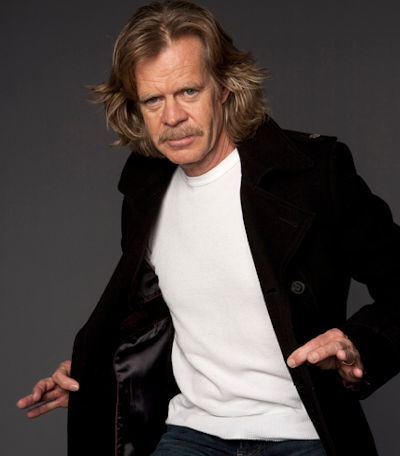
"I don’t like emotions… For some reason I’m more comfortable in imaginary circumstances." – Actor William H. Macy One of our primary tools as a creative person is imagination. But in his book "Stumbling on Happiness" Harvard psychology professor Daniel Gilbert proposes that imagination may directly impact our sense of happiness in limiting or distorting ways. Meghan Daum writes in her column "Goodbye to you, Mr. Smiley" [Los Angeles Times, May 20, 2006] that the book suggests "happiness is largely an anticipatory experience… we spend much of our time not so much experiencing pleasure as thinking about future pleasure and taking steps to ensure its attainment." From the "Imagination, creativity, happiness" section of my book "Developing Multiple Talents."
Kindle - http://t.co/KqYN0ORZ
Website - http://developingmultipletalents.com
|
|
Scooped by
Douglas Eby
September 22, 2012 8:38 PM
|
“Whenever we do things that haven’t been done before, there are surprises. In many cases we call them failures. I prefer to call them “data” and to mine them to learn something interesting. This is one of the secrets of truly creative people…. They try lots of things and keep what works, using the failures as fertilizer for the next idea.” Tina Seelig - author of inGenius: A Crash Course on Creativity http://vsb.li/jFBt82
~~~
Photo of Edison from post: Getting Past Fear of Failure, By Kenneth W. Christian, Ph.D.
http://theinnerentrepreneur.com/785/getting-past-fear-of-failure/
|
|
Scooped by
Douglas Eby
September 21, 2012 12:22 PM
|
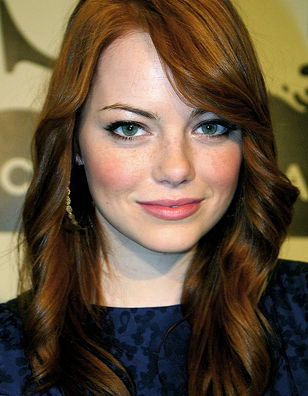
Many artists talk about using their intuition, exploring identity and being authentic, and how fear and anxiety impacts their creative expression. Cameron Crowe: “Do you have a little voice inside you that you trust?” Emma Stone: “Yeah, definitely. The gut—that’s the loudest speaker. My gut never stops talking to me—unless I’m really tired with jet lag." ~~ But Linda Kreger Silverman, Ph.D. (of the Gifted Development Center) notes, “Higher education indoctrinates students to think logically and skeptically and to dismiss intuitive information..."
|
|
Scooped by
Douglas Eby
September 19, 2012 7:16 PM
|
When still a child, make sure you read a lot of books. Spend more time doing this than anything else. When an adult, try to read your own work as a stranger would read it, or even better, as an enemy would. Don’t romanticise your ‘vocation’. You can either write good sentences or you can’t. There is no ‘writer’s lifestyle’. All that matters is what you leave on the page. ... ~~ List of her books: http://vsb.li/Mj786v
|
|
Scooped by
Douglas Eby
September 18, 2012 11:43 AM
|
"Nobel Prize winner Eric Kandel’s voluminous The Age of Insight: The Quest to Understand the Unconscious in Art, Mind, and Brain, from Vienna 1900 to the Present is a fascinating, albeit dense, examination of the interrelations between art and science." ~~ In his book, psychiatrist Eric Kandel writes about a "vintage" artist, with comments that apply to many if not most contemporary creators: “Like other modern artists faced with the advent of photography, Klimt sought newer truths that could not be captured by the camera. He...turned the artist’s view inward — away from the three-dimensional outside world and toward the multidimensional inner self and the unconscious mind.” - From my post Unconscious Creativity, Conscious Creating
http://blogs.psychcentral.com/creative-mind/2012/06/unconscious-creativity-conscious-creating/
|
|
Scooped by
Douglas Eby
September 17, 2012 12:42 PM
|
We formulate stories about our own behavior and that of others all the time. If we’re not sure about the details, we make them up – or rather, our brain does, without so much as thinking about asking our permission.
|
|
Scooped by
Douglas Eby
September 15, 2012 7:12 PM
|
"Tony Wagner interviews many different extremely innovative people (e.g. early Apple designer, MIT grad startup CEO in Tanzania etc), finds out about their education and experiences, even interviews their parents to find out about philosophies of child-raising, schooling, setbacks and failure, etc. It's a treasure trove." ~~ Creating Innovators: The Making of Young People Who Will Change the World, by Tony Wagner. http://vsb.li/fsLdO2 See book trailer and quotes in my post Tony Wagner on Encouraging New Innovators
http://blogs.psychcentral.com/creative-mind/2012/08/tony-wagner-on-encouraging-new-innovators/
|
|
Rescooped by
Douglas Eby
from Positive Psychology
September 13, 2012 11:54 AM
|
Research suggests that happiness is rooted in interpersonal virtues such as kindness, gratitude and the capacity for love. Gretchen Rubin shares what she found on her journey to discover exactly what makes her happy. The article notes: "Happiness has also been linked to increased generousity, courage, and creativity." ~~~ More quotes by Rubin: “To be happier, you have to think about feeling good, feeling bad, and feeling right, in an atmosphere of growth.” - From my post Happy If We Think We Are http://talentdevelop.com/4500/happy-if-we-think-we-are/
Via Sandeep Gautam
|
|
Scooped by
Douglas Eby
September 10, 2012 10:40 PM
|
Positive obsessions, productive creativity
Creativity coach Eric Maisel, PhD says, "Negative obsessions are a true negative for everyone, but most creators — and all would-be creators — simply aren’t obsessed enough. For an artist, the absence of positive obsessions leads to long periods of blockage, repetitive work that bores the artist himself, and existential ailments of all sorts." -- From his article: In Praise of Positive Obsessions. Quoted in my book Developing Multiple Talents: The personal side of creative expression http://t.co/KqYN0ORZ ...
Photo from post: Creative obsessions: Adam Savage and Stanley Kubrick
http://talentdevelop.com/1554/creative-obsessions-adam-savage-and-stanley-kubrick/
|
|
Scooped by
Douglas Eby
September 10, 2012 3:52 PM
|
Learning how to regulate emotional reactions to trauma and abuse is important for anyone, but essential for sensitive and creative people. As Shakespeare noted, we are subject to numerous “slings and arrows of outrageous fortune” and the “heart-ache and thousand natural shocks that flesh is heir to.” But many people also suffer abuse and traumas that go beyond those “natural shocks.”
|
|
Rescooped by
Douglas Eby
from Creativity Scoops!
September 9, 2012 11:46 PM
|
“Creativity does have a reputation for being magical. One myth is that it's associated with the particular personality or genius of a person. Creative thinking is a skill that involves qualities such as the propensity to take risks and ...
Via Creativity For Life
|
|
Rescooped by
Douglas Eby
from Creativity Scoops!
September 7, 2012 11:28 AM
|
It's common for creatives to pour a cup of coffee before sitting down to work every day, but how does caffeine actually affect creative thinking? In a nutshell:... ~~ Related post: “I used to drink several cups of coffee a day, but I kicked the habit a long time ago because I found that caffeine made me too jittery and unfocused.” That is a quote by Steve Pavlina, author of one of the most popular, and financially successful, sites and blogs dedicated to personal development... - From my post Caffeine, anxiety, productivity – Steve Pavlina on using Paraliminals http://talentdevelop.com/375/caffeine-anxiety-productivity/
Via Creativity For Life
|