Who better to go to for career advice than Sir John Hegarty, the co-founder of Bartle Bogle Hegarty, and one of the world’s most awarded creatives?
One way to turn a 10-year career, into 20 or even 50 years, according to Hegarty, is to stay connected. “You have to stay riveted to what is going on around you,“ he says. “And stay positive. Cynicism is the death of creativity.”
Reduced latent inhibition in the brain allows us to treat something as novel, no matter how may times we've seen it - something that experienced meditators seem to do - which may enhance creativity.
In his post Why Daydreamers Are More Creative, cognitive psychologist Scott Barry Kaufman, PhD covers a number of fascinating topics relating to the creative mind, including Latent inhibition.
Learning a living mediation is a way to do this- so it is happening during interactions, not just sitting time. We introduce Living Systems frameworks that enable people to treat something as novel. It is because it reduces the reactivity people normally feel and competititiveness that causing rejection of the "new". Certainly all of this is needed for creativity, which is in short supply when Responsible Entrepreneurs are trying to grow a business. They far too often fall back on tried and "true", or worse, what is familar.
Like children, many creators have multiple creative interests, and may keep a childlike mindset to become multitalented artists.
“The function of artists is to keep people childlike in a positive way. To keep open to the world.”
Viggo Mortensen continues, “Apart from traveling to different countries, to different communities, to different parts of your city, I think that art is one of the greatest anti-war and anti-poverty weapons.”
Thanks to ARTST TLK for a great interview with Henry Rollins on being a creator who "wants to start conversations" - one of his quotes I really like:...
This is not just about drug use and abuse – there are many forms of self-limiting addictive behavior that can interfere with realizing our creative and other talents. But substance use is one area to start with.
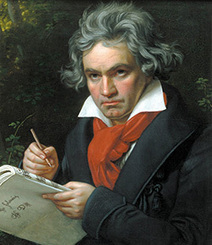
Beethoven reportedly drank wine about as often as he wrote music, and was an alcoholic or at least a problem-drinker.
Three keys to thinking like a creative genius Maria Konnikova, a world-reknown Harvard psychologist and writer, explores what it takes to have a mind capable of matching the fictional detective/genius...
Making meaning is especially crucial for creative people, and one of the potential consequences of insufficient meaning in our lives and work is depression.
Video by David Shiyang Liu - "UPDATE: Thanks for all your kind words guys! It's quite overwhelming to see this shared and retweeted all over! All sins typographic in nature have been amended,…"
Book: The New Kings of Nonfiction - "An anthology of the best new masters of nonfiction storytelling, personally chosen and introduced by Ira Glass" http://buff.ly/12z0fQn
In How to Find Your Element, his 7-session workshop for Big Think Mentor (http://goo.gl/06gYu), creativity expert Sir Ken Robinson tackles the epidemic of dissatisfaction with work and life. In this introduction, he outlines the path to "finding your element" -- the environment and set of activities that will activate your unique abilities, sustain your happiness, and enable you to live your best possible life."
Titles by Ken Robinson include: Out of Our Minds: Learning to be Creative http://shrd.by/dG6dC0 Finding Your Element: How to Discover Your Talents and Passions and Transform Your Life http://buff.ly/12xAz6N
...
Also see another video in post: Ken Robinson: Do schools kill creativity? http://shrd.by/eAt1J5
Writer Emerson Csorba comments about Jonah Lehrer’s best-seller: "I was intrigued by his exploration of what supports creativity. I still agree with Lehrer and see evidence of his point that all people have creative potential.
"It seems more and more clear that “Eureka!” moments are the result of smashing already-existing ideas together, and allowing oneself the time for fresh ideas to germinate in one’s mind."
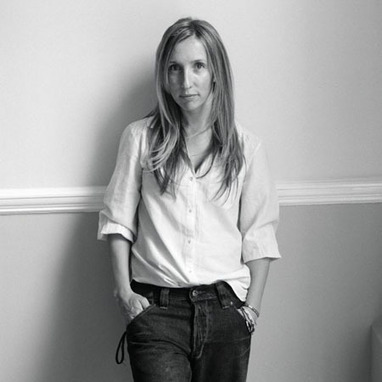
50 SHADES OF GREY hires Sam Taylor-Johnson to direct the best-selling book and here are a few of our own works directed by women.
"According to The Directors Guild, less than 5% of all feature films produced in America are directed by women so it’s great to boost up that percentage with this news."
"The writer-filmmaker-performance artist is curating emails from 10 collaborators to create a portrait of who they--and we--are in moments that are both intimate and mundane...her work--be it in prose, on film, or in the email-based art projects that she takes on with some regularity--reflects that there’s something about the way people interact with one another digitally that has her attention."
I’ve been feeling so burnt out lately, so naturally I’ve been telling myself that I need a vacation, along with the usual chestnuts like “I’m working too hard,” “my efforts are outweighing my returns,” “I’m just not good enough at this”—this being...
In his article Is There A Little Rain Man In Each Of Us?, Darold Treffert, MD asks if it is possible “to tap and use those still existent, but less frequently used, capacities and circuits, with some of their savant-like characteristics, in those of us more wedded to left brain capacity and higher level memory?”
"All you can do is sit back and bask in your relevance to the cosmos."
"There is hardly a greater cosmic sage of our age than astrophysicist Neil deGrasse Tyson. In this sublime, characteristically eloquent short clip from BigThink, he echoes Ptolemy’s awe as he teases apart the misguided tension between our human ego and the immensity of the universe..."
Responding to a magazine question: "What kills creativity?" - actress Gillian Anderson replied succinctly, "Ego." ... Creativity teacher and writer Julia Cameron has commented, "We tend to think, or at least fear, that creative dreams are egotistical... This thinking must be undone."
Many accomplished people are multitalented and active, even exceptional, in more than one area of creative expression.
David Lynch has commented about being a creative polymath: “I started out as a painter, and then painting led to cinema…still photography, music…There are just so many things out there for us to do.”
David Lynch résume bien la situation. Ce vaste monde est comme un jardin de cocagne pour ceux qui sont curieux, avides d'aprendre de nouvelles de choses, de faire, de créer, de tester..
David Lynch est un "scanner' comme les appellent Barbara Sher qui a été la première à écrire sur la gestion du temps spécifique pour ce type de personnalités, qui donnent aux autres l'impression de se disperser et de ne pas savoir ce qu'ils veulent, d'être instables...
>>A lire " Refuse to choose", de Barbara Sher
Personnellement, étant une "scanner" aussi, j'ai résolu ma problématique en étant pluri-activités : activité opérationnelle en entreprise, activité de consulting pour multiplier les secteurs et les sujets abordés et activité artistique.
Michelle Lhooq: 'The increased predominance of mobile devices—not to mention our clingy dependence on them—has sparked a boom of ambitious apps for phones and tablets that are case studies for storytelling in the “digital age.”'
Another aspect of work situations and creative productivity is personality, including traits such as high sensitivity and introversion. For example, Susan Cain (author of "Quiet: The Power of Introverts in a World That Can’t Stop Talking") commented in a New York Times article: "Research strongly suggests that people are more creative when they enjoy privacy and freedom from interruption. And the most spectacularly creative people in many fields are often introverted, according to studies by the psychologists Mihaly Csikszentmihalyi and Gregory Feist." - From my post To Be More Creative, Be An Introvert http://blogs.psychcentral.com/creative-mind/2013/04/to-be-more-creative-be-an-introvert/
“For an artist, it is a driven pursuit, whether we acknowledge this or not, that endless search for meaning.” Dianne Albin
Meaning is a key element in how we choose which of our talents to develop and express. Finding and making meaning is especially crucial for creative people.
For more from Scott Barry Kaufman related to his new book “Ungifted: Intelligence Redefined” see my post Don’t You Have To Be “Gifted and Talented” To Be Creative?
For many career seekers, “follow your passion” can be a terrifying piece of advice, mainly because the word passion conjures up images of intense, frenzied activity better suited to an Antonio Banderas movie than to most people’s real lives.
Identifying our passions may certainly be a key element in a life well lived. But many people may find the advice to “Find your passion” to be useless or even fearful. Author Daniel Pink has said, “I find that question very daunting: What’s your passion? I find that almost paralyzing, in a way. I find it less paralyzing to say, What are you interested in doing next?” - From my post It takes more than feeling passionate http://developingmultipletalents.com/45/it-takes-more-than-feeling-passionate/
By Orna Ross -- "Let’s continue with this over-simplified way of thinking about our brains as having two major ways of gleaning intelligence about the world that seem to be opposed to each other: an outer-directed, ego-centred self...and an inner-directed spirit-centred self...
"This is why in Inspiration Meditation, we train the mind to notice the space between the words. This space has long been recognised as the font of creative ideas and insights.
"The great Spanish poet, Frederico Garcia Lorca, called it “dark water”: water that gathers its darkness from the fact that it is deep."
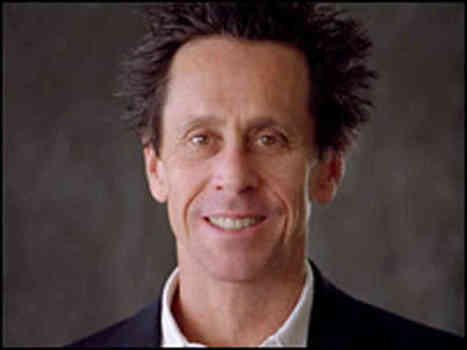
"With movies like A Beautiful Mind and Apollo 13 to his credit, Oscar-winning producer Brian Grazer could rest on his laurels. But that's not for him."
"They say that life is tough enough. But I guess I like to make things difficult on myself, because I do that all the time. Every day and on purpose. That’s because I believe in disrupting my comfort zone."
Quoted in the "Watch out for that comfort zone" section of my book "Developing Multiple Talents: The personal side of creative expression" http://developingmultipletalents.com/
Creativity coach Eric Maisel, PhD is author of more than 30 books including Fearless Creating, The Van Gogh Blues, Coaching the Artist Within and many other titles on developing creativity and leading a creative life.
In his course Your Best Life in the Arts, he provides “real answers to the challenges that confront you” – whether you are “just beginning to write, paint or play an instrument” or have “logged in thousands of hours at your craft.”
"This suggests that the successful propagation of ideas involves the anticipation of pleasure in sharing the idea with other people, as well as thinking about how other minds will respond to the message. How does neural activity relate to these various stages"
For more from cognitive psychologist Scott Barry Kaufman reated to his new book “Ungifted: Intelligence Redefined” see my post Don’t You Have To Be “Gifted and Talented” To Be Creative?
To get content containing either thought or leadership enter:
To get content containing both thought and leadership enter:
To get content containing the expression thought leadership enter:
You can enter several keywords and you can refine them whenever you want. Our suggestion engine uses more signals but entering a few keywords here will rapidly give you great content to curate.


 Your new post is loading...






















Book: Hegarty on Advertising http://buff.ly/161eTmF