Your new post is loading...

|
Rescooped by
Romain
from Newsletter navale
January 7, 2015 11:19 AM
|
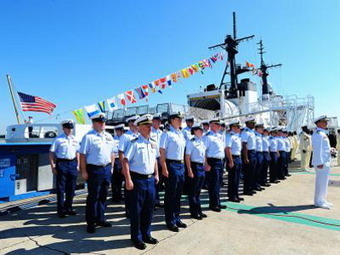
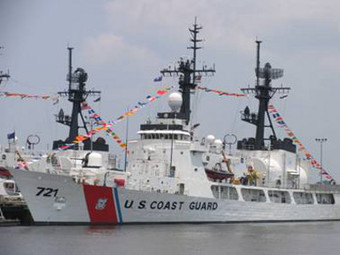
The former United States Coast Guard cutter USCGS Gallatin, now called NNS Okpabana, has arrived in Nigeria, after being handed over to the Nigerian Navy in May 2014.
The vessel arrived in Nigerian waters on January 2, joining its sister ship NNS Thunder, another Hamilton class cutter donated to Nigeria by the United States. The Nigerian Navy spent $8.5 million refurbishing the 45 year old ship, according to the News Agency of Nigeria.
At its reception in Lagos, Chief of Naval Staff Vice Admiral Usman Jibrin said that “it was the successes recorded by NNS Thunder in curtailing threats in our maritime domain and the larger Gulf of Guinea region, with the confidence reposed in our country by the USA, that made it possible to acquire NNS Okpabana. The addition of this ship into the NN [Nigerian Navy] fleet will certainly bolster our zeal to end the menace in our maritime domain and the region, as well as support the regional and global effort to eliminate transnational maritime threats. This nation has always requested the navy to do more and with this, the government recognises that there must be needed platform for the navy to do its job well.” Jibrin said the NNS Okpabana would be used to combat maritime crimes such as piracy, oil theft, smuggling, illegal fishing and arms smuggling. Jibrin also noted that President Goodluck Jonathan’s government has invested a large amount of money in recapitalising the Navy fleet, such as through the acquisition of two offshore patrol vessels from China. Jibrin said that China is also assisting with the upgrade of the Port Harcourt shipyard, with a Chinese team expected in Nigeria by the first quarter of this year.
The 115 metre long 3 250 ton Gallatin is a member of the Hamilton class. Gallatin, introduced into US Coast Guard service in 1968, is equipped with a helicopter flight deck, retractable hangar and a fast boat. The High Endurance Cutter has four main engines and can be driven by either twin diesel engines or twin gas turbines via two controllable-pitch propellers. The Nigerian Navy is due to take delivery of another ex-US vessel, the US Navy Survey Ship John McDonnell. This vessel was deactivated on August 25, 2010, as the US Navy streamlined survey operations. The 63 metre, 2 054 ton oceanographic survey vessel can launch two 34 foot launches. Other vessels received from the United States include the NNS Obula, Nwamba, Kyanwa and Ologbo.
Via Patrick H.
|
|
Rescooped by
Romain
from Newsletter navale
March 18, 2014 1:03 PM
|
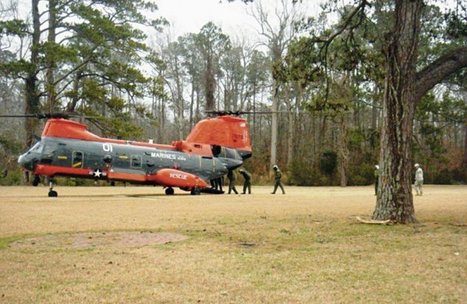
A delegation from the Nigerian Navy recently visited the United States to discuss the procurement of surplus Boeing-Vertol HH-46 Sea Knight and Kaman H-2 Seasprite helicopters from the US Marine Corps (USMC), the US Naval Air Systems Command (NAVAIR) announced on 17 March. The delegation arrived at Marine Corps Air Station (MCAS) Cherry Point in North Carolina on 4 February for a visit to NAVAIR's Specialized and Proven Aircraft Program Office (PMA-226) that included a search and rescue flight demonstration aboard HH-46E helicopter. While NAVAIR said that the Nigerian Navy is interested in procuring surplus HH-46E and H-2 platforms, the command did not reveal possible numbers or delivery timelines.
Via Patrick H.
|
|
Rescooped by
Romain
from Newsletter navale
November 15, 2013 5:02 AM
|
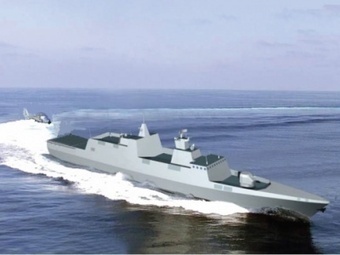
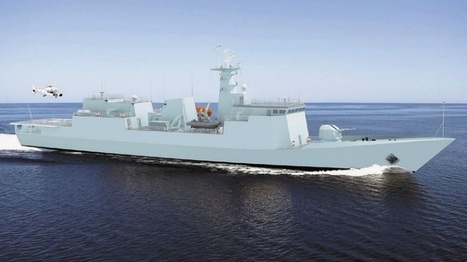
The Nigeria Navy (NN) has contracted the China Shipbuilding and Offshore International Company (CSOC) to upgrade its naval dockyard into at Port Harcourt into a world-class factory that will build offshore patrol vessels (OPVs) and carry out maintenance on vessels.
The Chinese company, which won a contract to build two 95 metre P18N OPVs for the Nigerian Navy in 2009, is scaling up the facilities to enable it to do the remaining construction works on the vessels locally in Port Harcourt. Nigerian Navy chief of Policy and Plans Rear Admiral Emmanuel Ogbor said the upgrading of the shipyard is part of the navy's drive to develop a local ship-building capability and an industrial base capable of maintaining the country's naval vessels.
Localising building of naval vessels in Nigeria will make more naval ships available for patrol and protection of critical offshore infrastructure in Nigeria's maritime domain for the benefit of all,” Ogbor said.
CSOC representative Xu Qui said the first phase of the project will entail construction of a new jetty and other facilities for the repairing of ships up to 5 000 dead-weight tons (dwt). The second phase will focus on the construction of a new dry dock and auxiliary facilities with a capacity to build and repair offshore patrol vessels and 5 000 dwt ships. The third and final phase will see the setting up of a fully modern shipyard capable of building and repairing offshore patrol vessels, offshore platformss and seafaring vessels of up to 10 000 dwt.
According to Jane’s Defence Weekly, the first Chinese-built OPV is being built at the Wuchang shipyard in Wuhan and is expected to be delivered to Nigeria in mid-2014. The second vessel is also set to arrive in Nigeria in 2014, and will be completed either later next year or in early 2015.
According to Jane’s, the NN dockyard has already produced a 31metre long Seaward Defence Boat (SDB) and is using the experience gained to build a larger, 38-metre long SDB and a 16.56 m, 92 ton naval tug. The dockyard previously built a 90-passenger naval ferry (Sauka Lafiya) in 2009.
International interest in Nigerian ship-building has grown of late with Singapore-based Suncraft International offering the NN two low-cost ship designs - one for a 60 metre long vessel with a helicopter pad and the other for a 90 metre long vessel which has an integral hangar.
Suncraft has delivered at least a dozen 17 metre Manta and two 38 metre patrol craft to the Nigerian Navy, which will soon receive two Ocea FPB 98 patrol craft.
Many of the Nigerian Navy’s vessels are in poor condition due to lack of maintenance, but the Navy is embarking on a highly ambitious expansion programme that aims to acquire 49 naval vessels and 42 helicopters over the next decade. A number of vessels have been delivered over the last several years, such as the ex-US Coast Guard Hamilton class cutter NNS Thunder, and dozens of inshore patrol vessels. The Nigerian Navy will receive two more ex-United States vessels in 2014/15, the US Navy Survey Ship John McDonnell and the US Coast Guard Cutter Gallatin.
Via Patrick H.
|
|
Rescooped by
Romain
from Newsletter navale
May 29, 2013 1:43 PM
|
The Nigerian Navy has opened a maritime surveillance and intelligence fusion centre to monitor piracy and ship movements throughout the Gulf of Guinea from the Eastern Naval Command base in Calabar. Speaking at the centre’s inauguration ceremony, Flag Officer Commanding the Eastern Naval Command, Rear Admiral Joseph Aikhomu said the new facility, which is equipped with radar and satellite monitoring equipment, will enhance the navy’s intelligence gathering capacity as it continues to battle piracy and oil bunkering across the Gulf of Guinea. The United States, which is already funding a number of joint border security projects with Nigeria, has pledged to donate more surveillance equipment to monitor the country’s porous borders in a broader crackdown on illegal immigration. The Interior Minister Patrick Abba Moro said more than 19,000 illegal immigrants have been deported from the country since the latest resurgence of fighting between Boko Haram insurgents and the security forces.
Via Patrick H.
|
|
Rescooped by
Romain
from Newsletter navale
February 13, 2013 10:41 AM
|
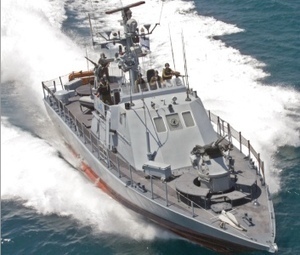
The Nigerian Navy has commissioned into service three OCEA and two Shaldag patrol boats during a ceremony at Western Naval Command Headquarters in Lagos.
The three OCEA FPB 72 Mk 2 vessels are 24 metre long coastal patrol craft with a top speed of more than 30 knots. The first commenced sea trials in March last year and all three were delivered in late September.
On September 4, 2012, Israel Shipyards announced that two new Shaldag Mk II Fast Patrol Craft were on their way to “an African customer for delivery to the local Navy.” This almost certainly was Nigeria.
During the commissioning ceremony on Monday, Minister of Finance Ngozi Okonjo-Iweala said the vessels would be used to combat oil theft and other crime on Nigeria’s waterways. She is quoted by This Day as saying the government procured the boats because Nigeria relies heavily on resources from its maritime domain....
...The Chief of Naval Staff Vice Admiral Dele Ezeoba said the Navy required at least 40 such patrol boats to effectively deal with maritime crime like sea robbery, piracy and oil theft. “Though the boats are small, they are fast. They are designed for security tasks such as interdiction, anti-smuggling, anti-illegal bunkering, sea robbery and piracy.”
Ezeoba noted that eleven officers and 48 ratings have been trained to man and maintain the boats.
The Shaldag design is in service with the Israeli Navy and other customers in Europe, Asia and Africa. It was developed and built by Israel Shipyards Ltd in the late 1980s but upgraded over the years based on combat experience. The type is powered by two diesel engines driving two water jets, which give an acceleration time to 40 knots of 40 seconds. The Shaldag Mk II has a length of 24.8 metres, a displacement of 58 tons and a range of 650 nautical miles.
Standard equipment on most Shaldag versions includes an X-band surveillance/navigation radar and electro-optical sensor system for day and night surveillance. A number of armament options are available, including fore and aft deck guns, and heavy machineguns on the fly bridge. The guns can be remotely controlled (such as the 23/25 mm Typhoon and 12.7/7.62 mm Mini-Typhoon) or manually operated weapons. In addition, a 20-23 mm naval gun can be mounted on the rear gun mount or four to eight short range missiles can be carried.
The Nigerian Navy received at least two Shaldag Mk IIs in June 2009. It is undergoing major expansion, with new boats being built locally and overseas. In October last year, China’s Wuchan Shipyard began construction of the first of two P18N offshore patrol vessels for the Nigerian Navy. These vessels are 95 metres long and are being built by China Shipbuilding and Offshore International Limited, the trade arm of China Shipbuilding Industry Corporation (CSIC). They will be delivered in around three years’ time and will be partly built in Nigeria.
Via Patrick H.
|
|
|
Rescooped by
Romain
from Newsletter navale
March 31, 2014 8:40 AM
|
The Nigerian Navy has taken delivery of one Manta and two OCEA patrol boats, donated by the Nigerian Port Authority to fight maritime crime.
The boats were handed over by the Port Authority (NPA) on March 18 during a ceremony attended by the Managing Director of the NPA Mallam Habib Abdullahi, who said the handover demonstrated the Authority’s determination to collaborate and partner with other relevant government agencies to secure the nation’s territorial waters both off shore and on shore.
Abdullahi added that “We are optimistic that these patrol boats, consisting of one 32 meters OCEA named NNS Dorina and two 17 meters Manta boats named NNS Torie and NNS Egede, with their unique operational features and capacities, will augment the fleets of the Nigerian Navy in their search and rescue operations within the nation’s water fronts”.
The OCEA patrol boats are FPB 98 models. The company delivered three 24 metre FPB 72 patrol craft to the Navy in 2012.
The Managing Director also disclosed that the Authority in collaboration with Nigerian Maritime Administration and Safety Agency (NIMASA) has plans to rehabilitate the Navy’s Forward Operational Base (FOB) at Takwa Bay. The recent acquisitions are part of a string of orders from the Nigerian Navy. Late last year it emerged that the service had taken delivery of three new 17 metre-long Manta Mk II ASD Littoral Interceptors and one new 25 metre-long Shaldag Mk II Fast Patrol Craft.
The four boats were commissioned into service at the NNS Beecroft Naval Base on Victoria Island in Lagos in November.
The NN now has 22 of the 17 metre-long Manta Mk II ASD Littoral Interceptors while the number of Israeli-made Shaldag Fast Patrol Craft (FPC) vessels has increased to five. The first two Shaldag FPCs were delivered in 2009 while two more were commissioned into service in February 2013.
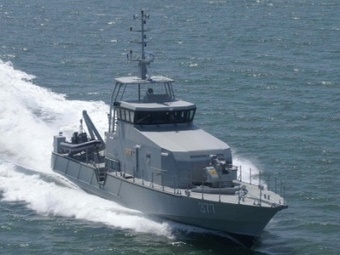
The Suncraft International Manta Mk II is powered by two 1 200 hp diesel engines, giving a top speed between 45 and 50 knots. The 16.5 metre long vessels feature ballistic protection, carry a crew of six and have a range of 250 nautical miles at 35 knots.
The Nigerian Navy is expected to receive two P-18N offshore patrols vessels from China in the second half of this year and is expected to take delivery of two more ex-US Coastguard vessels, USNS John McDonnell and USCGC Gallatin, in due course.
Via Patrick H.
|
|
Rescooped by
Romain
from Newsletter navale
November 27, 2013 12:59 PM
|
The Nigerian Navy (NN) has taken delivery of three new 17 metre-long Manta Mk II ASD Littoral Interceptors and one new 25 metre-long Shaldag Mk II Fast Patrol Craft to help the force battle rampant maritime crime.
The four boats were commissioned into service at the NNS Beecroft Naval Base on Victoria Island in Lagos last week by NN Chief of Naval Staff Vice Admiral Dele Ezeoba. The commissioning event also included a tour of the facility where the navy is building the country's second locally-made warship, a 38 metre-long Seaward Defence Boat (SDB), due for delivery in June next year.
The NN now has 22 of the 17 metre-long Manta Mk II ASD Littoral Interceptors while the number of Israeli-made Shaldag Fast Patrol Craft (FPC) vessels has increased to five. The first two Shaldag FPCs were delivered in 2009 while two more were commissioned into service in February this year.
The Shaldag design is in service with the Israeli Navy and other customers in Europe, Asia and Africa. It was developed and built by Israel Shipyards Ltd in the late 1980s but upgraded over the years based on combat experience. The type is powered by two diesel engines driving two water jets, which give an acceleration time to 40 knots of 40 seconds. The Shaldag Mk II has a length of 24.8 metres, a displacement of 58 tons and a range of 650 nautical miles.
Standard equipment on most Shaldag versions includes an X-band surveillance/navigation radar and electro-optical sensor system for day and night surveillance. A number of armament options are available, including fore and aft deck guns, and heavy machineguns on the fly bridge. The guns can be remotely controlled (such as the 23/25 mm Typhoon and 12.7/7.62 mm Mini-Typhoon) or manually operated. In addition, a 20-23 mm naval gun can be mounted on the rear gun mount or four to eight short range missiles can be carried.
The Suncraft International Manta Mk II is powered by two 1 200 hp diesel engines, giving a top speed between 45 and 50 knots. The 16.5 metre long vessels feature ballistic protection, carry a crew of six and have a range of 250 nautical miles at 35 knots.... ...Nigeria has also ordered two new OCEA FPB 98 Mk.II Coastal Patrol Craft and is expected to take delivery of two more ex-US Coastguard vessels, USNS John McDonnell and USCGC Gallatin, in due course.
Via Patrick H.
|
|
Rescooped by
Romain
from Newsletter navale
October 29, 2013 10:39 AM
|
The Nigerian Navy (NN) is moving ahead with plans to build naval vessels locally by collaborating with foreign partners. "The Nigerian Navy is extremely keen to have their own in-house shipbuilding capacity and has opened the floor to constructive partnerships in that regard," Dr Karen Sumser-Lupson, the chair and commissioner of the African Maritime Safety & Security Agency (AMSSA), told the inaugural IQPC OPV Africa conference, which was held in Lagos from 27-29 August 2013. The drive to develop a shipbuilding capability stems partly from the Nigerian government's 'Vision 2020' self-reliance drive and also a desire to create an industrial base that is capable of maintaining the naval vessels, which typically suffer from poor operational availability. "Localising building of naval vessels in Nigeria will make more naval ships available for patrol and protection of critical offshore infrastructure in Nigeria's maritime domain for the benefit of all," Rear Admiral Emanuel Ogbor, the NN's chief of policy and plans, told the conference. Leveraging its experience gained from building the 31 m-long NNS Andoni (P 100), the first Seaward Defence Boat (SDB) to emerge from the Nigerian Naval Dockyard in Lagos, the NN is proceeding with the construction of a larger, 38 m SDB. More importantly, the Nigerian Naval Shipyard (NNSY) in Port Harcourt (formerly the Witt & Busch shipyard) is being upgraded and modernised with Chinese assistance so that it can build offshore patrol vessels (OPVs) and carry out maintenance on vessels of up to 10,000 dwt. China Shipbuilding & Offshore International Company (CSOC), which signed a contract with the NN in April 2012 to build two 95 m P18N OPVs, is upgrading the NNSY so that it will be able to complete the construction of the second vessel. Around 50-70% of the OPV will be carried out at Port Harcourt, suggesting that some construction and the majority of the outfitting will take place at the NNSY. The OPV project is a major step up for the shipyard, which built a 90-passenger naval ferry, Sauka Lafiya (A 483), in 2009 and is currently building a 16.56 m, 92 ton naval tug. Speaking at the IQPC OPV Africa Conference, Xu Ziqui of CSOC revealed the scope of the dockyard upgrade. A new jetty and "auxiliary facilities" capable of repairing 5,000 dwt vessels and offshore projects will be built in Phase 1. A new dry dock and auxiliary facilities to build and repair OPVs and 5,000 dwt ships will be constructed in Phase 2. Phase 3 calls for a fully modernised shipyard that is "able to build and repair OPVs, and up to 10,000 dwt sea-going vessels and offshore projects", said Xu. Industry sources say the first OPV, which is being built at Wuchang shipyard in Wuhan, is expected to be delivered in mid-2014. The second will also arrive in Nigeria in 2014 and is expected to be completed later that year or in early 2015. Photographs posted on the NN's website in October showed that the chief of naval staff, Vice Admiral Dele Ezeoba, recently attended a "hull formation ceremony" for the first OPV in Wuhan. Despite the growing Chinese influence in Nigeria, a number of non-Chinese companies are trying hard to sell OPVs and patrol vessel to the NN. Singapore-based Suncraft International is pushing two new 'low-cost' OPV designs: one for a 60 m vessel with a helicopter pad, the other for a 90 m vessel that has an integral hangar. To date, Suncraft has supplied more than a dozen 17 m Manta and two 38 m patrol craft to the NN. In another development, IHS Jane's understands that the Nigerians rejected an offer of one or more second-hand Israeli warships, most likely ageing Saar-class missile vessels. OCEA is set to deliver the first of two 31.8 m FPB 98 patrol craft, NNS Dorina (P 101), to Nigeria. The company delivered three 24 m FPB 72 patrol craft to the NN in 2012. The NN is also interested in acquiring a second Hamilton-class cutter, USCGC Gallatin (WHEC 721), from the Unites States. The transfer is expected to go through in mid-April 2015.
Via Patrick H.
|
|
Rescooped by
Romain
from Newsletter navale
May 29, 2013 1:44 PM
|
The Nigerian Navy will receive two more ex-United States vessels next year, the US Navy Survey Ship John McDonnell and the US Coast Guard Cutter Gallatin.
Chief of Naval Staff, Vice Admiral Dele Ezeoba, on Friday said that the two vessels would be inspected between May and August next year, reports Nigeria’s National Mirror.
Ezeoba was represented by Rear Admiral Emmanuel Ogbor, Chief of Policy and Plans, who said that the United States has transferred several ships to Nigeria over the last decade. These include the NNS Thunder, Obula, Nwamba, Kyanwa and Ologbo.
“These ships have contributed immensely to the security of the nation’s maritime environment and the Gulf of Guinea,” he said. The vessels are donated as part of the US military’s Excess Defence Articles system.
The USNS John McDonnell was deactivated on August 25, 2010, as the US Navy streamlined survey operations. The 63 metre, 2 054 ton oceanographic survey vessel can launch two 34 foot launches.
The 115 metre long 3 250 ton Gallatin is a member of the Hamilton class – the Nigerian Navy has already taken delivery of the Hamilton class cutter Chase (now NNS Thunder), which was commissioned in January 2012.
Gallatin, introduced into Coast Guard service in 1968, is equipped with a helicopter flight deck, retractable hangar and a fast boat. The 115 metre High Endurance Cutter (WHEC) has four main engines and can be driven by either twin diesel engines or twin gas turbines via two controllable-pitch propellers.
Over the weekend the Nigerian Navy said it had impounded more than 40 vessels suspected of being involved in the illegal oil trade, as the Navy steps up its fight against maritime crime.
Ezeoba said that the Navy’s fleet was expanding, with the commissioning of five Seaward Defence Boats earlier this year and the construction of another indigenous Andoni class boat and the construction of two 95 metre offshore patrol vessels, which are expected to arrive before the end of next year.
Via Patrick H.
|