A reference resource for the CIO and the CISO on cyber security, looking beyond the technology horizon into leadership, management, culture, governance, resilience and the real dynamics of security transformation
40% of North American business-critical applications are in the public cloud, whether it is file storage, a communications application, or full blown IaaS.
The world of cybersecurity has changed drastically over the past couple of decades. We have evolved from a world of keystroke logging and trojans to a universe of full fledged ransomware and cyber warfare.
The WannaCry ransomware attack reminds us that a positive and proactive approach to cybersecurity is a prerequisite of doing business in the application economy.
A failure by many organisations to take cyber security seriously has long been blamed on the lack of a single significant event to shake things up. Does WannaCry fit the bill?
The question healthcare orgs need to ask themselves every day: “Are we more secure today than yesterday?” Here's some advice healthcare CISOs should heed.
IoT, Privacy, and Security: Innovation Vs. Regulation By CIOReview - “If we had computers that knew everything there was to know about things—using data they gathered without an
A survey sponsored by Check Point found that 64 percent of respondents are doubtful that their organization can prevent a mobile cyberattack. What can be done to combat that?
Who are the most influential social media thought-leaders and thinkers, focusing in risk management, compliance and regtech in the UK? Our list ranks th
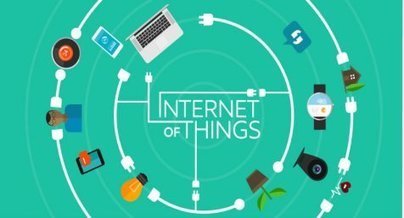
Over 20 percent of enterprises will have digital security services devoted to protecting business initiatives using devices and services in the Internet of Things by year end 2017, , report, iot, internet of things, gartner, cyber security, CISOs, Chief Information Security Officer, byod
The auto industry needs to drive automotive cybersecurity principles and actively protect consumer data before regulators define the rules of the road. Here are 5 tips for protecting your consumers and your company’s agenda.
As ever more mobile and IoT devices connect to the internet, the potential for damaging cyberattacks can only increase. How can organisations begin to get the upper hand over the burgeoning cast of 'bad actors'?
Wayne Sadin, chief technology and chief operating officer of Affinitas Life, tells CIO Journal that cybersecurity vigilance by the board could have avoided or decreased the panic linked to the WannaCry ransomeware attack. “Boards shouldn’t micromanage, but they should understand why patching may not be happening,” he says.
Preventing Ransomware: Keep in mind that specific defensive techniques and tools do work on specific threats. The art of the CISO is arraying them effectively.
Over 80% of security professionals identify ‘people’ as the industry’s biggest challenge compared to technology and processes, according to the results of the second annual survey from The Institute of Information Security Professional
Cyber-attacks can originate from anywhere, but there appears to be an unabated trend of pointing the finger on either "sophisticated attackers" or, more blatantly, naming and blaming nation-states like China and Russia (alright, maybe North Korea and Iran). The truth about attribution (who is the attacker) is often overlooked for something more dramatic, especially in situations where sensitive information or brand reputation is at risk. Specifically, we see businesses often try to save face by blaming attacks on state actors when they failed to make . . .
To get content containing either thought or leadership enter:
To get content containing both thought and leadership enter:
To get content containing the expression thought leadership enter:
You can enter several keywords and you can refine them whenever you want. Our suggestion engine uses more signals but entering a few keywords here will rapidly give you great content to curate.





 Your new post is loading...
 Scoop.it!