Your new post is loading...

|
Scooped by
Complexity Digest
August 4, 2022 12:42 PM
|
Xindi Wang, Onur Varol & Tina Eliassi-Rad Applied Network Science volume 7, Article number: 54 (2022) It is well known that networks generated by common mechanisms such as preferential attachment and homophily can disadvantage the minority group by limiting their ability to establish links with the majority group. This has the effect of limiting minority nodes’ access to information. We present the results of an empirical study on the equality of information access in network models with different growth mechanisms and spreading processes. For growth mechanisms, we focus on the majority/minority dichotomy, homophily, preferential attachment, and diversity. For spreading processes, we investigate simple versus complex contagions, different transmission rates within and between groups, and various seeding conditions. We observe two phenomena. First, information access equality is a complex interplay between network structures and the spreading processes. Second, there is a trade-off between equality and efficiency of information access under certain circumstances (e.g., when inter-group edges are low and information transmits asymmetrically). Our findings can be used to make recommendations for mechanistic design of social networks with information access equality. Read the full article at: appliednetsci.springeropen.com
|
|
Scooped by
Complexity Digest
May 19, 2022 1:56 PM
|
Research at the Professorship of Computational Social Science (COSS) is focused on:
* bringing modelling and computer simulation of social processes and transportation phenomena together with technology, experimental, and data-driven work,
* combining the perspectives of different scientific disciplines (e.g., social science, computer science, complexity science and sociophysics),
* bridging fundamental and applied for work,
* developing digital tools to support people and studying the resulting behaviour. More at: www.jobs.ethz.ch
|
|
Scooped by
Complexity Digest
April 27, 2022 4:03 PM
|
•Content: 3 Modules, each consisting of several videos
•Estimated: 4 work weeks, 1h per week
•Self-paced, progress at your own speed
•No cost to enrol
•Subject: Computer Science, Traffic Systems, Social Science
•Level: Introductory
•Language: English
•Target groups: Students, citizen scientists, politicians, journalists, researchers of different fields
(urban planners, architects, computer scientists)
•Recommended Reading: Helbing, Dirk. Next Civilization: Digital Democracy and Socio-Ecological Finance-How to Avoid Dystopia and Upgrade Society by Digital Means. Springer
Nature, 2021 Read the full article at: coss.ethz.ch
|
|
Scooped by
Complexity Digest
March 11, 2022 5:50 PM
|
The Complex Systems Society announces the ninth edition of the CSS Scientific Awards. The CSS Emerging Researcher Award recognizes promising researchers in Complex Systems within 3 years of PhD completion. The Junior Scientific Award is aimed at recognizing excellent scientific record of young researchers within 10 years of PhD completion. The senior scientific award will recognize outstanding contributions of Complex Systems scholars at whatever stage of their careers. Deadline: May 31st, 2022. More at: cssociety.org
|
|
Scooped by
Complexity Digest
January 24, 2022 6:34 PM
|
Prof. Carlos Gershenson Complex systems are characterized by interactions that may generate novel information. This information can change problems, so previous solutions become obsolete. To face complexity, we need adaptation. In this course, we will cover different methods for building systems that can adapt to unforeseen changes. Tuesdays and Thursdays, 10:00-11:30 AM, Mexico City Time. First Class: February 1st, 2022. The class is open and free for all students worldwide. Those who deliver successfully coursework and final project will receive a certificate. Details at: ac.gershenson.mx
|
|
Scooped by
Complexity Digest
December 14, 2021 4:44 PM
|
The special issue “Autopoiesis: Foundations of Life, Cognition, and Emergence of Self/Other” is devised to host an interdisciplinary forum on scientific research based on autopoiesis and its role for undestanding life, cognition, the emergence of self/other, and related issues. It is open to various approaches, targets, and goals, all having autopoiesis as common denominator, sharing and applying its core concepts to face novel problems, perspectives, and activities. We suggest interested Authors to manifest their interest by contacting the special issue Editors, providing a title and (preferably) an extended abstract (around 500 words) about the topic they intend to approach and other methodological details before May 31, 2022. More at: www.journals.elsevier.com
|
|
Scooped by
Complexity Digest
October 12, 2021 2:59 PM
|
The 2021 GESDA Science Breakthrough Radar provides an overview of science trends and breakthrough predictions at 5, 10 and 25 years in 24 science and technology areas, a synthesis of the related fundamental debates in society, and an exploration of opportunities for concerted action through initial contributions on the implications for international affairs, global challenges, and the SDGs. Read the full article at: radar.gesda.global
|
|
Scooped by
Complexity Digest
September 28, 2021 12:08 PM
|
Lead instructors: Sarah Maurer and Chris Kempes This course aims to push the field of Origins of Life research forward by bringing new and synthetic thinking to the question of how life emerged from an abiotic world.
This course begins by examining the chemical, geological, physical, and biological principles that give us insight into origins of life research. We look at the chemical and geological environment of early Earth from the perspective of likely environments for life to originate.
Taking a look at modern life we ask what it can tell us about the origin of life by winding the clock backwards. We explore what elements of modern life are absolutely essential for life, and ask what is arbitrary? We ponder how life arose from the huge chemical space and what this early 'living chemistry' may have looked like.
We examine phenomena, that may seem particularly life like, but are in fact likely to arise given physical dynamics alone. We analyze what physical concepts and laws bound the possibilities for life and its formation.
Insights gained from modern evolutionary theory will be applied to proto-life. Once life emerges, we consider how living systems impact the geosphere and evolve complexity.
The study of Origins of Life is highly interdisciplinary - touching on concepts and principles from earth science, biology, chemistry, and physics. With this we hope that the course can bring students interested in a broad range of fields to explore how life originated.
The course will make use of basic algebra, chemistry, and biology but potentially difficult topics will be reviewed, and help is available in the course discussion forum and instructor email. There will be pointers to additional resources for those who want to dig deeper.
This course is a Complexity Explorer Frontiers Course. The goals of a Frontiers Course are to share the excitement and uncertainty of a scientific area, inspire curiosity, and possibly draw new people into the research community who can help this research area take shape. More at: www.complexityexplorer.org
|
|
Scooped by
Complexity Digest
May 7, 2021 11:38 AM
|
The CSS promotes the Junior Scientific Award to recognize the excellence in the scientific career of young researchers in Complex Systems. It is awarded once a year to a maximum of two young researchers (up to ten years after PhD completion) who have achieved outstanding results in complexity science in any of the areas representative of the CSS. Read the full article at: cssociety.org
|
|
Scooped by
Complexity Digest
April 26, 2021 4:30 PM
|
Tallinn University seeks to hire two Research Fellows in Cultural Data Analytics, particularly in (1) Audiovisual Machine Learning, and (2) Cultural Dynamics, to work on ambitious, high-impact research at the CUDAN ERA Chair (chair holder Prof. Dr. Maximilian Schich). Start of the employment contract: 01.07.- 01.09.2021, duration of the contract is up to 31.12.2023. Deadline of submitting the application documents is 31st May, 2021. Read the full article at: cudan.tlu.ee
|
|
Scooped by
Complexity Digest
February 25, 2021 1:20 PM
|
We created a calendar to aggregate seminars and events from and for members of the Complex Systems Society. Please share and subscribe. You can access it here, or in iCal format. If you would like to add events to this calendar, please send me an email.
|
|
Scooped by
Complexity Digest
January 12, 2021 2:29 PM
|
Collective Intelligence is a transdisciplinary journal devoted to advancing the theoretical and empirical understanding of group performance in diverse systems, from adaptive matter to cellular and neural systems to animal societies to all types of human organizations to hybrid AI-human teams and nanobot swarms. Editors-in-Chief: Jessica Flack, Panos Ipeirotis, Scott E Page & Geoff Mulgan https://dl.acm.org/journal/colint
|
|
Scooped by
Complexity Digest
October 6, 2020 10:59 AM
|
Three Laureates share this year’s Nobel Prize in Physics for their discoveries about one of the most exotic phenomena in the universe, the black hole. Roger Penrose showed that the general theory of relativity leads to the formation of black holes. Reinhard Genzel and Andrea Ghez discovered that an invisible and extremely heavy object governs the orbits of stars at the centre of our galaxy. A supermassive black hole is the only currently known explanation.
|
|
|
Scooped by
Complexity Digest
August 4, 2022 12:23 PM
|
Centre for Theoretical Physics and Natural Philosophy (NAS) would like to invite applications for two postdoctoral positions. One position will be in cosmology with a particular focus on dark energy and modified gravity models. The candidate should have a PhD in either physics or in astrophysics with strong expertise and knowledge in both the theoretical and observational aspects of cosmology. Another position will be offered in complexity. The candidate should have a PhD in Physics with a prior experience in time series and network analysis together with a strong practical programming skill in statistical and/or machine learning data analysis. Initially, the position will be offered for one year and can be extended for two more years. Upon satisfactory performance, it may lead to a tenure track position. More at: na.mahidol.ac.th
|
|
Scooped by
Complexity Digest
May 2, 2022 7:11 PM
|
Richard A. Watson A program for Earth Literacies May 17th to June 7th, 2022 Why are we fighting and exploiting each other? And why are we destroying the planet’s natural resources and the balance of the global ecosystems we ourselves depend on? How do we treat each other and the biosphere with more kindness and compassion? This course seeks to bring together the ideas of this new science and these worldviews to relieve the tension between self-interest and our impact on one another and the world around us. The focus will be both on presented material and what we can learn from each other to move into compassionate connection. The taught material will include slide presentations, with break-out room exercises, and opportunities to share reflections and to learn from one another in group discussion – and if Im feeling suitably brave and vulnerable, maybe a little guided visualisation to ‘feel into’ and invite the worldview we choose, and our role in it. More information at: www.richardawatson.com
|
|
Scooped by
Complexity Digest
April 7, 2022 1:49 PM
|
Examples of self-organising systems can be found practically everywhere: a heated fluid forms regular convection patterns of Bénard cells, neuronal ensembles self-organise into complex spike patterns, a swarm changes its shape in response to an approaching predator, ecosystems develop spatial structures in order to deal with diminishing resources, and so on. Typically, self-organisation (SO) is defined as the evolution of a system into an organised form in the absence of external pressures. SO within a system brings about several attractive properties, in particular robustness, adaptability, and scalability. Consequently, a natural question to ask would be: Is it possible to guide the process of self-organisation towards some desirable patterns and outcomes? Over the last decades, it has become apparent that this question can be rigorously formalised across multiple domains, leading to the emergence of a new research field: Guided Self-Organisation (GSO). This has led to theoretical developments in information theory, network theory, dynamical systems, game theory, systems biology, and sociophysics, as well as practical applications in artificial intelligence, synthetic biology, unconventional computation, distributed robotics, and active matter. More at: www.mdpi.com
|
|
Scooped by
Complexity Digest
February 17, 2022 5:38 PM
|
FBK-CHuB is seeking a Researcher in the field of the analysis and modelling of complex social systems.
In particular, the candidate will be involved in a research project focused on the modelling of the interaction between human and artificial agents in complex social scenarios. The work will include the exploration of the interaction of different typologies of actors, artificial or natural, acting following different goals and strategies in paradigmatical complex social scenarios such as ant colonies, flocks of birds or interaction models on networks, as well as in more realistic scenarios such as online communication (bots) or traffic (self-driving cars). More at: jobs.fbk.eu
|
|
Scooped by
Complexity Digest
January 20, 2022 4:53 PM
|
The Complex Systems Society (CSS) organizes every year a main conference (CCS) - the most important annual meeting for the complex systems research community. The Complex Systems Society invites bids to host CCS2023. The conference is generally held in September/October of each year. The deadline for proposals submission is March 15, 2022. Read the full article at: cssociety.org
|
|
Scooped by
Complexity Digest
October 27, 2021 2:20 AM
|
SFI Complexity Interactive (SFI-CI) combines the dynamic interactions of an in-person course with the flexibility to learn from anywhere in the world. This three-week, part-time, online course offers participants a theory- and applications-based view of complexity science. Complexity Interactive provides a foundation for thinking broadly about complex systems, encouraging participants to explore syntheses across systems in an open dialog with SFI faculty. The program's size is limited to ensure everyone has ample opportunity to discuss with faculty and with each other.
In 2022, the curriculum will explore scaling, robustness, and feedbacks, with a particular focus on sustainability and climate change. More at: www.santafe.edu
|
|
Scooped by
Complexity Digest
October 11, 2021 8:09 AM
|
This year’s Laureates – David Card, Joshua Angrist and Guido Imbens – have provided us with new insights about the labour market and shown what conclusions about cause and effect can be drawn from natural experiments. Their approach has spread to other fields and revolutionised empirical research.
Many of the big questions in the social sciences deal with cause and effect. How does immigration affect pay and employment levels? How does a longer education affect someone’s future income? These questions are difficult to answer because we have nothing to use as a comparison. We do not know what would have happened if there had been less immigration or if that person had not continued studying.
However, this year’s Laureates have shown that it is possible to answer these and similar questions using natural experiments. The key is to use situations in which chance events or policy changes result in groups of people being treated differently, in a way that resembles clinical trials in medicine.
Using natural experiments, David Card has analysed the labour market effects of minimum wages, immigration and education. His studies from the early 1990s challenged conventional wisdom, leading to new analyses and additional insights. The results showed, among other things, that increasing the minimum wage does not necessarily lead to fewer jobs. We now know that the incomes of people who were born in a country can benefit from new immigration, while people who immigrated at an earlier time risk being negatively affected. We have also realised that resources in schools are far more important for students’ future labour market success than was previously thought.
Data from a natural experiment are difficult to interpret, however. For example, extending compulsory education by a year for one group of students (but not another) will not affect everyone in that group in the same way. Some students would have kept studying anyway and, for them, the value of education is often not representative of the entire group. So, is it even possible to draw any conclusions about the effect of an extra year in school? In the mid-1990s, Joshua Angrist and Guido Imbens solved this methodological problem, demonstrating how precise conclusions about cause and effect can be drawn from natural experiments.
“Card’s studies of core questions for society and Angrist and Imbens’ methodological contributions have shown that natural experiments are a rich source of knowledge. Their research has substantially improved our ability to answer key causal questions, which has been of great benefit to society,” says Peter Fredriksson, chair of the Economic Sciences Prize Committee. Read the full article at: www.nobelprize.org
|
|
Scooped by
Complexity Digest
May 7, 2021 11:41 AM
|
The CSS promotes the Senior Scientific Award to recognize the scientific career of Complex Systems scholars. It is awarded once a year to members who have achieved outstanding results in complexity science in any of the areas representative of the CSS. Read the full article at: cssociety.org
|
|
Scooped by
Complexity Digest
May 7, 2021 11:31 AM
|
This year the CSS launches a new award. The CSS Emerging Researcher Award recognizes promising researchers in Complex Systems. It is awarded once a year to up to two researchers who have made outstanding first steps in the complexity science research in any of the areas representative of the CSS.
Read the full article at: cssociety.org
|
|
Scooped by
Complexity Digest
March 22, 2021 6:19 PM
|
Binghamton’s Systems Science graduate program is now officially registered by the New York State Education Department as a Distance Education program. You can complete your advanced degree in Systems Science (Master’s, PhD) fully online from anywhere in the world. More at: www.binghamton.edu
|
|
Scooped by
Complexity Digest
February 24, 2021 1:40 PM
|
Many of us have used the notion of “self-organization” in our studies. What is it precisely, though? A constituent element could be, e.g., the emergence of non-trivial properties from comparatively simple rules. What would simple, non-trivial or complex emergence mean in this context? In this Special Issue, we invite viewpoints, perspectives, and applied considerations on questions regarding the notions of self-organization and complexity. Examples include: Routes: In how many different ways can self-organization manifest itself? Would it be meaningful, or even possible, to attempt a classification? Detection: Can we detect it automatically—either the process or the outcome? Or do we need a human observer to classify a system as “self-organizing”? This issue may be related to the construction of quantifiers, e.g., in terms of functions on phase space, such as entropy measures. Complexity: Is a system self-organizing only when the resulting dynamical state is “complex”? What does “complex” mean exact;ly? Are there many types of complexity, or just a single one? E.g., it has never been settled whether complexity should be intensive or extensive, if any. Domains: Where do we find self-organizing processes? Are the properties of self-organizing systems domain-specific or universal? In which class of systems does self-organization show up most clearly? Prof. Dr. Claudius Gros
Dr. Damián H. Zanette
Guest Editors
Read more at: www.mdpi.com
|
|
Scooped by
Complexity Digest
October 7, 2020 10:15 AM
|
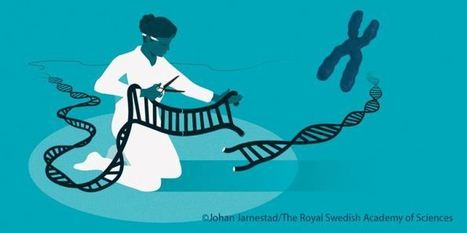
Emmanuelle Charpentier and Jennifer A. Doudna have discovered one of gene technology’s sharpest tools: the CRISPR/Cas9 genetic scissors. Using these, researchers can change the DNA of animals, plants and microorganisms with extremely high precision. This technology has had a revolutionary impact on the life sciences, is contributing to new cancer therapies and may make the dream of curing inherited diseases come true.
|












![What’s love got to do with it? From ‘survival of the fittest’ to compassionate connection [online course] | CxAnnouncements | Scoop.it](https://img.scoop.it/jenEIq-1jd-TLag3aUA0Tzl72eJkfbmt4t8yenImKBVvK0kTmF0xjctABnaLJIm9)