


I don't usually think immersive as much as light touch and simple but gameification could benefit from immersion. Marty

 Your new post is loading...
 Scoop.it!
I don't usually think immersive as much as light touch and simple but gameification could benefit from immersion. Marty

No comment yet.
Sign up to comment
Scoop.it!
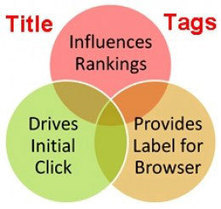
"With the recent Google Panda update in October 2011, we witnessed a huge uproar among webmasters and website owners as a lot of sites with high PageRanks fell like a heap of brick, while some others which had authentic organic links and well optimized pages climbed a few places more, unexpectedly. ...As the webmasters didn’t know of a recourse to sort things out and stabilize the fall, they were meddling in the dark on a course unknown till Google issued its new set of indices to rate and review websites, which made it pretty clear that unless websites were structured and built according to the new guidelines, there was no scope for improvement. The upshot of the Google Panda algorithmic update was aimed at removing poor quality sites from the top of Google’s search results, while increasing the PageRank of sites that were structured optimally and had real organic value with better back links and original content. Google’s new strategy is totally user-oriented, aimed at increasing user loyalty and user experience by improving the quality of search engine results at the same time bringing down BlackHat reliant SEO sites that had till then being exploiting Google’s vulnerabilities. The Panda update is focused on deterring websites that rank high on search engine results through link farming and other BlackHat approaches rather than serving end users through long term organic SEO strategies." Here is some good structured advice on what you can look into to improve your chances of getting out of a Google Panda slap: http://news.submitinme.com/newsdetails-84.aspx Via Robin Good
Scoop.it!

Want to build your followers? Simple: share stuff worth retweeting. Nika Stewart on why a retweet is an implied endorsement and how to get more!
**** Even more than implied endorsement is is the modeled data point each RT represent. Since Internet marketing is a fancy way of saying we all roll dice with content and keywords now RTs = what matters NOW and so should be fed.
Feeding what matters most to our audience doesn't mean we aren't leading too. We had to create the content that got the RTs in the first place. Watching RTs like hawks on wires above fields looking for movement because movement = dinner makes their value well in excess of their weight. Anyone who thinks Twitter is over needs to understand how such an immediate feedback loop can't be "over" until something 2x as good stands in its place and good luck with that. Slinging rocks in the general direction of giants may work again (David v Goliath) but not easy or sure. Via Shirley Williams (appearoo.com/ShirleyWilliams)
Scoop.it!

Takes more to win these days than a better mousetrap as this excellent case study shares.
Via axelletess
Scoop.it!

Designing a website is something that requires creativity, talent and a lot of thinking.
To develop a nice website – both beautiful and with a good UI – we have to pay attention to elements like navigation, menus, content, header, icons and so on. And giving them a nice look will make a big difference in the final result. Via maxOz
Scoop.it!

Brands are built on cultural DNA and therefore, must evolve with the times and shifting consumer desires.
To successfully navigate such turbulent waters, we recommend for marketers to steward brands through a "trend process", recognizing that the brand essence resides in quintessential equities - visual, sensorial, experiential and personality - that create truly emotional bonds with consumers. Via maxOz
Scoop.it!

When using Twitter for business, the second most important tasks, next to actually being active, is measuring how you are doing. Let’s break a few down so you can make an educated choice about what tool (or combination of tools) will work best for you. Via maxOz
Scoop.it!

Social crm is fascinating ties customer service to social marketing and branding.
Scoop.it!

This article was written a year ago yet its so for today as this memes are beginning to take momentum. If you are serious about learning the rules for the new economy its a must. Via Ferananda

Martin (Marty) Smith's comment,
November 26, 2011 9:36 AM
Thanks to Jim for sharing this very important piece. One thing is clear in our "new" economy - money isn't the only or even most important currency (or curren-see). It is possible to spend large sums and have no one care whatsoever. I'm not sure if this new realism locating and supporting authentic (or the seemingly authentic) things is Internet created or merely communicated and sped up and, in the end, it doesn't matter. Attention, hearts and minds are new currencies more important than paper money. Our new currencies are so fast moving the old one has trouble even keeping up. How do you "value" Facebook, Wikipedia or Google? Not very well as it turns out, or not synced in time very well (always over or under). Paper currency is too slow by half and incapable, by itself, of delivering results. This makes the greatest de-valuation of paper money the Internet not inflation.
Scoop.it!

This is the article mentioned in the flow post - old but important because "gameification" is everywhere and mobile is going to speed up the trend. Marty
Companies are realizing that “gamification” -- using the same mechanics that hook gamers -- is an effective way to generate business.
Martin (Marty) Smith's comment,
November 26, 2011 9:19 AM
Funny to call something written yesterday (a year ago) "old" but such are the gameification times we live in :).
Martin (Marty) Smith's comment,
November 26, 2011 9:40 AM
See my note on the Flow piece for why this issue of curreny and games is interrelated and expanding as I write this (almost).
Scoop.it!

Do you participate in so many different types of online marketing strategies that when your boss asks you which one is the most effective, you don’t know what to say? This is where Google Analytics Advanced Segments come into play. Using these, you can create different segments for different groups of referral traffic – traffic from social media, article marketing, link building, directories, local search, guest posts, and so on.
Also, one thing to note is the best thing about these Advanced Segments is that they are available for every website under your Google Analytics login. Via Robin Good
Scoop.it!

Lately eight words have come up more often than not as the new imperative for business, not just for the start up but the more established business to measure themselves against. We live in ‘volatile’ times and they reflect what we have to constantly remind ourselves to do and they just are keeping me buzzing at present. Via Peter Verschuere
Martin (Marty) Smith's comment,
November 25, 2011 12:05 PM
Thanks Peter and yes these are the words :). Marty
Scoop.it!

I'm constantly recommending thought leadership as a marketing strategy and, frequently, getting a lot of pushback. It started when I was a consultant, but continues to this day.
Via Said Hamideh
|
Scoop.it!
Content Management in the Cloud seems to be very straightforward. It is supposed to be agile, simple, and cost effective. In my opinion, it is going to completely change the practice of Content Management.
Scoop.it!

What is keeping you from succeeding with your social media strategy? Is it resources? Time? Vision? More than likely it is your corporate culture! This article explains why.
Via Miguel Rodriguez
Scoop.it!

Rory's Story Cubes are brilliant. Originally invented as 9 dice-like cubes inscribed with a total of 54 images that lead to over 10 million possible combinations...to be used to guide the construction and telling of stories. The actual cubes have been used for several years in classrooms around the world to advance second language development, improve literacy skills, tell stories to improve speaking and listening, to overcome writer's block, to facilitate creative problem-solving, and more. This game has won several major awards.
Now the cubes have gone virtual as an iPhone App. See a demo video here and see endorsements from users. The app is $1.99 in the iTunes store, and plays on all iOS devices (iPhone, iPod Touch, iPad).
This is a wonderfully creative and enjoyable way to build language and social skills.
Do check this out. I rate it 10 out of 10! -JL Via Jim Lerman
Martin (Marty) Smith's comment,
November 26, 2011 2:38 AM
Very cool Jim. I love Siftables from MIT media lab too. I like the idea of cubes because I see us moving to a snippet world here soon where everything is tagged and constantly spinning in both space and time. One possible future for content developers :).
Scoop.it!

A fantastic site that organizes models, examples, patterns and recommendations for the effective use of visual transitions and motion graphics in the design of interactive content pages or online / mobile applications.
Via Robin Good
Martin (Marty) Smith's comment,
November 25, 2011 12:06 PM
Robin the pieces of this I understood (bout half:) were fascinating. Thanks, Marty

Robin Good's comment,
November 25, 2011 12:10 PM
Thank you Marty! ...for finding the time to stop and let me know. I think this is truly valuable for those who want to understand how to communicate more effectively. Glad you enjoyed too. :-)
Scoop.it!

While Americans have an increasingly negative opinion of news organizations, they still trust the media more than the government or corporations. Here, this infographic created with GOOD examines the public’s relationship with their news providers in more depth. Via maxOz
Scoop.it!

“Advancements in social media and technology have allowed us to perform special functions with our mobile devices in relation to our location. A study conducted by the “Advancements in social media and technology have allowed us to perform special functions with our mobile devices in relation to our location. A study conducted by the Pew Research Center found that more than a quarter of American adults use mobile or social location-based services. Who are these users?”” Via maxOz
Scoop.it!

In honor of Thanksgiving, I wanted to write a post about the power of family in social media storytelling. And as you site down to whatever celebration you embrace, think about the videos below and what they evoke within you.
I love this article because of the points it makes about social media and your business stories. For example: "But first, remember that the goal isn’t to be good at social media. The goal is to be good at business because of social media." And then: "We want to do business with what we know, like, and trust. Social media can be used to increase the degree to which we know, like, and trust companies." The article then goes on to demonstrate how a delicatessen in Phoenix, AZ has used stories of its founders to create a loyal customer base. There are 4 videos to view in the article and I'll let you determine if you think they work or not. But what I do like is the author saying, "The More You Sell, The Less You Sell...What I love about these videos is that they don’t devolve into promotions-based drivel. There’s no coupon. There’s no “35th Anniversary Special”. There’s not even a call-to-action." As consumers, we are all becoming jaded about marketing, branding and sales. So keep this in mind as you create your business stories. The points above and others in this article may be well worth following.
Scoop.it!

Google+ was never supposed to simply be a competitor to Facebook? What if Google wasn't bringing the fight to Palo Alto, swords drawn and ready to take them on. No no, Google's vision was much, much bigger than that, and it comes down to one thing. Google+ was never created to directly compete for people's time on the internet. A simple, ad free system, Google+ was launched to compete for users' personal data. Becoming the primary platform for social networking would simply be a bonus. Via The New Company, ABroaderView
Scoop.it!

If every packaging started to look like this the flamboyant packaging would stand out and start to be my favorite. Standing out isn’t about being more than what everyone else is, it usually means you are just less.
Minimalism, your table for one is ready... Via Level343
Scoop.it!

Designers, in many ways, are quintessential first adopters and ideal test customers: They're technically savvy and demanding, with an extreme attention to detail and polish.
Via maxOz
Scoop.it!

The Global Soap Project is a small non-profit that began in 2009 with a beautifully simple concept: collect a portion of the 2.6 million bars of partially used soap disposed of every day by U.S. hotels, reprocess it into new bars and distribute it to people left vulnerable to disease due to lack of proper hygiene and sanitation supplies."
|






