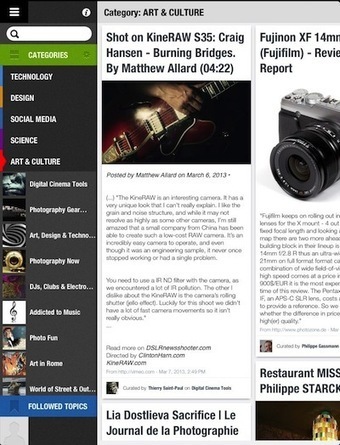
Scoop.it collates work from online publications using an online magazine format, and this visual impact alone makes it very effective.
The additional appeal of broadcasting from a hub allows me to tap into and share with my ed tech networks, which is why I find myself using it more often during time constraints.
First of all, it’s powerful–it incorporates multiple elements of familiar social media tools. But it’s also very flexible–the mobile app is quite functional for both iPhone and Android, and a toolbar plugin can be installed on browser windows. Scoop.it’s athleticism makes it a time-saver; educators and students will quickly grasp its value in content gathering.
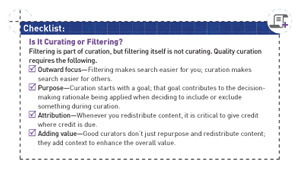
Additionally, using Scoop.it will meet multiple standards (Common Core and NETS-S) across the curriculum. Students use critical thinking skills to collect, evaluate and analyze content; they may identify trends from discourse; they develop writing skills in original expression; and they interact, communicate and publish to a global audience. But perhaps more importantly, students practice digital citizenship and personal responsibility to lifelong learning.
Click headline to read more--
Via
Chuck Sherwood, Former Senior Associate, TeleDimensions, Inc


 Your new post is loading...











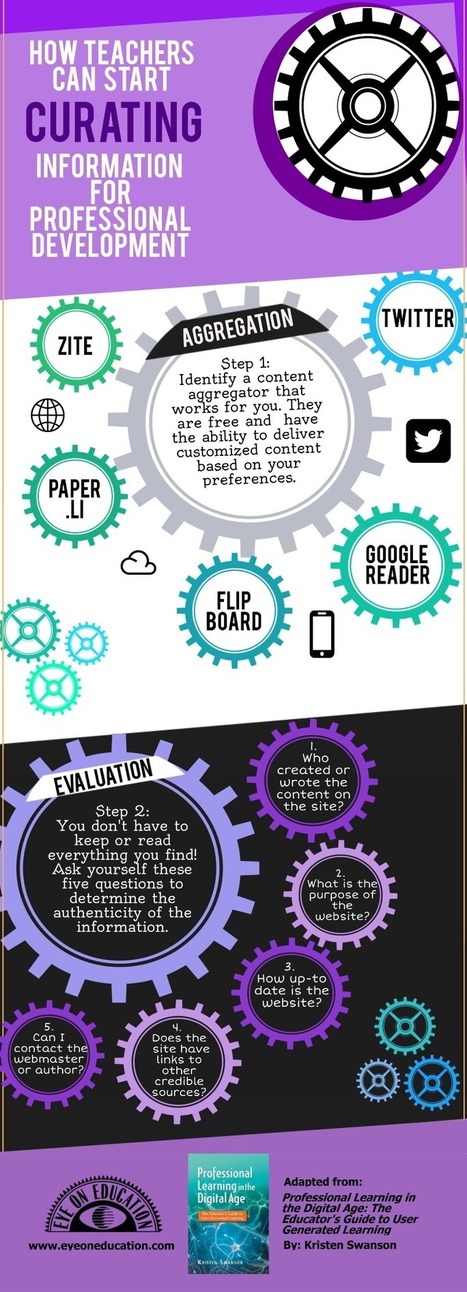










I see this helping to create a PLN Personal Learning Network
This educator describes how Scoop.it can be the tool by which you teach students to gather, manage, and evaluate information. I 100% agree with his caveat at the bottom that Scoop.it doesn't do the teaching but because it is so simple and seamless and allows for so much interaction and feedback between student curator and instructor, it is the perfect medium for it.
Need a new subjects or all higher education students - digital content curation - we provide less pre-preapred resources - students need to learn what is worth citing