 Your new post is loading...

|
Scooped by
Philippe J DEWOST
May 11, 2013 11:10 AM
|
In 2009, Airbnb was close to going bust. Like so many startups, they had launched but barely anyone noticed. The company’s revenue was flatlined at $200 per week. Split between three young founders living in San Francisco, this meant near indefinite losses on zero growth. As everyone knows, venture investors look for companies that show hockey stick graphs, and according to co-founder Joe Gebbia, his company had a horizontal drumstick graph. The team was forced to max out their credit cards...
|
|
Scooped by
Philippe J DEWOST
May 9, 2013 1:44 PM
|
Waze and Facebook partnered in October 2012 when Waze released its updated version that allows users to share their drive with their Facebook friends.
This would be Facebook's third acquisition in Israel. It bought Snaptu in 2011 for $70 million and Face.com in 2012 for $60 million.
In the last year, Waze tripled its user base to 45 million and in March alone, 1.5 million users downloaded the free mobile navigation app, Calcalist said.
|
|
Scooped by
Philippe J DEWOST
May 8, 2013 4:30 AM
|
Loic Le Meur's keynote on the Sharing Economy as he studied the theme for his upcoming conference LeWeb London on June 5-6
|
|
Scooped by
Philippe J DEWOST
May 3, 2013 3:52 AM
|
Latest research suggests half of employers will, in just four years time, require employees to bring their own devices to work. Should BYOD be a requirement over a personal, optional decision? Some interesting tidbits from the research: 38 percent of companies expect to stop providing workplace devices to staff by 2016. (PCs, such as desktops and laptops, are included in the definition of BYOD.)BYOD is most prevalent in midsize and larger enterprises, often generating between $500m-$5bn in revenue per year, with 2,500-5,000 employees on the roster.BRIC nations, such as India, China, and Brazil, will most likely already be using a personal device — typically a "standard mobile phone" — at work.Meanwhile, companies in the U.S. are more likely to allow BYOD than those in Europe (likely due to stronger data protection rules, see below).Around half of all BYOD programs provide a partial reimbursement, while full reimbursement costs "will become rare."Gartner vice president David Willis says companies should "subsidize only the service plan on a smartphone."
|
|
Scooped by
Philippe J DEWOST
April 19, 2013 8:20 AM
|
If you walk into the lobby of the data center Facebook operates in the high desert in Prineville, Oregon, you’ll find a flatscreen display on the wall where you can check the pulse of this massive computing facility. The display tracks the efficiency of the operation, which spans 333,400-square feet and tens of thousands of computer servers. Facebook built this data center in an effort to significantly reduce the power and dollars needed to serve up the world’s most popular social network, and — driven by CEO Mark Zuckerberg’s deep-seeded belief in the free exchange of ideas — the company aims to push the computing world in a similar direction. The display — which shows much the same information Facebook engineers use to monitor the facility — is an advertisement for the Facebook way. Now, the company is taking this idea a step further. On Thursday, Facebook uncloaked a pair of web services that let anyone in the world track the efficiency of the Prineville data center and its sister facilityin Forest City, North Carolina. “We’re pulling back the curtain to share some of the same information that our data center technicians view every day,” Facebook’s Lyrica McTiernan said in a blog post. “We think it’s important to demystify data centers and share more about what our operations really look like.”
|
|
Scooped by
Philippe J DEWOST
April 17, 2013 9:19 PM
|
Netflix is looking to ditch its Silverlight-based video player for an HTML5 version that would work pretty much anywhere, but HTML5 isn’t quite up to the task just yet, according to the company. Microsoft has already put Silverlight — once Microsoft’s much-hyped alternative to Adobe’s Flash Player —out to pasture. While Microsoft will continue to support Silverlight for some time, it will be retired come 2021. That gives Netflix and others eight years to come up with an alternative. For its part Netflix wants to use HTML5, but HTML thus far lacks some key components Netflix needs, namely a way to generate media streams for playback, a cryptography protocol and, most controversially, DRM for streaming media.
|
|
Scooped by
Philippe J DEWOST
April 17, 2013 5:07 AM
|
The value of Bitcoins – the peer-to-peer currency – has been soaring so much of late that you have certainly heard about it. It is also likely that you still don’t fully understand how this decentralized payment mechanism works in practice as it is hard to build a bridge between the overly general and the overly complicated descriptions of the system. Here is our (imperfect) take at it based on what we have read so far. The monetary economics of it is fairly straightforward and uninteresting, but the mechanics of making payments over a communications channel without a trusted party is really interesting.
|
|
Rescooped by
Philippe J DEWOST
from Startups & Co.
April 16, 2013 1:57 AM
|
"Our heavy investments in Prime, AWS, Kindle, digital media, and customer experience in general strike some as too generous, shareholder indifferent, or even at odds with being a for-profit company. “Amazon, as far as I can tell, is a charitable organization being run by elements of the investment community for the benefit of consumers,” writes one outside observer. But I don’t think so. To me, trying to dole out improvements in a just-in-time fashion would be too clever by half. It would be risky in a world as fast-moving as the one we all live in. More fundamentally, I think long-term thinking squares the circle. Proactively delighting customers earns trust, which earns more business from those customers, even in new business arenas. Take a long-term view, and the interests of customers and shareholders align."
Via Alain Rodermann
|
|
Scooped by
Philippe J DEWOST
April 10, 2013 6:03 PM
|
It's ugly out there for the traditional PC makers. IDC says PC sales fell 14 percent in the first quarter on a year-over-year basis. That's worse than its forecast of a 7.7 percent drop.
This is the worst quarter for PC industry since 1994 when IDC started tracking sales. So, that pretty much makes it the worst quarter in history.
IDC blames Microsoft's Windows 8 operating system for alienating consumers. The new tile-based interface is too weird for consumers, says IDC.
Instead of buying new laptops or desktops, people are buying tablets and smartphones which serve as good-enough alternatives.
|
|
Scooped by
Philippe J DEWOST
April 9, 2013 2:08 PM
|
Between 34 percent and 42 percent of large enterprises will be seriously considering procuring various unified communications (UC) applications as a premise-based, but managed, service, by 2015, according to the findings of the Dimension Data 2013 Global UCC Study conducted by research firm Ovum. .../... Results also suggest U.S. businesses have taken a reasonable and careful approach to bring your own device (BYOD) initiatives, with more than 60 percent of firms supporting employee owned smartphones and tablets, and almost 20 percent indicating support for those which have arrived in the organization without official vetting.
|
|
Scooped by
Philippe J DEWOST
April 7, 2013 10:43 AM
|
Richard Kaner and his graduate student Maher El-Kady have been trumpeting graphene micro-supercapacitors that would combine the very fast charge and discharging capabilities of supercapacitors – hundreds of times faster than batteries – with the high energy density of batteries. Now the researches say they have demonstrated a scalable fabrication process that could make their supercapacitors cheap to produce while expanding the possibilities for their use. The UCLA researchers say they’ve been able to produce more than 100 micro-supercapacitors on a single disc in less than 30 minutes, using inexpensive materials. (image via UCLA) “We are now looking for industry partners to help us mass-produce our graphene micro-supercapacitors,” Kaner said in a statement.
|
|
Scooped by
Philippe J DEWOST
April 5, 2013 6:24 AM
|
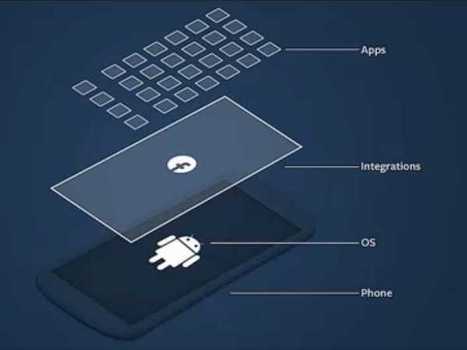
Mark Zuckerberg swore his team wasn't making a Facebook phone. But today, he greeted a room full of press in Menlo Park with a different message. "Today we're finally going to talk about that Facebook phone," the social network's CEO said. But by "Facebook phone," Zuckerberg doesn't mean actual hardware. Instead his team created Home, a concept that changes the "soul of the phone," the home screen. "What would it feel like if our phones were designed around people, not apps?" Zuckerberg asked the audience. "We're not building a phone. We're not building a new MP3 player. And we're not building a new internet communication device," Zuckerberg said. Instead, Facebook Home appears the moment you turn on your phone or wake it up from stand-by mode (Zuckerberg says people turn on their phones an average of 100 times per day). Facebook Home doesn't display the typical static background photo. It shows story after story posted by friends to Facebook or Instagram in real-time. It displays status updates, photos, and other open graph stories with large images. Below is a graphic that simply explains what Facebook Home is. It's an integration on top of Android's Operating System but beneath the app icon layer we're all used to seeing on our smart phones. Facebook has built the first home screen that comes to life, and updates in real time.
|
|
Scooped by
Philippe J DEWOST
April 4, 2013 2:01 PM
|
http://www.youtube.com/watch?v=QTmp95CP8ys Le projet « Paris Capitale Numérique » vise à créer des quartiers d’activités numériques de référence à Paris et sur le territoire francilien, mais aussi dans les collectivités qui le souhaitent en régions, afin de mettre en valeur le dynamisme de l’économie numérique française. Renforcer l’attractivité de la France Il s’agit de développer l’attractivité internationale de la France dans le secteur du numérique : Créer un « site phare » dans Paris ou sa proche banlieue qui fédère, valorise et attire les meilleures initiatives et talents, français comme internationaux, dans les secteurs de l’innovation et des nouvelles technologies ;Inventer un modèle d’écosystème attractif d’acteurs, reproductible, favorable à la création et au développement des entreprises innovantes, qui puisse servir de socle à un label ;Créer une dynamique de réseau avec d’autres agglomérations françaises et internationales propice aux échanges et à l’innovation.
|
|
|
Rescooped by
Philippe J DEWOST
from Startups & Co.
May 11, 2013 3:01 AM
|
Editor's note: This is a guest post by Stefano Bernardi, who is on the founding team of Betable, where he heads Customer Development. Previously, he worked in venture capital in Europe. ...
Via Alain Rodermann
|
|
Scooped by
Philippe J DEWOST
May 9, 2013 1:33 PM
|
Two years ago, Mark Zuckerberg and company turned the hardware world on its head when they launched the Open Compute Project, an effort to improve every aspect of the modern data center and share the results with the world at large. They began by “open sourcing” fresh designs for computer servers and power systems and cooling equipment. Then they did the same with hardware that stores massive amounts of digital data. Then they remade the racks that hold all these machines. And now it’s time for the networking gear.
The idea is to design a networking switch that anyone can load with their own operating system — just as you can load your own OS on a computer server. Typically, networking switches are sold by hardware giants such as Cisco and HP and Dell, and they ship with software specific to the company that designed them. But Facebook aims to separate the hardware from the software.
|
|
Scooped by
Philippe J DEWOST
May 3, 2013 3:53 PM
|
The walls around Barnes & Noble‘s Nook walled garden are tumbling down. The company’s Nook HD and Nook HD+ are credible content-consumption tablets — remarkably credible, actually, considering that they come from a 127-year-old bookseller. But they sold so poorly over the holiday season that it raised questions about whether B&N would end up being forced to de-emphasize its hardware business in favor of selling content on other platforms. The Nooks use Barnes & Noble’s own custom version of Android and provide its own stores for books, magazines, newspapers and apps. And therein lies an oft-raised argument against buying a Nook: the Barnes & Noble application store has had only 10,000 pieces of software — mostly for-pay ones — vs. the hundreds of thousands of choices in Google’s Google Play.
So with one fell swoop, in the form of a software update being rolled out today, B&N is eliminating that downside. It’s giving both Nooks the Google Play stores for apps, music, movies and books, plus key Google apps which the tablets have lacked until now: Chrome, Gmail and YouTube. (Google’s policies for its apps are an all-or-nothing proposition for device makers — if they want Google Play, they also have to pre-install Google’s apps.) New Nooks sold at Barnes & Noble’s bookstores and elsewhere will also carry the updated software.
|
|
Scooped by
Philippe J DEWOST
May 1, 2013 2:41 PM
|
|
|
Scooped by
Philippe J DEWOST
April 19, 2013 8:12 AM
|
"The computer is responsive in a manner that I've never experienced before."
|
|
Scooped by
Philippe J DEWOST
April 17, 2013 8:58 PM
|
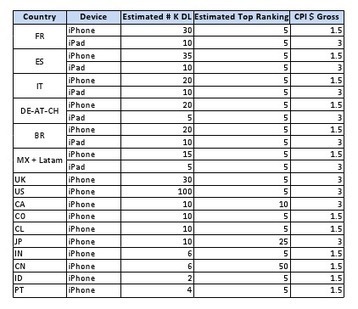
Apple said it removed AppGratis for violating a clause in the iOS developer guidelines that prohibits apps from mimicking the official App Store. But there's a disconnect between AppGratis's official statements about how it promotes apps and how it attracts developers for such promotion. Specifically, AppGratis gives developers an estimate of where in Apple's App Store rankings an App can land based on how much the developer is willing to pay, according to a document from the company's pitch that a source in the developer community sent us. For example, this document shows AppGratis estimates a ~$300,000 buy will land an app in the top five slot in the US version of the App Store.
|
|
Scooped by
Philippe J DEWOST
April 16, 2013 9:08 PM
|
Mobile browsing got significantly faster over the last 12 months, according to a new report from Google, and the average page load times on mobile are now comparable to desktop page load times. On mobile, Web pages now load about 30% faster than a year ago, but when it comes to desktops, Google only found some very minor speed-ups. That, however, is actually quite impressive, given that the size of the average Web page increased by over 56% in the last 12 months.
|
|
Scooped by
Philippe J DEWOST
April 12, 2013 1:58 PM
|
Verizon and NEC said they have successfully sent the highest-capacity transmissions for regional and long-haul distances over field fiber. The two companies said tests showed that by expanding from one band to two bands, the C-band and the L-band, the two firms were able to transmit 40.5 terabits per second for a long-haul distance of more than 1,800 kilometers (1,118 miles) and 54.2 Tb/s over a regional distance of more than 630 kilometers (391 miles), using Verizon’s fiber loop outside Dallas. The achievement was accomplished by tightly packing optical channels in the two bands of the optical fiber spectrum, the two firms added.
|
|
Scooped by
Philippe J DEWOST
April 9, 2013 2:21 PM
|
The city started the traffic system in preparation for the 1984 Olympics at a handful of intersections surrounding the Los Angeles Memorial Coliseum, where crowds flocked to watch Carl Lewis and Evelyn Ashford. Other cities have chased to keep up, adopting centralized control of at least some traffic signals. But Los Angeles has remained at the forefront, with a system that is not only more widespread, but also faster and more autonomous than most others. Now, the magnetic sensors in the road at every intersection send real-time updates about the traffic flow through fiber-optic cables to a bunker beneath downtown Los Angeles, where Edward Yu runs the network. The computer system, which runs software the city itself developed, analyzes the data and automatically makes second-by-second adjustments, adapting to changing conditions and using a trove of past data to predict where traffic could snarl, all without human involvement.
|
|
Scooped by
Philippe J DEWOST
April 9, 2013 2:21 AM
|
Back in 1995, a public television show called "The Computer Chronicles" made an episode about an emerging technology: "The Net." We found the video after venture capitalist MG Siegler embedded it on his blog. It's pretty insane how far things have come in the last 20 years.
|
|
Scooped by
Philippe J DEWOST
April 5, 2013 4:42 PM
|
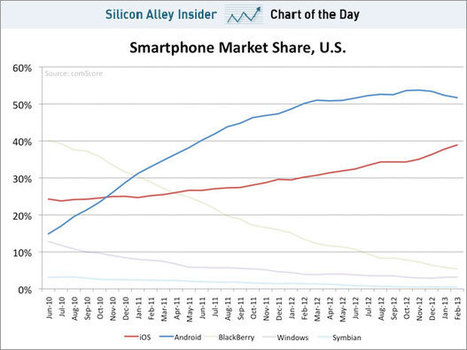
For the three months ended in February, Apple had 38.9 percent of the U.S. smartphone market, up from 35 percent for the same period ending in November. Android fell to 51.7 percent over the same period, down from 53.7 percent. The United States is not the world, but it is a leading market for smartphones. So, it's worth paying attention to these trends. Apple has been able to eat into Android's lead thanks to increased distribution and lowered pricing. The iPhone wasn't available from Verizon until February 2011, four years after it debuted on AT&T. It later joined Sprint, then some regional carriers, and this year it's going to T-Mobile. Apple offers the iPhone at a variety of prices on Verizon and AT&T, from $0 to over $400. A free-on-contract iPhone has made it an option for more people. Android is a great operating system available on a number of excellent phones, some with gigantic screens. It's odd that it's gone flat. It's not just a U.S. phenomenon for Android, either.
Latest white paper details how the imperative to launch multiscreen services drives cable operators to embrace OTT technologies and ultimately an all-IP future; The paper describes a phased approach to all-IP, starting with moving VOD to adaptive bit-rate streaming (ABR); Paper argues that an IP-based unicast ABR approach can also secure new off-net subscribers; Recommends the adoption of a unicast ABR model over multicast IP for linear TV, starting with niche channels
Via Claude Seyrat
|


 Scoop.it!











Great piece reminding us that sometimes, it's okay to do things that don’t scale