Your new post is loading...
Foreign investors mopped up the flood of new issuance by Canadian governments and companies, a sign the nation continues to be viewed a safe haven. Investors from outside the country bought a net $49 billion (US$36 billion) of Canadian securities in April, the largest monthly purchases from abroad on record, Statistics Canada reported Tuesday. That included $15.8 billion in federal government bonds, as well as $10.2 billion in federal government money market instruments such as treasury bills, both record inflows. Foreign investors also bought $25.4 billion in corporate bonds. The unprecedented purchases coincide with a hefty issuance of federal debt by Prime Minister Justin Trudeau’s government to fund spending to support Canadians through the economic shock and shutdowns caused by COVID-19.
“The strong inflows into Canadian debt markets reveal that, even during the height of the crisis in this country, Canada was seen as an attractive place to park funds,” Katherine Judge and Royce Mendes at CIBC World Markets said in a report to investors.
The SEC’s long-expected reforms to Regulation S-X regarding financial disclosure for business acquisitions and dispositions were published as final amendments on May 21, 2020. [...] Broadly speaking, the final amendments are:
(A) require the financial statements of the acquired business to cover only up to the two most recent fiscal years (reduced from three fiscal years), in addition to interim period disclosure;
(B) update the tests used to determine the “significance” of an acquisition or disposition to generally reduce the incidence of anomalous “false positive” results and thereby help issuers avoid burdensome disclosure requirements for transactions that are not “material” in the common-sense meaning of the word;
expand the use of pro forma financial information in measuring significance;
(C) permit pro forma financial information to include “management adjustments” reflecting reasonably estimable synergies and other transaction effects that have occurred or are reasonably expected to occur as a result of the transaction;
(D) no longer require the issuer to include separate acquired business financial statements, so long as the business has been included in the issuer’s post-acquisition audited annual financial statements for either nine months or a complete fiscal year, depending on the significance of the acquired business;
(E) modify and enhance the required disclosure for the aggregate effect of acquisitions for which financial statements are not required or are not yet required;
(F) increase the significance threshold for dispositions from 10% to 20% to conform with the minimum significance threshold for acquisitions;
The nation must not halt its economic recovery efforts, but policy makers must prepare for the consequences, and consider their options.This Solutions Brief offers a plan toward long-term fiscal soundness that would prevent the recovery from the pandemic from undermining the federal government’s ongoing fiscal standing by segregating new debt incurred from recovery intiatives into a separate financial entity, financing it with bonds of the longest maturity, and paying the interest through an addition to current revenues. Though now is not the right time to impose a payment mechanism for the incremental debt caused by the recovery effort, it is not too early to consider what that mechanism should be.
The stereotypical image of the chief financial officer (CFO) as a mere bean-counter who only settles the books and tracks regulatory compliance no longer applies. Today, the CFO’s role has evolved from back-office treasurer to strategic business partner of the chief executive officer (CEO) and valued adviser to the board of directors on the firm’s critical issues – especially mergers and acquisitions (M&A). In the last two decades, more than 790,000 M&A deals have been announced worldwide, with a total value of over $57 trillion.[1] Traditionally, CEOs are considered most responsible for the development of M&A strategy. In most modern firms, however, the CFO now plays an equally important role. CFOs are involved in every stage of the M&A process, from due-diligence to integration of the target. Several academic surveys highlight how CFOs are responsible for identifying financially attractive targets, designing financing strategies for the acquisition, and focusing on the identification and realization of post-merger synergies. [...] We created an innovative index that captures the ability of a CFO to influence M&A decision-making. Our index is based on a set of CFO-specific attributes such as board membership, outside board experience, level of financial expertise, compensation, seniority, and relative pay. Based on this index, we separate our sample firms into two groups. One group has an influential CFO and one does not. From this comparative analysis we obtain a number of important results.
À 6 contre 3, les juges du plus haut tribunal des États-Unis concluent que la loi fédérale interdisant la discrimination fondée sur le sexe protège également les employés LGBTQ. La Cour suprême a estimé que la loi sur les droits civiques, qui interdit la discrimination basée sur le sexe, s'applique également aux personnes de la communauté LGBTQ. Celles-ci ne peuvent donc pas être congédiées en raison de leur orientation sexuelle ou de leur identité de genre. Neil Gorsuch, nommé par le président Trump, de même qu'un autre juge de la mouvance conservatrice, le juge en chef de la Cour John Roberts, se sont joints aux membres plus progressistes du tribunal. Il est impossible de discriminer une personne parce qu'elle est homosexuelle ou transgenre sans la discriminer en fonction du sexe, a écrit le juge Gorsuch, qui a rédigé l'arrêt. L'administration Trump s'était rangée du côté des entreprises qui avaient congédié leurs employés.
La pandémie de coronavirus rend plus urgente que jamais l’imposition de nouvelles règles forçant les multinationales à payer « leur juste part » d’impôt, estiment des économistes, à commencer par celles qui profitent le plus de la crise, comme les géants du Web. La crise en cours plombera les revenus et fera exploser les dépenses des gouvernements pour des mois, voire des années à venir, ont observé lundi des membres de la Commission indépendante pour la réforme de la fiscalité internationale des sociétés au moment de dévoiler une quinzaine de recommandations. Déjà, les dépenses publiques d’urgence dépassent les 9 000 milliards $US et l’on prédit un demi-milliard de pertes d’emplois, particulièrement chez les travailleurs les plus vulnérables des pays en développement. En attendant que les pays conviennent enfin d’une façon d’appliquer un taux d’impôt minimal sur les profits des multinationales, les gouvernements pourraient au moins commencer par instaurer une taxe sur les entreprises pharmaceutiques ou numériques qui ont vu leur chiffre d’affaires et leur valeur en Bourse grossir avec la pandémie et les mesures de confinement, a fait valoir l’un des membres de la Commission, le Prix Nobel d’économie Joseph Stiglitz, lors d’une conférence de presse virtuelle.
Using the courts to punish shareholders for disclosure breaches that also hit share prices is double jeopardy and lets boards and management off the hook. Class actions enable a group of individuals who have suffered similar losses to band together and share the costs of legal action in pursuit of compensation that would otherwise be infeasible. Litigation funders further facilitate that process through fee structures that link remuneration to outcomes achieved. Shareholder v shareholder: the danger of shareholder class actions is they place existing investors in double jeopardy. In this way, the imbalance in financial resources between individual claimants and large defendants that would otherwise inhibit the former taking legal action because of the costs and risks involved, is significantly reduced. If successful, claimants can expect to be compensated for loss or hurt at the expense of those whose actions were responsible. [...] But shareholder class actions are an entirely different kettle of fish. These generally involve as plaintiffs a group of investors who purchased a company’s shares on the stock exchange over some period when the company knew, but had not publicly disclosed, some negative information about itself. [...] The fallacy involved in permitting such shareholder class actions is easily seen. It is the previous shareholders who sold their shares to the “new” shareholders who benefited from the sale at an inflated price. They are no longer shareholders (or have a lower stake) in the company. Unfortunately, it is probably impossible to design a system where compensation of the new shareholders is funded by “clawing back” funds from that group of sellers! [...] So what underpins this ludicrous situation of allowing such shareholder class actions? It would appear to reflect an idealised model of public company governance which is far divorced from reality. In that model, shareholders and management are one and the same, or management simply implements decisions made by the shareholders. In that idealised model (perhaps relevant in early corporate history or where there is a dominant, controlling, shareholder), allowing such actions which penalise those shareholders can make some sense.
[...] The market volatility caused by COVID-19 has impacted the shareholder activism landscape and has made many public companies attractive targets for activist investors. Given the current environment, companies should assume that they may be targeted by an activist investor, either alone or in concert with others, and should take steps to prepare accordingly. Public companies should conduct a comprehensive assessment of their structural vulnerabilities to determine how they may be vulnerable to an activist hedge fund or hostile raider. Companies should consider reviewing their organizational documents and their overall corporate governance from an activist and hostile takeover defense perspective. Upon completion of that review, companies should determine whether they should make any corporate governance changes to mitigate structural vulnerabilities or enhance structural protections, including in particular any amendments to their charter or bylaws. Public companies should also consider whether they should adopt a shareholder rights plan, also known as a “poison pill.” A poison pill may be adopted for the purpose of protecting against an unsolicited acquisition of the entire company or a significant portion thereof, or to protect the company’s federal net operating loss carryforwards from being limited under Section 382 of the Internal Revenue Code. Even if a poison pill is not imminently necessary, companies should consider going through the exercise of preparing a “shelf” poison pill. While the benefits of actually adopting a poison pill may not outweigh some of the countervailing considerations, companies should consider having a shelf poison pill and related documents prepared and internally vetted so a poison pill can be adopted and publicly announced on very short notice.
British Columbia will now become the first jurisdiction in Canada to statutorily permit and regulate benefit corporations ("B Corps").
Bill M 209, the Business Corporations Amendment Act (No. 2), 2019, which was originally introduced as a private members bill by Dr. Andrew Weaver, received Royal Assent on May 16, 2020, and is set to come into force on June 30, 2020. In a previous blog post, we discussed the concept of "B Corps". B corp is a certification granted by the non-profit B Lab that signifies a for-profit company voluntarily meets the highest standards of social and environmental performance, public transparency and legal accountability. It is a symbol that the company balances both profit and societal purpose, instead of the standard corporate purpose of maximizing profit. [...] Standard models of corporate governance require corporate directors to exercise their fiduciary duties by acting in the best interests of the company. This has sometimes been interpreted as putting a priority on maximizing shareholder profit (though that concept has received more traction in the United States as opposed to Canada). Benefit corporations, in contrast, must conduct their affairs to create a general public benefit. Thus, at its core, a benefit company is a for-profit company that commits to conducting its business in a responsible and sustainable way. [...] A benefit company's articles must contain a provision setting out the company's commitment to conducting business in a responsible and sustainable manner and to promote specific public benefits.
OTTAWA — Unclear rules in Canada around intellectual property have given aggressive actors like China backdoor access to sensitive national security assets, two technology experts warned, as concerns run high over the threat of foreign takeovers. Jim Balsillie, former Blackberry head and chair of the Council of Canadian Innovators, told a House committee on Monday that current foreign investment rules fail to properly account for new technologies and IP rights, and “profoundly” need a rethink in an increasingly digital economy. Balsillie said Ottawa has for years scrutinized foreign takeovers based on the value of the deals, or according to vague “strategic interest” outlines, while allowing foreign governments access to critical research and intellectual property — a move he said is “akin to putting an additional bolt lock on the front door, while advertising that our screen door on the side is open.” The House of Commons industry committee is studying potential changes to the Invest in Canada Act amid heightened concerns around foreign takeovers. Some experts last week warned the committee against a unique threat posed by Chinese state-owned enterprises, which can be used to advance the geopolitical ambitions of the country. [...] Some experts last week warned that defining strategic industries or technologies could prove difficult, as reasons for the justification would be nearly impossible to prescribe. [...] “Everybody would want their industry to become strategic,” Patrick Leblond, professor of international affairs at University of Ottawa, told the committee last week. “It is difficult to distinguish what constitutes a strategic industry.”
Environmental and social (E&S) issues are an increasingly publicized component of investment management. Large fund families, including the “Big Three” of Vanguard, BlackRock, and State Street, market themselves as advocates for the environment, women, workers in developing countries, and other non-shareholder constituencies. Funds make such claims not only for their designated socially responsible investment (SRI) funds, but also for their mass-market, plain-vanilla index funds. Based on funds’ marketing materials, stewardship reports, and public statements from fund executives, reasonable investors may well expect high levels of support for shareholder proposals relating to E&S issues. Have these statements translated into meaningful changes in voting outcomes, or are they largely self-promotional puffery? Overall, support for ESG proposals is low among the largest investors. In the 2018-2019 proxy season, the largest of the Big Three — Vanguard and BlackRock — supported unique shareholder E&S proposals at rates of 7.5 percent and 7.1 percent, respectively. State Street explicitly markets itself as supporting progressive environmental and social issues and supported E&S proposals at the somewhat higher rate of 22.7 percent. Although these rates are low in an absolute sense, a comparison with other funds reveals support for E&S proposals at far higher rates (e.g., Deutsche Bank at 77.9 percent) and lower rates (e.g., Dimensional at 0 percent). Given the Big Three’s low rates, it is possible that their public statements mislead investors.
Until fairly recently, activist hedge fund Elliott Management’s core technology investing strategy was pretty straightforward: Target a smallish company known for selling software to businesses, agitate for a sale -- sometimes by offering to buy the company -- and profit when a buyer came along. Some of the targets were well-known within particular tech sector niches, like BMC, Novell and Informatica, but none were giants or household names. Elliott, founded by billionaire Paul Singer, notched sale after sale, reaping gains from the associated premiums on the acquisitions. Its track record gave Singer a reputation among CEOs and board members as the world’s most feared investor. Former AthenaHealth CEO Jonathan Bush, whose company was targeted by Elliott in 2017, described doing research on Elliott as ’googling this thing on your arm and it says, ‘You’re going to die.’” The New Yorker called Singer a “doomsday investor,” highlighting a series of unflattering tactics taken by one of Singer’s top lieutenants, Jesse Cohn, to oust Bush from his role. But in the past few years, a gradual but noticeable transformation has taken place at Elliott: The technology targets have gotten bigger. [...] Finding suitable software targets has also become more difficult as multiples have expanded, companies have consolidated, and management has become more sophisticated. [...] The bigger targets have required the firm to adjust its tactics. Elliott has had to be more collaborative, working with companies that have no obvious buyers given their size.
Hertz Global Holdings Inc., whose stock appears destined to be wiped out when its bankruptcy case is finished, wants to sell US$1 billion more of its shares, even though it readily concedes those might wind up worthless, too. Investors promptly bid up Hertz by 68 per cent. The car renter wants to take advantage of the quixotic rally in its stock by offering as many as 246.78 million common shares, according to a court filing. The proceeds would provide some much-needed working capital while Hertz tries to dig out from massive debts that forced it into court protection. Judge Mary Walrath set a hearing for later today to consider the idea. [...]
Hertz said it would warn any potential buyers that “the common stock could ultimately be worthless” and protect Jefferies LLC, the firm managing the potential sale, against lawsuits that could result from the offering. [...] “As odd as it is, it might turn out to be brilliant move,” said Bruce Grohsgal, a retired bankruptcy lawyer who teaches at Widener University’s law school in Delaware. [...] Still, the new stock could be risky because in bankruptcy all debt -- including Hertz’ bonds trading Friday at less than half their face value -- would have to be repaid in full before shareholders get a single cent. “A lot of people would ask, what the heck is going on?” Grohsgal said.
|
After repeatedly telling investors that Fairfax Financial Holdings Ltd. shares are “ridiculously cheap,” founder Prem Watsa has committed US$149-million of his own money to buying additional shares in the insurance company. Mr. Watsa, a veteran value investor and billionaire, more than doubled his holding of Fairfax subordinated voting stock by acquiring 482,600 shares in a series of purchases since last Wednesday. He now holds approximately 3 per cent of the company’s subordinated voting shares and continues to control Fairfax through his ownership of multiple voting stock. The 69-year-old chief executives joins a long list of Canadian executives who raised stakes in their own companies after the market declined in March because of the economic impact of the global pandemic. [...] Fairfax’s share price fall sharply in March, along with almost every publicly traded company, and has gone sideways since then, during a broad-based equity market recovery. So far this year, Fairfax’s stock price is down by 30.9 per cent. [...] Fairfax is one of the world’s largest commercial and property and casualty insurers, and posted a US$1.26-billion loss in the first quarter of 2020 as the market decline forced the company to write down the value of its investments.
It’s a natural human phenomenon. After a period of intense activity, it’s perfectly understandable to relax, take a step back and catch one’s breath. M&A deals are no different. The push to get a deal signed is often marked by long days and, sometimes, long nights for all involved. Once the deal is signed, it’s natural for the deal teams, for management, for the respective boards of directors, to go home, get a bit of sleep and go into “execution mode.” “Let’s get this closed,” they say. [...] Directors of merger parties must remain actively engaged after a merger agreement is signed. A seemingly increasing number of cases have been critical of boards for failing to act – for instance, the recent Tile Shop case where directors failed to act in preventing certain insiders from acquiring increasing control (which we wrote about here) and the growing line of Caremark cases where the board either (i) “utterly failed to implement any reporting information restrictions or controls” or (ii) having implemented them, “consciously failed to monitor or oversee their operations, thus disabling themselves from being informed of risks or problems requiring their attention” (which we wrote about most recently here).
The lockdowns European countries imposed when the COVID-19 pandemic hit have caused supply-and-demand shocks in all industry sectors. In response, governments have launched lifeboats, such as loan guarantees, and value transfers, which include income support and exceptions to social-security contributions. Loan guarantees form the backbone of fiscal measures in Europe, accounting for at least 69 percent in each of the five largest economies (Exhibit 1). While the measures are unprecedented in scale, so is the value at stake. According to the McKinsey Global Institute, the difference between a weak and strong recovery in the eurozone could be as much as €1.7 trillion. To improve the chances of making a strong recovery, European governments must allocate resources in the best possible way. In this article, we argue that for some sectors, this will mean focusing on navigating safely through the COVID-19 crisis. However, for others—such as those that were already in structural decline and were then badly hit by the crisis—it will mean catalyzing structural change and preparing for restructuring.
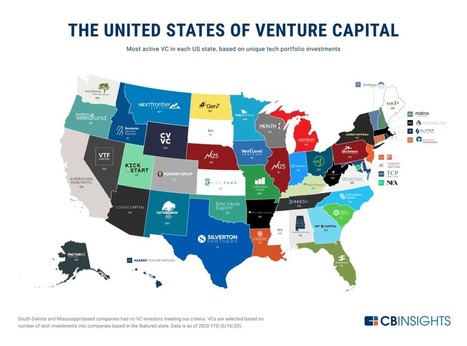
Despite recent challenges, venture capital firms are still seeking out investment opportunities across the country. Since our last analysis of most active VCs in January 2020, we've seen shake-ups across 10 states. Our graphic maps out the most active VC investor in every US state. Although startups based in California, New York, and Massachusetts have traditionally accounted for the majority of VC tech investment in the US, VCs are spurring other hotbeds of innovation across the country. The Covid-19 pandemic put a dent in VC deal activity during Q1’20, while investors cut fewer but larger checks, with funding up 14% quarter-over-quarter. Using CB Insights data, we analyzed the most active venture capital firms investing in tech startups in every US state.
By the time eight-year-old Lee Ji-ho is bundled out the door for his one day a week of in-class schooling, his mother has already completed an online form detailing his temperature, any signs of a cough or other respiratory complaints, and whether any family members have recently arrived home from overseas or are in quarantine. Once at school in Seoul’s Seocho district, he sits metres apart from classmates and is instructed not to talk to friends — not even during lunch, where instead he eats in solitude, separated from the other children by a plastic divider. The rigour faced by the young Ji-ho and his parents is just one example of an ever-expanding series of guidelines, rules and regulations imposed on a country of 52m by health officials desperately trying to avoid fresh waves of coronavirus. It is more than three months since South Korea’s coronavirus infection rate peaked. In that time political leaders and health experts around the world have credited the government of President Moon Jae-in for teaching important lessons in the swift deployment of mass testing and aggressive contact tracing to counter what was for a time the worst Covid-19 outbreak outside of China.
LONDON (Reuters) - The coronavirus outbreak has prompted a significant increase in news consumption but the economic turmoil is forcing news businesses to accelerate their move to digital, The Reuters Institute for the Study of Journalism said. The coronavirus lockdowns prompted a global rise in viewing of television and online news though concerns about misinformation remain high, with Facebook and WhatsApp seen as the main channels for spreading so called “fake news”. [...] “The headline is that we see an accelerated move to digital media and mobile media and various kinds of platforms,” Rasmus Kleis Nielsen, director of the Reuters Institute, said by telephone. “This is accompanied by a continued decline in trust in news and growing concerns over misinformation, in particular on social media and from some politicians.” [...] But a ray of hope may be that increasing numbers of people are willing to pay for news online, though that may also increase informational inequality as many cannot afford top quality journalism. And a “winner takes all” process can be seen: Around half of those that subscribe to any online or combined package in the United States use the New York Times or the Washington Post, the Reuters Institute found.
A board of directors’ vision and leadership becomes particularly vital during times of distress. While day-to-day operations rest with management, both fiduciary duty law and sound corporate governance practices call for the board to set a tone at the top of the company and establish its overarching strategy. Even as the gradual process of re-opening the economy begins, it is clear that challenging business circumstances will persist for some time, particularly in the hardest-hit industries (e.g., energy, real estate, and retail). In addition to overseeing the recovery, this may well entail the board’s greater exploration of the company’s strategic alternatives. This article provides five insights to directors navigating this challenging environment. The Board’s primary duty is to focus on the best interests of the company, which is not necessarily the same as short-term profitability. Even as economic shocks may add short-term pressures, the board’s responsibility remains to take actions that are in the company’s best interests. Unless the board has determined to sell the company for cash, directors are “not under any per se duty to maximize shareholder value in the short term.”1 Rather, directors “are obliged to chart a course for a corporation which is in its best interests without regard to a fixed investment horizon.”2 Directors must show the discipline to chart the course they believe to be best for the company, even if short-term earnings shortfalls due to macroeconomic events may affect stockholders’ decision-making.
Companies and their boards are largely facing reopening decisions alone, and their decisions in the coming weeks and months will be fundamental to the companies’ survival. Akerman LLP’s Bill Ide gives boards four important steps to take now to build the stakeholder trust, which can inoculate them from being viewed as responsible for their stakeholders’ health and economic misfortunes. Government committees, whistle blowers, the plaintiffs’ bar, activists, customers and special interest groups all appear to be readying to assail company boards, for failing the public trust. It also appears inevitable that unemployment will continue to rise and vitriolic public elections in the fall of 2020 will fan the flames of public anger, which will predictably spill over into calls for more accountability of companies and their boards. It is with this backdrop that the country is now looking to reopen. With inconsistent and often vague guidelines being provided by various levels of government, companies and their boards are largely facing reopening decisions alone. The decisions that they make in the coming weeks and months will be prove to be fundamental to the company’s survival. [...] Companies and boards who are viewed as having not done the right thing will be prime targets for opportunists. Boards should take four important steps now to ensure to build the stakeholder trust that can inoculate them from becoming a target.
The world's largest proxy adviser has advised Tesla investors should vote against the re-election of its Australian chairwoman Robyn Denholm, citing high compensation for board members as well as billions of dollars worth of shares board members have pledged as security for personal loans. Tesla under Ms Denholm's stewardship has failed to give reasonable rationale for consecutive years of high director pay, Institutional Shareholder Services said in a report ahead of the electric carmaker's shareholder meeting on July 7. Ms Denholm, and company founder and chief executive Elon Musk are two of the three directors facing re-election at the meeting. [...] "The increase in pledging activity at the company with the absence of a clear rationale and lack of a more robust anti-pledging policy call into question the audit committee's ability to effectively oversee risk," ISS researchers led by Robert Kalb wrote in the report. Denholm, 56, serves on all of the board committees and chairs the audit committee. The recommendation against Ms Denholm is a setback to Tesla - one of the most polarising companies on the US stock market - following internal and external efforts to improve the company's governance. Last year, the carmaker announced several longtime directors who are close to Musk would leave the board, and board members' terms would be shortened to allow shareholders to vote more regularly on their re-election. [...] Ms Denholm is also a member of the board's compensation committee, which ISS criticises over how much money was awarded to directors last year. The company paid $US7.4 million ($10.6 million) to Kathleen Wilson-Thompson, $US5.9 million to Larry Ellison, $US2.7 million to Denholm and $US1.2 million to Steve Jurvetson. [...] Her shares and options are estimated to have a value of $US125 million. "These amounts are considered to be significant outliers" compared with directors at other companies, ISS researchers wrote.
Corporate boards forced to move meetings online during the coronavirus pandemic are trying to guard against cyberattacks with secure communication platforms and instructions for members on notetaking and eavesdropping. Boards are gravitating to platforms such as Cisco Systems Inc.'s Webex, LogMeIn Inc.'s GoToMeeting, and Microsoft Corp.'s Teams, according to directors and consultants. Nasdaq Inc. has added 2,000 customers over the past few months for its board platform that offers secure messaging and presentation aids, the company said. The move has forced corporate leaders, often better at networking in-person than virtually, to burnish their technology skills. “Everybody’s online now, including the board,” said Bob Zukis, CEO and founder of the Digital Directors Network, which advocates for corporate governing bodies to add technology experts to their ranks. Boards are building security into online meetings because the items they discuss, like layoffs and government loans, make them attractive targets for hackers. That’s driving demand for digital portals such as Nasdaq’s and one from Diligent Corp., which offer secure means for discussions and document sharing compared with more-easily-compromised apps. [...] Directors participating in board meetings from their homes have to worry about a threat the boardroom didn’t present—eavesdropping. [...] The virus has been “a wakeup call” for boards to evaluate their makeup and consider adding at least one member with high-tech expertise, said Kelly Bissell, who leads Accenture Security globally. [...] Some directors are avoiding online platforms they view as having insufficient security protections, such as Zoom Video Communications Inc. Organizations, including Elon Musk’s SpaceX and Tesla Inc. and New York City’s Department of Education, banned usage of Zoom early during the pandemic because of privacy flaws the video platform has since pledged to resolve.
Events of recent weeks and months have starkly illuminated the effects of systemic racism and injustice on Black Americans, including threats to physical safety, psychological trauma and economic disparity. CEOs worldwide and across industries have spoken out, expressing their horror and outrage, as well as their resolve to do more. Companies have announced significant financial commitments; others have referred to actions to be taken, and early movers have begun to announce or amplify business-related initiatives. Institutional investors, asset owners, asset managers, private equity fund limited partners and investor groups have also begun speaking out and considering action with respect to companies in their portfolios. The question for all is how to follow through on the sentiments expressed and drive positive change: what tools are available to address systemic racism and injustice and the threats they pose, and how can those tools be used? ESG metrics, including those of the leading voluntary disclosure frameworks, provide valuable tools and models to help both public and private companies and their investors and other stakeholders (including employees, customers, business partners and communities) understand their progress on these issues. These tools can also support and facilitate constructive engagement and discussion with such internal and external stakeholders on how companies can further foster and integrate inclusion and diversity into their day-to-day business and interactions.
Many employees at New York City hedge funds and other investment firms are now scattered around the region, working from home. Some view that as an opportunity to avoid a New York City tax, tax specialists say. The city’s 4% unincorporated business tax raises about $2 billion a year for the city by taxing investment-fund managers, law firms and other individually owned businesses, based on the portion of sales or services performed within the city. As employees sheltered at homes in the Hamptons or in the suburbs, a group of hedge funds and other investment-management firms have begun using apps to track where their New York-based employees are working day to day. Their goal is to show that a large portion of the fees paid to investment managers were for services performed outside the city and therefore not subject to the city tax. The city is already forecasting a $359 million decline in collections of the unincorporated business tax compared with the $2.14 billion in last year’s budget, without taking into account actions of companies looking to shift accounting of sales outside the city.
|