Your new post is loading...
The Security Exchange Act of 1934 ( “the Act”) is the most expansive secondary market regulation enacted in the history of the United States. The Act was the first federal law to mandate disclosure of audited financial statements, it established the Securities and Exchange Commission (SEC), and is still the basis of much financial litigation. However, according the 2003 Economic Report of the President, “whether SEC enforced disclosure rules actually improve the quality of information that investors receive remains a subject of debate among researchers almost 70 years after the SEC’s creation.” Some even argue that the Act did not improve the quality of information at all. In our new study, The Information Content of Corporate Earnings: Evidence from the Securities Exchange Act of 1934, we revisit the passage of the Act and, using novel data and methodology, conclude that the Act’s implementation of a mandatory disclosure system and increase in enforcement of accounting standards and financial regulation made earnings disclosures more informative to investors.
On June 30, 2020, the U.S. Department of Justice and Federal Trade Commission released a final version of the agencies’ updated Vertical Merger Guidelines. The updated Guidelines are broadly consistent with the draft Guidelines the DOJ and FTC released in January of this year, but contain meaningful changes that express certain concerns with vertical mergers with greater specificity, and eliminate the proposed “safe-harbor” contained in the draft Guidelines. Accordingly, while the Guidelines may still disappoint advocates for yet more intense vertical merger enforcement, the Guidelines nonetheless represent a potential step toward more vigorous vertical merger enforcement in the U.S. The revised Guidelines continue to be grounded in existing DOJ and FTC positions and well-established theories and principles. In addition, there is no change in the weight of the Guidelines as a policy document: while they do not legally bind courts, many merger investigations are resolved at the agency level in accordance with the Guidelines, and courts have viewed other guideline documents from the agencies as influential policy statements.
We present a simple framework for dual‐class stock shares in which common shareholders receive public and private cash flows (i.e., dividends and any private benefit of holding voting rights) and preferred shareholders only receive public cash flows. We isolate these two cash flows in order to identify the role of voting rights on equity‐holders' wealth. In particular, using a structural cointegrated VAR model, we find a negative relationship between the value of the voting right and the preferred shareholders' wealth.
The three lines of defense framework is a fundamental pillar of corporate governance structures and has been embraced by most, if not all, financial regulators and the institutions they regulate. Even though the framework’s origin is subject to debate, there is general consensus on the framework’s underlying principles and the benefits it brings to organizations when implemented properly. The first line of defense is composed of the risk owners, such as the business development and operations functions. They manage the risks to the business and are also responsible for implementing corrective actions to address any process or control weaknesses. They are tasked with maintaining effective internal controls and executing the right procedures on a daily basis. The second line of defense is composed of the standard setters, such as the finance, legal and compliance functions. They typically support the first line by providing the risk management frameworks and setting the risk tolerance thresholds of the organization. They also assist the first line in developing new processes and controls or enhancing the existing processes and controls to manage risks. The third line of defense is composed of the assurance providers, such as the internal audit function. They provide independent and overall assurance on the effectiveness of governance, risk management and internal controls. Even though the framework is useful in providing a simple, yet intuitive, guide to monitor the effectiveness of an organization’s risk management while allowing businesses to own their risks, it is not without issues. Here are three common problems one must know and overcome to properly implement the framework.
At the end of 2003, the Italian dairy company Parmalat descended into bankruptcy in an eye-catchingly abrupt manner. A routine bank reconciliation revealed that €3.9bn of cash which Parmalat was supposed to have at Bank of America did not actually exist. The scam that emerged duly blew apart one of Italy’s best-known entrepreneurial companies, and sent its founder, Calisto Tanzi, to prison for fraud. Dubbed Europe’s Enron, it humiliated two large auditing firms, Deloitte and Grant Thornton, and ended up costing the former $149m in damages. Yet it rested on an apparently simple deception: the reconciliation letter on which the auditors were relying had been forged. There were shades of Parmalat’s collapse again last week when, nearly two decades later, another fast-growing European entrepreneurial company blew up in strikingly similar circumstances. After years of public questions about the reliability of its accounts, primarily from the FT, the German electronic payments giant, Wirecard, was forced to admit to a massive hole in its balance sheet. [...] “The integrity of the cash account [which records cash and should reconcile to all the other items in the accounts] is totally central to the whole system of double-entry bookkeeping,” says Karthik Ramanna, professor of business and public policy at Oxford’s Blavatnik School of Government. “If there is no integrity to the cash account, then the whole system is just a joke.” [...] Such cases have raised concerns about the independence of auditors, and their willingness to challenge the wishes of management at the client, who are often driven by their own desire for self-enrichment or survival. “It’s so important if you want to keep the relationship to have a rapport with the finance director,” says a financier who once worked at a Big Four auditing firm. “It is basically sometimes easier to swallow what you are told.” [...] It is a problem that has deepened with the adoption of modern accounting standards. Over the past three decades, these have progressively dismantled the traditional system of historical cost accounting with its emphasis on the verifiability of evidence and using prudent judgment, replacing it with one based on the idea that the primary purpose of accounts is to present information that is “useful to users”.
As discussed in our previous post, in order for companies to successfully manage HCM issues arising in 2020, it will be important for them to be proactive. How companies do that will be a function of each company’s profile, its available resources and its individual culture, but there will be some common themes that emerge. At the highest level, companies will need to be proficient in two ways: viewing HCM through a broader lens as a key component of the company’s strategic focus and effectively communicating ongoing efforts with stakeholders in a meaningful way. Many companies have been faced with difficult choices regarding compensation. There isn’t a right or wrong way to handle these difficult decisions—in practice, we have seen a panoply of options and opportunities for companies to demonstrate the value they place on their workforce, even if they are reducing compensation costs. These decisions depend on each company’s facts and circumstances.
An imagined dialogue between Milton Friedman, the economist who has come to represent the shareholder primacy world view, and Socrates. The now venerable management scholar Charles Handy asked “What’s a Business For?” in an article published in Harvard Business Review in 2002. Charles Handy has often been ahead of the times—he anticipated the business process outsourcing phenomenon long before it become a standard part of the corporate playbook—and the question he posed in 2002 is has now become one of the current topics in business and management journals. In August 2019 Business Roundtable, an association of the chief executive officers of major US corporations, redefined the purpose of the corporation to “promote an economy that serves all Americans”. Since 1978 Business Roundtable has periodically issued principles of corporate governance. For at least the last 20 years these have endorsed the principle of shareholder primacy—that corporations exist with the primary purposes of maximising value for shareholders. The new statement instead “affirms the essential role corporations can play in improving our society when CEOs are truly committed to meeting the needs of all stakeholders”. In the UK, Professor Colin Mayer of Saïd Business School at Oxford University, has been leading a major research and engagement programme examining the purpose of business and its role in society at the British Academy, the national academy for the humanities and social sciences. The Future of the Corporation—Purpose Summit, conducted online from 22–24 June 2020 because of the coronavirus pandemic, has recently been examining a proposed new definition of the purpose of business—“to profitably solve the problems of people and planet, and not profit from creating problems”.
[...] This new type of public offering—with roadshows done via Zoom or WebEx calls, opening bells rung by the push of an electronic button and socially distanced celebrations in private homes—could persist even as lockdown orders lift, executives, bankers and stock-market operators say. Companies are finding that going public virtually costs less time and money, and allows more people to be part of the listing celebrations. The NYSE and Nasdaq Inc. had nine public offerings in April, 15 in May and 37 in June, according to data provided by Dealogic through June 30. Nasdaq conducted 64 IPOs through June 30, with companies raising $19.11 billion, while NYSE had 33 listings with $15.44 billion raised during that period, Dealogic said. [...] The company held its roadshow over four days instead of the usual eight. Mr. Sadun and other executives met dozens of investors a day through phone and video calls. Mr. Sadun dressed in a formal shirt and dress pants daily. “You never knew when you had to turn the camera on,” he said. CFOs at other companies also liked how virtual offerings made it easy to get more done in less time. Vroom met with 235 potential investors in seven days, a process that usually takes three weeks or more, finance chief Dave Jones said. [...] At enterprise-technology company ZoomInfo, unrelated to the popular group-chat service provider Zoom Video Communications Inc., finance chief Cameron Hyzer did eight investor meetings in eight hours from a barn near his family home in Maine. “Being able to do it from home makes a huge difference,” he said. “In New York, you are lucky when you get five meetings in eight hours,” he said. Having dinner with the family instead of in a hotel was another plus, Mr. Hyzer said. A shorter span between the launch of the roadshow and the IPO pricing also reduces market risk, said Lauren Cummings, co-head of technology equity capital markets Americas at Morgan Stanley, one of the underwriters for SelectQuote’s IPO.
Air Canada had a very good year in 2019, and CEO Calin Rovinescu was well-paid as a result. The company gave Mr. Rovinescu total compensation of almost $13-million during the year, the bulk of which came in grants of Air Canada’s high-flying stock. It now seems like ancient history. Air Canada has seen its revenue crushed by the COVID-19 pandemic and its share price fall by two-thirds in 2020. In documents sent to shareholders before its annual meeting, the company said that, as of May 4, Mr. Rovinescu’s 2019 pay package was worth just $5.8-million instead. He is not alone. Despite recent market rebounds, the shares of a majority of large Canadian companies have declined in 2020, some by as much as two-thirds. And the leaders of these companies – who have increasingly been paid in company stock, not cash, in recent years – have seen their wealth fall precipitously. This sets up a dilemma for companies that believed that rich pay packages – made all the richer when the company’s stock climbed – are necessary to retain and motivate leaders. But when millions of dollars of compensation vanish within weeks, and carefully crafted bonus plans have unattainable targets, what happens next? [...] And most of the dynamics that have led to ever-higher pay packages over the years still exist. “We’ve been through this before, in 2008,” says Catherine McCall, head of the Canadian Coalition for Good Governance, a group of institutional investors who engage with companies on governance practices. After that financial crisis, “there was a really quick recovery in executive compensation.” [...] Ms. McCall of the Canadian Coalition for Good Governance says companies that revise goals downward “will want to be cognizant of the fact that workforces suffered dreadfully: huge layoffs, cuts in pay. So you cannot make the executive compensation decision without a recognition of what’s going on more broadly, with employees, customers, and the community where you get your employees and customers from.”
A series of form letters sent to retirement plans hint at how the Labor Department may enforce a new requirement that sponsors justify socially conscious investments. One such letter obtained by Bloomberg Law presses plan administrators to provide 13 types of supporting documents, including: the names, addresses, and duties of those responsible for making investment decisions, proxy voting policies, and myriad financial statements associated with the plan design. The letters predate a proposed rule by the Employee Benefits Security Administration, which would require sponsors to fully document their reasoning for investing in environmental, social, and corporate governance (ESG)-focused funds, according to an agency official. EBSA has been sending out the letters over the past few months. But failing to hand over every document related to a plan administrator’s decisions doesn’t automatically mean there’s been a fiduciary breach, benefits lawyers say. Labor officials would still have to prove that the investment activity is financially harmful under current law, they say. “It’s not an enforcement initiative,” Susan Rees, a former EBSA official now with Wagner Law Group in Boston, said of the proposed rule. DOL trial lawyers “still have to prove it’s imprudent” to invest in ESG funds to prevail in lawsuits alleging a breach of fiduciary duty, she said, adding that would likely be “a claim of last resort.”
Even in the best of times, onboarding executive talent is a challenging yet mission-critical endeavor. Many organizations are now contemplating how to onboard executives during a COVID-19 work-from-home situation, while onboarding executives are understandably concerned about how restrictions will impact their ability to build rapport, align their team and pick up on cultural cues. CEO succession: Managing a successful outcome — virtually
We believe that the most effective transitions in this environment result from a well-orchestrated onboarding and transition plan that leverages technology and includes more frequent and varied interactions than the norm. A deliberate and focused transition plan can dramatically improve a leader’s potential for success, positioning them to do the following:
(A) Create a foundation for strong relationships with team members, colleagues and other stakeholders
(B) Make important observations about the culture and how work gets done
(C) Develop an effective leadership style for the context
(D) Begin to shape a vision and strategy aspiration for their function or business unit that supports the overall business
Effectively negotiating merger and acquisition agreements for a privately held technology company involves addressing and resolving a number of key business, legal, tax, intellectual property, employment, diligence and liability issues. Such agreements are often heavily negotiated, and a poorly negotiated transaction can result in significant risks to the selling company and its shareholders, including with respect to the certainty of closing the deal and potential post-closing indemnification liabilities to the buyer. This article discusses a number of the hotly contested key issues in acquisitions of privately held technology companies. The ability to achieve success in any negotiation depends on a number of factors: the leverage a party has in the negotiation, the price and other key terms the parties may have already agreed upon at the letter of intent stage, the risks a party is willing to take with respect to closing conditions and post-closing liability exposure, whether there is competition among bidders for the target company, the quality of the lawyers involved, and the skill of the negotiating team. The COVID-19 pandemic and related business crisis have also complicated M&A deals generally, and particularly those involving technology companies, and we discuss a number of the new issues that have arisen, both from a substantive and a process standpoint.
The needs of stakeholders in a corporate ecosystem are changing. New generations of employees who will soon make up the majority of the workforce are demanding more than just safe and fairly compensated work. They want to see meaning in the work they do. Suppliers want to grow, partner and learn with their customers rather than just fulfilling orders. Customers are after experiences, rather than just supply for their demand. Communities expect business to take an ever more just and responsible role in society. Shareholders want to earn sustainable profits, and make sure that the companies they own stay innovative, agile and relevant. The Sustainability Board Report has developed an organisational framework that taps into the power of purpose, individual management style and fosters outcomes that benefit all stakeholders in a corporate ecosystem. We call it the PEP framework (PEP): Purpose, Enablement and the second P stands for various terms: Productivity, Performance, Profitability, Prosperity, Parity. [...] We recommend implementing quantitative “thresholds” for managers to act within, around each ‘P’ and the ‘E’. That is for example, giving managers the flexibility to redesign employees’ roles or adjust their salaries to a certain extent. It could be fixed percentage thresholds that cannot be under- or over-shot when managers are negotiating with suppliers. Or perhaps a threshold for price adjustments that managers need to adhere to, for services and/or products as well as minimum quotas for new hires hailing from local communities. [...] The board will be helpful to approve any initiatives that lie outside of those thresholds. This not only keeps the level of governance as lean as possible, but it also flags major organisational shifts to the board directly, that could imbalance the stakeholder equilibrium that is supposed to be maintained under PEP. Remember that bringing this equilibrium out of balance will decrease the shareholder value too.
|
The UK financial watchdog has announced that the operational separation of audit must take place by the end of June 2024. A landmark in the reform of the UK audit market has been reached with the Big Four firms put on notice that the “operational separation” of audit from other services must take place by the end of June 2024. Audit firms have been warned that new arrangements must ensure auditors are “not accountable” to the executives at client companies; they are not considered consultants; and their cultures must “support audit quality and the public interest”. The Financial Reporting Council, the UK’s governance and audit regulator, said firms would need to demonstrate they had achieved objectives outlined by the watchdog. The move to separation follows three reviews of the audit profession undertaken by the Competition and Markets Authority, Sir John Kingman and Sir Donald Brydon, as well as various parliamentary investigations. Sir Jon Thompson, the FRC chief executive, said: “Today the FRC has delivered a major step in the reform of the audit sector by setting principles for operational separation of audit practices from the rest of the firm. “The FRC remains fully committed to the broad suite of reform measures on corporate reporting and audit reform and will introduce further aspects of the reform package over time.” The FRC have asked the Big Four—PwC, Deloitte, KPMG and EY—to submit separation timetables by the end of October this year.
Two extraordinary accounting scandals — one at Luckin Coffee Inc. in China and the other at Wirecard AG, the German digital payments firm — have revealed brazen and bankrupting frauds, directed by the most senior executives at each firm. Together, they tend to support three conclusions: (A) Stealing candy from a baby appears to be harder than getting fraudulent financial statements past a Big 4 accounting firm;
(B) If you want to detect fraud, forget the accountants and contact your local short sellers; they are the real detectives today; and
(C) When the fraud is really egregious, we often find that the regulator has been captured by the fraudster.
Indeed, in Germany, the securities regulator sought to bar short selling in Wirecard and actually launched criminal complaints against two Financial Times journalists for stock manipulation because they had interviewed the short sellers.[1] In the end, BaFin (the German regulator) succeeded only in shooting itself in the foot. Reform is probably coming in both countries, but will it be the right reform? If all that is done is to deny accounting firms the ability to engage in outside consulting for their audit clients, little will have been achieved.[2] This column cannot cover everything in these scandals, so it will focus on the short sellers. Here, we face a paradox: Sometimes, they are the hero of the story, and sometimes the villain.
We model an investor’s choice between filing Schedules 13D and 13G and use the model to estimate expected returns to activist and passive investing. Using the model, we decompose average Schedule 13D filing announcement returns into treatment (75.2%), stock picking (12.2%), and sample selection components (12.6%). The treatment component of Schedule 13D announcement returns predicts improvements in firm performance and a lower probability of a proxy contest, suggesting that our estimate of the treatment component identifies more effective activism campaigns. Counterfactual analysis shows that if all investors shared the private cost of activism, a large fraction of Schedule 13G filings would have been filed as Schedule 13D, resulting in substantial firm value gains.
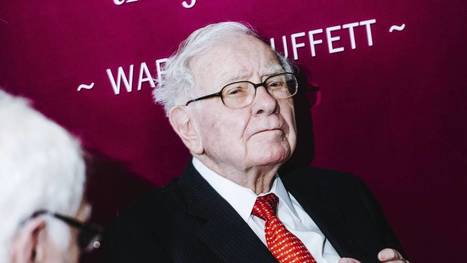
Warren Buffett finally found his next crisis-era deal. His Berkshire Hathaway Inc., which has stayed relatively quiet during the tumult of the coronavirus pandemic, broke its silence at the end of a holiday weekend with its biggest acquisition in more than four years. The agreement for Dominion Energy Inc.’s natural gas pipeline and storage assets signaled to the market that Buffett is willing to pounce despite his cautious tone in May about the pandemic, according to David Kass, a professor of finance at the University of Maryland’s Robert H. Smith School of Business. “He’s willing to make investments now, of a fairly sizable amount,” Kass said. “It’s very positive that he’s sending a signal for the right deal at the right price, $10 billion or more, ‘We’re ready to go, we’re ready to invest.’” [...] His inability to make a major acquisition recently has drawn scrutiny from his critics, who argued that Buffett lost his ability to pull off the game-changing transactions that helped vault Berkshire into the ranks of the most valuable U.S. public companies. Now, the deal to buy substantially all of Dominion Energy’s natural gas transmission and storage assets for $4 billion, along with the assumption of $5.7 billion in debt, shows that Buffett is willing to put his money to work, Kass said. [...] Buffett has considered its energy business one of the “lead dogs” of Berkshire’s non-insurance operations alongside its railroad. Berkshire’s purchase expands its hold in the sector, adding more infrastructure to handle natural gas to its already sprawling energy operations across states such as Nevada and Iowa. Berkshire also struck the deal at a low point in the market. Natural gas futures in the U.S. dropped last month to their lowest point in 25 years and have recovered just slightly since then. “This looks like confirmation that commodities like energy are undervalued,” Bill Smead, chief investment officer at Smead Capital Management, which owns Berkshire shares, said in an emailed comment. “At the bottom, assets move from weak hands to strong hands.”
The board's role in a crisis guide includes findings from interviews with chairs, board members and chief executives who have experienced major crises over the last 10 years. These crises include major natural disasters, reputational crises, market collapse, critical infrastructure failure, terrorist attacks, through to pandemic responses. The interviewees covered sectors as diverse as banking, education, health, electricity, transport, mining, manufacturing, retailing, local government, and scientific research.
COVID-19 has caused many illnesses and deaths worldwide. It also has caused significant economic loss for many business enterprises and this may impact, in turn, on the compensation those enterprises pay their executives. Today’s column discusses the impact COVID-19 may have on executive compensation. On March 13, 2020, the President of the United States declared a national emergency beginning as of March 1 based on COVID-19. On March 27, 2020, the President signed into law the Coronavirus Aid Relief and Economic Security Act (the “CARES Act”). COVID-19-related decisions include picking the date to separate pre-COVID-19 and post-COVID-19 periods (the “COVID Start Date”) for compensation or other purposes. For most companies, at the present time, such decisions are at the discretion of the individual company. Exceptions may include companies receiving loans from, or loans guaranteed by, the U.S. Treasury Department. Such loans may be contingent upon agreement by the borrowing company to certain conditions, including the date to be treated as the COVID Start Date.
Is it possible to access the internet without interacting with the big five American tech companies? Technically, yes, but large swaths of the web would be inaccessible to consumers without the products and platforms created by Apple, Amazon, Facebook, Microsoft and Alphabet, Google’s parent company. In this episode of Big Tech, co-hosts David Skok and Taylor Owen speak with Matt Stoller, the director of research at the American Economic Liberties Project and the author of Goliath: The 100-Year War Between Monopoly Power and Democracy. Stoller looks at how the political landscape has changed from the time of the railroad tycoons to the modern Silicon Valley tech monopolies. Each of these companies has established itself in a market-leading position in different ways. On mobile, Apple’s App Store is the only way for software developers to reach iPhone customers. Google controls search, maps and online advertising. Amazon’s website is the dominant online retail platform. “In some ways, it’s a little bit like saying, well, you know, that railroad that goes through this one narrow valley that you have to take to get to market, well, that’s not a monopoly, because there are other railroads in the country,” Stoller says. “Well, yeah, maybe there are, but it doesn’t matter if you need that particular railroad to get where you’re going….that’s what Amazon is like in a lot of the sectors that it deals with.” Finally, underpinning much of the internet are Microsoft Azure and Amazon Web Services cloud data centres. Is corporate power a political problem or a market problem? Skok, Owen and Stoller discuss topics ranging from the robber barons of the 1930s and the antitrust reforms that followed, to the current environment, one that evolved over several political generations to become, as Stoller describes it, a crisis of concentration separated from “caretaking,” in which profits can amass through domination rather than through better products or services.
On june 30th Vladimir Putin posed in front of a 25-metre bronze statue to the Soviet soldier which he had just unveiled. Filmed from below, to give him extra height, President Putin appealed to his people to vote on a package of constitutional changes, for the sake of the motherland that millions of Russians died to defend against Hitler. He did not mention the real reason for the vote: to let him stay in power beyond 2024, when he is obliged by the current constitution to stand down. The next day Mr Putin declared victory, after a whopping 78% of Russians were declared to have voted to approve the 200-odd changes which together mark a new phase in his reign. He hopes to move from being merely the second president of post-Soviet Russia to being its life-long supreme leader. [...] The voting was stretched over a week and was partly conducted electronically, creating ample opportunity for rigging. It was not a proper referendum. It had no precedent or legal basis. It did not require a minimum threshold, was not independently monitored and did not follow any clear rules. The changes had already been passed by Russia’s servile parliament, approved by its constitutional court and signed into law by the president. [...] Appointed as acting president of Russia by Boris Yeltsin at the end of 1999, Mr Putin long ago did away with free and fair elections. Genuine opponents are harassed, imprisoned or barred from standing. State media are thoroughly one-sided. Nonetheless, there has been a degree of popular consent to his rule. It has rested on the concept of “Putin’s supermajority”—an idea first introduced by one of his spin-doctors, Gleb Pavlovsky, months before Mr Putin’s first election victory in 2000.
In a research paper written by Prof. Elizabeth Pollman, titled Startup Governance, and published through the Institute for Law and Economics, a joint research center of the Law School, the Wharton School, and the Department of Economics in the School of Arts and Sciences at the University of Pennsylvania, the author tackles the corporate governance issues facing unicorns. There have been a number of privately held companies that have faced corporate governance issues, which, in some cases have delayed their IPOs, and, in other cases, perhaps even contributed to the withdrawal of their IPOs. Despite the growing number of unicorns and the prominence of a number of these companies, there has not been much analysis of some of the governance challenges. As Pollman writes, the US securities laws merely distinguish between non-reporting and reporting companies.
Force majeure arguments are increasing during the coronavirus pandemic, but this emerging body of law remains largely undeveloped. Lowenstein Sandler attorneys offer practical tips for crafting force majeure clauses to avoid litigation in a post-pandemic world and how to prepare for a possible second wave of Covid-19. In the wake of Covid-19, litigants have increasingly sought to excuse contractual performance by invoking force majeure clauses or the doctrine of impossibility. Yet despite the numerous (and creative) Covid-19-related arguments propounded by litigants in recent months, this emerging body of law remains largely undeveloped. There are only a handful of reported decisions on these matters, and the substance of these rulings echoes the principles that were applied in the pre-Covid era: Force majeure clauses are strictly and narrowly construed, and the evidentiary showing necessary for a successful impossibility argument remains a high bar. This article analyzes two recent federal district court holdings from May and June 2020 and offers practical tips for contract drafting to avoid (or succeed in) litigation in a post-pandemic world.
We recently surveyed more than 70 nominating/governance (nom/gov) committee chairs of S&P 500 and F500 companies, and spoke to several of them directly for added perspective, to learn how boards responded to the crisis and what longer-term governance changes they think may emerge post COVID. We found they are overwhelmingly confident that their board has the skill sets and experience it needs and do not anticipate any change in board structure or refreshment practices in the near future.
Investors are increasingly preparing for market volatility ahead of the U.S. presidential election, with some shifting stock positions and selling the dollar, as Democratic contender Joe Biden maintains a lead against President Donald Trump in opinion polls. Plenty can change in the four months before the Nov. 3 vote, and many investors remain focused on whether a resurgence of the coronavirus will damage a nascent U.S. economic rebound. Some money managers, however, are already preparing for the possibility of a Biden victory by betting against the dollar and cutting their positions in U.S. stocks. “The president’s poll numbers have fallen off a cliff,” said Phil Orlando, chief equity market strategist at Federated Hermes. “The market is looking at this and saying, ‘If the election were held today Biden would win.’” The latest Reuters/Ipsos poll showed Biden leading Trump by 8 percentage points among registered voters. Approval of Trump’s handling of the coronavirus pandemic has plummeted. A Biden victory - as well as a possible Democratic sweep of the House and Senate - could threaten policies championed by Trump and generally favored by Wall Street, including lower corporate tax rates and fewer regulations, analysts said. Despite the sharp coronavirus-fueled dip, the S&P 500 .SPX is up about 37% since Trump took office. The index gained 85% and 79% during the first terms of Presidents Barack Obama and Bill Clinton, respectively. Under Biden, the corporate tax rate is likely to increase to 28%, reversing half of the cut enacted by Trump and the Republican-led Congress in late 2017, according to Amundi Pioneer Asset Management.
|


 Scoop.it!